You're Not a Visual Learner. Nobody Is.
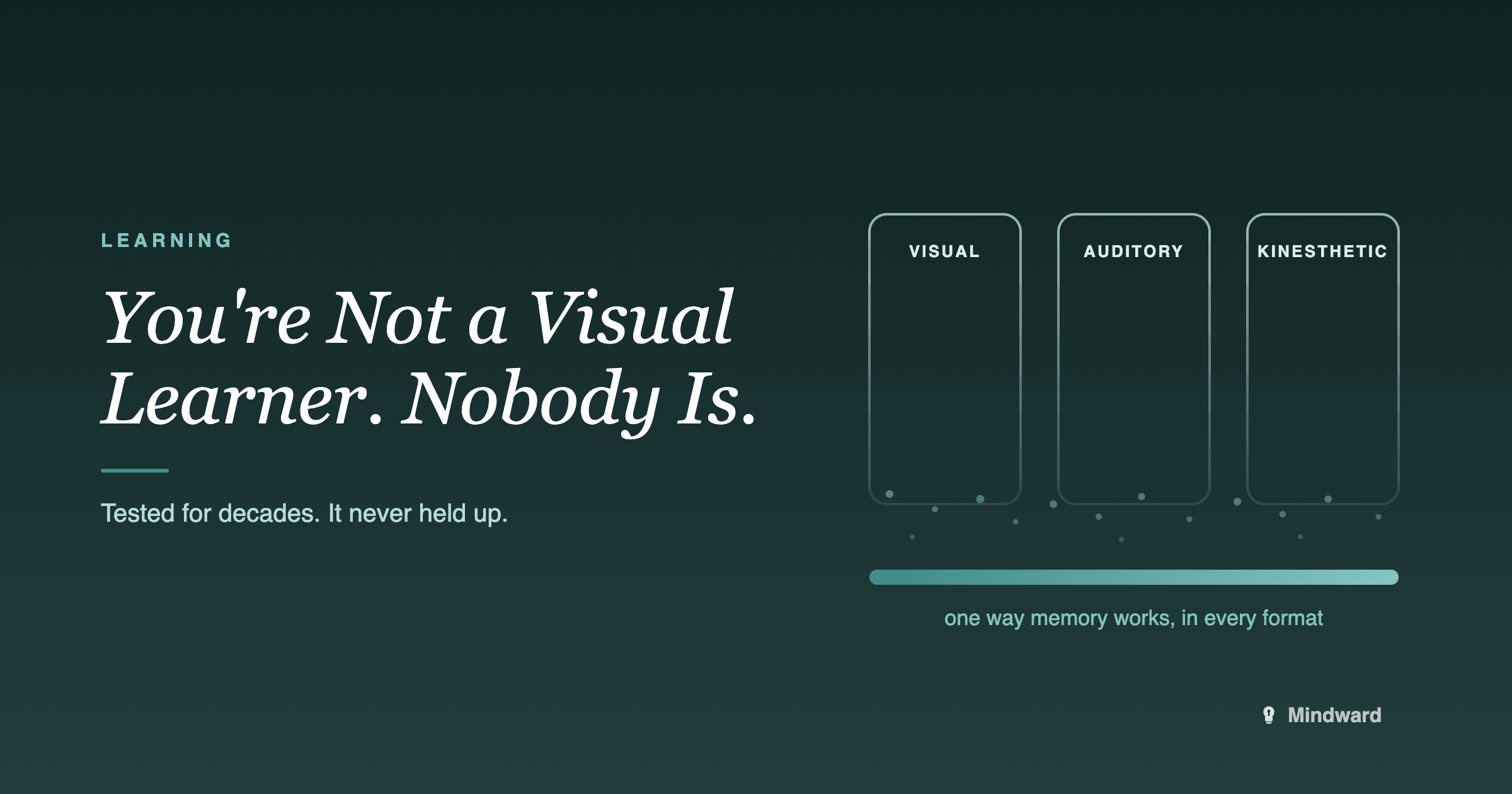
The idea that you learn best in one particular format has been tested for decades and never held up. What replaces it is simpler, more useful, and takes the pressure off.
Category
10 articles
The idea that you learn best in one particular format has been tested for decades and never held up. What replaces it is simpler, more useful, and takes the pressure off.
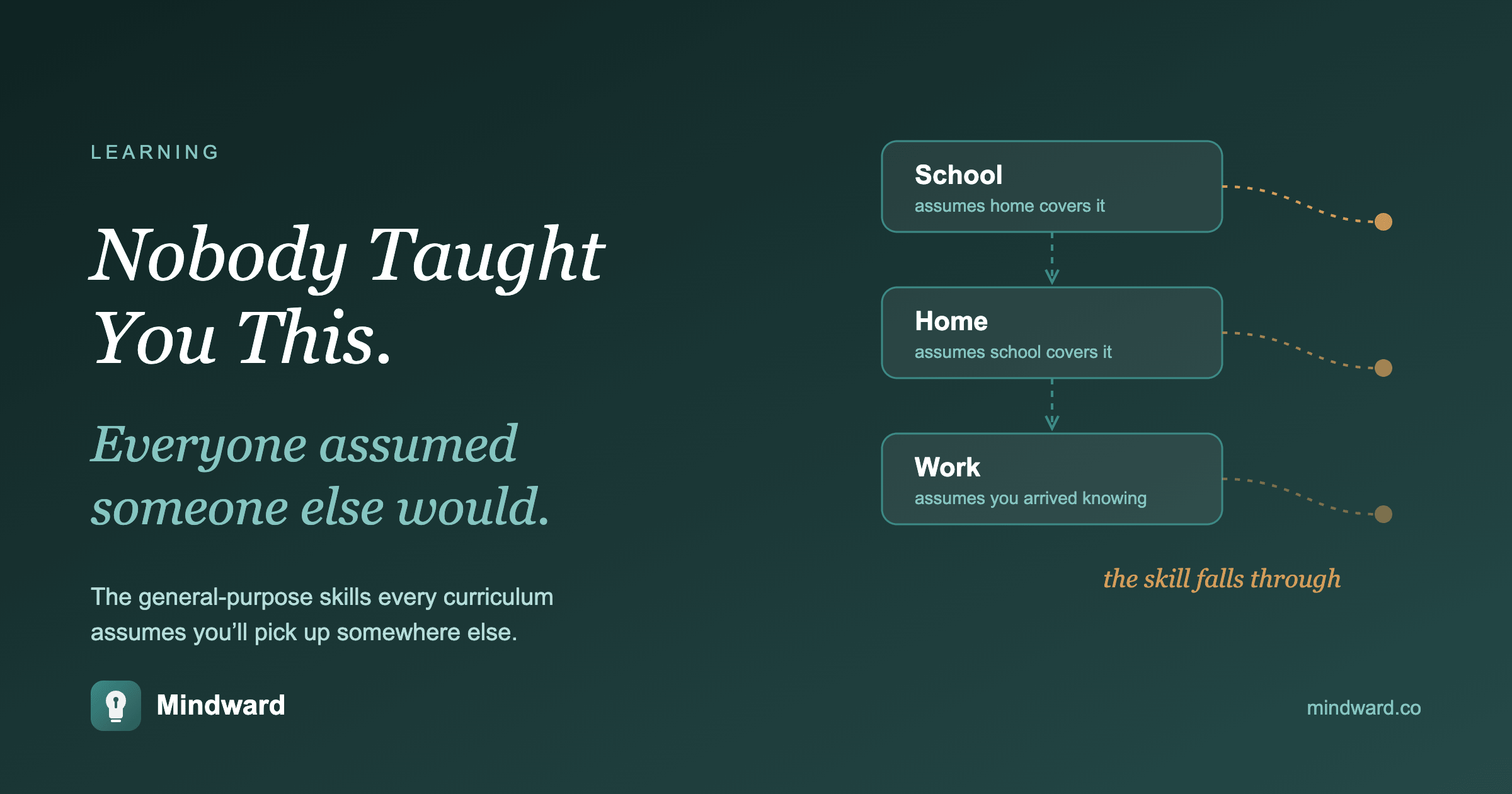
The things you feel embarrassed for not knowing — money, contracts, negotiation, your own lab results — were never actually taught to anyone. That's a curriculum problem, not a character one.
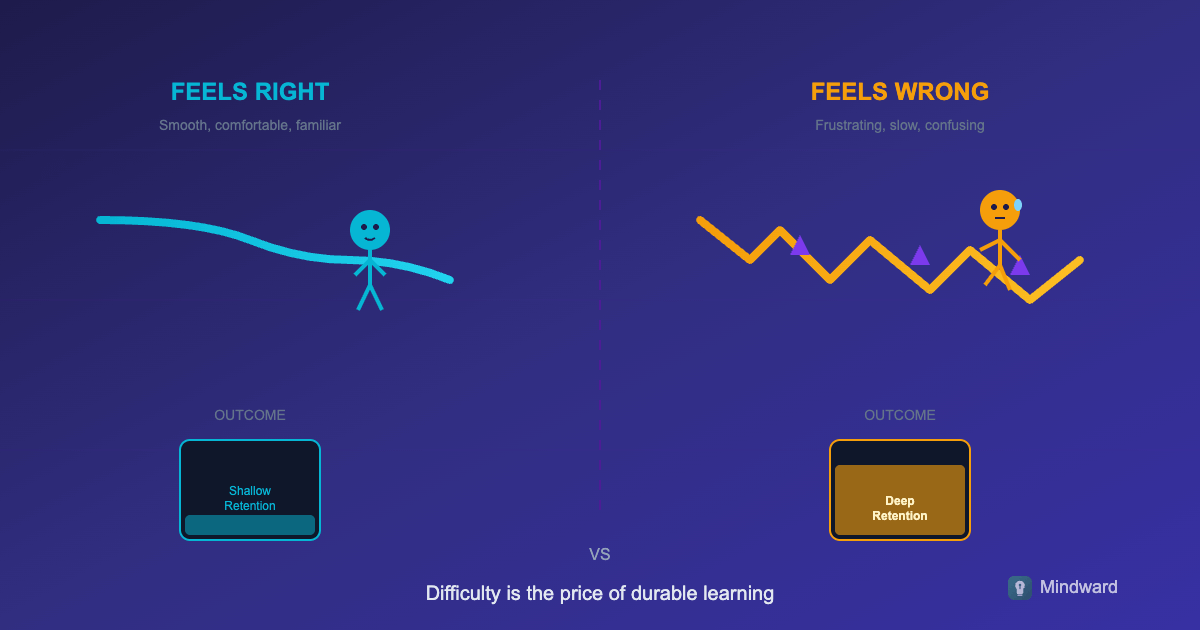
If studying feels easy, you're probably not learning. The most effective techniques feel frustrating—and that's exactly why they work.
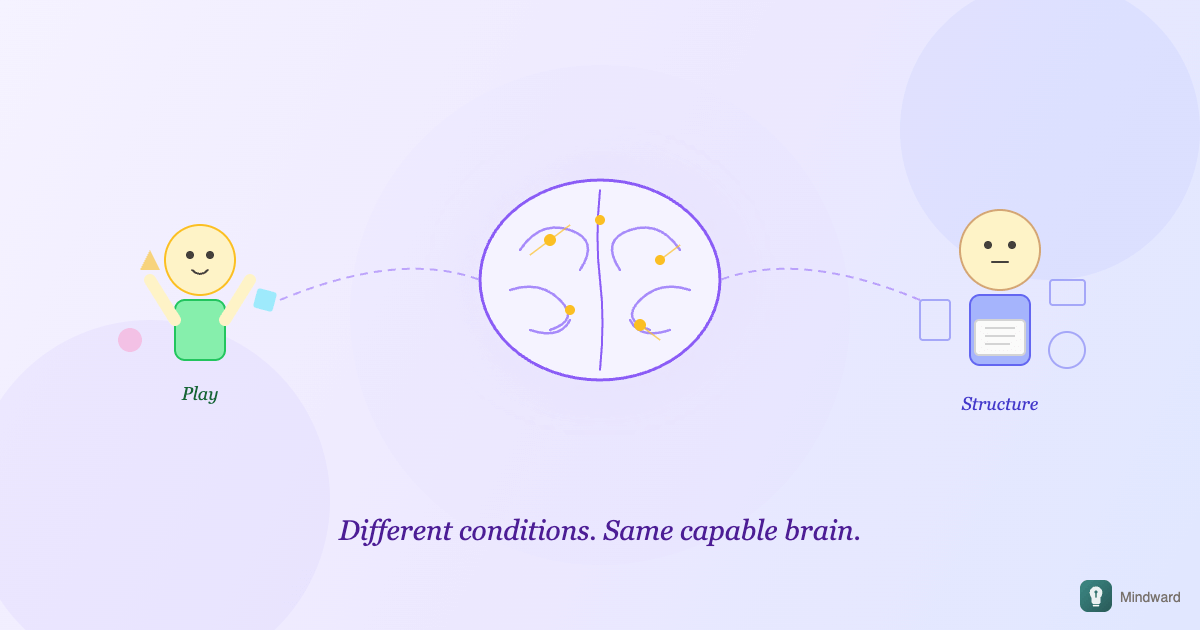
Kids aren't better learners. They just learn differently—with immersion, play, and zero self-judgment. Adults can access the same conditions if they stop treating learning like work.
The most common study method is also one of the least effective. Here's what actually works.
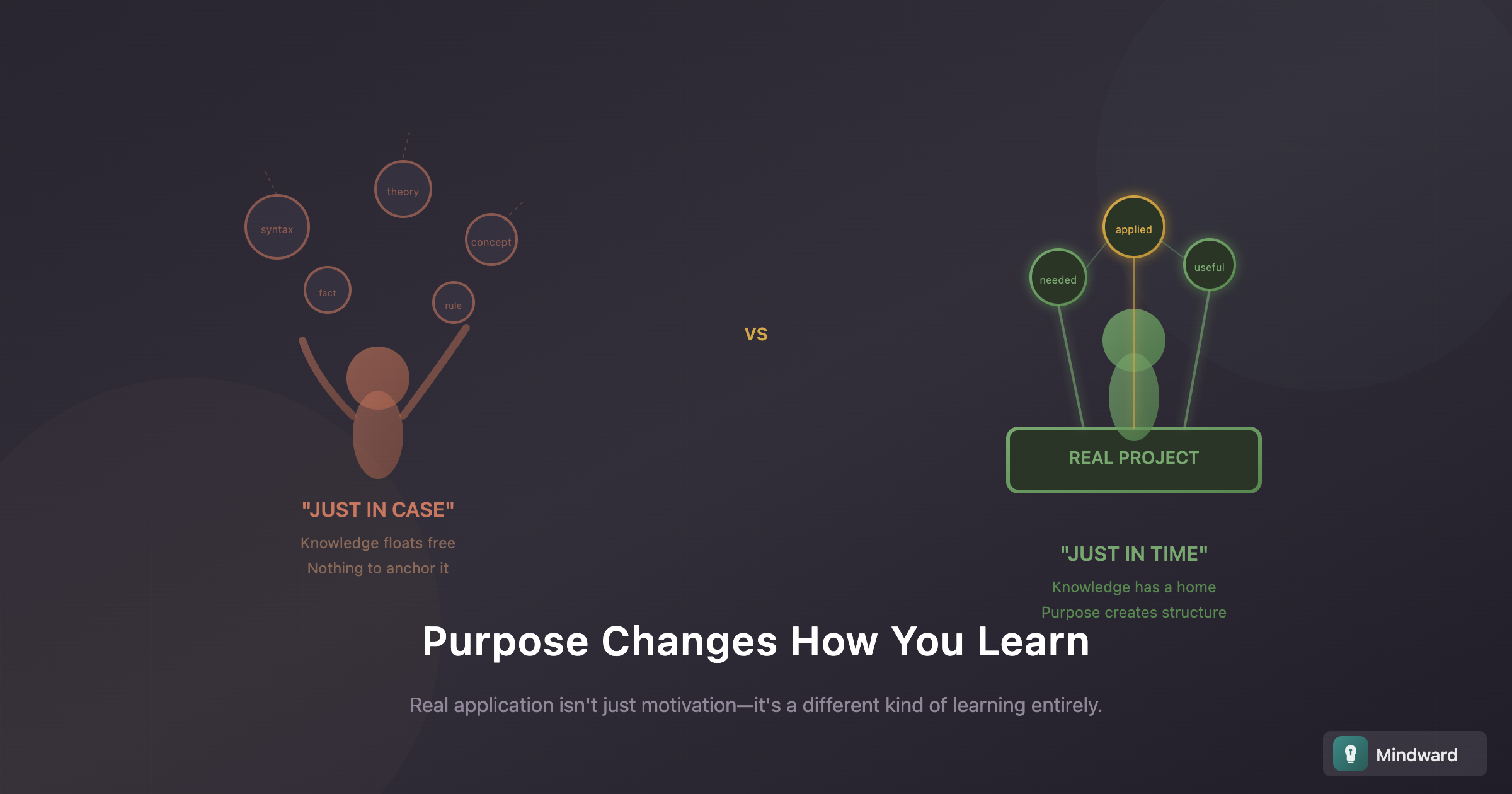
Learning 'just in case' feels responsible. Learning 'just in time' actually works. Here's why having a real use for knowledge changes everything about how quickly you acquire it.
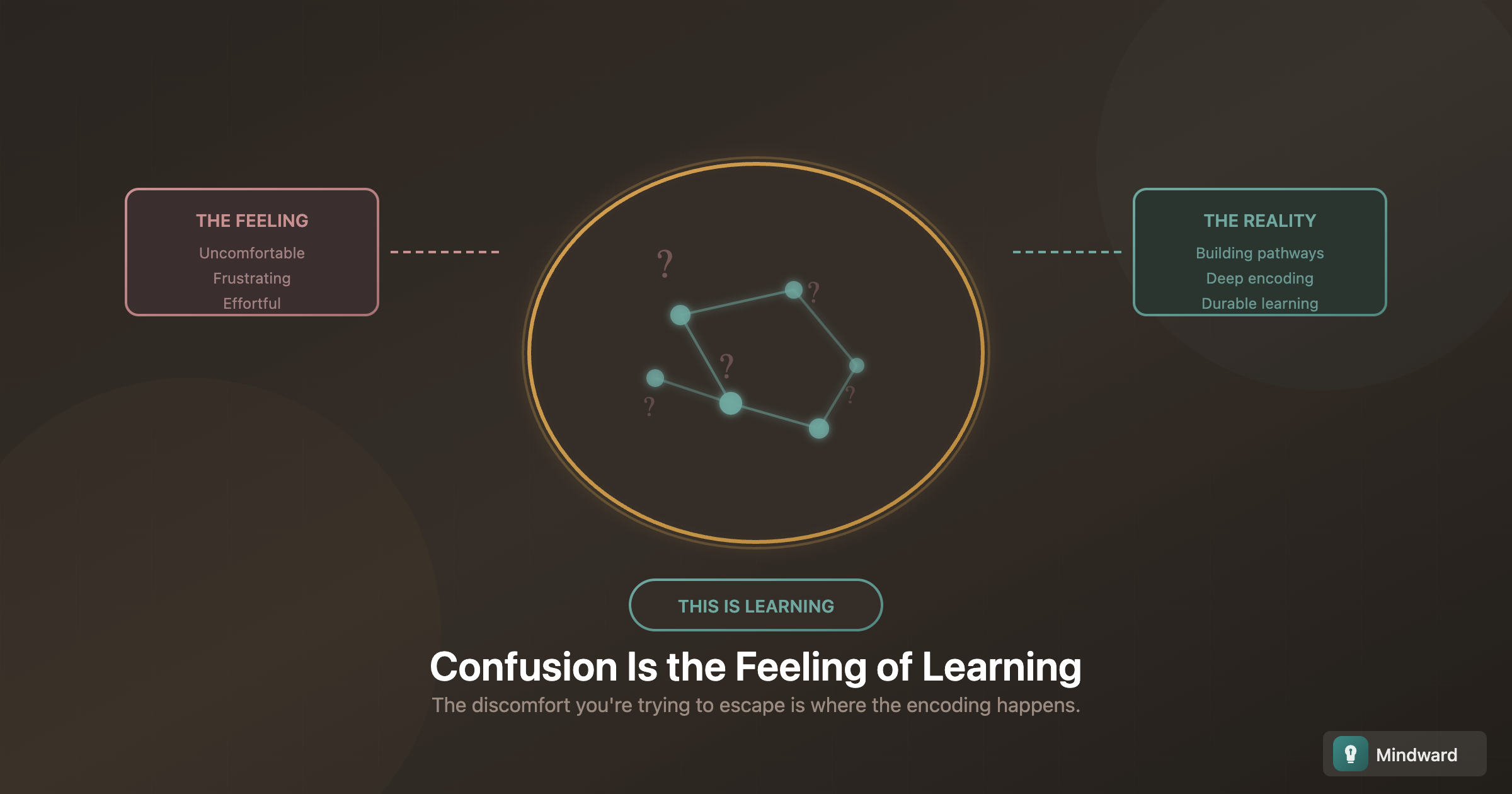
That uncomfortable feeling when something doesn't make sense? It's not a sign you're bad at learning. It's the feeling of your brain actually encoding something new.
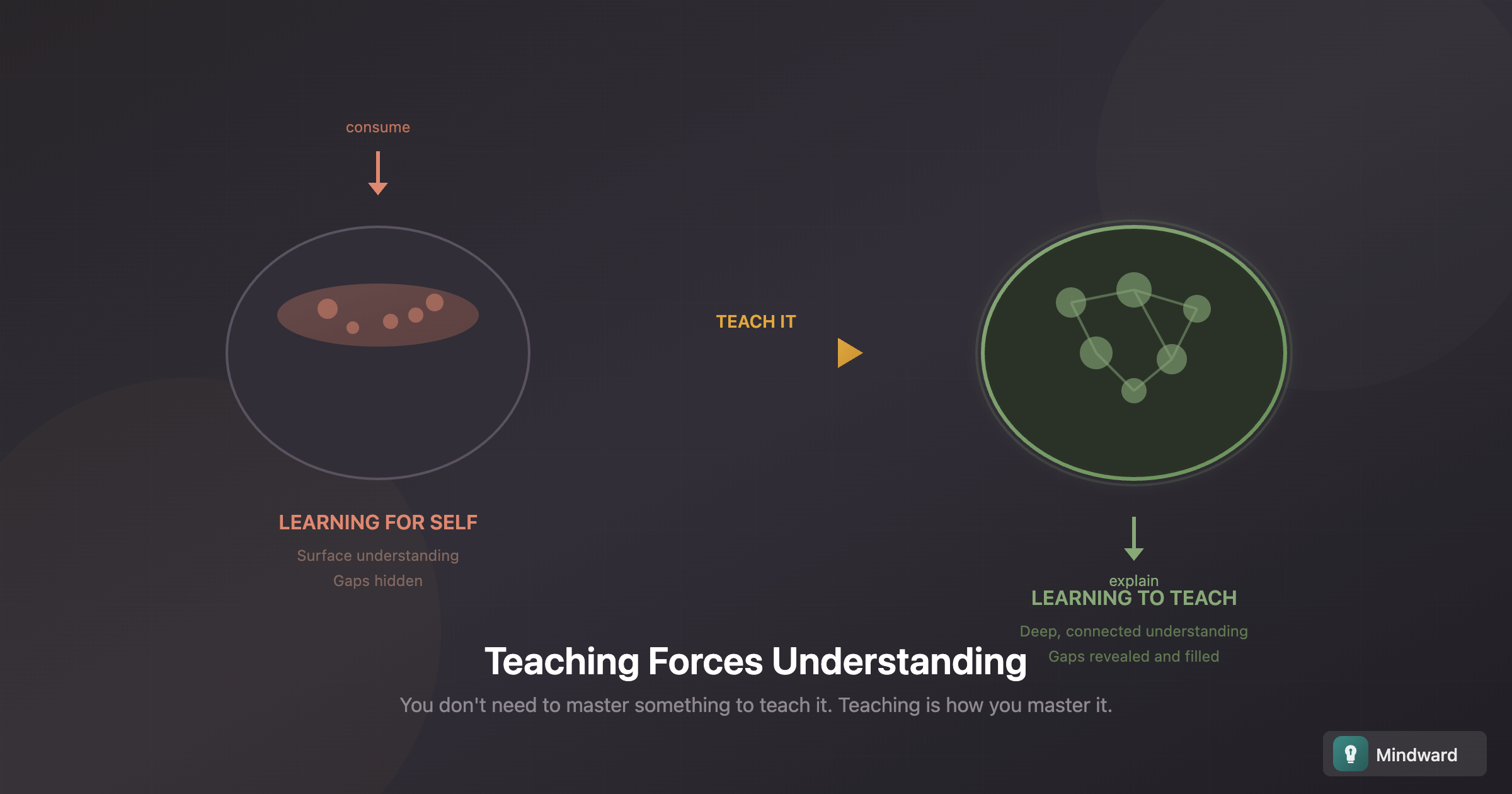
The fastest way to master something isn't more studying—it's explaining it to someone else. Teaching forces a depth of understanding that passive learning never reaches.
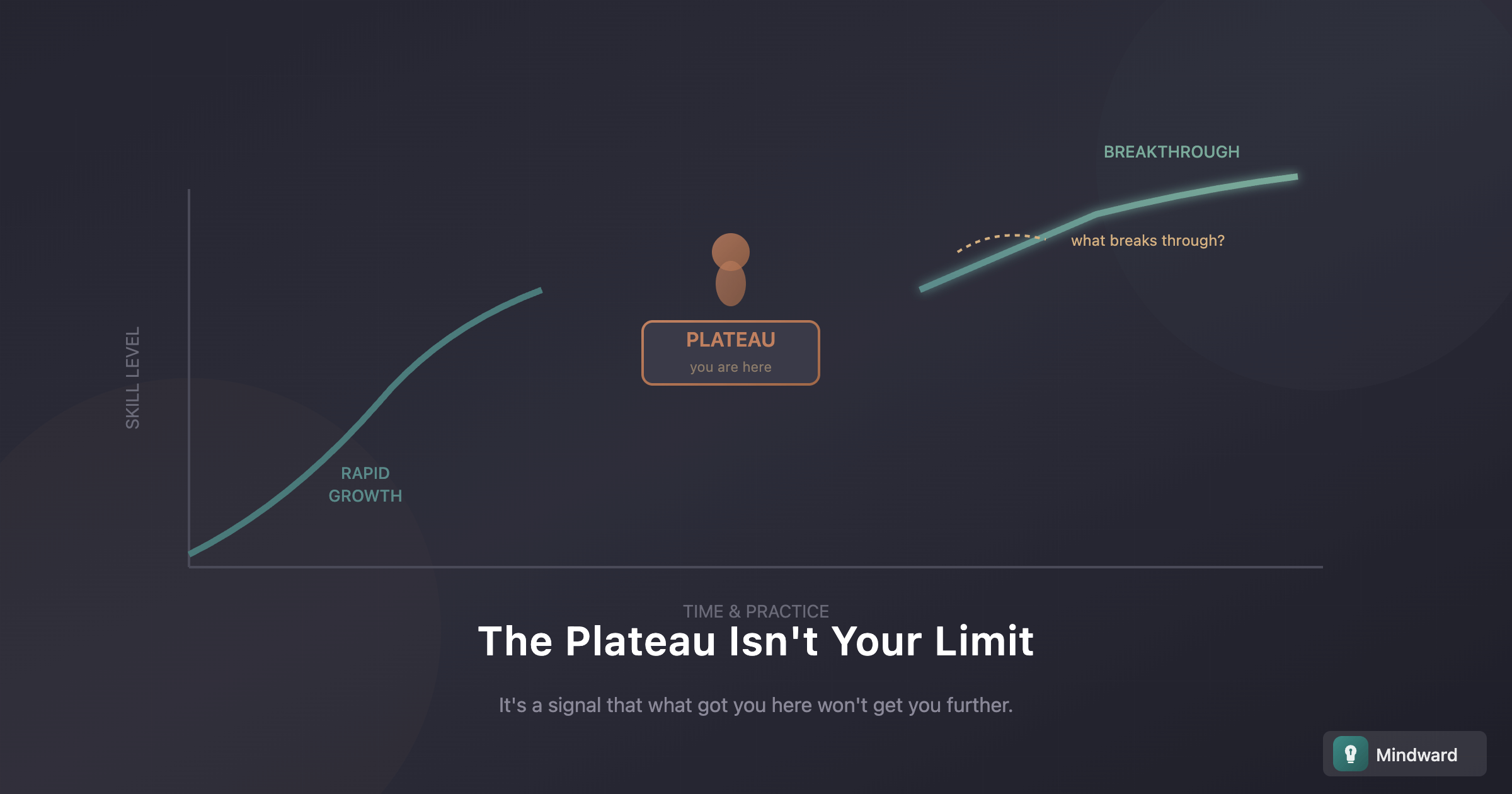
You were making progress. Then you stopped. The plateau isn't a sign you've hit your limit—it's a signal that what got you here won't get you further. Here's what actually breaks through.
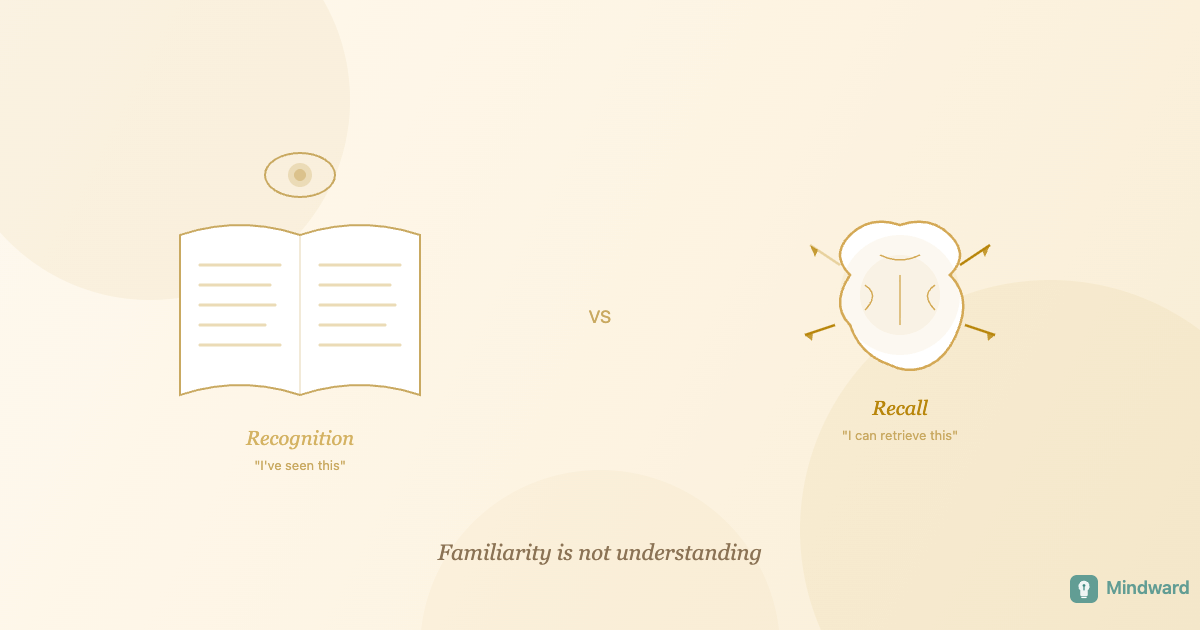
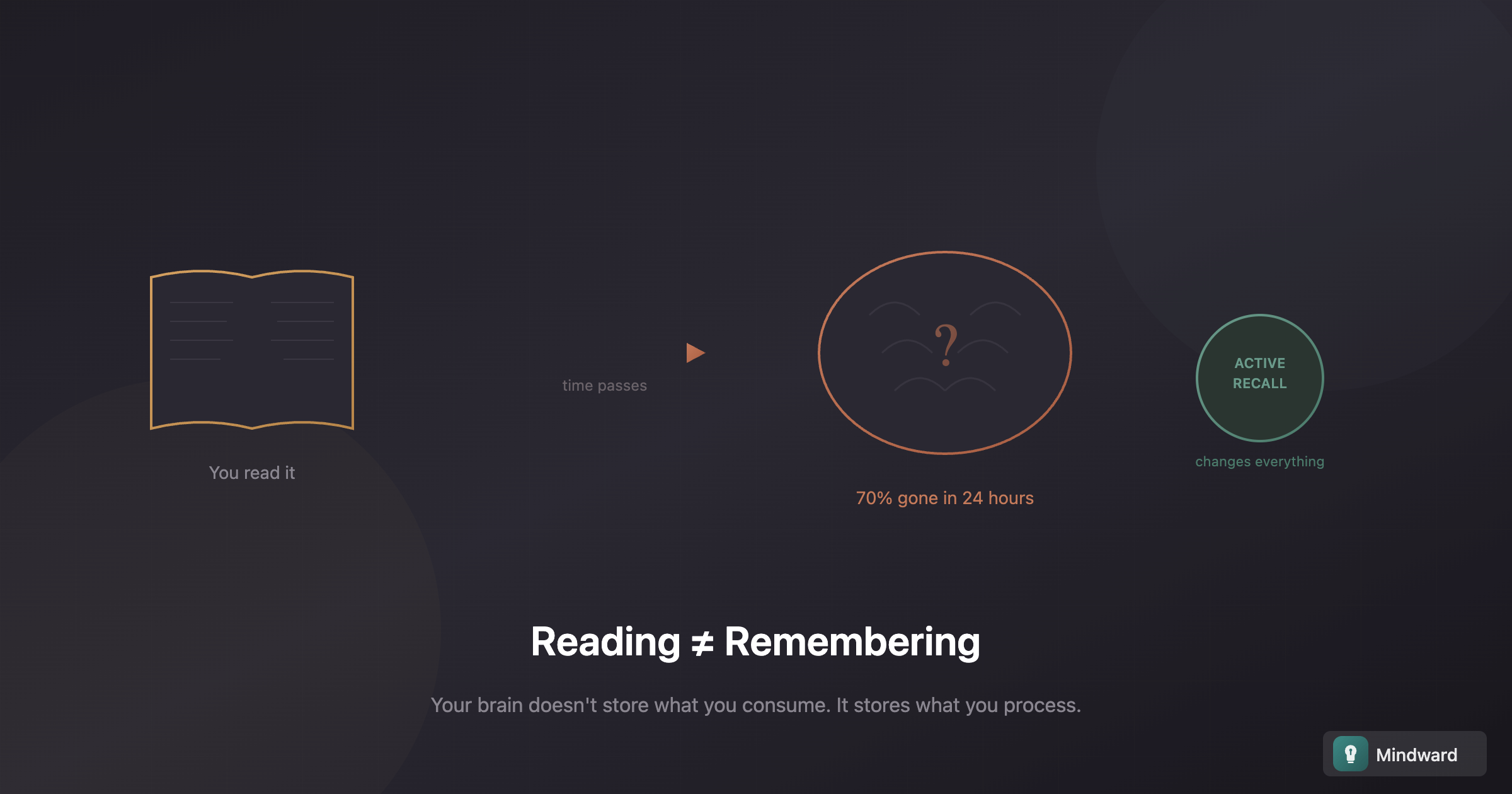
You've read dozens of books this year. You can barely remember what was in them. The problem isn't your memory—it's how you're reading. Here's what actually makes knowledge stick.