Rereading Feels Like Learning. It's Not.
The most common study method is also one of the least effective. Here's what actually works.
You've read the chapter twice. Highlighted the key points. The material looks familiar now. You feel ready.
Then the test comes, and your mind goes blank. The information that felt so solid disappears the moment you need it.
This isn't a failure of your memory. It's a failure of your method. And it happens to almost everyone because the most intuitive way to study is also one of the least effective.
The Familiarity Trap
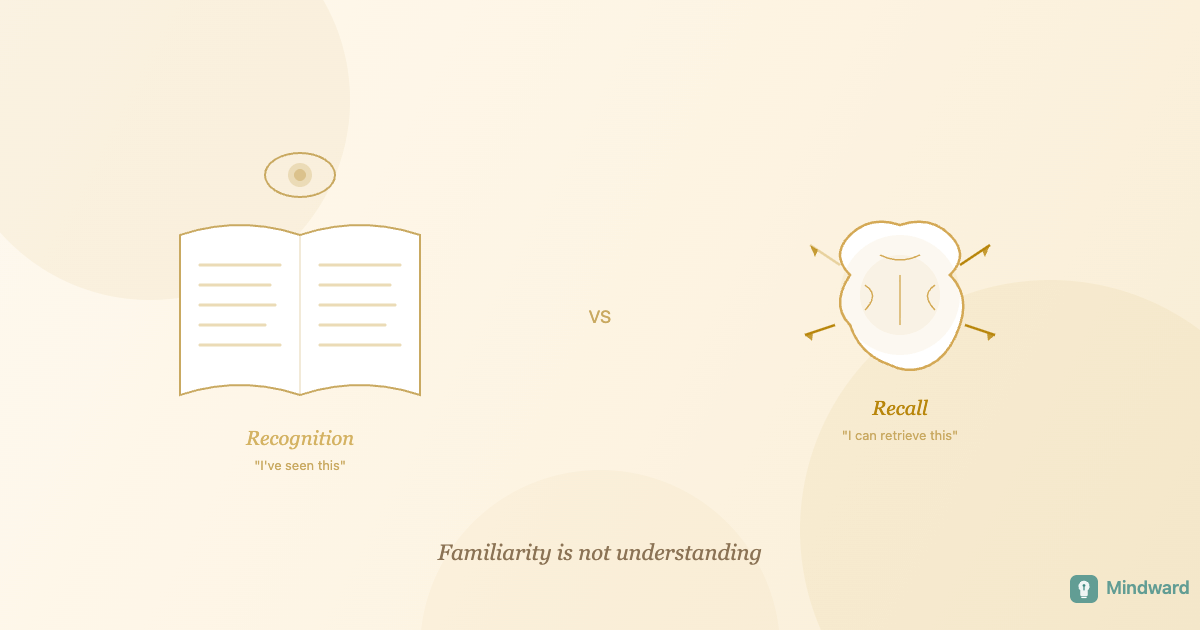
Rereading feels productive because it creates recognition. You see the words again, they look familiar, and your brain interprets that familiarity as knowledge. But recognition and recall are completely different cognitive processes.
Recognition is passive. It's your brain saying, "I've seen this before." Recall is active. It's your brain retrieving information without cues. The first feels easy. The second is what actually matters.
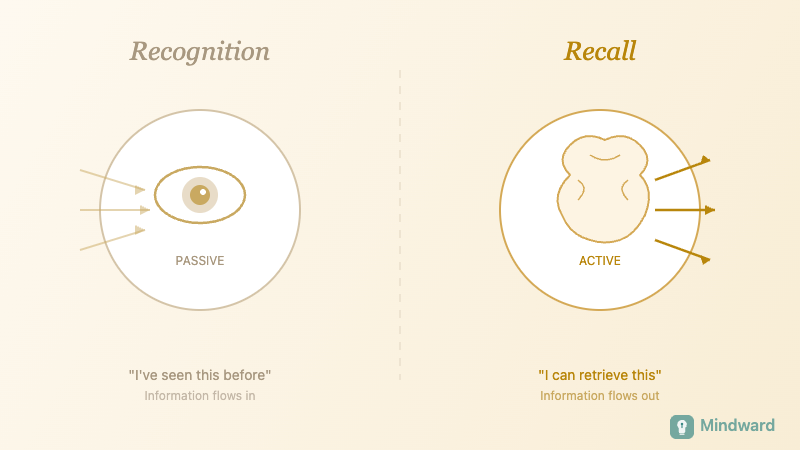
When you reread, you're training recognition. When you're tested, you need recall. The mismatch explains why you can feel completely prepared and still draw a blank.
Fluency Is Not Understanding
Psychologists call this the "illusion of competence." The material flows smoothly when you read it. You follow the logic. You understand each sentence. This processing fluency tricks you into thinking you've learned it.
But following along is not the same as being able to reproduce. Understanding in the moment is not the same as retaining for later. The ease of reading masks the absence of durable memory.
If it feels too easy, you're probably not learning. Real learning has friction.
This is why students who reread often perform worse than they expect. Their confidence comes from fluency, not from actual knowledge. The gap between perceived mastery and real mastery can be enormous.
What Actually Works
The alternative is uncomfortable but effective: instead of reviewing information, practice retrieving it.
Close the book. Look away from the notes. Try to recall what you just read. Write it down from memory. Explain it out loud to no one. The struggle you feel isn't a sign of failure—it's the actual learning happening.
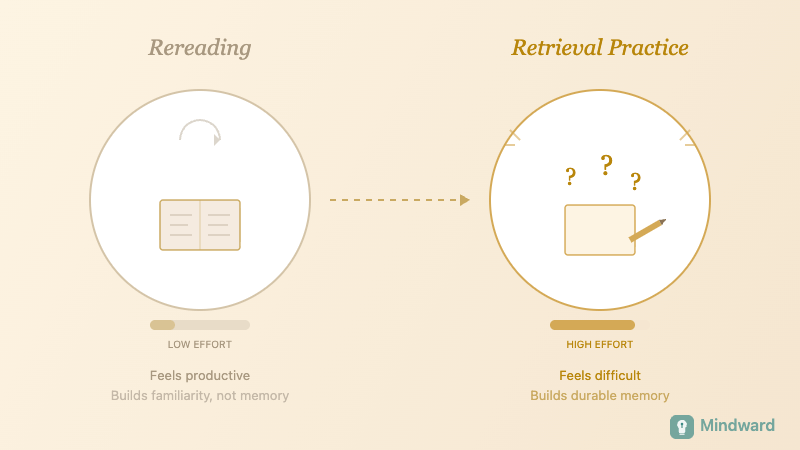
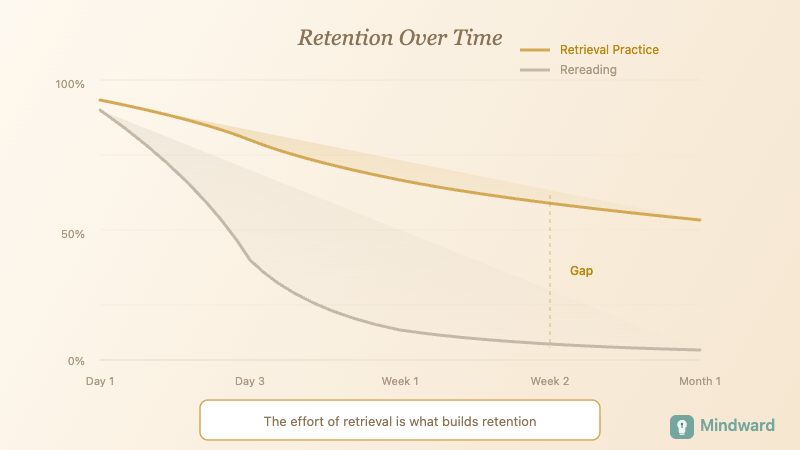
This is called retrieval practice, and decades of research confirm it's one of the most powerful learning techniques available. Every time you pull information from memory, you strengthen the neural pathways that store it. The effort of retrieval is what builds retention.
The Testing Effect
Here's the counterintuitive part: testing yourself isn't just a way to measure what you know. It's a way to increase what you know.
Studies consistently show that students who test themselves remember more than students who spend the same time rereading. Even when the test is difficult. Even when they get answers wrong. The act of attempting retrieval—successful or not—produces stronger memories than passive review.
This means the thing most people avoid (being tested) is actually the thing that helps most. The discomfort of not knowing is the precursor to knowing.
Making It Practical
You don't need formal tests. You just need to create moments of retrieval in your learning process.
- After reading a section, close it and write down the main points from memory
- Use flashcards that force recall, not recognition
- Explain concepts out loud as if teaching someone else
- Before reviewing notes, try to remember what's in them first
- When you get stuck, resist the urge to peek—struggle a bit longer
The key is to make retrieval your default, not your backup. Read once, then spend your remaining time practicing recall rather than rereading.
Trusting the Discomfort
Rereading is comfortable. Retrieval is not. This is precisely why people default to rereading—it feels like progress without the strain.
But learning that feels easy often isn't learning at all. The friction of trying to remember, the frustration of blanking, the effort of reconstruction—these are signs the method is working, not signs you're failing.
The struggle is the point. Easy studying produces fragile knowledge. Effortful retrieval produces durable memory.
Next time you sit down to study, notice the pull toward rereading. It will feel like the responsible choice. Resist it. Close the book earlier than feels comfortable. Test yourself before you feel ready. The discomfort is doing more than the comfort ever could.


Comments
How did you like this article?
No comments yet. Be the first to share your thoughts!