Why You Learn Faster When You Have a Use For It
Learning 'just in case' feels responsible. Learning 'just in time' actually works. Here's why having a real use for knowledge changes everything about how quickly you acquire it.
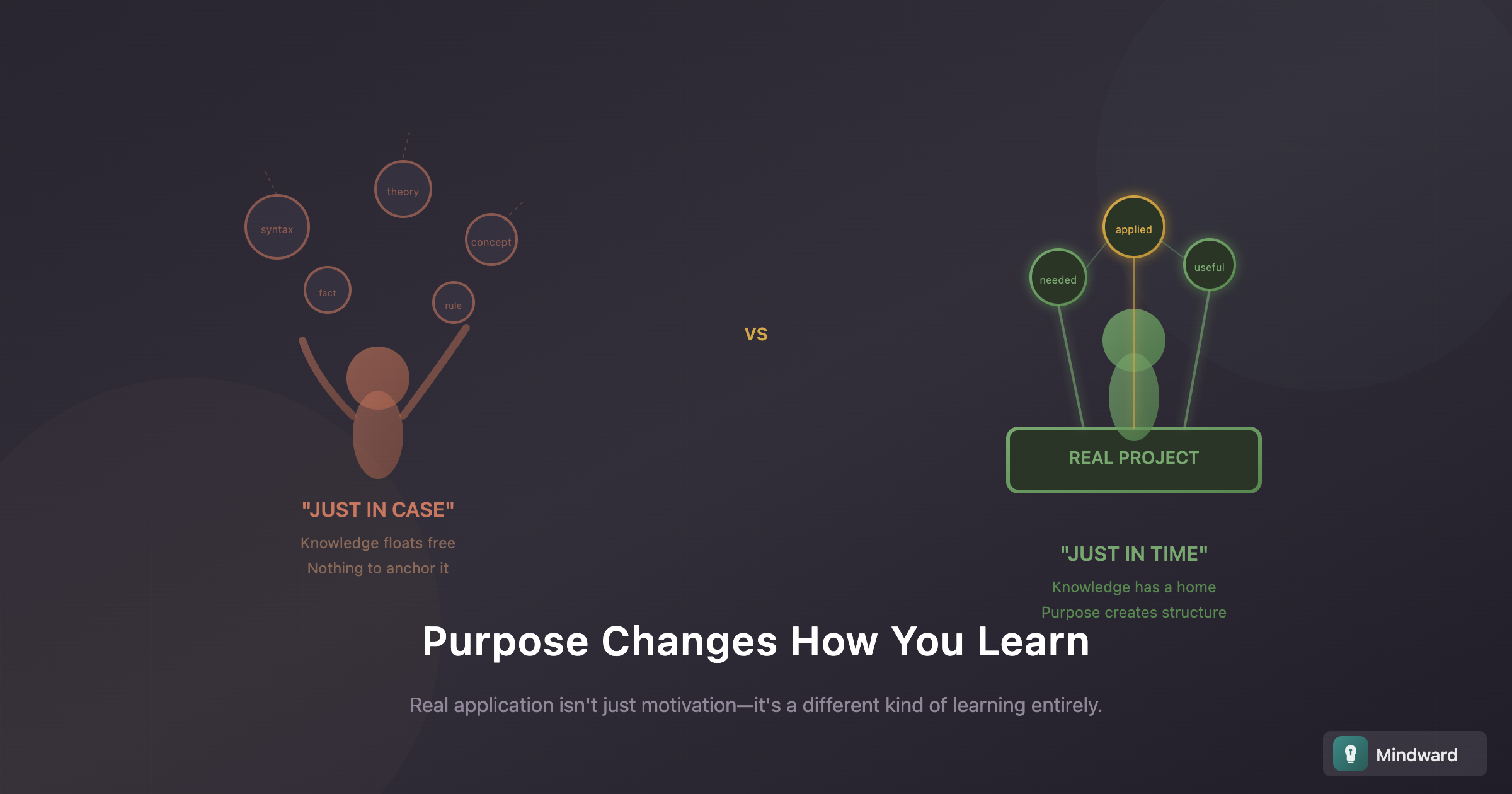
You've tried to learn things 'because they might be useful someday.' A programming language you don't need yet. A skill that seems valuable in theory. Knowledge that responsible people probably have. How'd that go?
Compare that to times you learned something because you needed it right now. A tool to finish a project. A skill to solve an immediate problem. Knowledge you'd apply within days. Night and day difference—and not just in motivation. The learning itself was faster, deeper, and stickier.
The Problem With 'Just in Case'
Learning without immediate application has a fundamental problem: your brain doesn't know what to do with the information. There's no structure to hang it on, no context to embed it in, no feedback to refine it against.
Abstract knowledge floats free. You can memorize syntax without understanding when to use it. You can learn concepts without grasping how they connect. Everything stays theoretical because there's nothing real to anchor it to.
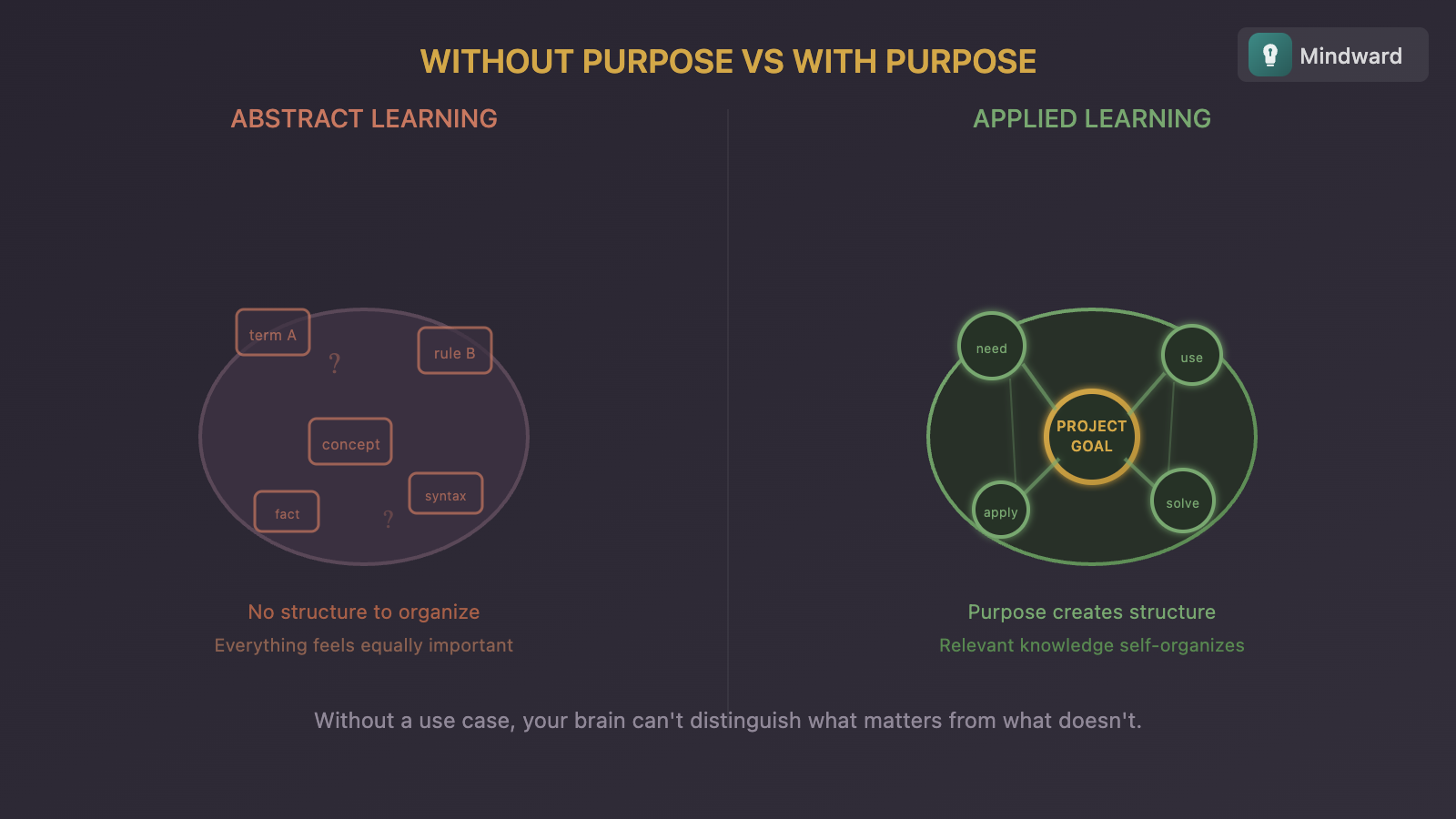
Without a use case, your brain can't distinguish what matters from what doesn't. Everything feels equally important—which means nothing feels urgent.
Why Application Accelerates Learning
When you're learning for immediate use, several things change at once. You have built-in relevance filters—you naturally focus on what you actually need. You have immediate feedback—you try something and see if it works. You have emotional stakes—the outcome matters beyond the learning itself.
Your brain encodes information differently when it's solving a real problem. The knowledge arrives pre-contextualized. You don't just learn what something is—you learn when to use it, how it interacts with other things, what can go wrong. That contextual richness is impossible to replicate in abstract study.
- Relevance filtering: You skip what you don't need and dive deep on what you do
- Immediate feedback: Every attempt teaches you something concrete
- Emotional engagement: Stakes make your brain pay attention
- Contextual encoding: Knowledge comes pre-attached to situations
- Natural repetition: You keep using what works, reinforcing it automatically
The Motivation Difference
There's also a simpler factor: learning for a real purpose is more interesting. Abstract study requires manufactured motivation. Applied learning carries its own momentum because you actually want the outcome.
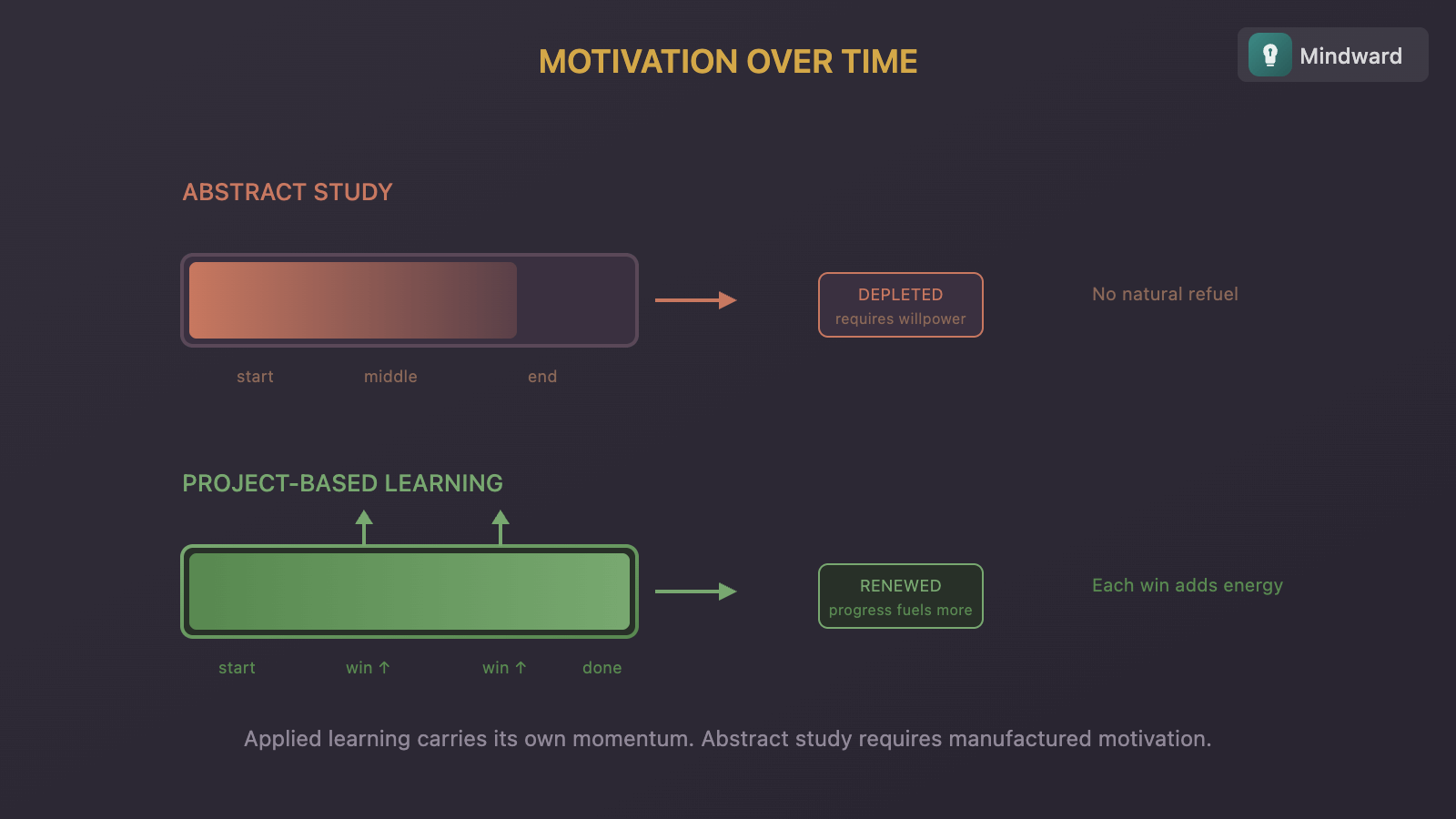
This isn't a character flaw to overcome. It's human nature working correctly. Your brain allocates attention based on perceived importance, and immediate needs are legitimately more important than hypothetical future ones. Fighting this is exhausting and usually loses.
Working with this dynamic means structuring learning around real projects rather than abstract curricula. Find the use case first, then learn what you need to execute it.
Just-in-Time Learning
The alternative to 'just in case' is 'just in time'—learning what you need when you need it, not before. This feels irresponsible to people who believe preparation means front-loading knowledge. But it's actually more effective.
Just-in-time learning means starting projects before you know how to finish them. It means looking things up as you encounter them rather than studying everything in advance. It means being comfortable with temporary incompetence because you know the learning will happen when it's needed.
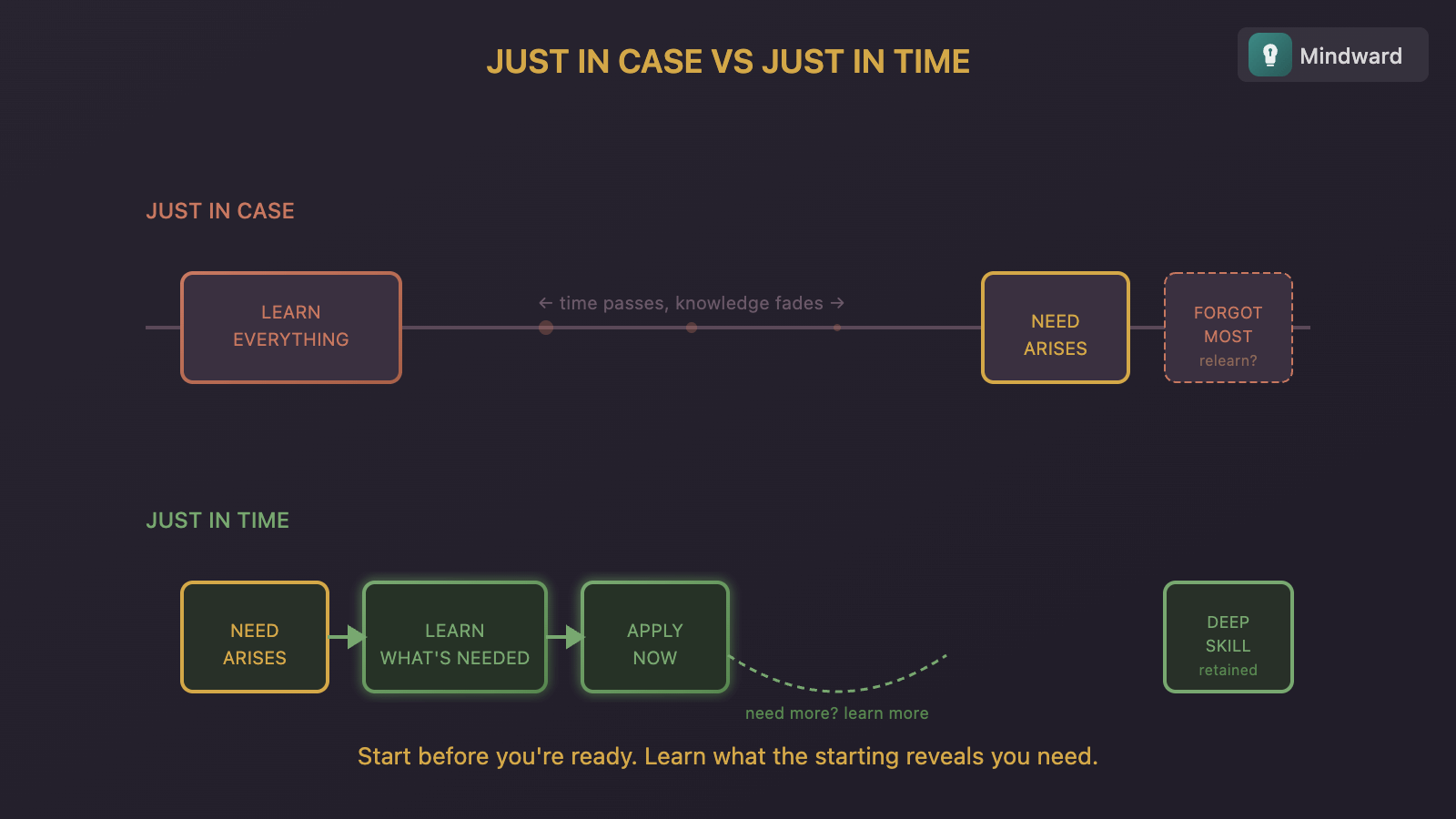
You don't need to know everything before you start. You need to start, then learn what the starting reveals you need.
Creating Artificial Stakes
Sometimes you genuinely need to learn something without an immediate project. In those cases, the move is to create artificial application—to manufacture the context that would naturally exist if you had a real use.
- Build something small: Even a toy project creates real decisions and real feedback
- Teach someone else: Explaining creates accountability and reveals gaps
- Set a deadline with output: Not 'learn X by Friday' but 'produce Y using X by Friday'
- Solve real problems: Use practice material from actual situations, not textbook exercises
- Commit publicly: Tell people what you're building, creating external stakes
The goal is to transform abstract learning into applied learning by giving yourself something real to do with the knowledge. The closer you can get to genuine stakes, the better the learning will work.
Permission to Start Before You're Ready
The deepest obstacle to just-in-time learning is the belief that you should be prepared before you begin. That starting without complete knowledge is reckless. That gaps in understanding are embarrassing rather than normal.
But every expert started with gaps. Every complex skill was learned piece by piece as the need arose. The people who seem effortlessly competent got that way by doing things before they fully knew how, then figuring it out as they went.
You learn faster with a use for the knowledge because use is what learning is for. The abstract stuff—studying without applying, preparing without doing—is the detour. The direct path is to find something worth building and let the building teach you what you need to know.


Comments
How did you like this article?
No comments yet. Be the first to share your thoughts!