Why Confusion Means It's Working
That uncomfortable feeling when something doesn't make sense? It's not a sign you're bad at learning. It's the feeling of your brain actually encoding something new.
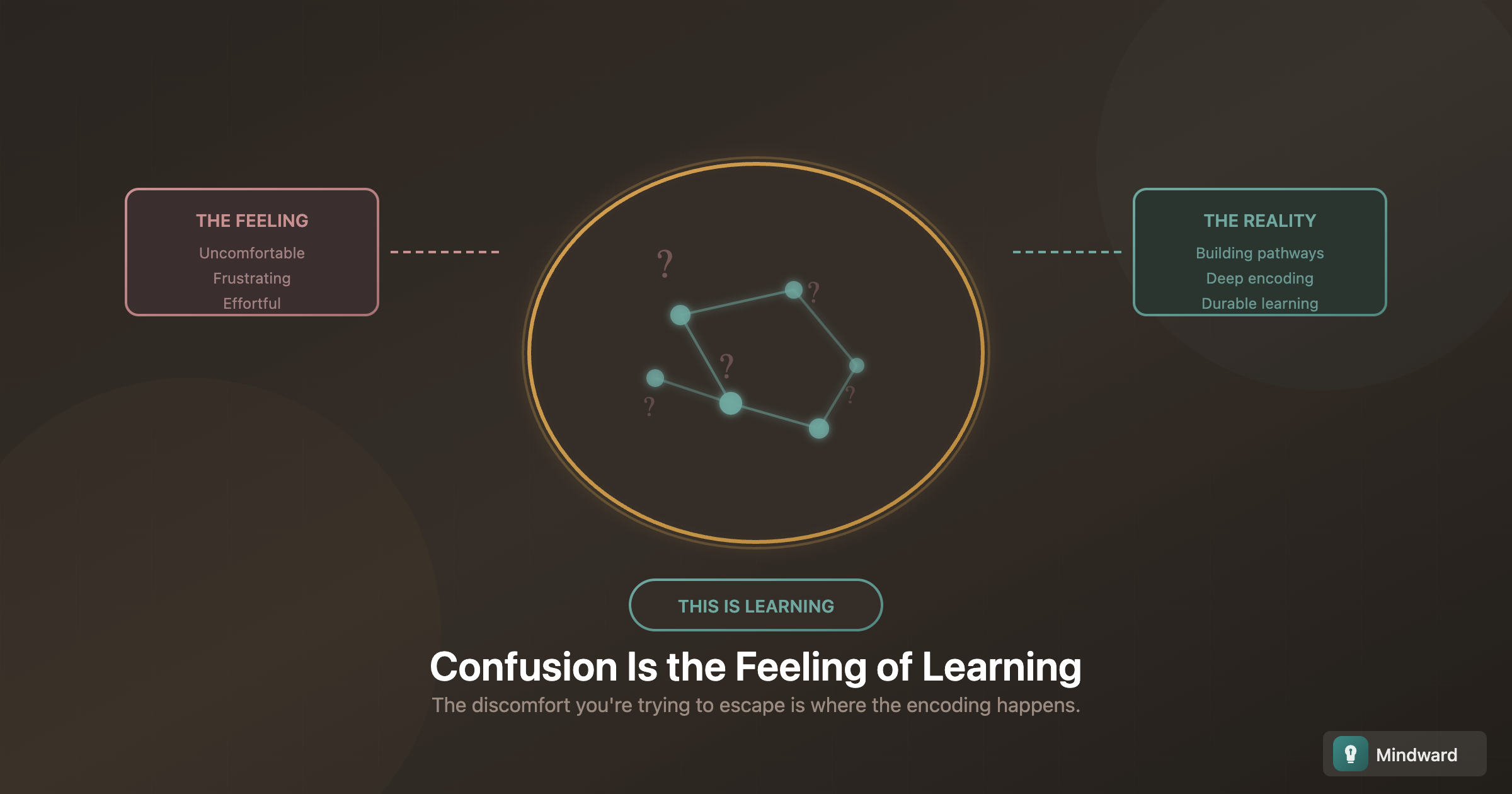
You're reading something new and your brain starts to hurt. The concepts aren't clicking. You re-read the same paragraph three times and still feel lost. Everything in you wants to close the book and find something easier.
Here's what no one told you: that feeling is learning. Not the obstacle to learning—the actual process of it. The discomfort you're trying to escape is precisely where the encoding happens.
The Productive Struggle
Psychologists call it desirable difficulty. Learning that feels hard produces better retention than learning that feels easy. The struggle isn't a sign that something's wrong with your brain. It's a sign that your brain is being forced to build new structures.
When information flows in smoothly, your brain treats it as familiar. It doesn't work hard because it doesn't need to. But when you're confused—when things don't fit your existing mental models—your brain has to actively construct new pathways. That construction is what creates durable learning.
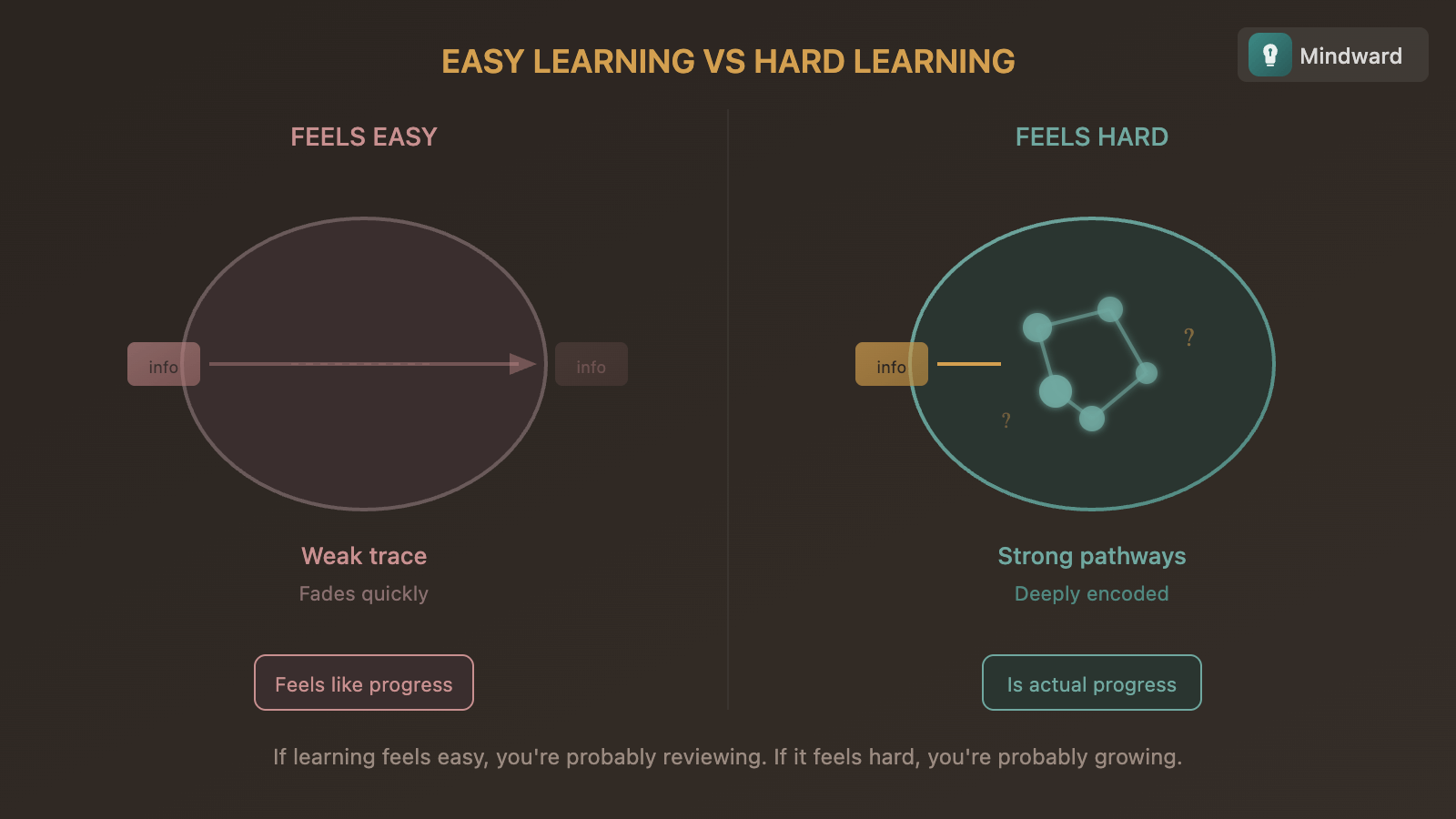
If learning feels easy, you're probably reviewing what you already know. If it feels hard, you're probably learning something new.
Why Easy Feels Like Progress
The trap is that fluency feels like mastery. When you read something that makes immediate sense, your brain registers it as learned. When you re-read notes and they feel familiar, you assume you've got it. But recognition isn't the same as recall, and familiarity isn't the same as understanding.
Easy learning produces confident ignorance. You feel like you know it because consuming it was effortless. Then you try to apply the knowledge and realize nothing stuck. The smoothness was a warning sign, not a green light.
Confusion, by contrast, produces humble competence. You know exactly where your understanding breaks down because you felt it break. That awareness is valuable—it points directly at what needs more work.
The Brain Under Load
When you're confused, your brain is doing several things at once. It's searching existing knowledge for relevant connections. It's generating hypotheses about what the new information might mean. It's testing those hypotheses against what you're reading. It's revising mental models that don't fit.
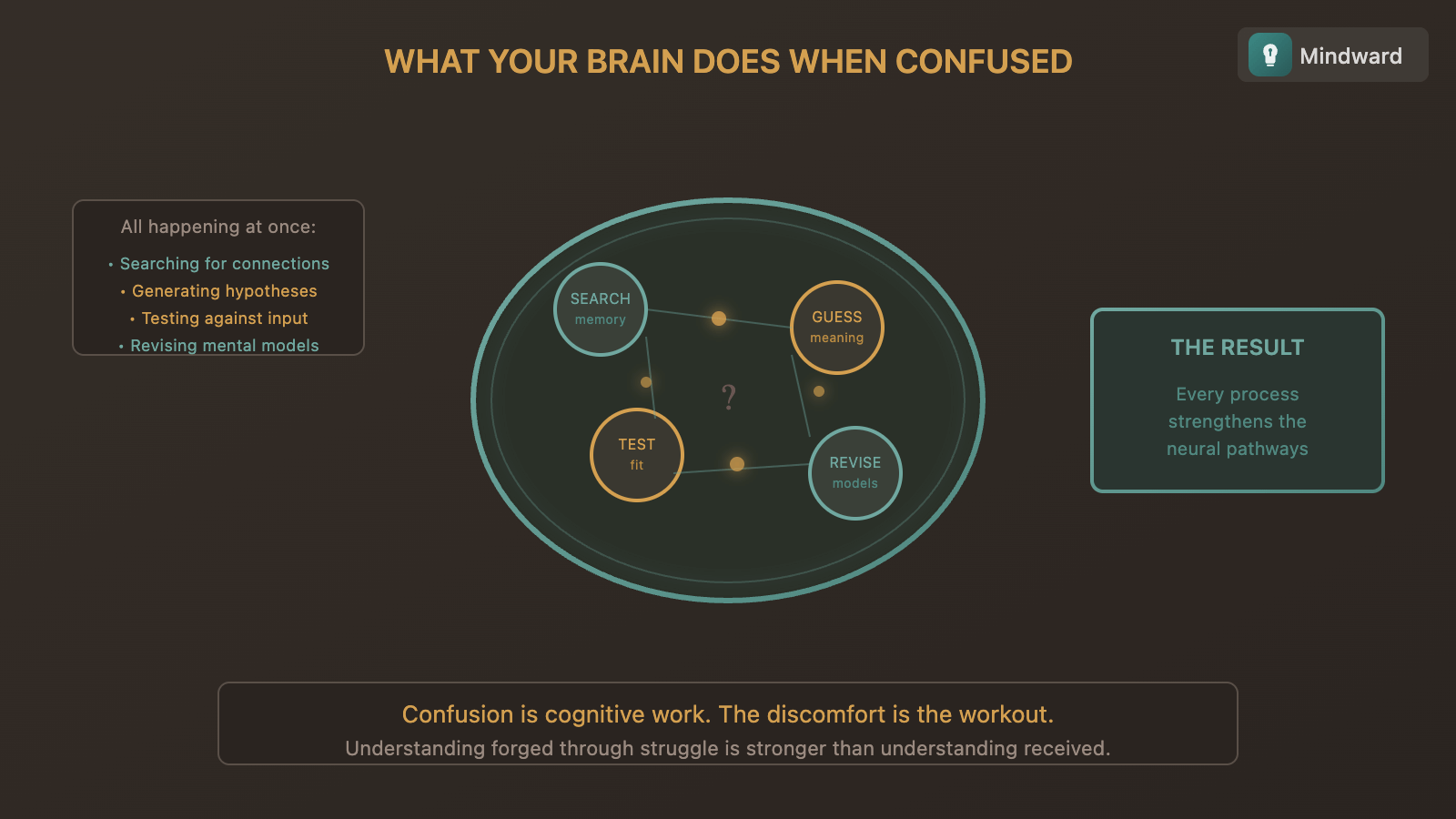
This is hard work. It consumes energy and feels uncomfortable. But every one of those processes strengthens the neural pathways involved. The confusion is the workout. The understanding that eventually emerges has been forged, not received.
- Confusion activates deeper processing than passive consumption
- Struggling to understand creates multiple retrieval routes to the same concept
- Mental effort signals to your brain that this information matters
- Resolved confusion produces stronger memory traces than information that was never confusing
How to Use Confusion Well
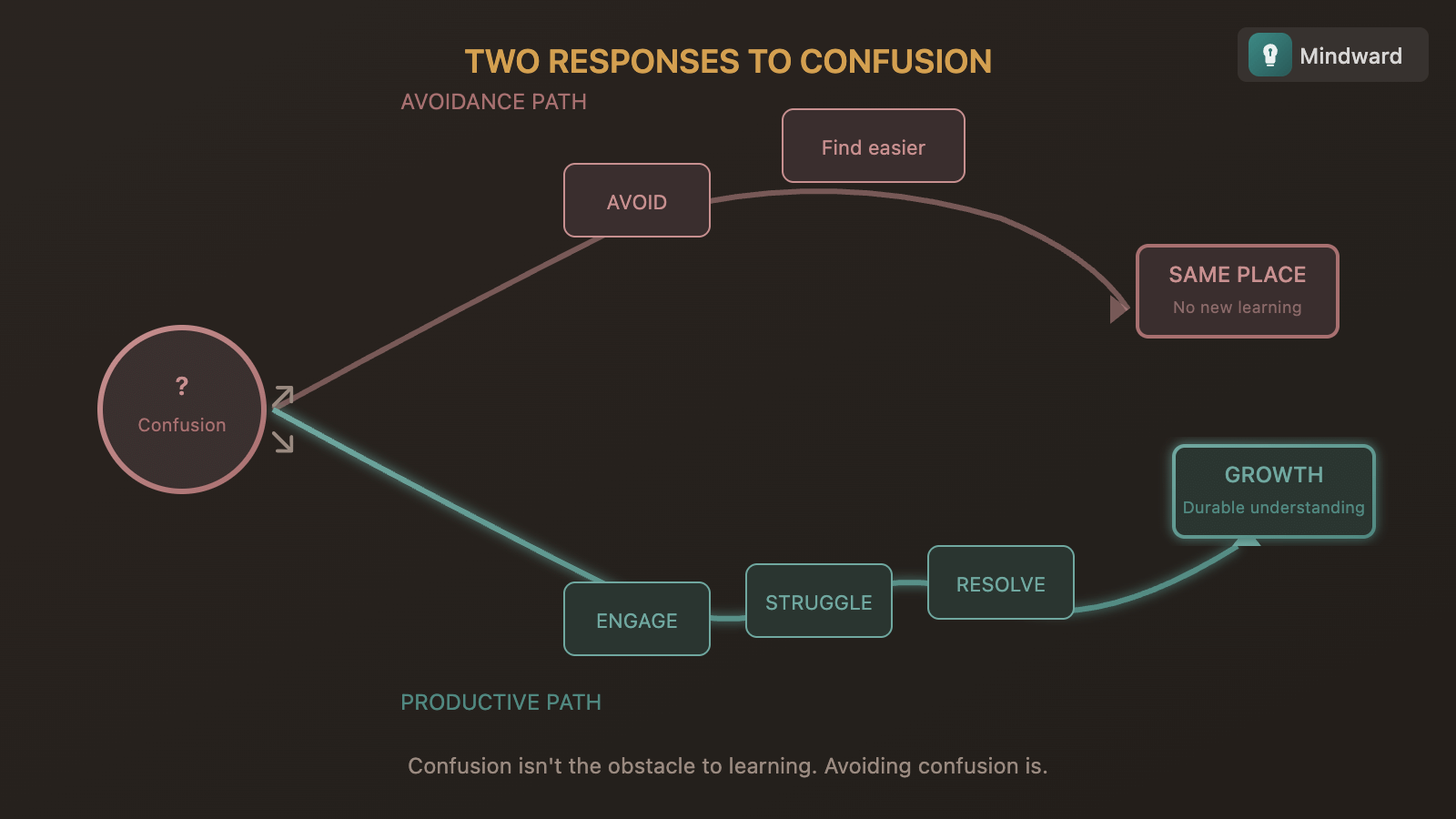
The goal isn't to stay confused forever. It's to recognize confusion as a productive state and work through it rather than around it. When you hit something that doesn't make sense, that's your cue to engage more, not less.
- Sit with it longer: Give yourself at least ten minutes of struggle before seeking help. The struggle itself is doing something.
- Articulate the confusion: Try to put into words exactly what you don't understand. Naming the gap often reveals the path across it.
- Generate guesses: Before looking up the answer, hypothesize what it might be. Wrong guesses prime your brain to receive the correct information.
- Connect to what you know: Ask what this reminds you of, even loosely. The brain learns by linking new information to existing structures.
The Permission to Struggle
Somewhere along the way, we learned that confusion means we're not smart enough. That understanding should come quickly if we're doing it right. That needing to re-read something multiple times is embarrassing.
This is exactly backward. The people who learn deeply are the ones willing to be confused longer. They don't take comprehension difficulties as verdicts on their intelligence. They take them as normal parts of the process—the parts where the actual learning happens.
Confusion isn't the obstacle to learning. Avoiding confusion is.
Next time you feel that uncomfortable fog when facing something new, try reframing it. That's not your brain failing. That's your brain working. The discomfort is the feeling of growth in real time—and it means something is actually changing.
Stay in it a little longer. The understanding that emerges from confusion is the understanding that lasts.


Comments
How did you like this article?
No comments yet. Be the first to share your thoughts!