Why You Plateau (And How to Break Through)
You were making progress. Then you stopped. The plateau isn't a sign you've hit your limit—it's a signal that what got you here won't get you further. Here's what actually breaks through.
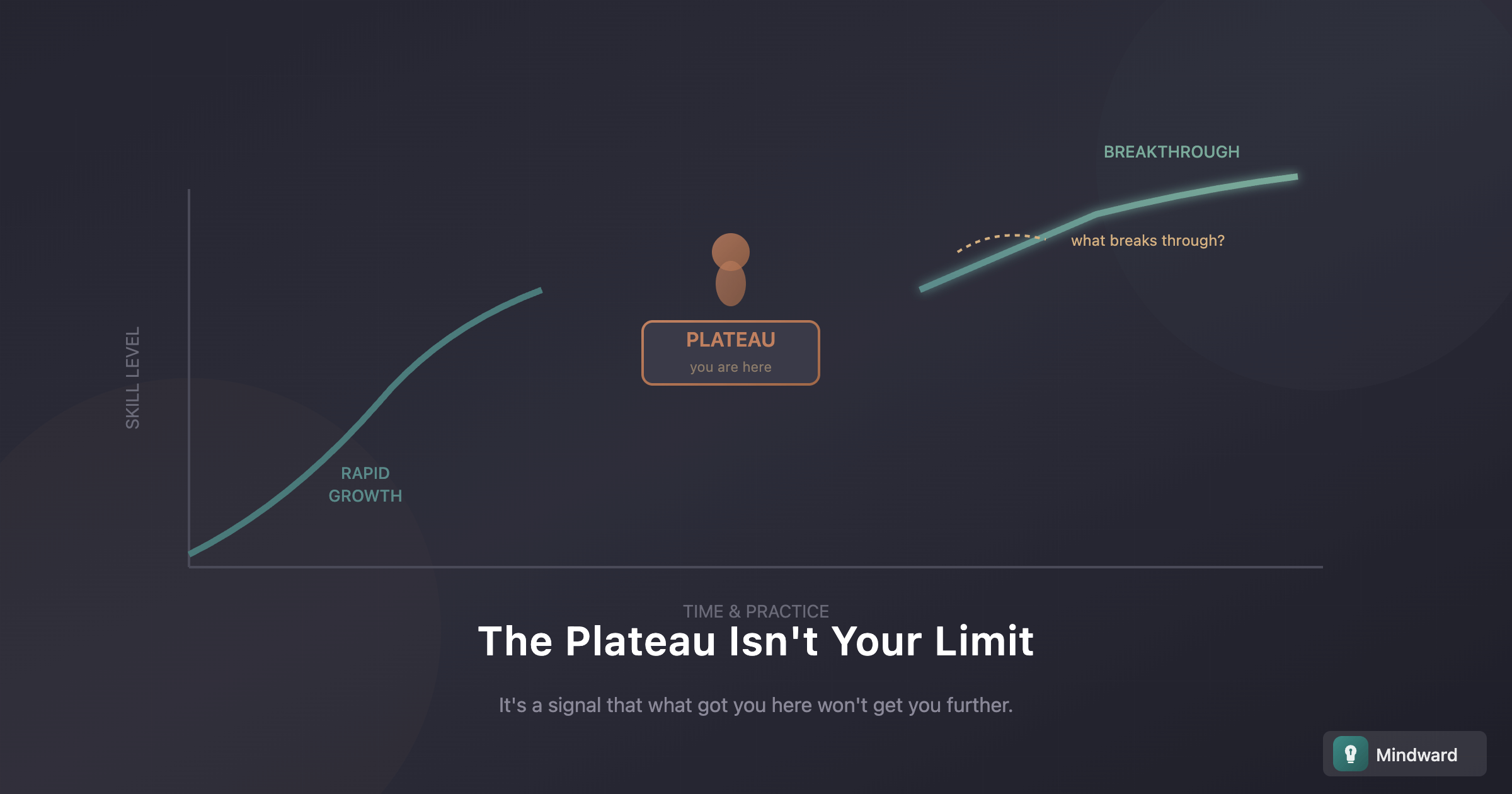
For weeks or months, you were improving. You could feel it—each session a little better than the last. Then it stopped. You're still putting in the time, still showing up, but the progress has flatlined. Welcome to the plateau.
The plateau isn't failure. It's not a sign you've reached your ceiling. It's a predictable phase in every learning curve, and it happens for specific, fixable reasons. Understanding why you're stuck is the first step to getting unstuck.
Why Plateaus Happen
In the early stages of learning, everything is new. Your brain is building basic frameworks, and improvement comes quickly because you're starting from zero. Any practice moves the needle.
But once those foundations are in place, the same practice that got you here stops producing gains. You've automated the basics—which is good—but automation means you're no longer actively learning. You're just executing what you already know.
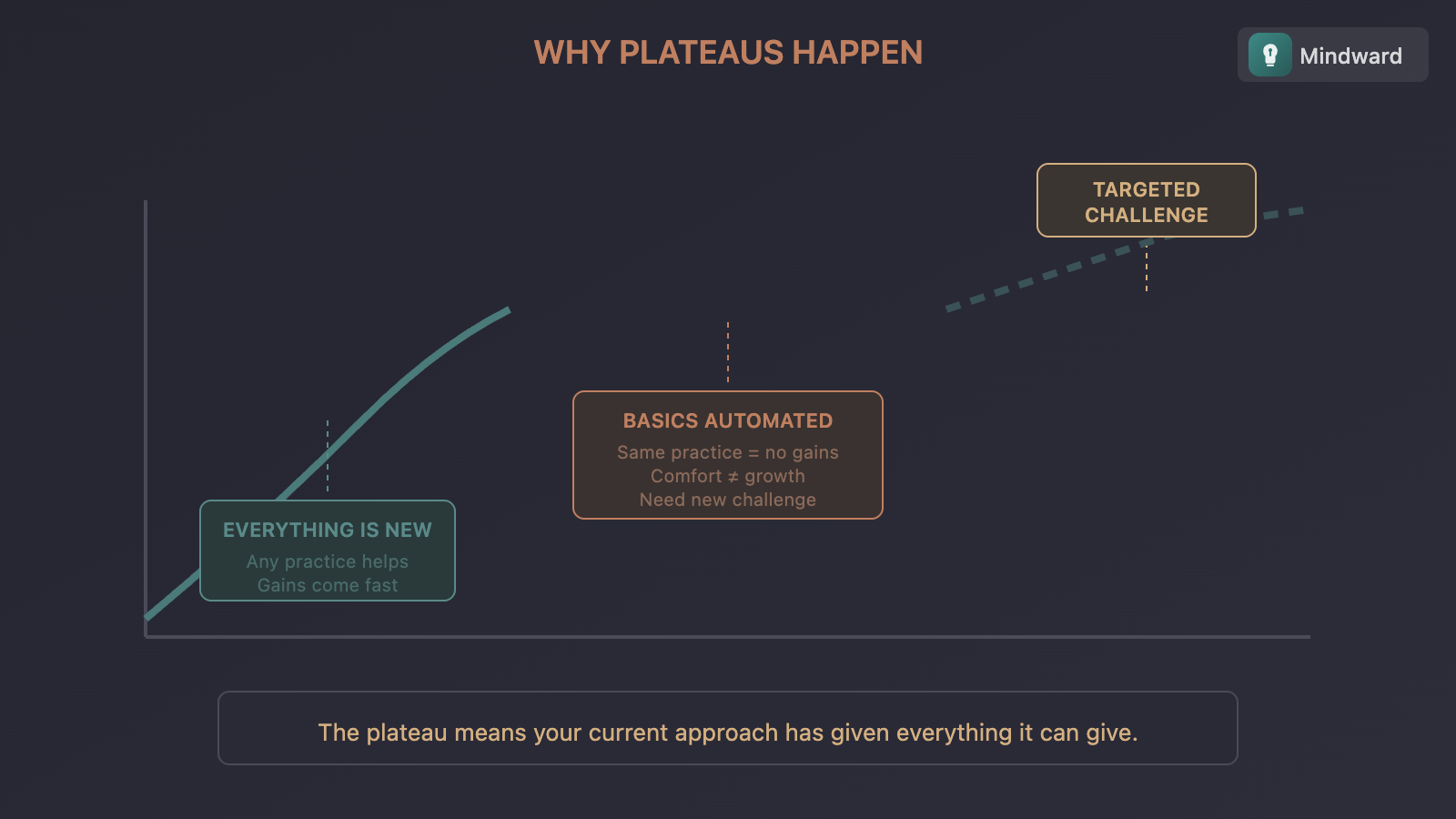
Plateaus don't mean you've stopped improving. They mean you've stopped challenging yourself in ways that force adaptation.
The Comfort Zone Problem
Practice doesn't automatically produce improvement. Repeating what you can already do is maintenance, not growth. If your practice sessions feel comfortable, that's a sign you've settled into the plateau.
Growth lives at the edge of your current ability—where things are hard enough to require focus, but not so hard that you can't engage meaningfully. Psychologists call this the zone of proximal development. It's where you're slightly over your head, making mistakes, course-correcting in real time.
When you stop putting yourself in that zone, you stop growing. The plateau is just the natural result of staying where you're comfortable.
Breaking Through
The solution isn't more practice—it's different practice. Harder practice. Practice that targets specifically what you're bad at rather than reinforcing what you already do well.
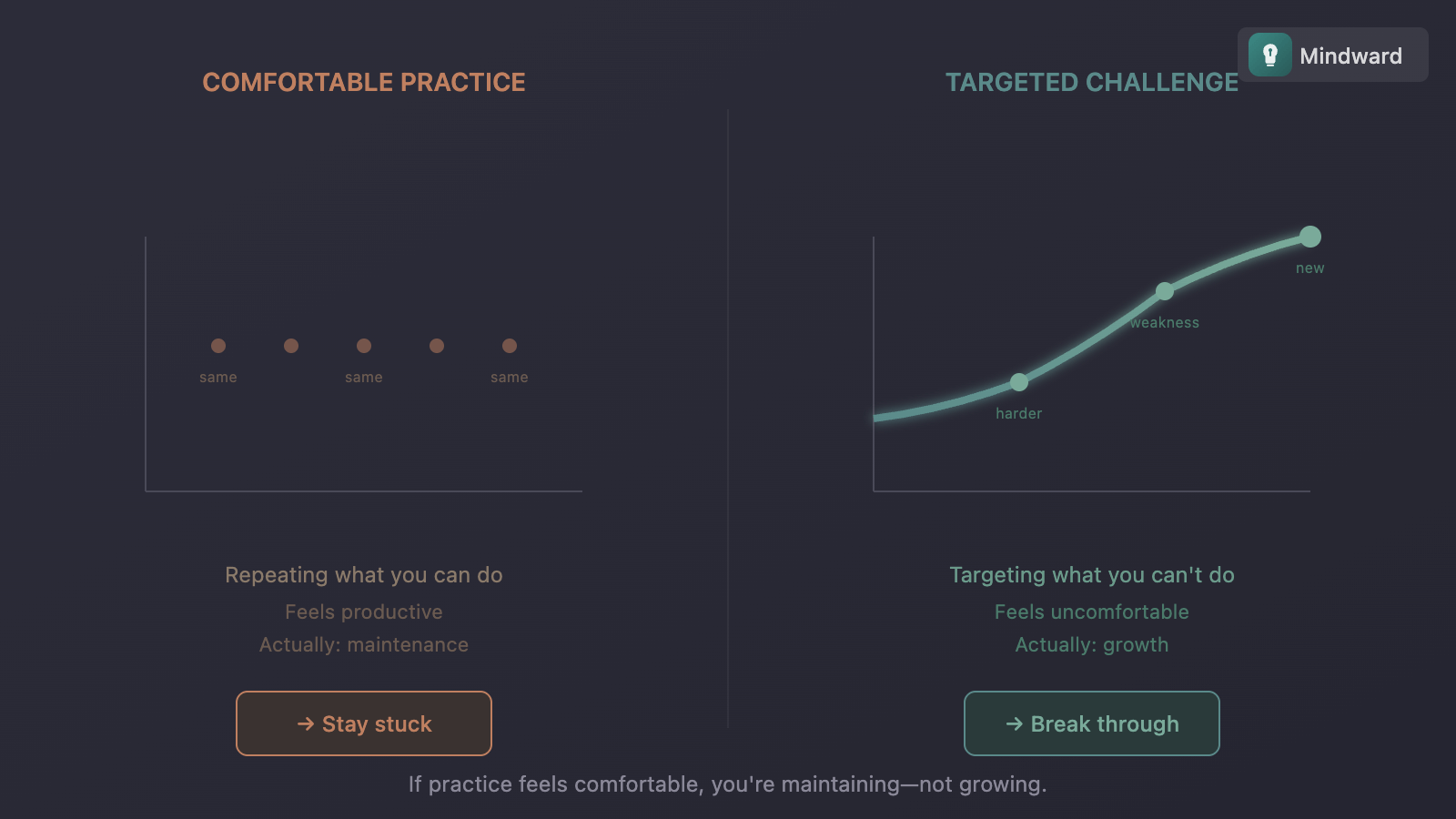
- Isolate weaknesses: Identify the specific sub-skills where you're weakest and practice those directly. General practice improves your strengths. Targeted practice eliminates your weaknesses.
- Increase difficulty deliberately: Add constraints that force new adaptations. Speed up, add complexity, remove scaffolding you've relied on.
- Get specific feedback: Self-assessment is unreliable once you're competent. Outside eyes—coaches, peers, recordings of yourself—reveal blind spots you can't see.
- Change the context: Practice the skill in new situations, with new variables. Transfer across contexts builds deeper, more flexible competence.
The Discomfort Requirement
Here's the uncomfortable truth: breaking through a plateau requires being bad again. You have to leave the competent performance you've achieved and enter the awkward phase of trying something new.
This feels like regression. It looks like going backward. A guitarist who's plateaued might feel worse when they start practicing difficult new techniques. A writer who's comfortable might struggle when they push into unfamiliar territory.
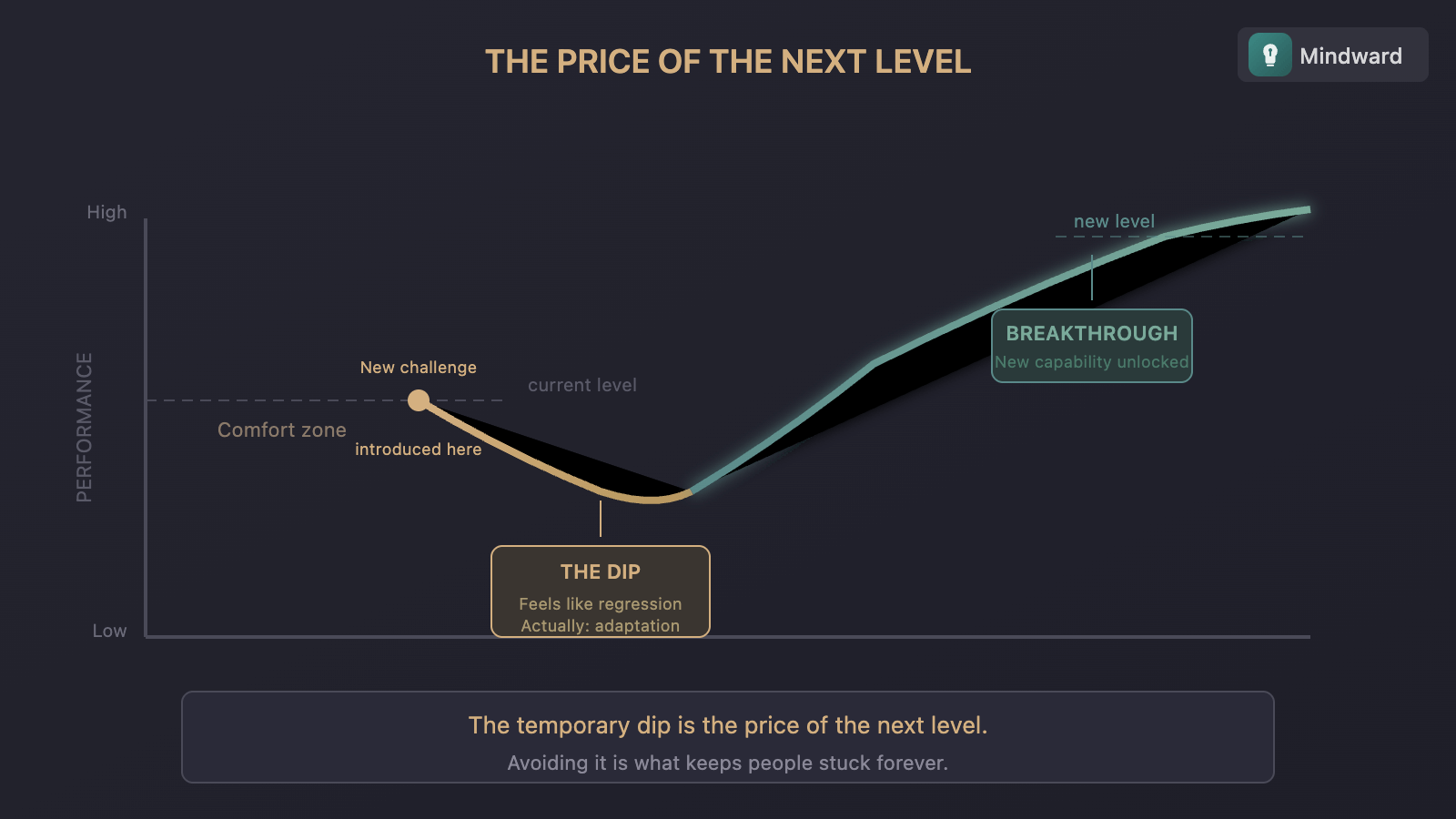
That temporary dip is the price of the next level. Avoiding it is what keeps people stuck.
If your practice never feels difficult, you're maintaining—not growing.
The Long Game
Plateaus aren't one-time obstacles. They're recurring features of the entire skill-development journey. You'll break through one and eventually hit another. That's normal. That's how mastery works—not a smooth upward curve, but a series of flat periods interrupted by growth spurts.
The people who reach high levels aren't the ones who never plateau. They're the ones who've learned to recognize a plateau and respond with the right adjustments instead of just grinding through the same practice.
You're not stuck because you've found your limit. You're stuck because the approach that got you here has given everything it can give. The plateau is your signal to evolve.
Change the challenge. Target the weakness. Embrace the discomfort of being a beginner again in some small way. That's how the plateau breaks. That's how every next level is reached.


Comments
How did you like this article?
No comments yet. Be the first to share your thoughts!