You're Probably Dehydrated Right Now
Dehydration doesn't announce itself with thirst. By the time you feel thirsty, your performance has already declined. Most people are running at a deficit without realizing it.
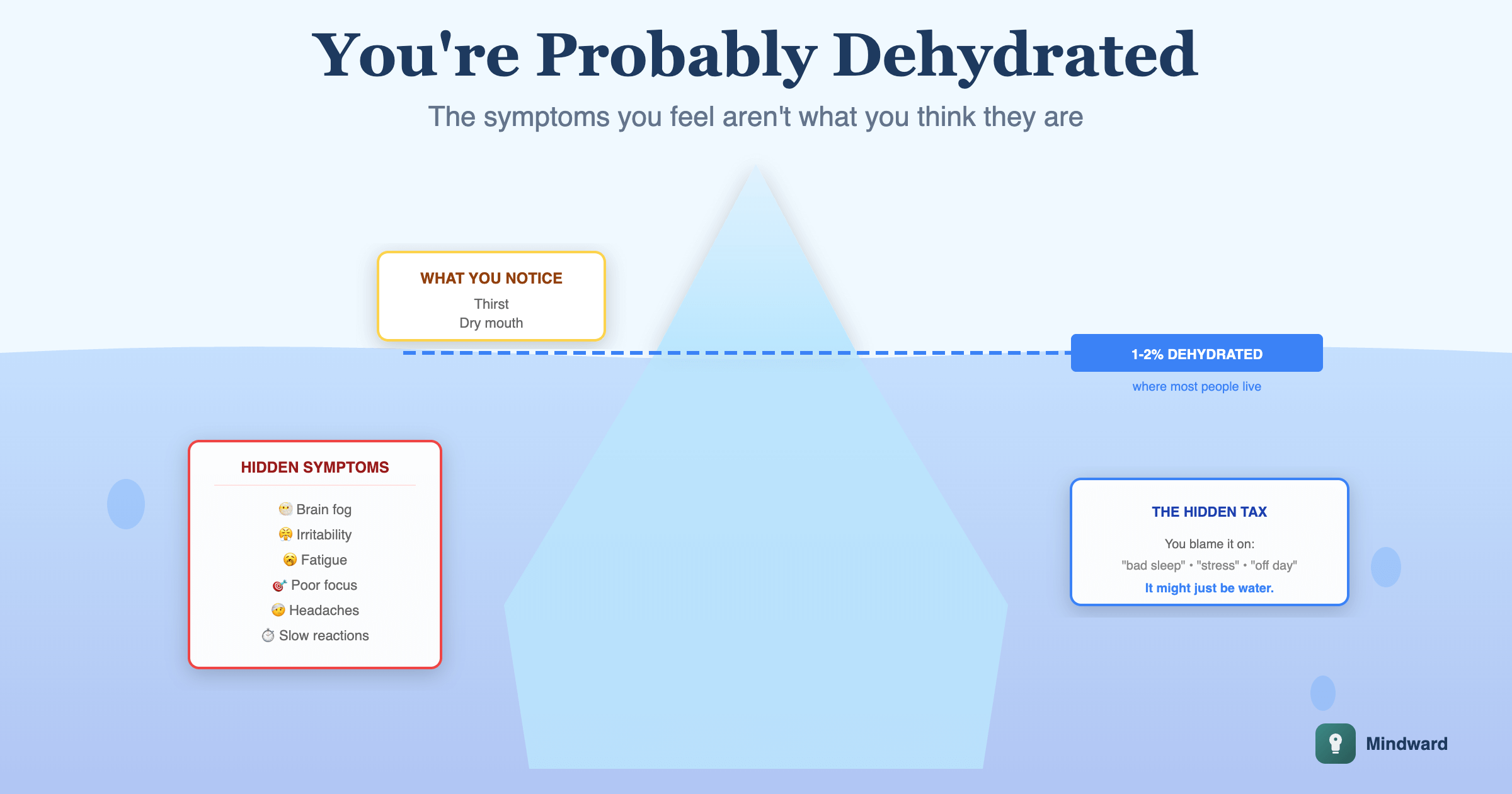
You're not tired. You're not unfocused. You're not in a bad mood for no reason. You might just be dehydrated.
This sounds too simple to be true. Surely if you were dehydrated, you'd know it. You'd feel thirsty. You'd notice something was wrong.
But that's not how it works. Thirst is a lagging indicator—by the time you feel it, you're already 1-2% dehydrated. And at just 1% dehydration, cognitive performance starts to decline. Focus wavers. Mood drops. Energy fades. You attribute it to stress, poor sleep, or just one of those days. The real cause never crosses your mind.
Most people operate in a state of chronic mild dehydration without ever connecting it to how they feel.
What Water Actually Does
Your body is roughly 60% water. Your brain is closer to 75%. Water isn't just something you consume—it's the medium in which every biological process occurs.
Blood needs water to flow properly and deliver oxygen to tissues. Your brain needs water to maintain the electrical signals that enable thought. Muscles need water to contract efficiently. Joints need water for lubrication. Temperature regulation, waste removal, nutrient transport—all depend on adequate hydration.
When water levels drop even slightly, these systems start to struggle. Not dramatically—you won't collapse. But everything works a little worse. The effects are subtle enough to miss, significant enough to matter.
Dehydration doesn't feel like dehydration. It feels like being tired, unfocused, or irritable.
The Cognitive Tax
Research consistently shows that mild dehydration impairs cognitive function. At just 1-2% dehydration—a level most people wouldn't notice—studies find measurable declines in concentration, working memory, reaction time, and mood.
One study found that women who were mildly dehydrated reported tasks feeling more difficult, had lower concentration, and experienced more headaches. Men showed impaired working memory and increased anxiety. Neither group felt particularly thirsty.
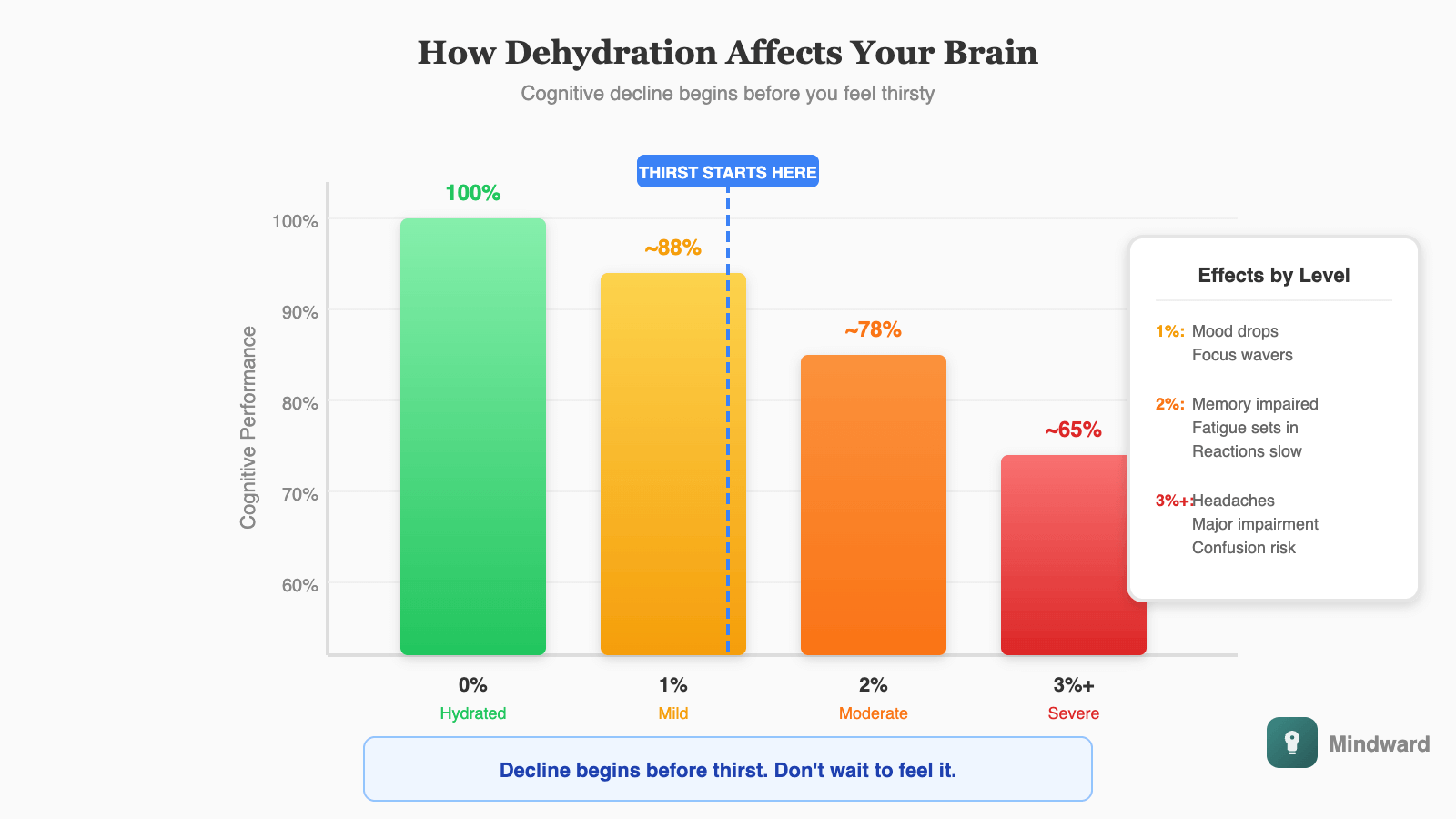
This is the hidden tax. You sit down to work, and something feels off. You can't quite concentrate. Your thoughts move slowly. You assume you didn't sleep well or that you're just not feeling sharp today. You power through, working harder to achieve the same results. Meanwhile, a glass of water might have fixed it in twenty minutes.
Why We Stay Dehydrated
If hydration matters this much, why don't we just drink more? Several factors work against us.
First, thirst is an unreliable signal. It evolved for survival—to prevent dangerous dehydration—not to optimize performance. By the time thirst kicks in, you've already been operating below capacity.
Second, modern life suppresses thirst cues. Climate control means we don't feel hot. Caffeine and busyness distract us from subtle body signals. We get absorbed in tasks and forget to drink. Hours pass without a sip.
Third, drinking feels like an interruption. Getting up, finding water, going to the bathroom—it breaks flow. So we delay. Just one more email. Just finish this section. The delay extends indefinitely.
- Air conditioning masks dehydration cues
- Caffeine provides alertness without hydration
- Busy work suppresses attention to body signals
- Drinking feels like an interruption to flow
- We mistake thirst for hunger or fatigue
How Much Is Enough
The old rule—eight glasses a day—is a rough approximation, not a precise requirement. Actual needs vary based on body size, activity level, climate, and what you eat. Some people need more, some less.
A better heuristic is urine color. Pale yellow means you're well-hydrated. Dark yellow means you need more. Clear and colorless might actually mean you're overhydrating, which is unnecessary and can flush out electrolytes.
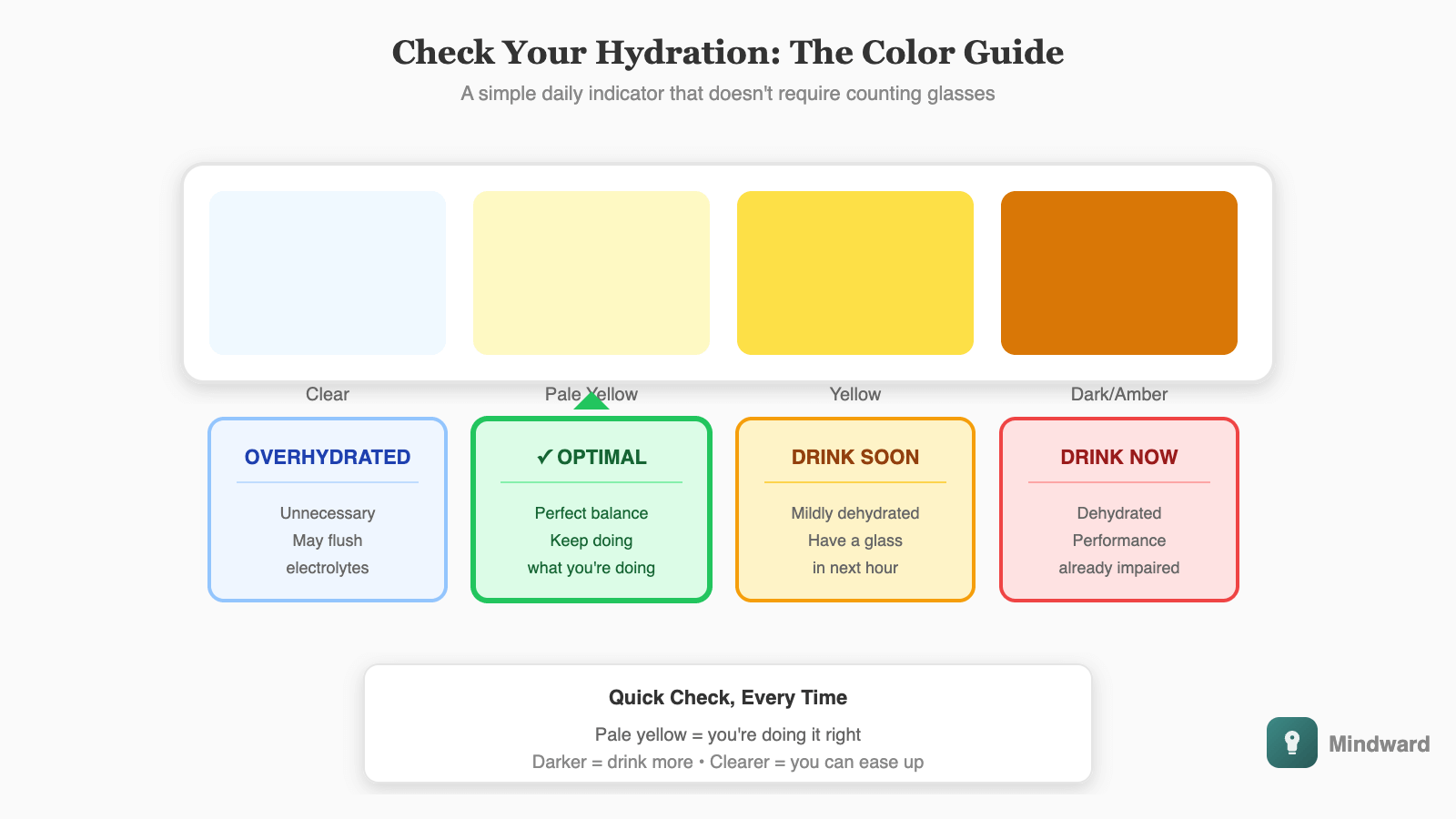
For most people, drinking when you first notice even mild thirst—rather than waiting until you're obviously thirsty—keeps you in the optimal range. Front-loading water in the morning, when you wake up dehydrated from sleep, also helps establish a good baseline for the day.
Beyond Plain Water
Water alone isn't always enough. Your body also needs electrolytes—minerals like sodium, potassium, and magnesium that help your cells actually absorb and use the water you drink.
If you're sweating heavily, drinking only water can actually dilute your electrolytes further. This is why athletes use sports drinks—not for the sugar, but for the sodium. For most daily situations, eating regular meals provides adequate electrolytes. But if you're active, sweating, or drinking large amounts of water, adding a pinch of salt or an electrolyte supplement can improve how you feel.
Coffee and tea count toward hydration, despite the mild diuretic effect of caffeine. The water in these drinks more than compensates for what the caffeine expels. You don't need to drink extra water to offset your coffee—just don't rely solely on caffeinated drinks.
Building the Habit
Knowing hydration matters doesn't automatically translate to staying hydrated. You need systems that make drinking water the default.
Keep water visible. A bottle on your desk, a glass by your bed, water in sight wherever you spend time. Visibility triggers action. If you have to go find water, you probably won't.
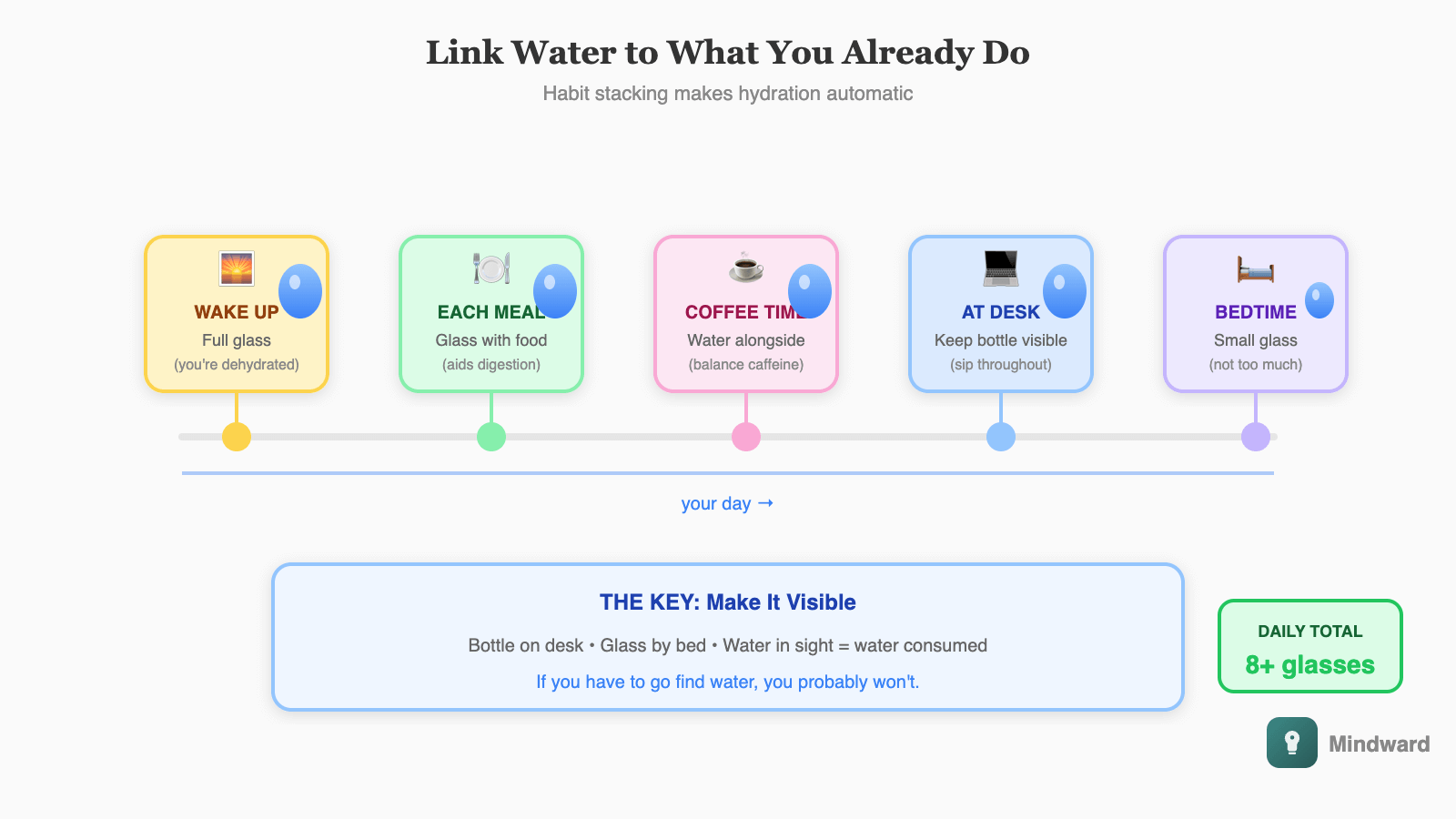
Tie drinking to existing habits. A glass when you wake up. Water with every meal. A bottle during every meeting. A sip every time you check your phone. These trigger-based approaches work better than trying to remember to drink randomly throughout the day.
- Morning: Full glass immediately upon waking (you're dehydrated from sleep)
- Meals: Water with breakfast, lunch, and dinner
- Work: Keep a filled bottle at your desk, refill when empty
- Breaks: Water with every coffee or snack
- Evening: Small glass before bed (not so much it disrupts sleep)
Track if needed, but don't obsess. A simple tally of glasses or bottles can help build awareness. But the goal is to develop an intuitive habit, not to hit a precise number. Once drinking water feels automatic, you can stop counting.
The Quick Test
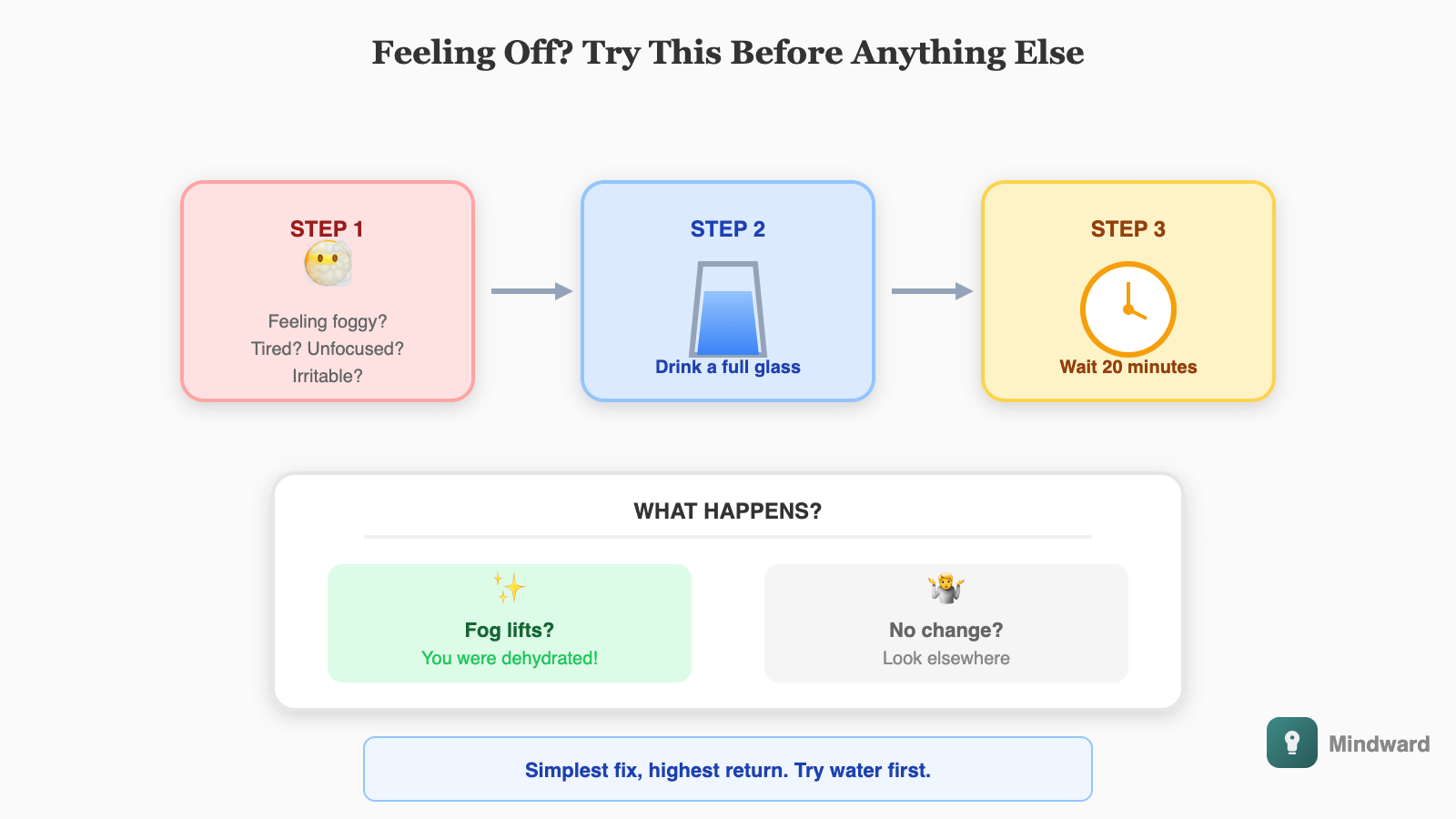
Next time you feel foggy, tired, or irritable without obvious cause, try this before reaching for coffee or powering through: drink a full glass of water and wait twenty minutes.
If the fog lifts, you have your answer. You weren't tired—you were thirsty. Your body wasn't failing you—it was asking for something basic that you weren't providing.
This is the simplest intervention with the highest return. No supplements, no complicated routines, no willpower required. Just water, consistently, before you're desperate for it.
Your brain runs on water. Give it what it needs, and everything else gets easier.


Comments
How did you like this article?
No comments yet. Be the first to share your thoughts!