The Afternoon Crash Isn't About Sleep. It's About What You Ate.
That 2pm slump you blame on tiredness is often a blood sugar crash in disguise. Here's what's actually happening—and how to stop the cycle.
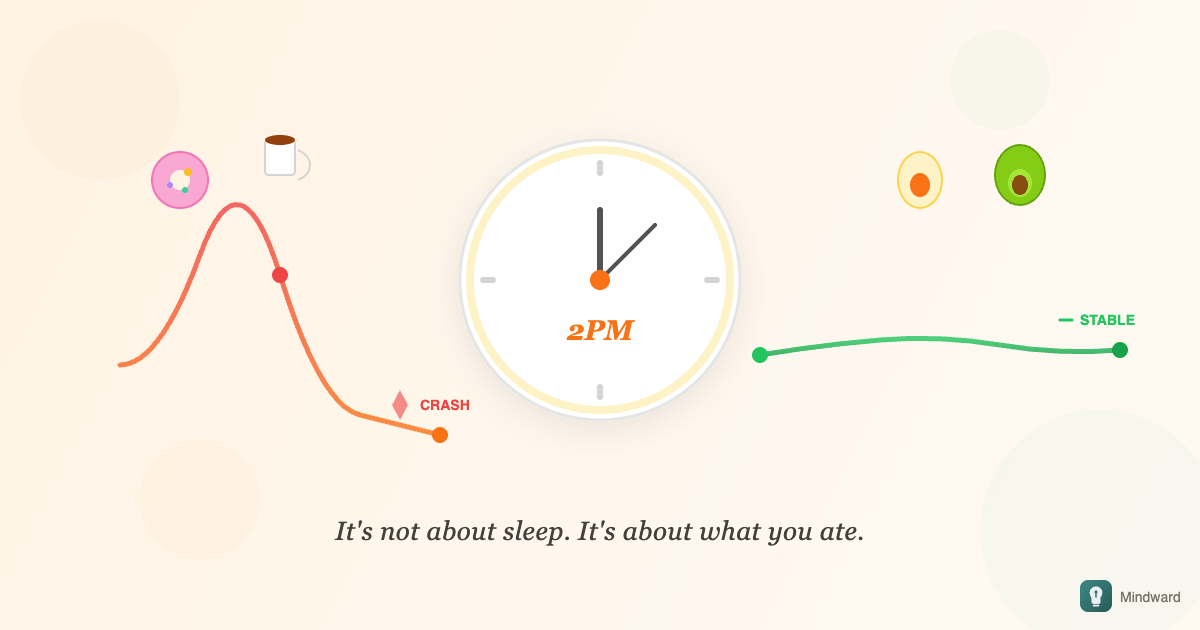
It's 2pm. You slept fine. You had coffee. But your brain feels like it's wading through fog, and you're already eyeing something sweet to get through the afternoon. This isn't a personality flaw or a sleep debt. It's chemistry—and it started hours ago, with what you ate.
Blood sugar isn't just a concern for diabetics. It's the invisible variable controlling your energy, your focus, your mood, and your cravings throughout the day. Most people are riding a roller coaster they don't know they're on.
The Spike and Crash Cycle
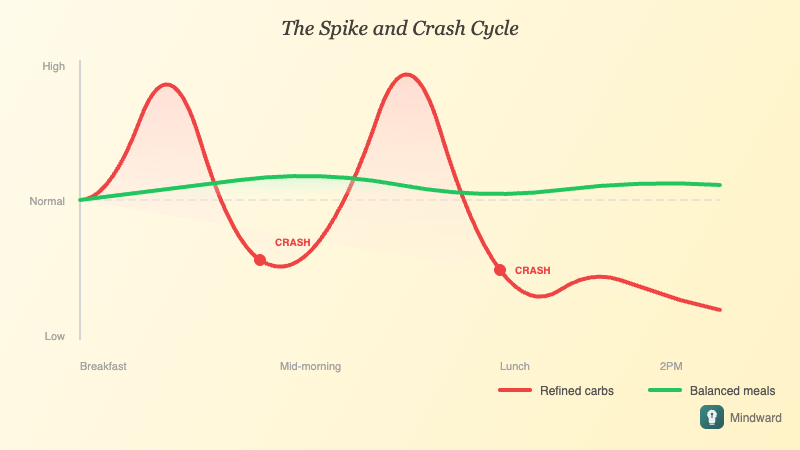
When you eat something high in refined carbohydrates—white bread, pastries, sugary drinks, even some 'healthy' granola bars—your blood sugar rises rapidly. Your body responds by releasing insulin to bring it back down. But insulin often overshoots, dropping your blood sugar below baseline. That's the crash.
During a crash, your brain—which runs almost entirely on glucose—starts sending alarm signals. You feel tired, unfocused, irritable, or suddenly hungry. And what does your body crave to fix it? More sugar. More fast carbs. The cycle repeats.
Why Breakfast Sets the Tone
A breakfast of toast and juice, cereal and milk, or a pastry with coffee might feel normal. But it's often pure glucose with little to slow absorption. You spike, you crash by mid-morning, you reach for a snack, you spike again, and by 2pm your body has been on a metabolic roller coaster for hours.
Compare this to a breakfast with protein, fat, and fiber—eggs with vegetables, Greek yogurt with nuts, or even last night's leftovers. These slow digestion, blunt the glucose spike, and keep energy stable for hours. The difference isn't willpower. It's biochemistry.
The afternoon crash is often the delayed consequence of a breakfast that spiked your blood sugar hours earlier.
The Order You Eat Matters
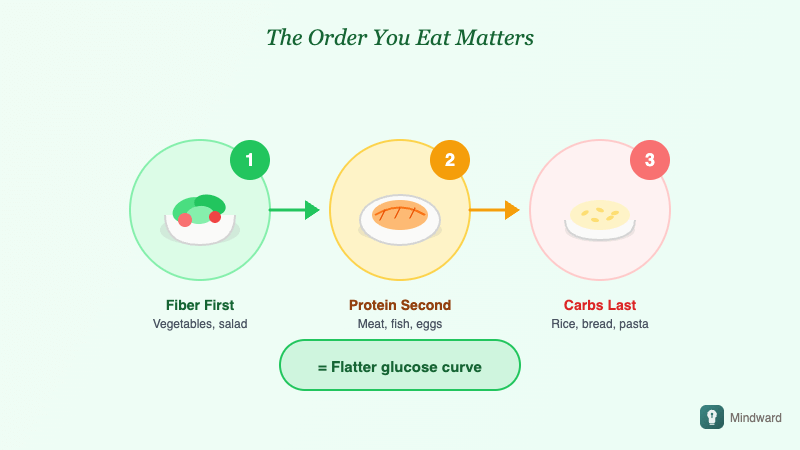
Research shows that eating fiber and protein before carbohydrates—even in the same meal—reduces the glucose spike significantly. Starting with a salad before pasta, or eating the vegetables and meat before the rice, changes how your body processes the entire meal.
This isn't about restriction. It's about sequence. You can eat the same foods and have a completely different metabolic response based on the order they hit your stomach.
Movement After Meals
Your muscles are glucose sinks. When you move after eating, your muscles absorb glucose directly from your bloodstream, reducing the spike without requiring extra insulin. A 10-15 minute walk after a meal can cut your glucose spike by 30% or more.
This is why a post-meal walk—common in many cultures—isn't just tradition. It's metabolic wisdom. You don't need a workout. A brief stroll around the block changes the equation.
Signs You're on the Roller Coaster
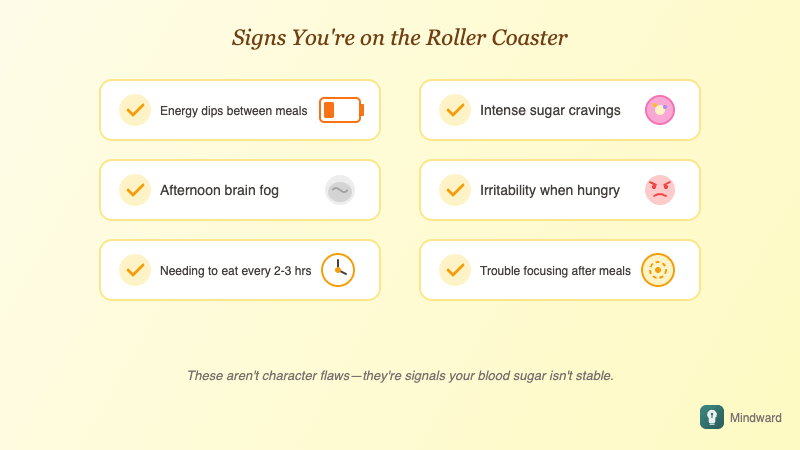
You might be caught in the spike-crash cycle if you experience regular energy dips between meals, intense cravings for sweets or carbs, difficulty concentrating in the afternoon, irritability when meals are delayed, or feeling like you need to eat every few hours to function.
These aren't character weaknesses. They're signals that your blood sugar isn't stable. The cravings aren't lack of discipline—they're your brain demanding glucose after you've crashed.
Simple Shifts That Stabilize
You don't need to overhaul your diet. Small changes compound. Add protein or fat to carb-heavy meals. Eat fiber first when possible. Take a short walk after eating. Choose whole grains over refined. Have a handful of nuts before a sugary snack if you're going to have one.
None of these require perfection. Each one blunts the spike a little. Together, they flatten the roller coaster into something more like rolling hills—enough variation to function, not enough to crash.
Stable blood sugar doesn't mean eating perfectly. It means not starting a cascade you'll spend all afternoon recovering from.
The afternoon slump isn't inevitable. It's feedback. Your body is telling you that something earlier in the day set off a chain reaction. Once you see the pattern, you can interrupt it—not with more caffeine or more snacks, but by changing what happens before the crash begins.


Comments
How did you like this article?
No comments yet. Be the first to share your thoughts!