You're Breathing Wrong (And It's Costing You)
The one thing you do 20,000 times a day is probably working against you. Here's how to fix it.
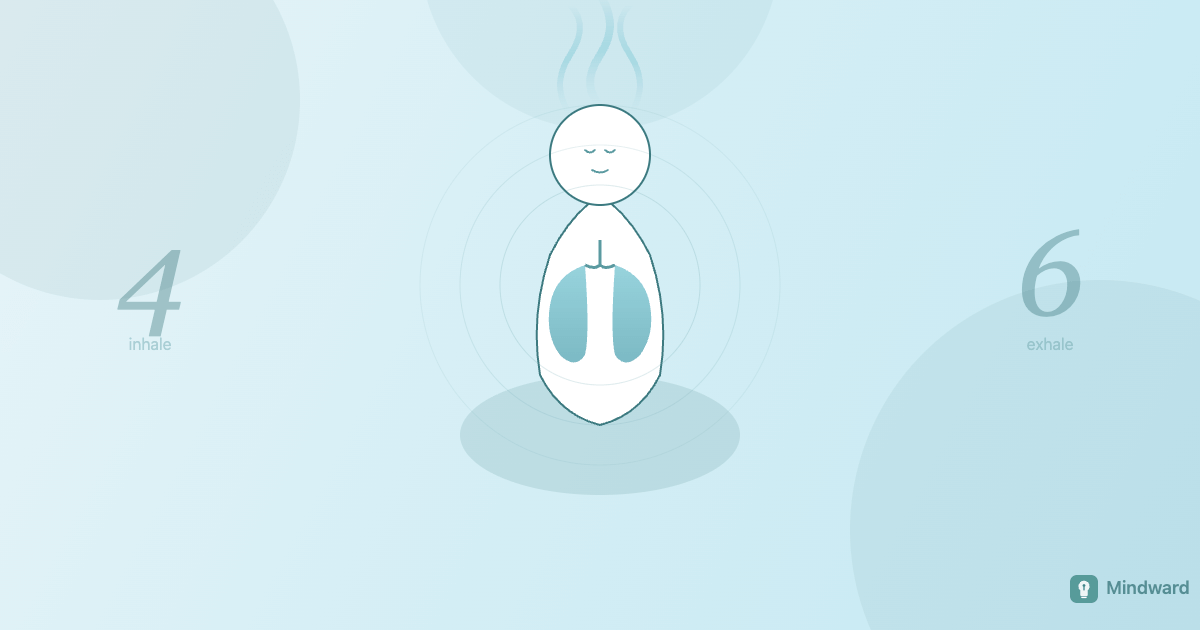
You take around 20,000 breaths every day. And there's a good chance most of them are working against you.
Not dramatically. Not in ways you'd notice immediately. But shallow, chest-based breathing keeps your body in a low-grade state of alert. It signals to your nervous system that something might be wrong. That you need to stay vigilant. And your body listens.
The result is a baseline of tension you've probably normalized. A subtle but constant drain on your energy. A harder time focusing. A quicker path to feeling overwhelmed.
The strange part is that breathing is automatic. You don't have to think about it. But that's precisely why it's easy to do poorly for years without realizing it.
What Wrong Breathing Actually Looks Like
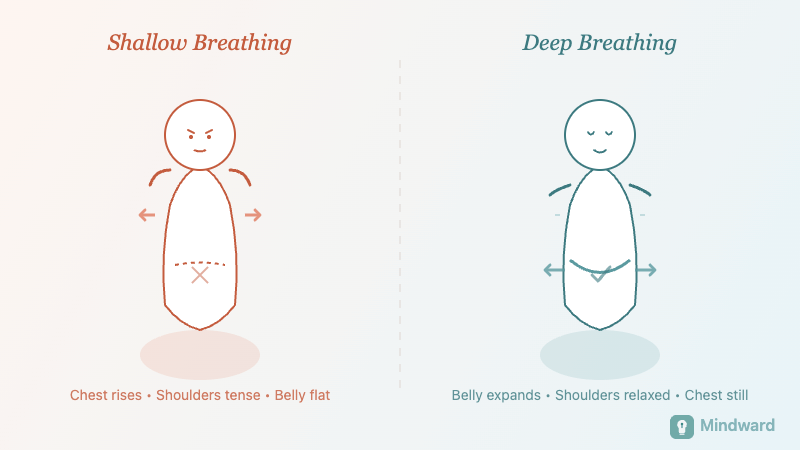
Watch someone who's stressed. Their shoulders rise. Their chest expands. Their breath is quick and shallow, pulling air into the upper lungs only.
Now watch a sleeping baby. Their belly rises and falls. Their chest stays relatively still. The breath is slow, deep, and effortless.
Somewhere between infancy and adulthood, most people unlearn this. Stress teaches us to breathe defensively. Sitting at desks compresses our diaphragms. Sucking in our stomachs for appearance restricts natural movement. We adapt to shallow breathing and forget there was ever another way.
Why It Matters More Than You Think
Your breath is a direct line to your autonomic nervous system. It's one of the few functions that runs automatically but can also be consciously controlled. This makes it a bridge between the parts of your body you can't directly influence and the parts you can.
Shallow, rapid breathing activates your sympathetic nervous system—the fight-or-flight response. Your heart rate increases. Stress hormones release. Your body prepares for threat.
Slow, deep breathing activates your parasympathetic nervous system—the rest-and-digest response. Heart rate slows. Muscles relax. Your body gets the message that it's safe.
You can't think your way into calm. But you can breathe your way there.
This isn't metaphor or mindfulness jargon. It's physiology. The vagus nerve, which runs from your brainstem through your chest and abdomen, responds directly to the rhythm and depth of your breath. Stimulate it correctly, and you shift your entire physiological state.
The Simple Fix You Can Start Now
You don't need an app. You don't need a meditation retreat. You need to remember how to breathe the way you were born breathing.
Place one hand on your chest and one on your belly. Breathe normally and notice which hand moves more. If it's your chest, you're breathing shallow.
Now try this: Breathe in slowly through your nose, directing the air downward so your belly expands. Your chest should move very little. Then exhale slowly, letting your belly fall. That's diaphragmatic breathing. That's the default your body wants to return to.

A Pattern That Actually Works
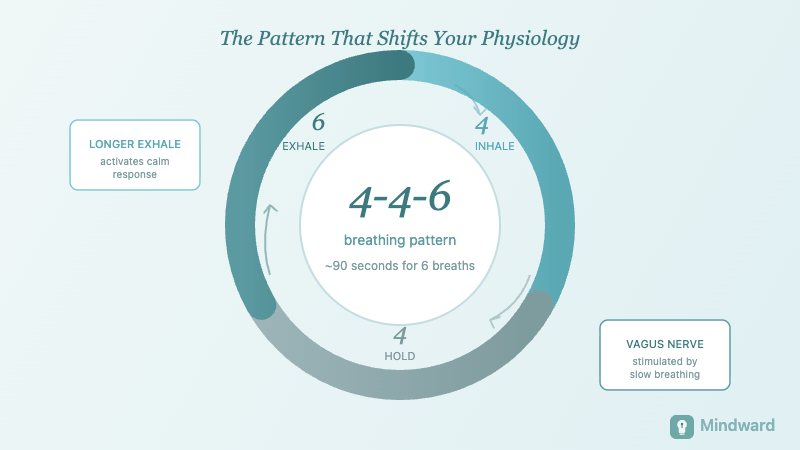
If you want something more structured, try this: Inhale for four counts. Hold for four counts. Exhale for six counts. The longer exhale is key—it's what activates the calming response.
Do this for just six breaths. That's about ninety seconds. Research shows this is enough to measurably shift your heart rate variability and reduce cortisol. Ninety seconds to change your physiology.
You can do this before a meeting. After a stressful email. When you wake up. When you can't sleep. The tool is always with you.
The Accumulation Effect
One conscious breath won't change your life. But breathing well as a default shifts everything over time.
Better baseline breathing means lower resting stress levels. It means more capacity to handle difficulty when it arrives. It means your nervous system spends more time in recovery mode and less time in defense mode.
Think of it like compound interest for your wellbeing. Small, consistent deposits that barely register in the moment but reshape your experience over months and years.
You don't need to breathe perfectly. You just need to breathe a little deeper, a little slower, a little more often.
Start With Awareness
You don't have to overhaul anything. Just start noticing. A few times today, check in: Where is my breath? Is it shallow or deep? Fast or slow? Chest or belly?
Awareness alone begins to shift the pattern. Your body wants to breathe well. It just needs the occasional reminder that it's allowed to.
Twenty thousand breaths a day. Even a fraction of them done consciously starts to add up. The tool has always been there. You just forgot you had it.


Comments
How did you like this article?
No comments yet. Be the first to share your thoughts!