Why You're Tired Even When You Sleep Enough
You're getting your hours, but waking up exhausted. The problem isn't how long you sleep—it's what's happening before, during, and after.
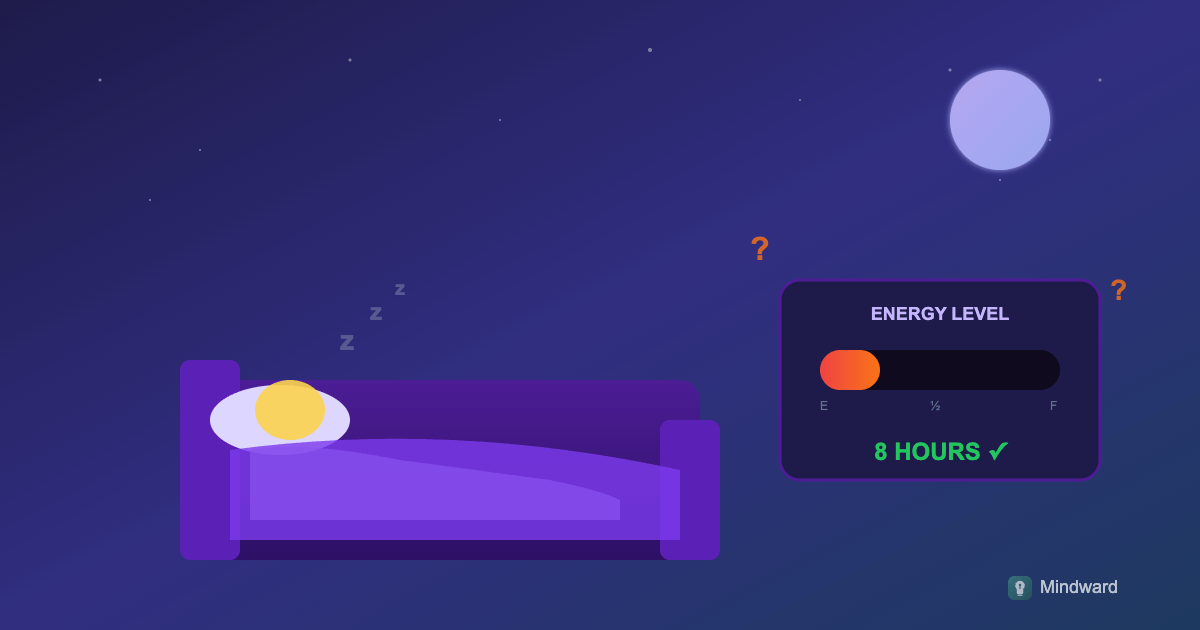
You did everything right. Eight hours in bed. Lights out at a reasonable time. Yet the alarm goes off and you feel like you barely slept at all. The tiredness sits behind your eyes, in your limbs, in the fog that takes two cups of coffee to clear.
This isn't a discipline problem. You're not failing at sleep. Something else is happening—and it's more common than you think.
Sleep Duration Isn't Sleep Quality
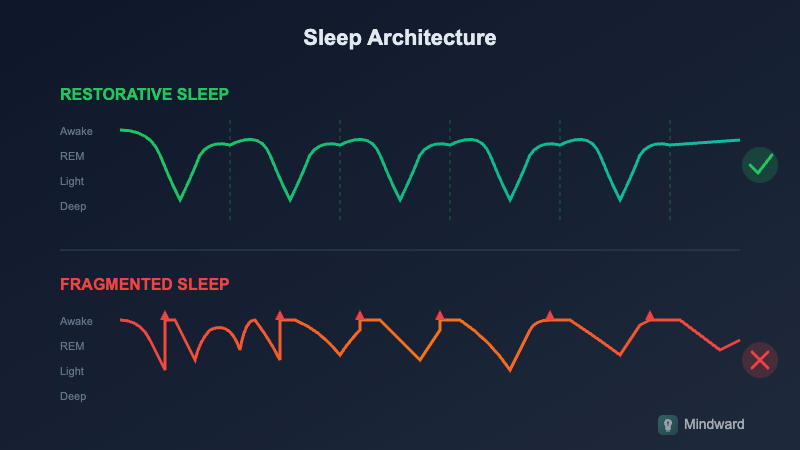
The eight-hour rule is a rough average, not a prescription. What matters far more is what happens during those hours. Your body cycles through sleep stages approximately every 90 minutes—light sleep, deep sleep, REM. Each stage serves different recovery functions. Deep sleep repairs your body. REM processes emotions and consolidates memory.
When these cycles get disrupted—by alcohol, stress, temperature, light, or inconsistent timing—you can spend eight hours in bed and get four hours of actual restorative sleep. Your sleep tracker might show "7.5 hours" while your body knows the truth.
The Hidden Energy Drains
Fatigue isn't just about sleep. It's the output of multiple systems, and any one of them can override a good night's rest.
Chronic low-grade dehydration dampens cognitive function and physical energy before you feel thirsty. Blood sugar spikes and crashes from processed foods create energy volatility throughout the day. Sedentary hours signal your body to conserve energy, not generate it. Unprocessed stress keeps your nervous system in low-level activation, burning resources even at rest.
Tiredness is often a signal, not a sentence. Your body is communicating that something in the system needs adjustment—sleep might just be the most visible variable.
The Circadian Disruption Problem
Your body runs on a 24-hour internal clock that regulates far more than sleepiness. Hormone release, body temperature, digestion, alertness—all synchronized to light exposure and consistent timing.
Modern life constantly disrupts this clock. Bright screens after dark tell your brain it's still daytime. Weekend sleep-ins create "social jet lag." Meals at irregular times confuse digestive rhythms. Working indoors means your body never gets the bright light signals it needs to anchor the cycle.
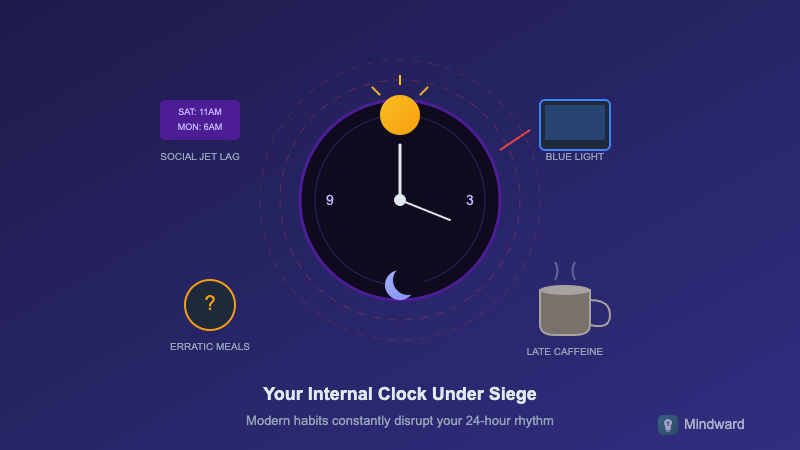
When your circadian rhythm drifts, you can feel tired at the wrong times, alert when you should be winding down, and never quite synchronized with your own biology.
What Actually Helps
Fixing fatigue isn't about adding another supplement or sleep gadget. It's about removing friction from systems your body already knows how to run.
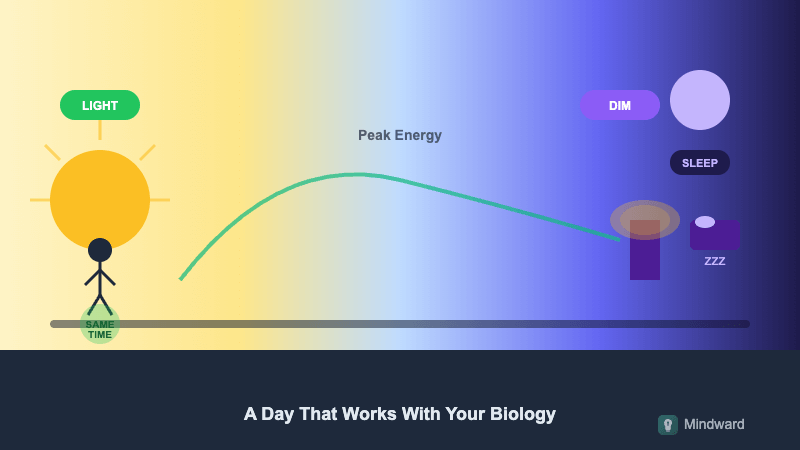
Light exposure matters more than most people realize. Fifteen minutes of bright outdoor light within an hour of waking helps anchor your circadian rhythm. Dimming lights after sunset—especially blue light from screens—signals your brain to prepare for sleep.
Consistency beats duration. Waking at the same time every day, even weekends, does more for sleep quality than adding extra hours. Your body learns when to initiate sleep cycles based on when it expects to wake.
Temperature regulation supports deep sleep. A cool bedroom (around 65-68°F) and a warm shower before bed create the core temperature drop that initiates sleep. Many people sleep in rooms that are too warm without realizing the impact.
The Minimum Effective Approach
You don't need to overhaul everything at once. Small adjustments compound.
- Get outside within an hour of waking, even for five minutes
- Set a consistent wake time and protect it, especially on weekends
- Stop eating two to three hours before bed
- Dim overhead lights after 8 PM and use lamps instead
- Keep your bedroom cool and fully dark
These aren't dramatic interventions. They're environmental adjustments that reduce the friction between your biology and your lifestyle.
The goal isn't perfect sleep—it's removing the obstacles that prevent the rest you're already capable of.
When to Look Deeper
Persistent fatigue despite good habits deserves attention. Sleep apnea, thyroid dysfunction, anemia, and other medical conditions can cause tiredness that no lifestyle change will fix. If you've addressed the basics and still wake exhausted, that's information worth sharing with a doctor—not a personal failure.
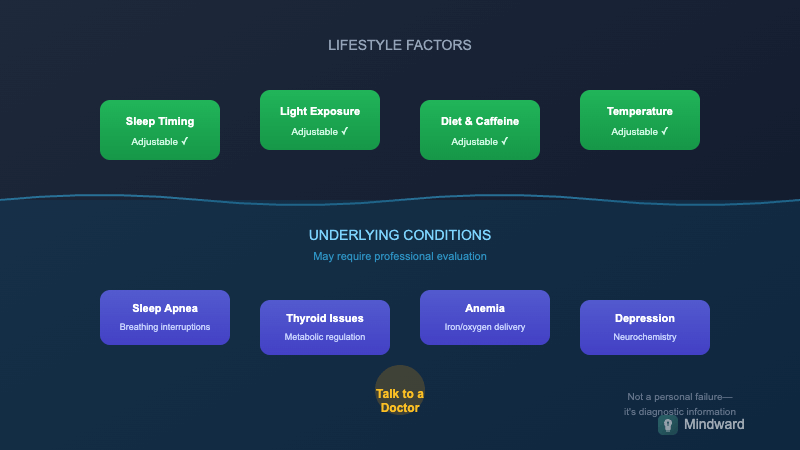
Your tiredness is real. It's not laziness or weakness or something you should push through indefinitely. It's data. And with the right adjustments—whether behavioral, environmental, or medical—most people find more energy than they thought possible.
You're not broken. You might just need different conditions to thrive.


Comments
How did you like this article?
No comments yet. Be the first to share your thoughts!