You're Not Lazy. You're Exhausted.
Before you judge yourself for lacking motivation, consider this: what if the problem isn't your character? What if you're simply running on empty?
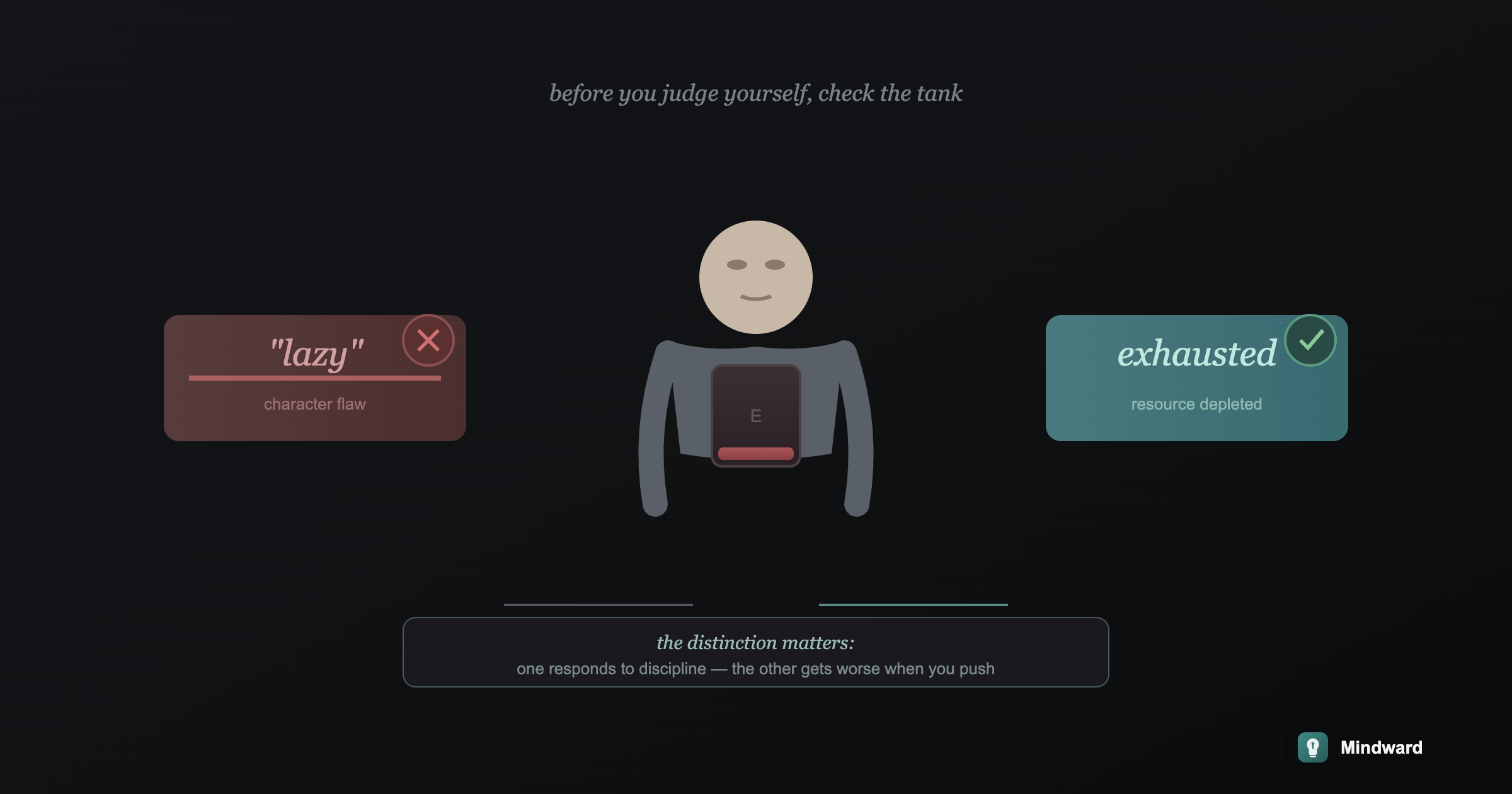
You're staring at your to-do list and nothing happens. The tasks aren't hard. You know what to do. But your body won't move. Your brain feels wrapped in fog. So you tell yourself the story you've been told: you're being lazy.
But what if that's wrong? What if the problem isn't a character flaw but a resource problem? What if you're not lazy—you're exhausted?
The distinction matters. Laziness implies choice, a moral failing that discipline can fix. Exhaustion implies depletion, a physical state that requires restoration. One responds to pushing harder. The other gets worse when you do.
How Exhaustion Disguises Itself
Exhaustion doesn't always feel like tiredness. Sometimes it feels like apathy, like you simply don't care anymore. Sometimes it shows up as irritability, where small things trigger big reactions. Sometimes it looks like procrastination, where you avoid tasks not because they're hard but because you have nothing left to give.
The body is clever at hiding its deficits. You can function for years on insufficient sleep, poor nutrition, and chronic stress. The bill doesn't come daily—it accumulates. By the time you notice, you've been running on fumes so long you've forgotten what full capacity feels like.
What you call your baseline might actually be a depleted state you've normalized.

The Motivation Trap
When you're exhausted, trying to motivate yourself is like flooring the accelerator with an empty tank. The engine revs, but you're not going anywhere. Worse, you're damaging the engine.
Motivation requires resources—glucose for the brain, neurotransmitters for drive, energy reserves to act. When those are depleted, motivation becomes biologically unavailable. It's not a mindset problem. It's a supply problem.
This is why discipline and willpower fail when you're truly exhausted. They draw from the same depleted account. You can't spend resources you don't have, no matter how hard you try.
Pushing through exhaustion isn't discipline. It's debt—borrowed from a future that's already overdrawn.
Signs You're Depleted, Not Lazy
There are differences between laziness and exhaustion, though they can look similar from the outside. Laziness is selective—you avoid some things but have energy for others. Exhaustion is global—everything feels hard, even things you normally enjoy.
With laziness, rest energizes you. With exhaustion, rest barely makes a dent—you sleep and wake up still tired. Laziness comes with guilt but not physical symptoms. Exhaustion often brings headaches, muscle tension, brain fog, or a compromised immune system.
Ask yourself: when did you last feel truly rested? If you can't remember, if 'tired' has become your permanent state, that's data. Your body is telling you something.

What Drains You
Exhaustion has sources. Some are obvious: insufficient sleep, poor nutrition, lack of movement. But others hide in plain sight.
Decision fatigue drains you. Every choice you make, no matter how small, draws from a limited daily reserve. Emotional labor drains you. Managing other people's feelings, maintaining appearances, suppressing your own needs—these cost energy even when they're invisible. Chronic uncertainty drains you. The mental load of unresolved problems, unclear futures, and persistent anxiety burns fuel around the clock.
You might be sleeping eight hours and eating well but still depleted because the leaks are elsewhere. Fixing exhaustion requires finding where the energy is actually going.
Recovery Isn't Lazy
If you're genuinely exhausted, the fix isn't motivation—it's recovery. And recovery takes time, often more than you want to give it.
One good night's sleep won't reverse years of deficit. One weekend off won't restore what months of overwork have taken. The body needs sustained, adequate rest to rebuild what's been depleted. This isn't indulgence. It's mathematics.
Give yourself permission to recover without earning it first. The work will still be there. You'll just be better equipped to do it.

The Reframe
Next time you feel lazy, pause before judging. Ask: am I choosing not to do this, or do I genuinely not have the capacity right now? The answer changes everything.
If it's choice, address the choice. If it's capacity, address the capacity. One requires discipline. The other requires rest. Applying the wrong solution makes things worse.
You're not lazy. You're human, running a system that requires fuel. Check the tank before blaming the driver.
The kindest thing you might do today is stop pushing and start refilling. Not because you've earned it, but because you need it. That's reason enough.


Comments
How did you like this article?
No comments yet. Be the first to share your thoughts!