You're Not Asking for Too Much. You're Asking the Wrong Person.
You've shrunk your needs so many times you've forgotten their original shape. But the problem was never that you wanted too much. It's that you kept asking someone who couldn't give it.
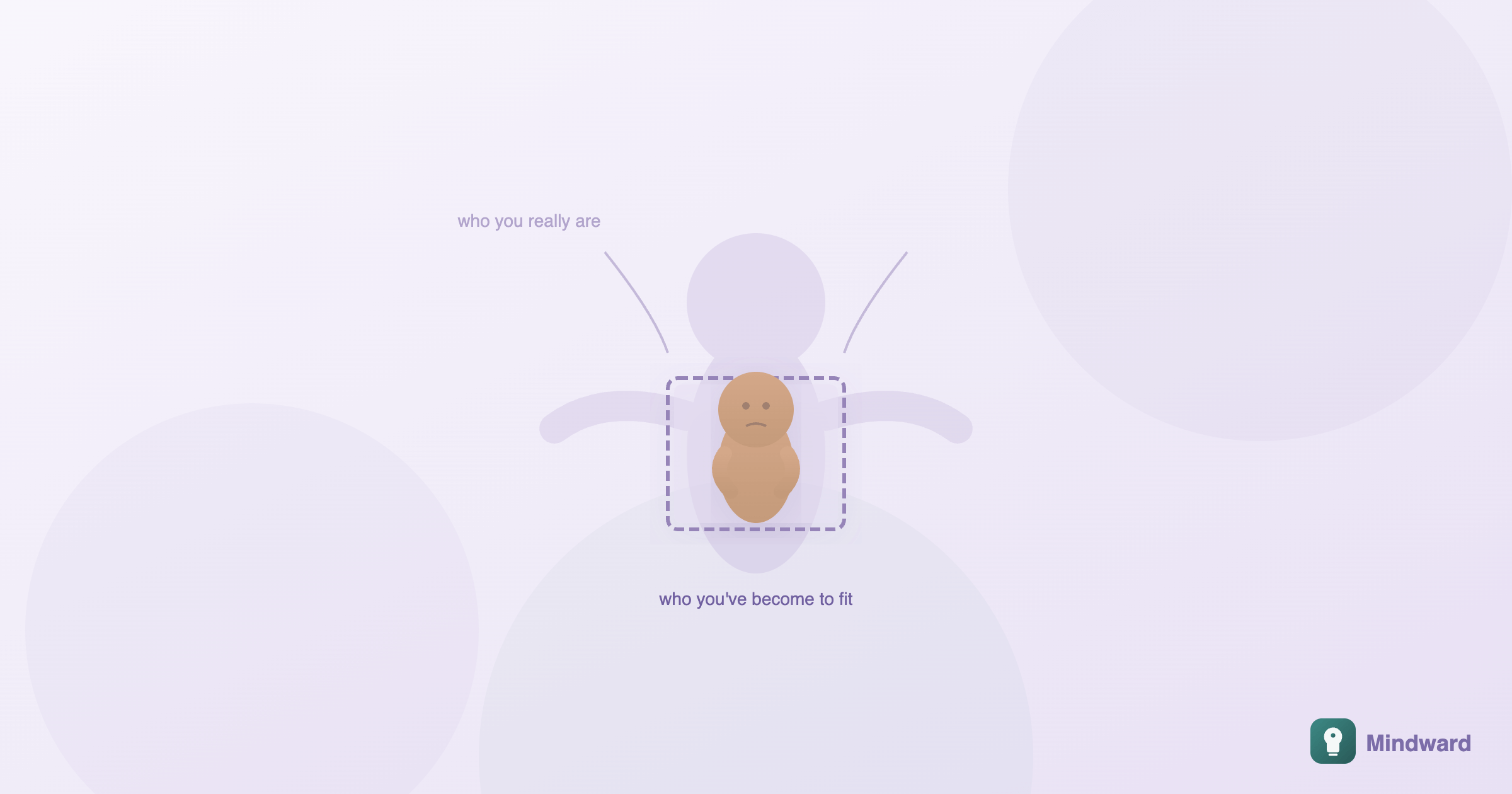
You've made yourself smaller so many times you've forgotten what your full size even looks like.
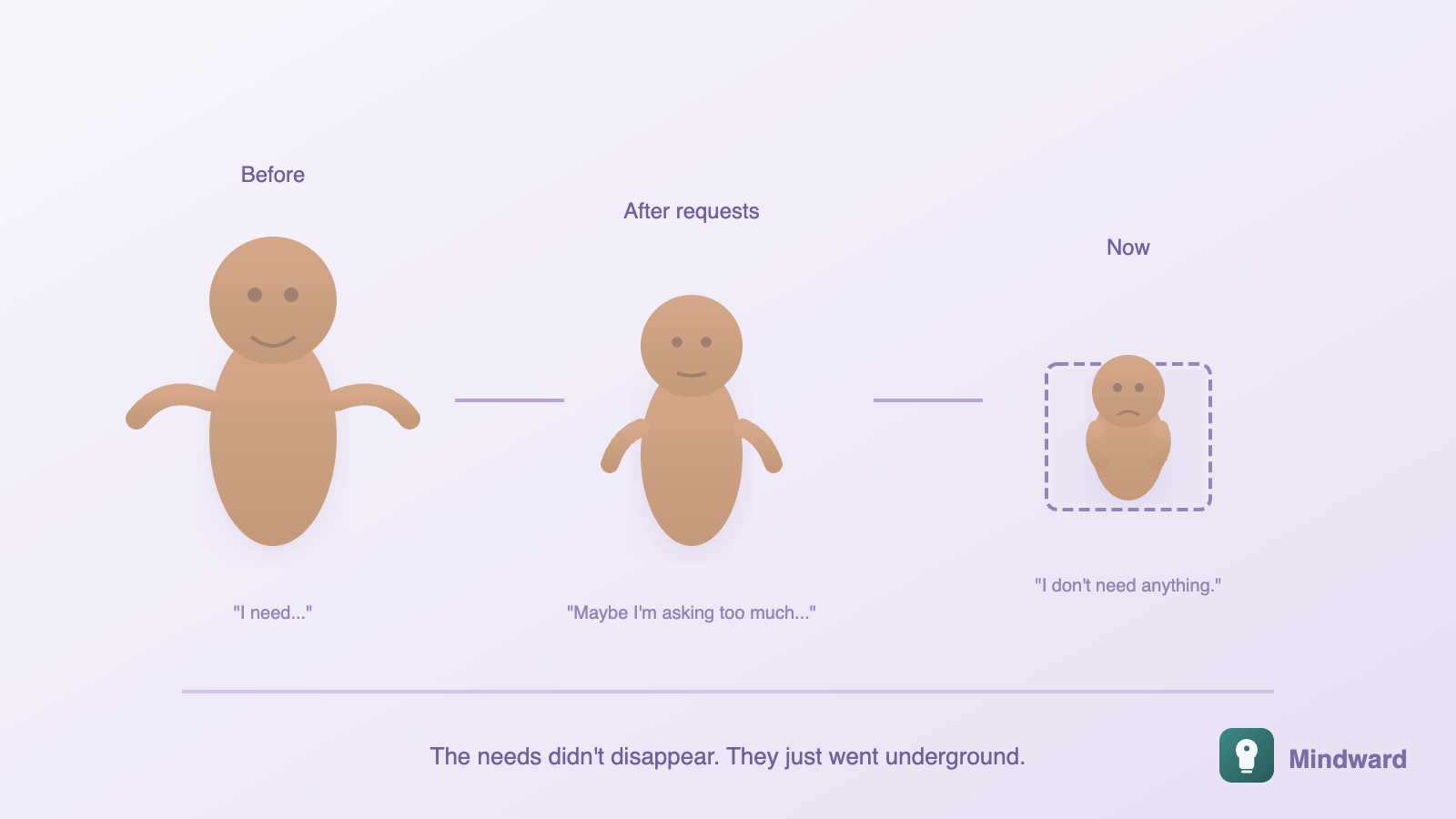
You stopped asking for reassurance because you didn't want to seem insecure. You stopped mentioning when things bothered you because you didn't want to be difficult. You learned to need less, want less, expect less—because every time you expressed a need, you were met with sighs, defensiveness, or silence.
And somewhere along the way, you internalized it: maybe you really are too much. Maybe your needs really are excessive. Maybe the problem is you.
The Lie of 'Too Much'
Here's what nobody told you: your needs aren't the problem. The match is the problem.
Wanting consistent communication isn't needy—it's a preference. Wanting physical affection isn't clingy—it's a need. Wanting to be prioritized, considered, emotionally met—none of that is excessive. It's human.
But when you keep bringing those needs to someone who can't meet them—or won't—you start to believe the needs themselves are wrong. You confuse their capacity with your worth.
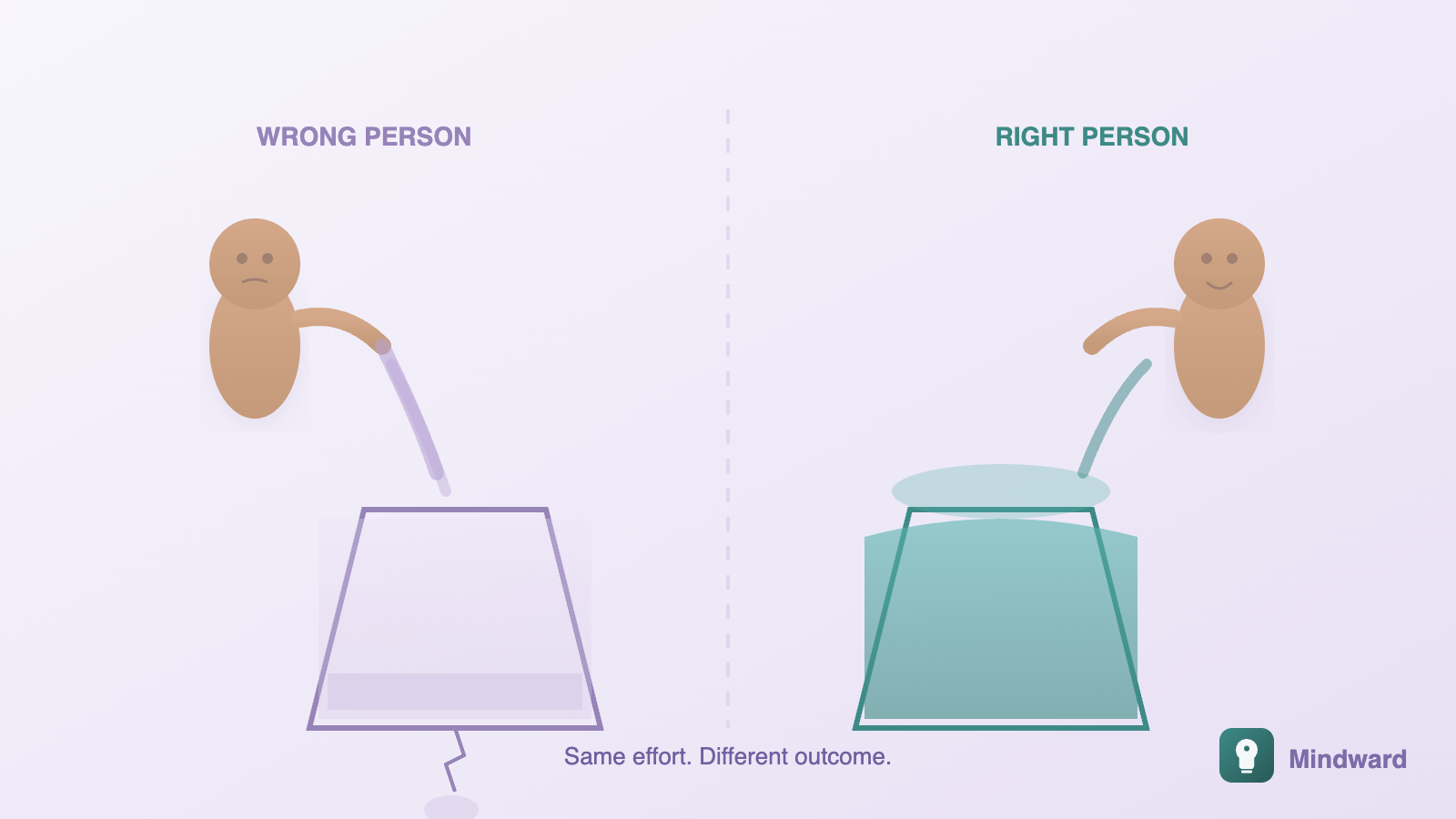
You're not too much. You've just been pouring into a cup that was never going to fill.
Why We Stay and Shrink
If the mismatch were obvious, you'd leave. But it's rarely obvious. It's gradual. You make one small accommodation, then another. Each one feels reasonable in isolation. You're being flexible. Understanding. Low-maintenance.
And there's often just enough good to make you question whether the gaps are real. They're kind sometimes. They try occasionally. You wonder if you're being ungrateful for focusing on what's missing instead of what's there.
But accommodation has a cost. Every need you suppress doesn't disappear—it just goes underground. It becomes resentment, anxiety, a quiet desperation you can't name. You start feeling crazy for wanting things you've been told are unreasonable.
You're not crazy. You're starving and being told you shouldn't be hungry.
Capacity vs. Willingness
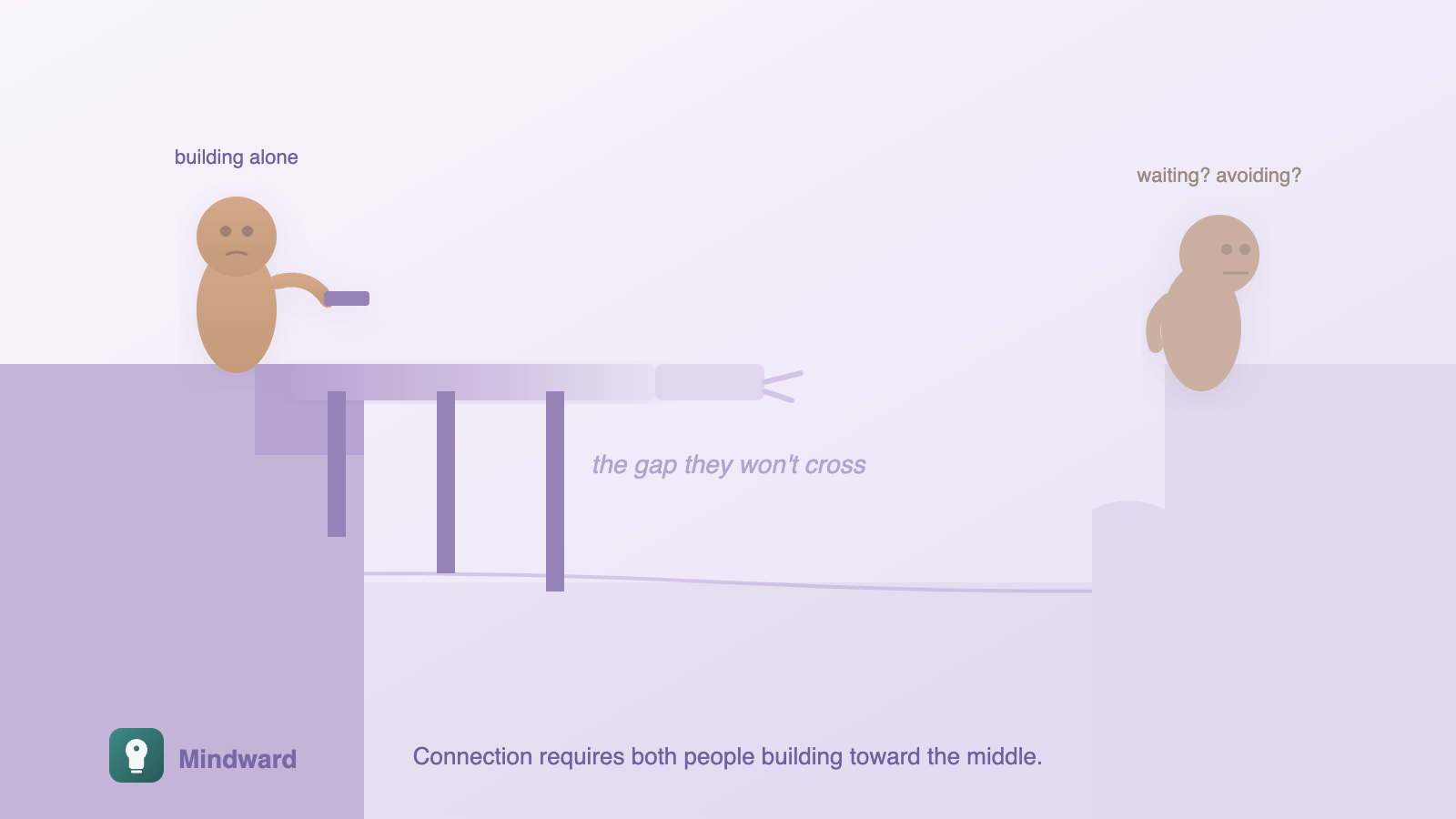
Some people can't meet your needs. Their own wounds, limitations, or wiring make them genuinely incapable of offering what you're asking for—not because they're bad people, but because they don't have it to give.
Some people won't meet your needs. They could, but they choose not to. Your needs aren't a priority. The effort feels like too much. They've decided, consciously or not, that what you're asking isn't worth the cost.
Both feel the same from the inside—like you're not getting what you need. But recognizing the difference matters. One is a tragedy of mismatch. The other is information about how much you matter to them.
- Can't: They struggle with emotional expression due to their own history. Won't: They're emotionally fluent with friends but shut down with you.
- Can't: They genuinely don't understand what you need despite honest attempts. Won't: They understand but dismiss it as unimportant.
- Can't: They're overwhelmed by their own circumstances temporarily. Won't: Their circumstances never seem to change no matter how long you wait.
The Right Person Won't Make You Feel Like a Problem
This is what changes everything: with the right person, your needs don't feel like burdens. They feel like information. Useful, welcome, workable.
The right person doesn't sigh when you express what you need. They don't make you feel like you're always asking for too much. They might not meet every need perfectly—no one does—but they don't make you feel broken for having needs in the first place.
Compatibility isn't about finding someone who needs nothing from you. It's about finding someone whose needs and capacity actually fit with yours.
When the fit is right, you stop shrinking. You stop apologizing for wanting things. You start to remember what it feels like to be met—not perfectly, but genuinely.
Reclaiming Your Full Size
If you've spent years making yourself smaller, you might not even know what you actually need anymore. The suppression has become so automatic that your real preferences are buried under layers of accommodation.
Start noticing. When do you feel resentful? That's usually a sign of a need that's been ignored. When do you feel relieved? That points to what actually matters to you. When do you feel most yourself? That's data about the conditions you thrive in.
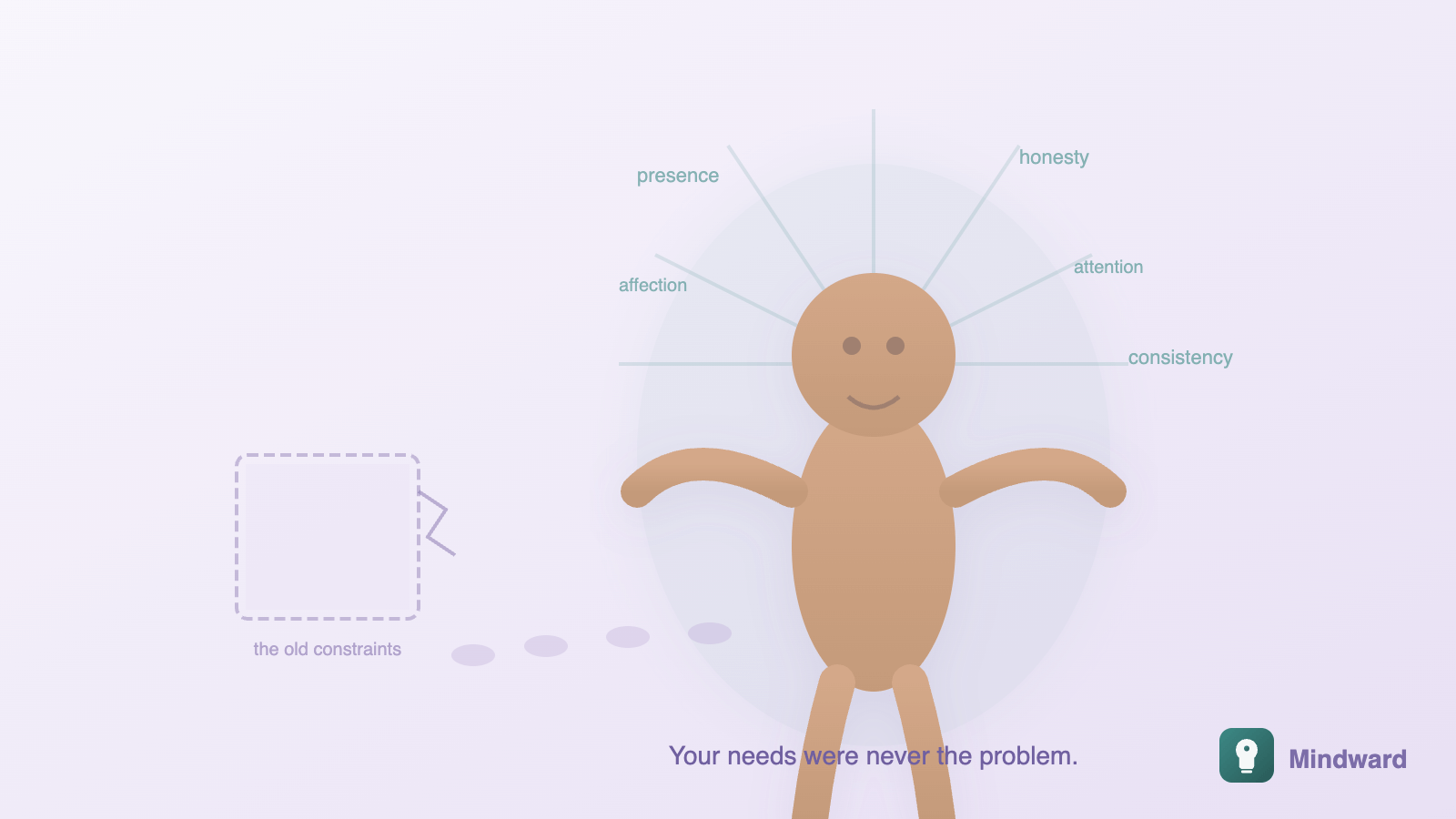
You don't have to have it all figured out before you stop shrinking. You just have to stop telling yourself the lie that your needs are the problem. They're not. They never were.
The next time someone makes you feel like you're asking for too much, consider the possibility that you're not asking the wrong thing. You're asking the wrong person.


Comments
How did you like this article?
No comments yet. Be the first to share your thoughts!