Loneliness in a Relationship Is the Loneliest Kind
You share a bed, a home, a life—and you've never felt more alone. This loneliness doesn't make sense on paper, which is part of what makes it so heavy.
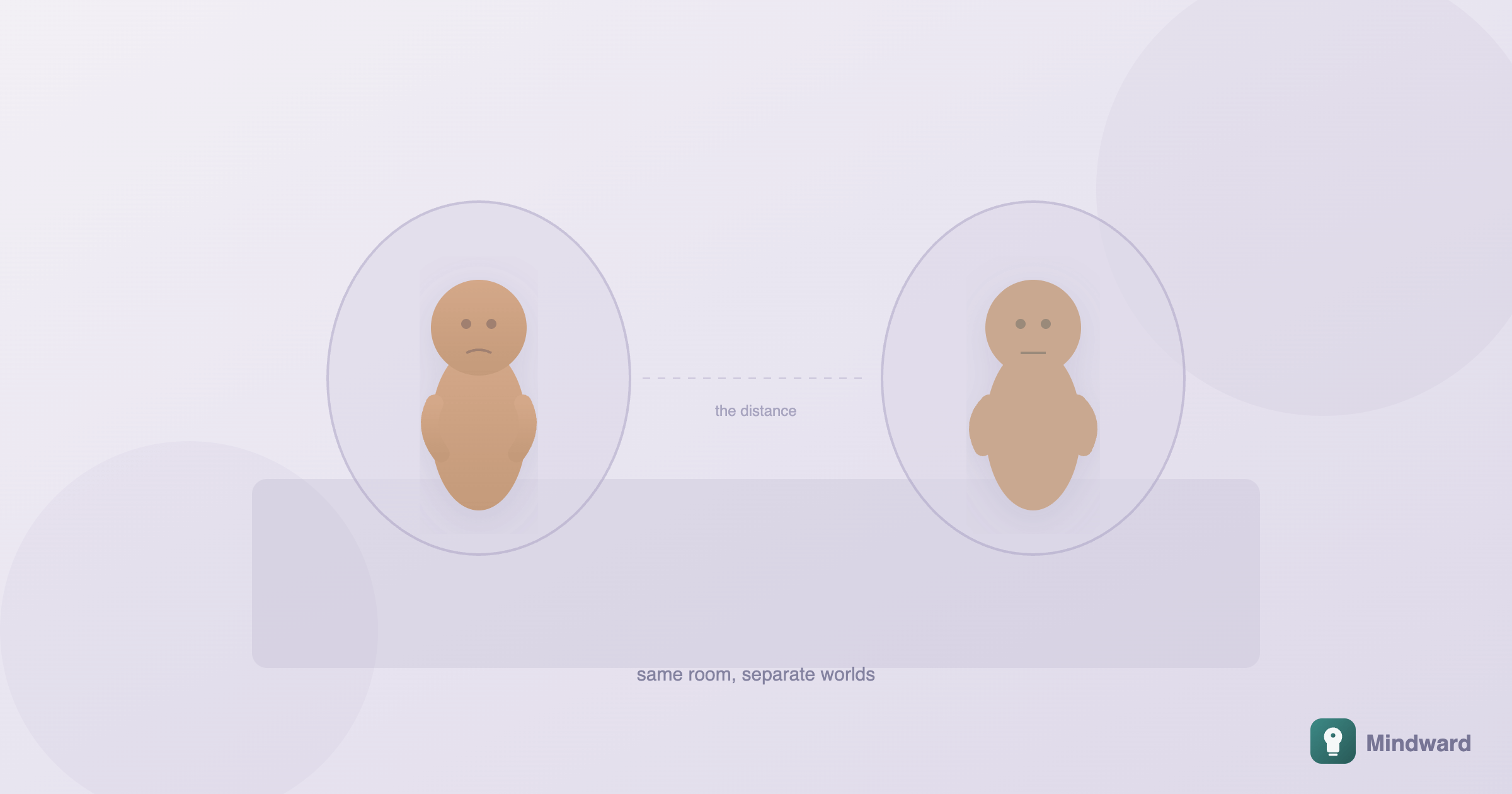
You're not single. You have someone. You share meals, split bills, sleep in the same bed. From the outside, you have what everyone's looking for.
So why do you feel so alone?
This is the loneliness no one talks about—the kind that happens inside a relationship. It doesn't make sense on paper. You have a partner. You're not supposed to feel this way. And yet there's an ache that won't go away, a sense that you're standing right next to someone and they can't see you.
Why This Loneliness Cuts Deeper
Being alone and feeling lonely are different things. You can be alone and feel perfectly content. You can be surrounded by people and feel invisible.
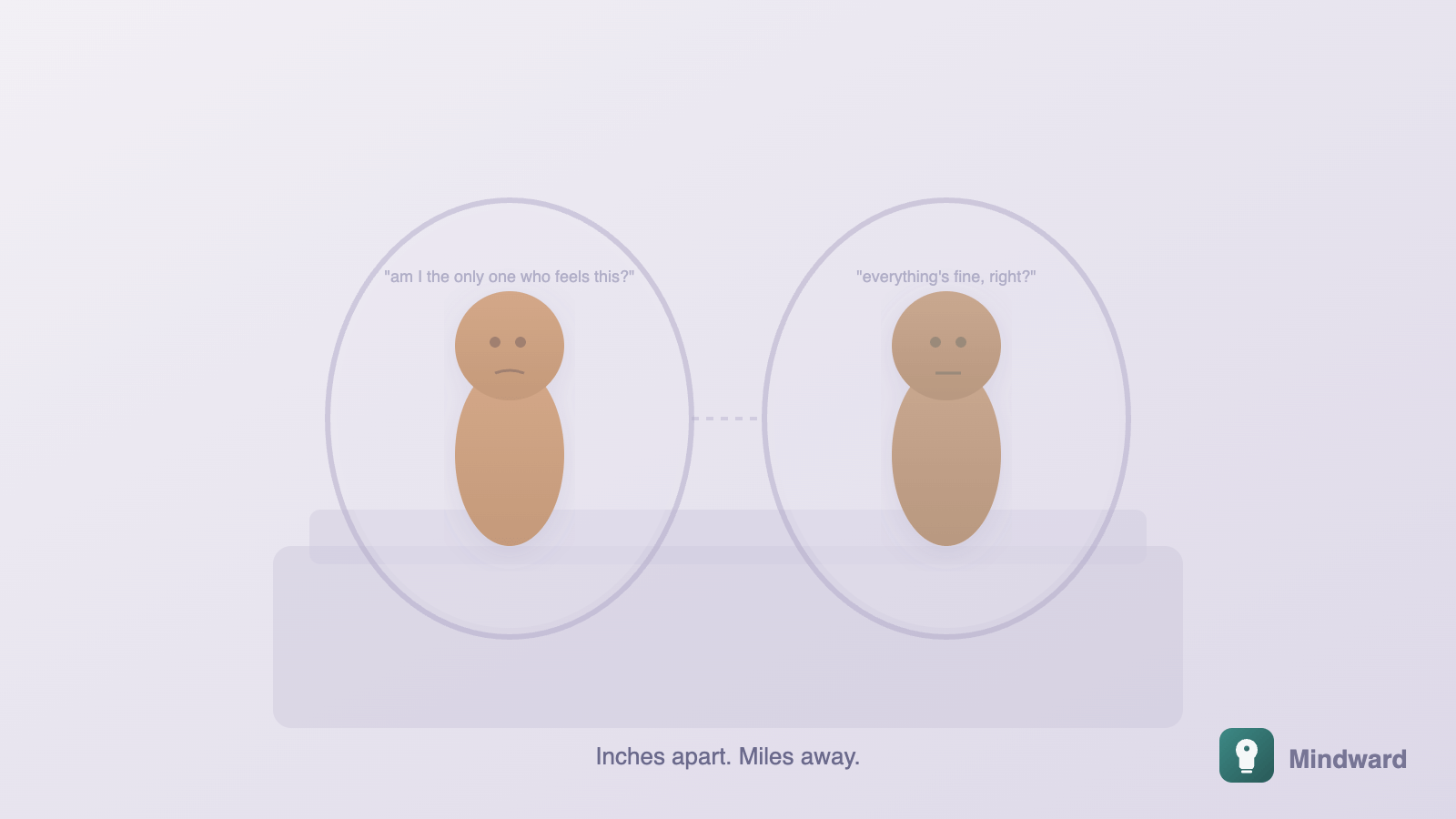
But loneliness inside a relationship has a particular weight. Because you're supposed to have the solution right there. The person who's meant to know you, see you, choose you—they're in the next room. And somehow that makes the distance feel even larger.
When you're single and lonely, at least the explanation is clear. When you're partnered and lonely, you start questioning yourself. What's wrong with me that I feel this way? Why isn't this enough? Am I broken for wanting more?
You're not broken. You're just not being reached.
Presence Without Connection
Physical proximity isn't the same as emotional presence. You can live with someone and never really be seen by them. You can talk every day and never feel heard. You can go through all the motions of partnership while the actual connection quietly starves.
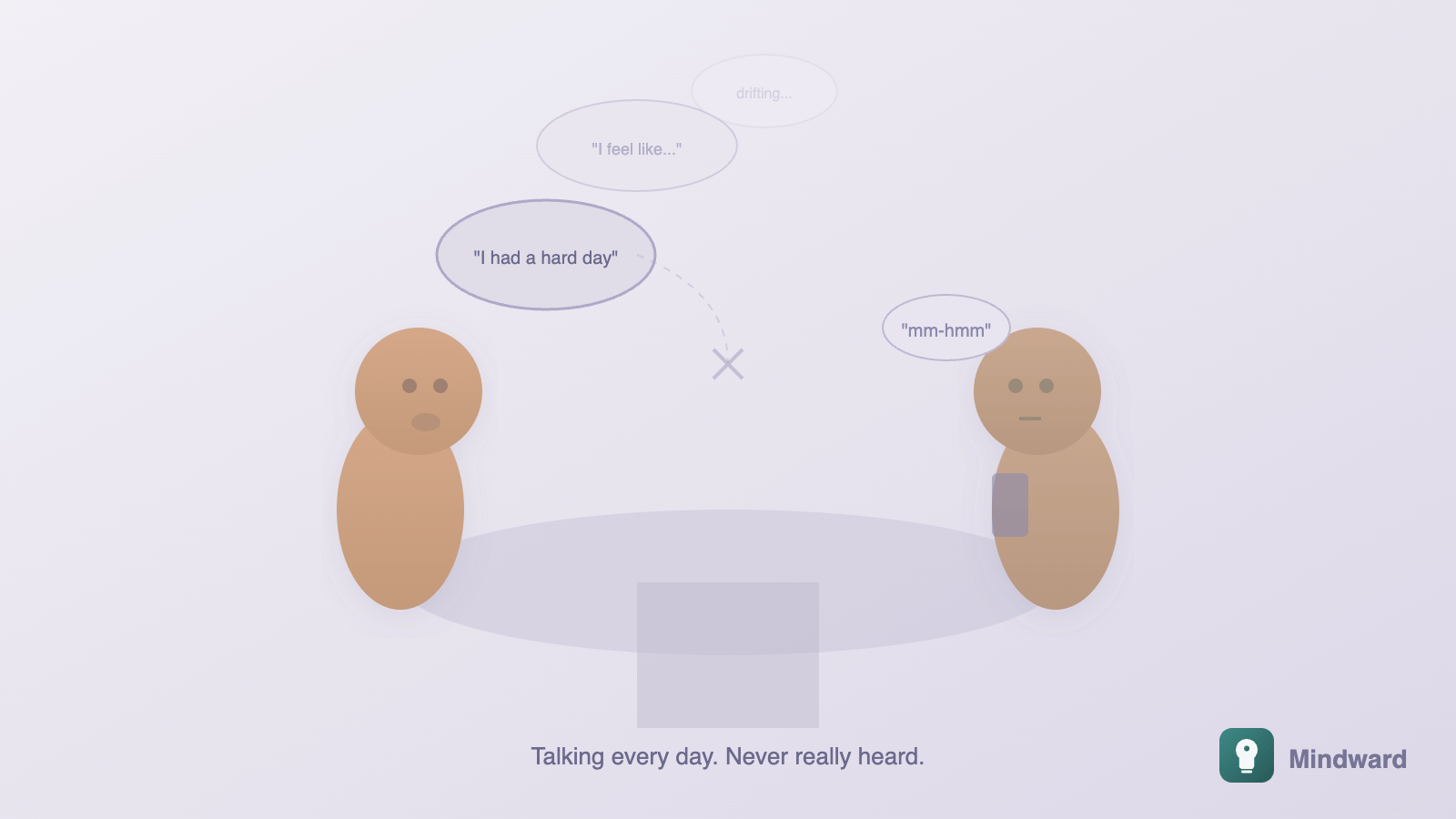
Maybe the conversations stay surface-level. Maybe your feelings get minimized or forgotten. Maybe you've stopped sharing because it never lands the way you need it to. Maybe you perform closeness without feeling it—going through the rituals of a relationship while the warmth slowly drains out.
You can be someone's partner and still feel like a stranger in your own home.
The Guilt of Ungrateful Loneliness
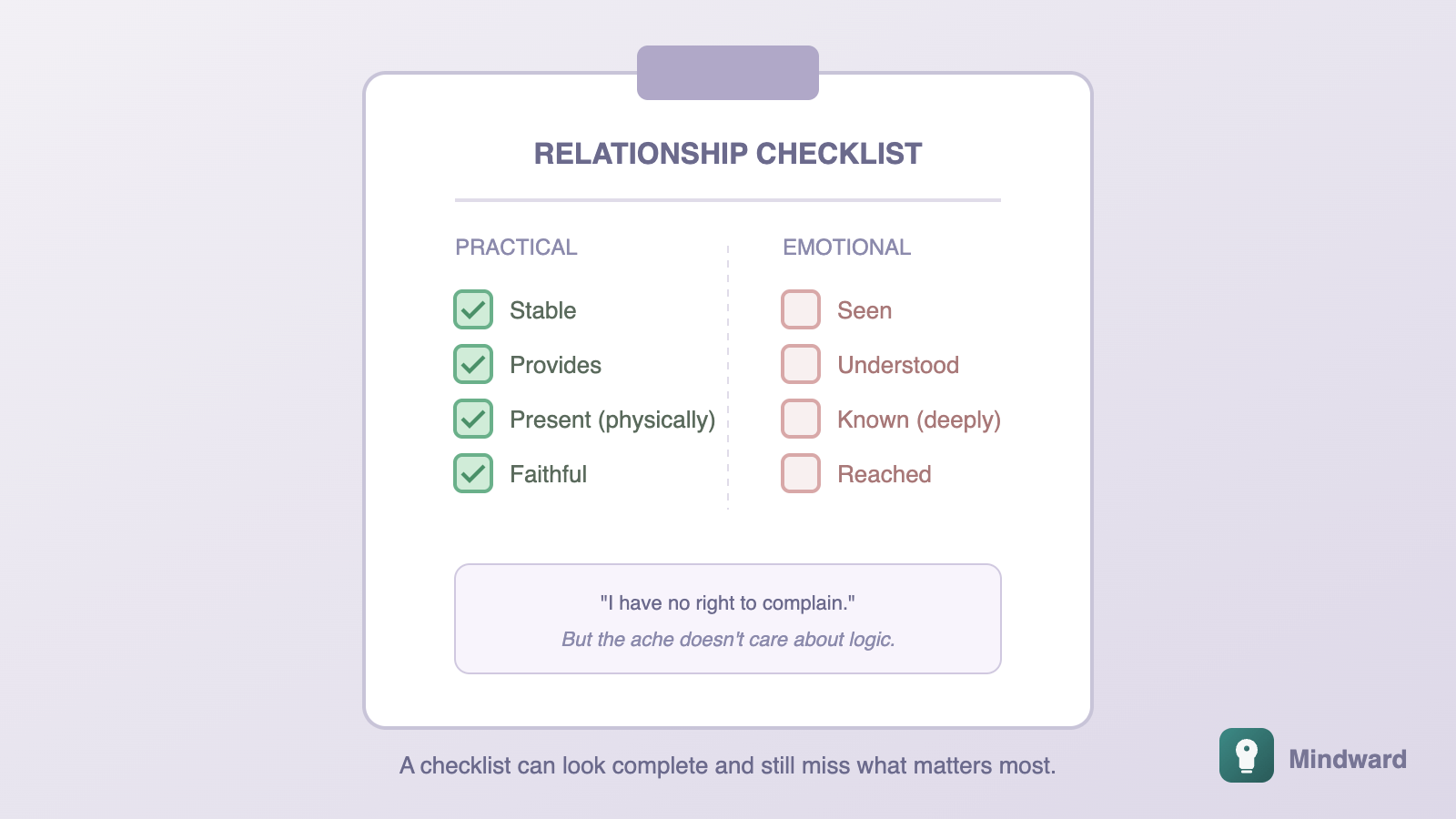
Part of what makes this so isolating is the shame around it. You have what so many people want. Your partner isn't abusive. They show up, in their way. You can list good things about them, reasons you should be happy.
And so you tell yourself you're being ungrateful. Needy. Dramatic. You minimize your own loneliness because it doesn't seem justified. You compare your relationship to worse ones and decide you have no right to want more.
- "At least they don't..."
- "Other people have it worse..."
- "I should be grateful for what I have..."
- "Maybe I'm just expecting too much..."
But comparison doesn't heal loneliness. And gratitude for what's present doesn't erase the ache of what's missing.
What You're Actually Missing
Loneliness in a relationship is usually about one thing: emotional intimacy. The feeling that someone truly knows you—not just the facts of your life, but the texture of your inner world.
It's the difference between someone asking "how was your day" and actually wanting to know. Between sharing something vulnerable and having it received with care. Between existing in the same space and genuinely being met there.
You don't need more time together. You need more presence in the time you have.
Some relationships have logistics without intimacy. Coordination without connection. Partnership on paper, loneliness in practice.
This Loneliness Is Information
Your loneliness isn't a character flaw. It's not evidence that you're too needy or that something is wrong with you. It's information about what's missing between you and this person.
Maybe the connection was never really there. Maybe it was there and has eroded. Maybe one or both of you stopped tending it. The reasons matter less than the recognition: something essential is absent, and you're feeling the absence.
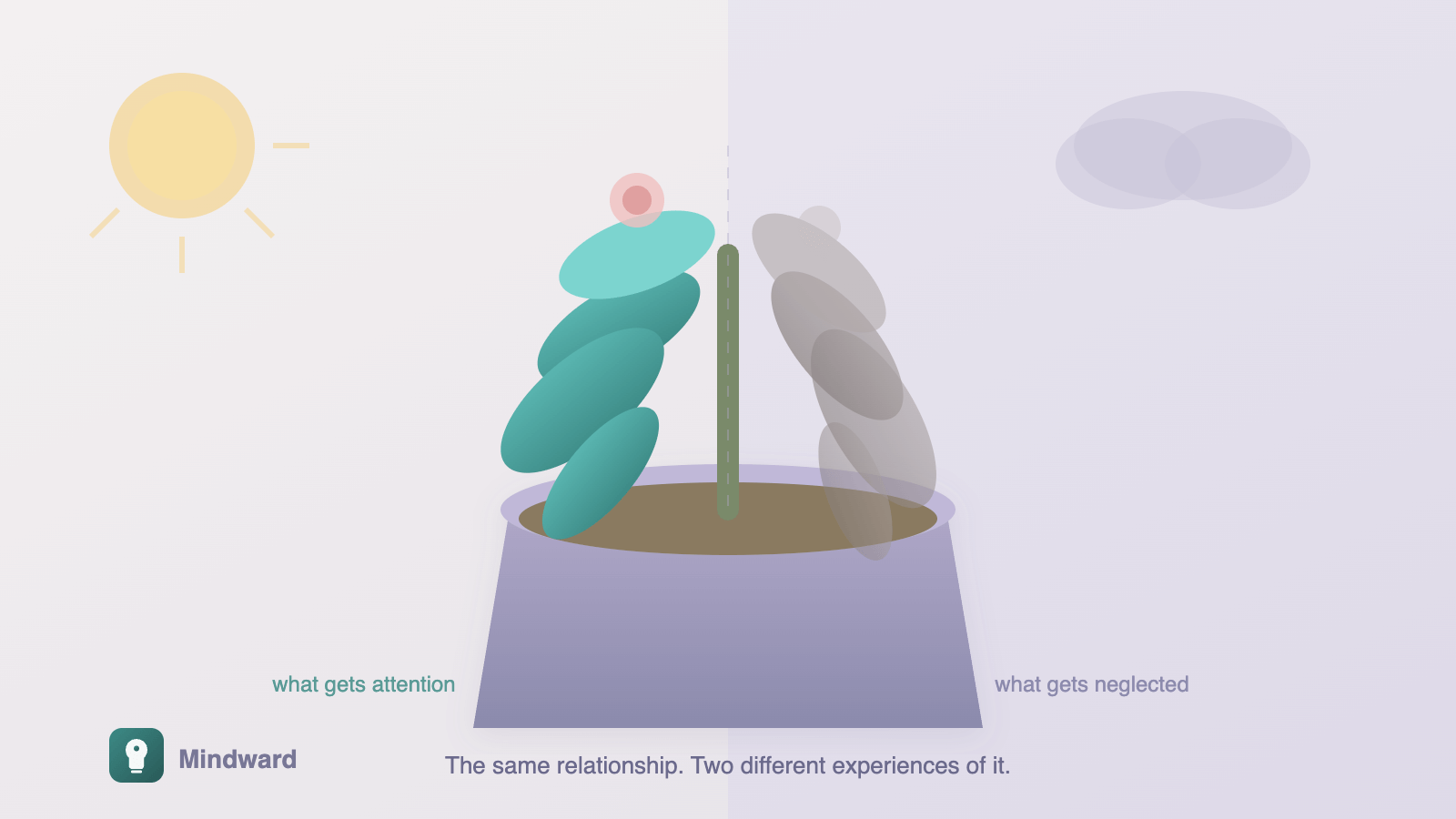
You can try to address it—name it, work on it, fight for it. But you can't address what you won't acknowledge. And you can't shame yourself out of a legitimate need.
Loneliness in a relationship is real. It counts. And you're allowed to want something that actually reaches you.


Comments
How did you like this article?
No comments yet. Be the first to share your thoughts!