Avoiding Conflict Is Slowly Killing Your Relationship
You think you're keeping the peace. But every conversation you don't have builds a wall between you and the person you're protecting the relationship from.
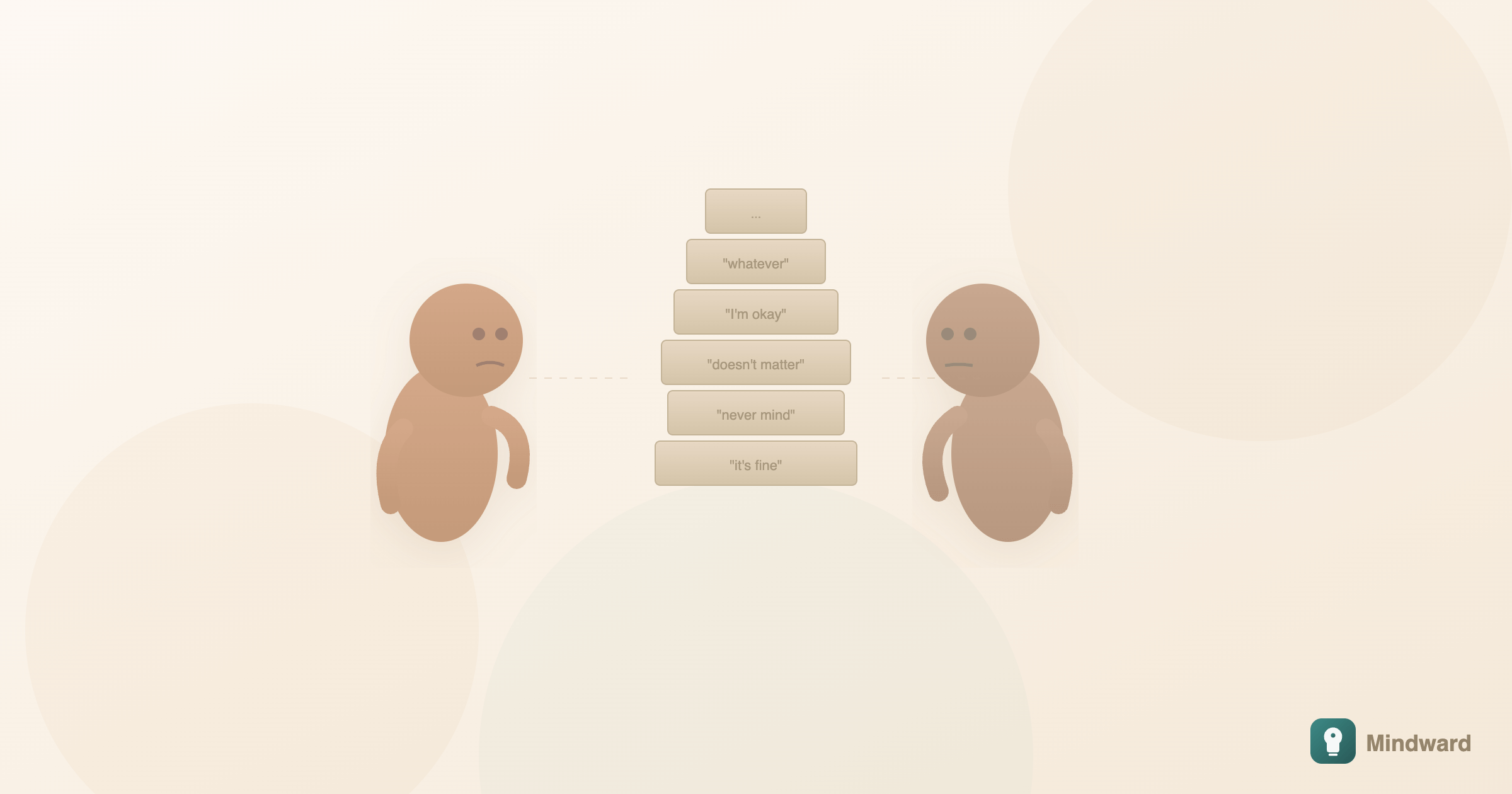
You let it go. It wasn't worth the argument. You swallowed the irritation, smiled through the disappointment, said "it's fine" when it wasn't. You're good at this—keeping things smooth, avoiding tension, not making a big deal out of things.
And from the outside, it looks like peace. No raised voices. No dramatic fights. A relationship that seems to work because nobody's upset.
But you know what's underneath. The growing list of things you can't say. The distance that's opened up so gradually you almost didn't notice. The sense that you're performing closeness rather than feeling it.
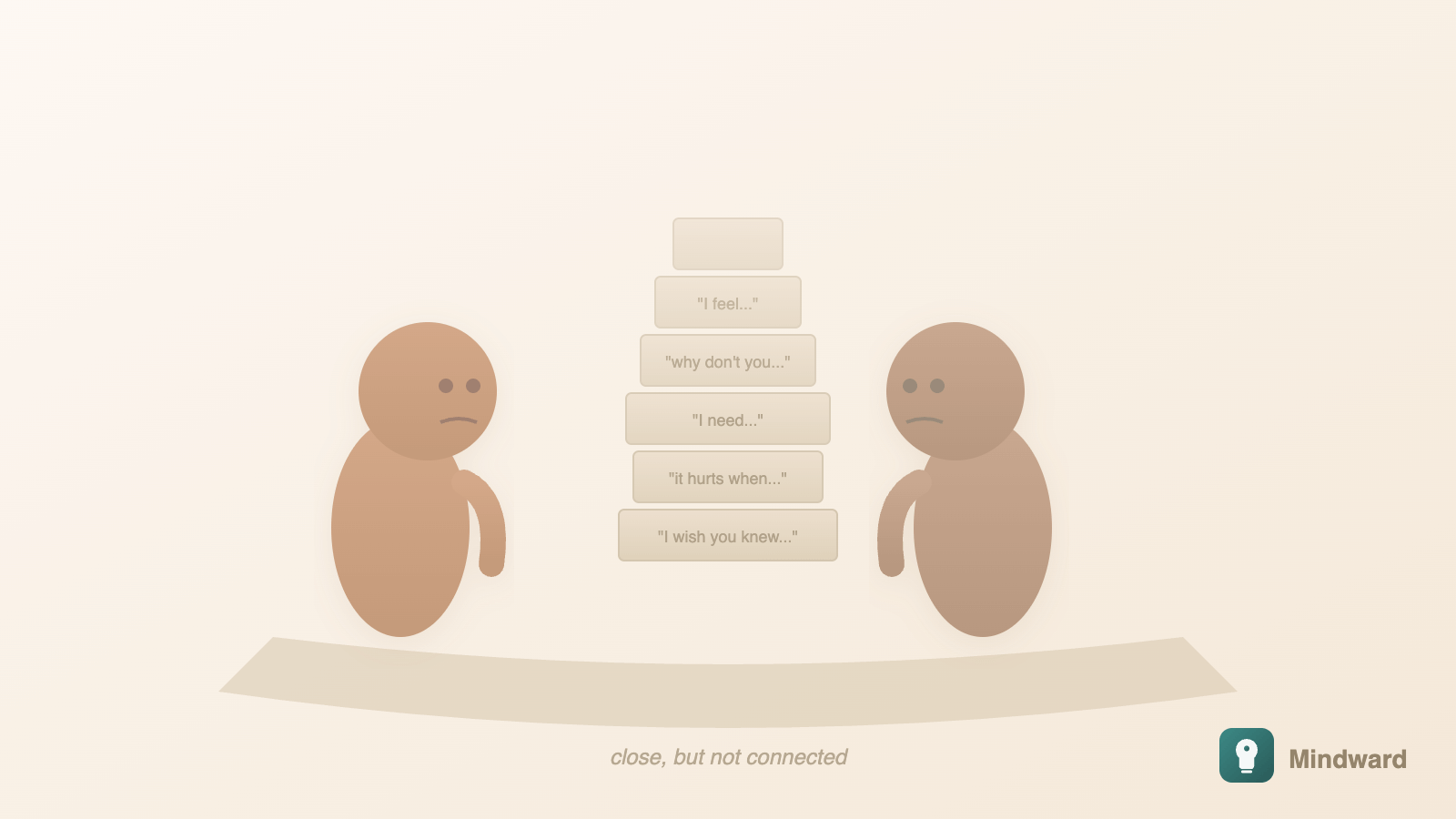
The Myth of Keeping the Peace
Conflict avoidance feels like protection. You're shielding the relationship from damage, preserving harmony, choosing connection over being right.
But here's what's actually happening: every time you don't say the true thing, you create a small gap between who you are and who you're presenting. Every swallowed frustration adds a thin layer of distance. Every "it's fine" when it isn't teaches your nervous system that this relationship isn't a safe place for your real feelings.
You're not keeping the peace. You're keeping the surface. And underneath, something is slowly dying.
Avoiding conflict doesn't prevent damage to the relationship. It just makes the damage invisible until it's severe.
What Silence Actually Communicates
You might think your silence protects the other person from hurt or keeps them from feeling criticized. But silence communicates its own message.
When you consistently hold back, the other person often senses the withdrawal even if they can't name it. They feel the distance, the slight guardedness, the conversations that stay on the surface. They might not know why you feel far away, but they feel it.
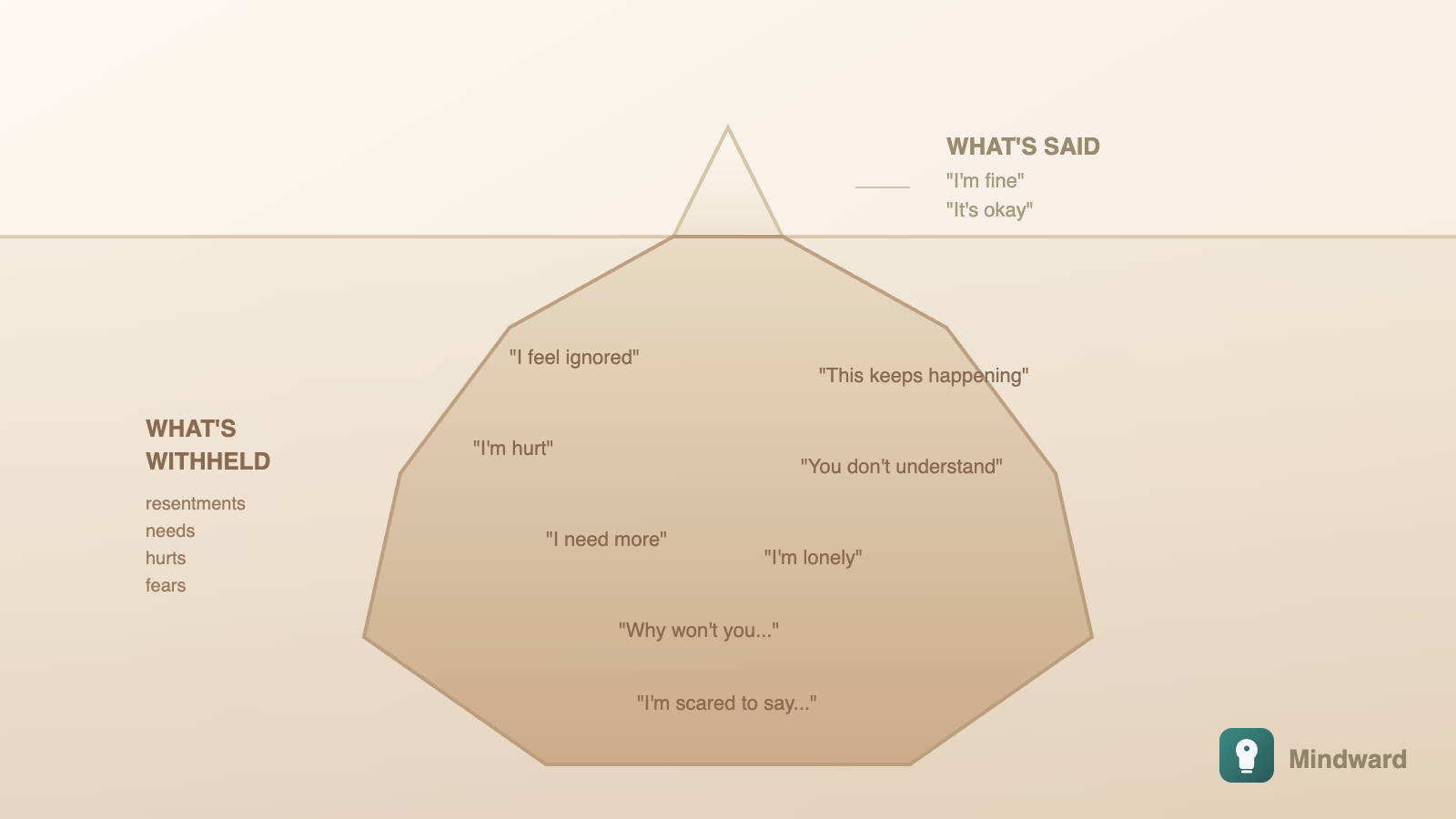
Worse, your silence denies them the chance to show up for you. They can't respond to concerns they don't know exist. They can't adjust behavior they don't know is landing badly. You've made the relationship "safe" by making it impossible for them to actually know you.
How Resentment Builds
Every unspoken thing has weight. At first, each one is easy to carry—barely noticeable. But they accumulate. And emotions that aren't processed don't disappear; they compound.
What starts as a small irritation you chose not to mention becomes part of a pattern you've been silently tracking. Then it becomes evidence in a case you're building without realizing it. Then one day something small happens and you have a reaction that seems completely disproportionate—because it's not about this moment. It's about all the moments.
- "You always..." (but you never told them once)
- "I've been feeling this way for months..." (and they're blindsided)
- "This isn't working anymore..." (when they thought everything was fine)
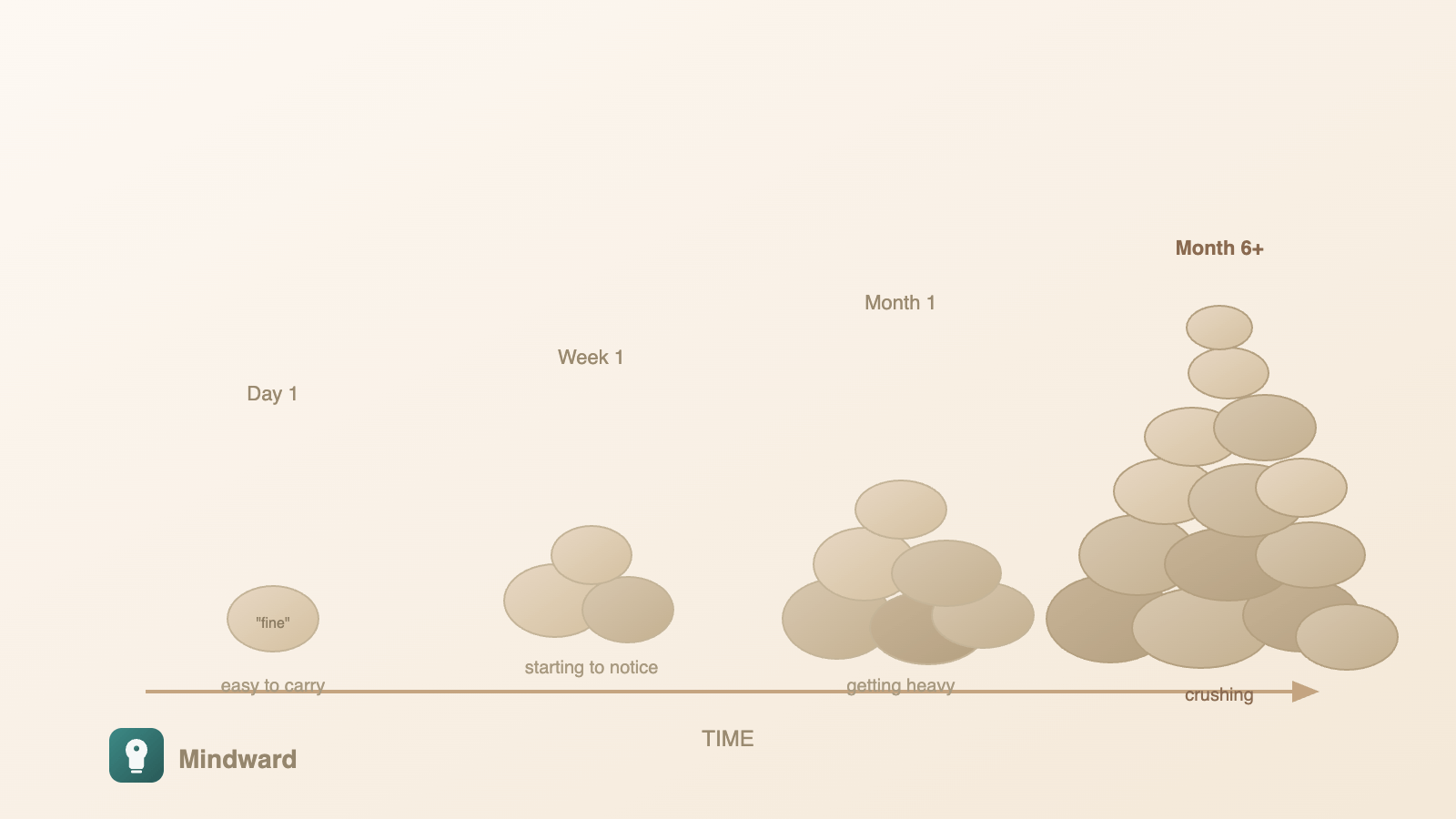
Resentment is what happens when you expect someone to know what you've never told them.
Why We Avoid
Conflict avoidance usually isn't laziness or indifference. It's often rooted in real experiences that taught you speaking up wasn't safe.
Maybe conflict in your past was explosive, so any tension feels dangerous. Maybe you learned that expressing needs led to punishment or withdrawal. Maybe you've absorbed the idea that good relationships shouldn't require hard conversations—that having issues means something is wrong.
But the absence of conflict isn't the same as the presence of intimacy. Relationships that can't tolerate honesty aren't actually safe. They're just stable—which is a different thing entirely.
What Healthy Conflict Actually Looks Like
Healthy conflict isn't about winning arguments or forcing change. It's about being known. It's saying: here's my experience, even when it's uncomfortable. Here's what I need, even when I'm not sure you can give it. Here's the truth of me, even when it risks disruption.
- It's raising an issue before it becomes a pattern, not after resentment has hardened.
- It's describing your experience without attacking their character.
- It's being willing to hear their perspective, even when it's different from yours.
- It's trusting the relationship can hold your honesty—and testing that trust enough to find out.
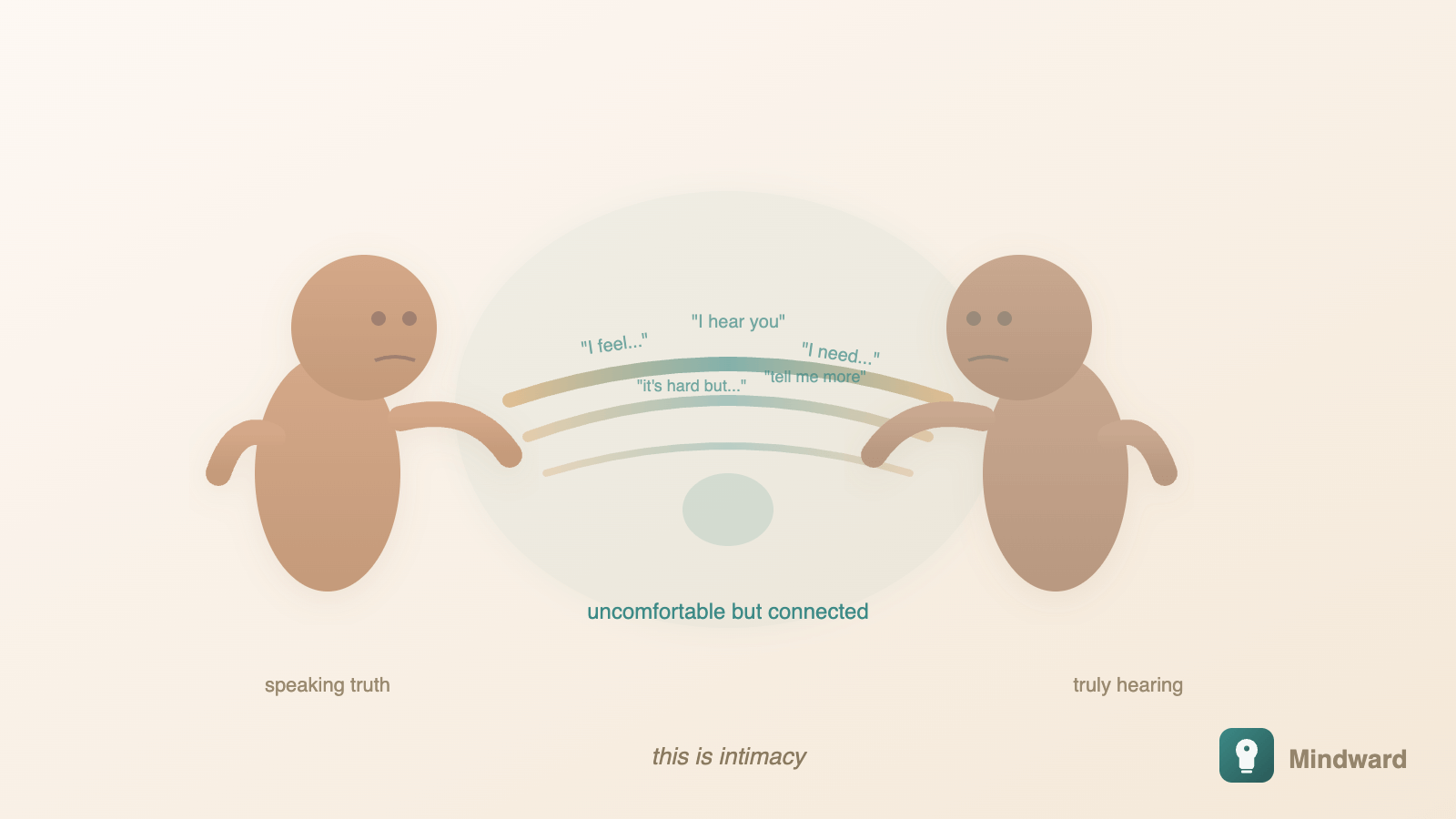
The conversations you're avoiding aren't threats to your relationship. They're the relationship. Intimacy is built in the moments when you show each other the hard stuff and discover you're still there afterward.
Your relationship doesn't need more peace. It needs more truth. And the two of you—whoever you really are—need the chance to actually meet.
A relationship where you can't be honest isn't a relationship you're actually in. It's a performance you're both attending.


Comments
How did you like this article?
No comments yet. Be the first to share your thoughts!