You Can Love Someone and Still Leave
Love isn't the only question. You can care deeply about someone and still recognize that staying is costing you both. Leaving isn't a failure of love—it's a recognition that love alone isn't enough.
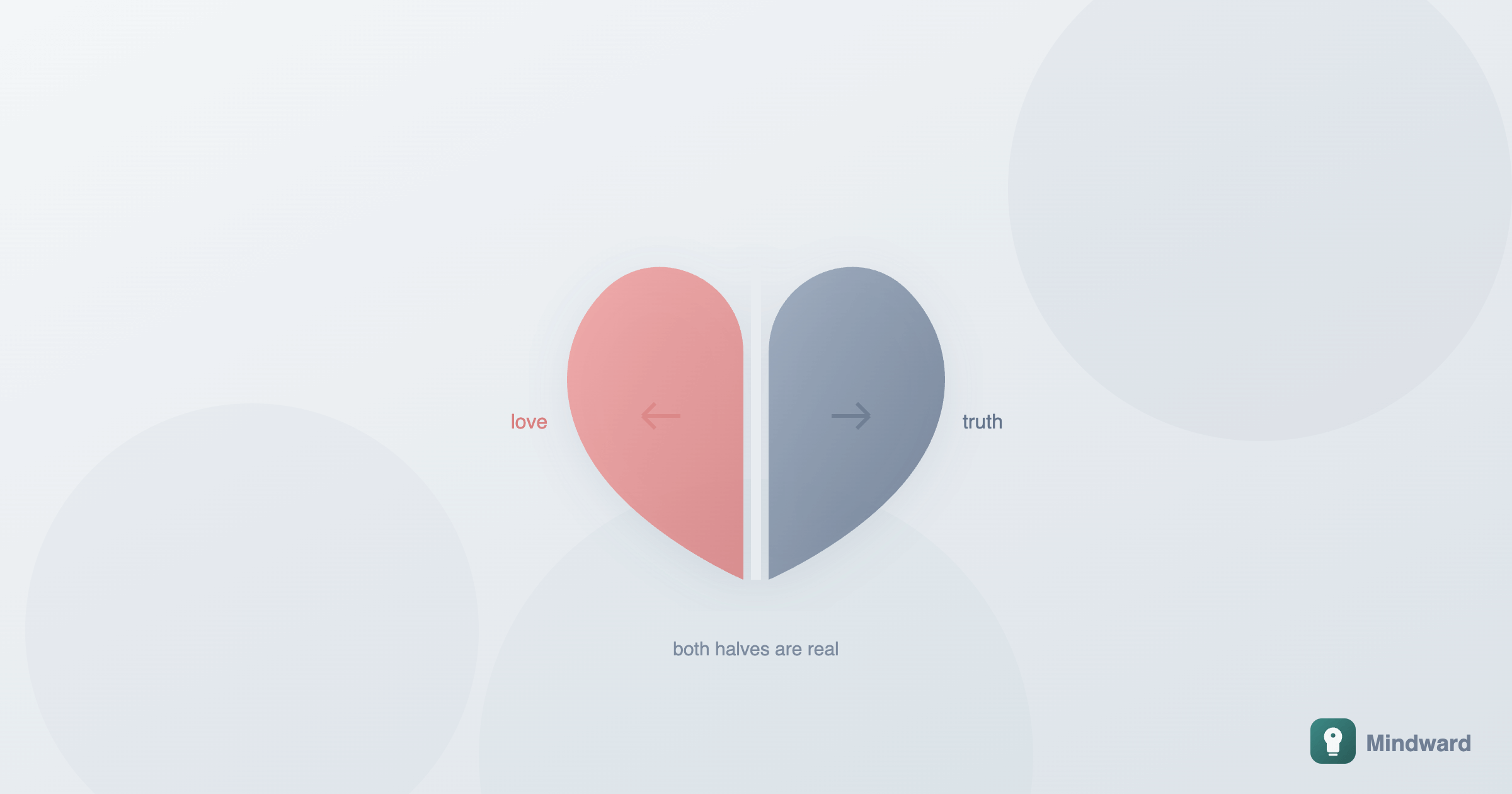
You still love them. That's what makes this so hard.
If the feelings were gone, the decision would be simple. You'd leave and not look back. But the feelings aren't gone. You care about them. You want good things for them. Part of you still lights up when they walk in the room.
And so you stay. Because how can you leave someone you love? What kind of person does that? You tell yourself that love should be enough. That if you just try harder, adjust more, wait longer—eventually the other pieces will fall into place.
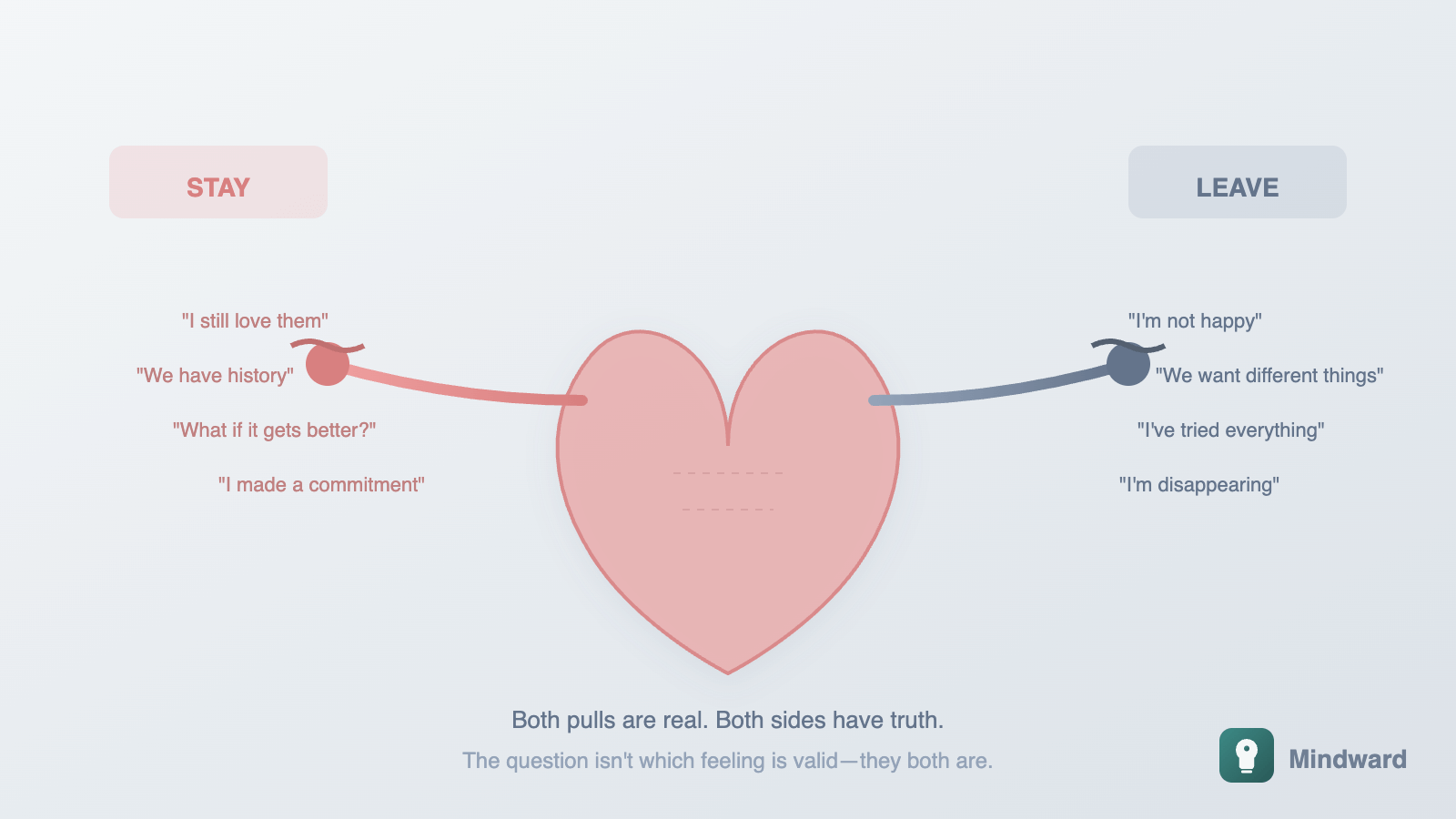
The False Equation
Somewhere along the way, you absorbed a belief: love means staying. If you leave, it means you didn't love them enough. It means you failed. It means the love wasn't real.
But this equation is wrong. Love is one ingredient in a relationship. It's necessary, but it's not sufficient. You also need compatibility, timing, capacity, willingness, and growth moving in the same direction.
You can love someone and be incompatible with them. You can love someone and want different futures. You can love someone and recognize that you bring out the worst in each other. You can love someone and know that staying is slowly diminishing you both.
Love tells you how you feel. It doesn't tell you what to do.
What Staying Is Actually Costing
When you stay past the point of knowing, you're not protecting the relationship. You're prolonging something that's already ended in every way except officially.
You're giving them a version of you that's increasingly withdrawn, resentful, or just going through the motions. You're taking up space in their life that could be filled by someone who's fully choosing them. You're consuming years that neither of you can get back.
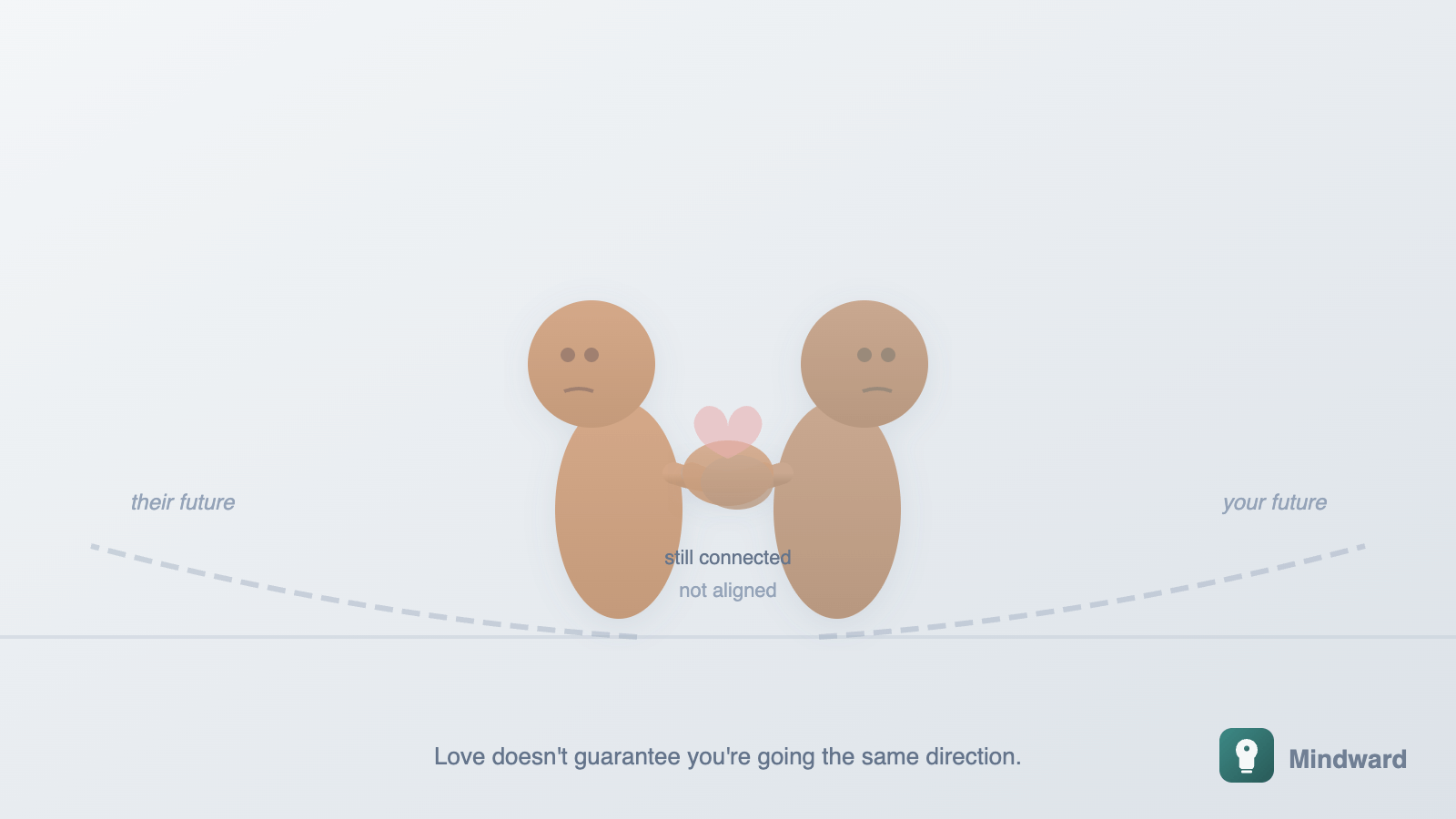
Staying out of guilt isn't a gift to them. It's a slow withdrawal disguised as presence. They can feel it even if they can't name it. The kindest thing isn't always staying. Sometimes the kindest thing is being honest about where you actually are.
Why Leaving Feels Like Betrayal
If you're someone who values loyalty, leaving feels like a moral failure. You made a commitment. You said you'd be there. Walking away seems to prove you were never trustworthy in the first place.
But loyalty to a relationship that isn't working isn't integrity—it's avoidance. Real integrity is being honest when things change. Real loyalty includes loyalty to yourself, to your growth, to your one life.
- Leaving someone you love doesn't mean the love was fake.
- It doesn't mean you wasted the time you spent together.
- It doesn't mean you're incapable of commitment.
- It means you're capable of honesty—even when honesty is painful.
The Grief of Choosing to Go
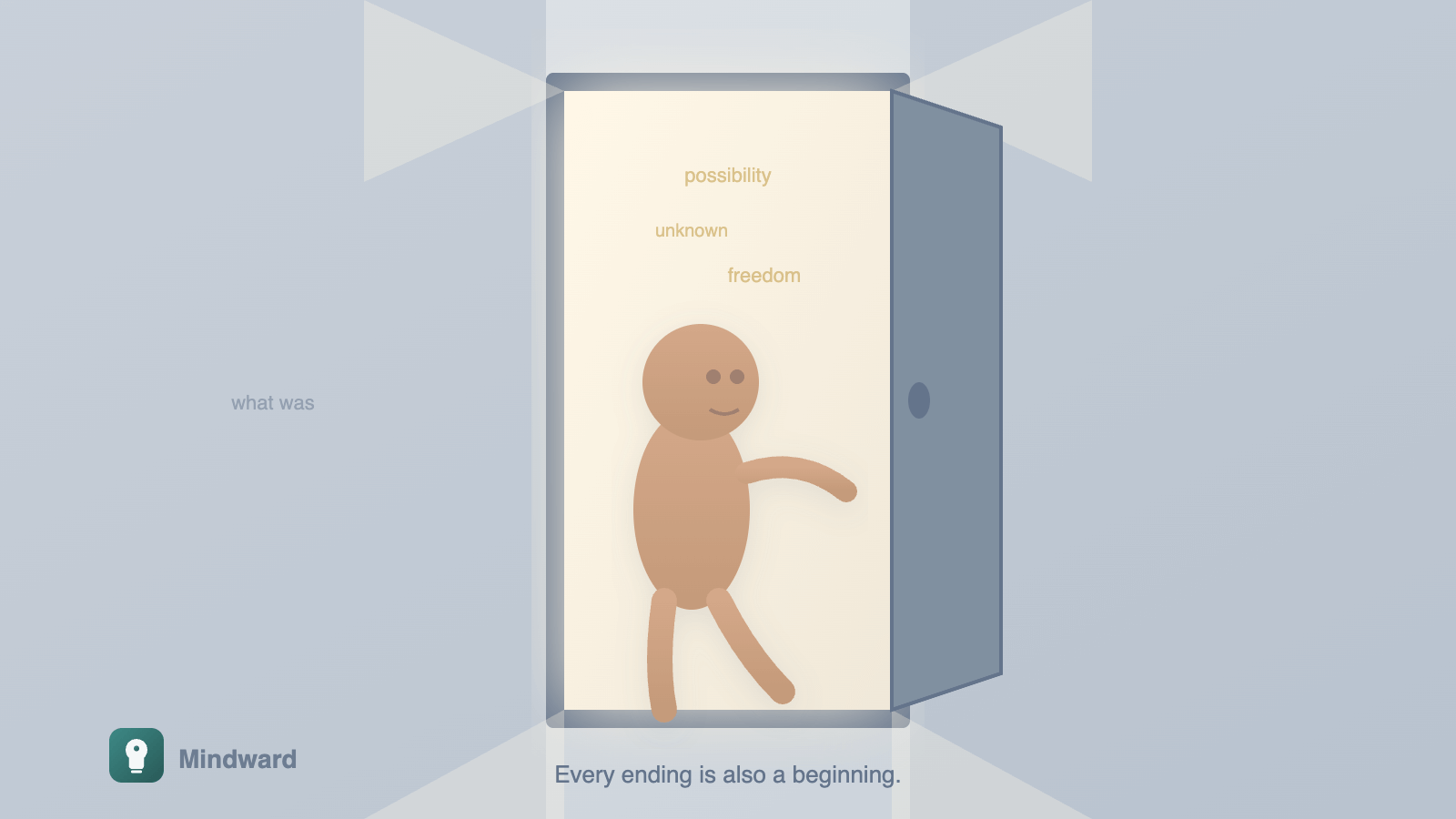
Leaving someone you love is its own kind of grief. You're not just mourning them—you're mourning the future you imagined, the person you were with them, the hope that things would get better.
This grief doesn't mean you made the wrong choice. It means the choice was real. Easy decisions don't require grief. The weight of what you're feeling is evidence of how much you cared, not evidence that you should have stayed.
You're allowed to grieve something you chose to end. Those aren't contradictions.
What Love Actually Asks
Real love—mature love—doesn't demand that you sacrifice yourself to preserve the relationship at any cost. It asks for honesty. It asks for presence while you're there. It asks for the courage to name what's true, even when the truth is that you need to go.
Loving someone well sometimes means releasing them. It means acknowledging that your paths have diverged. It means caring enough about both of you to stop pretending.
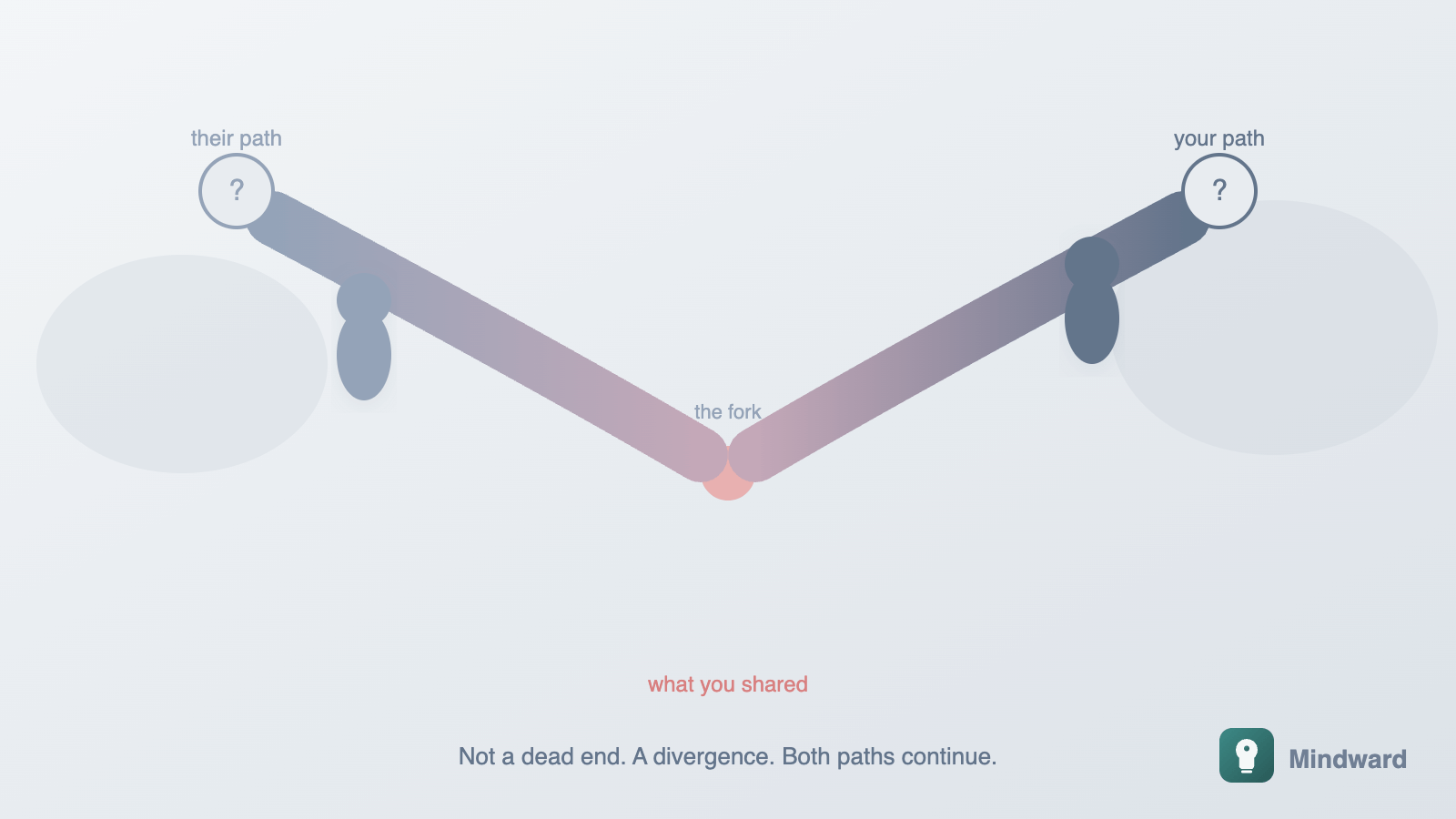
You don't have to stop loving them to leave. You just have to recognize that love was never the only question.
The real question is: can you build a life together that's good for both of you? And if the honest answer is no, then staying isn't love. It's fear dressed up as loyalty.


Comments
How did you like this article?
No comments yet. Be the first to share your thoughts!