You Don't Rise to Your Goals, You Fall to Your Systems
Goals tell you where to go. Systems get you there. The difference between who you are and who you want to be is what you do repeatedly.
Everyone has goals. The gap isn't ambition—it's architecture.
You want to be healthier, wealthier, more creative, more skilled. So does everyone else. Goals are easy to set because they cost nothing. They live safely in the future, requiring only a decision, not a change.
But wanting something has never been enough to get it. The people who actually transform their lives aren't the ones with better goals. They're the ones with better systems.
A system is what you do daily. It's the infrastructure beneath the aspiration—the machine that runs whether you feel motivated or not. Goals are the destination. Systems are the vehicle.
Why Goals Alone Fail
Goals create a strange paradox: they can actually prevent progress.
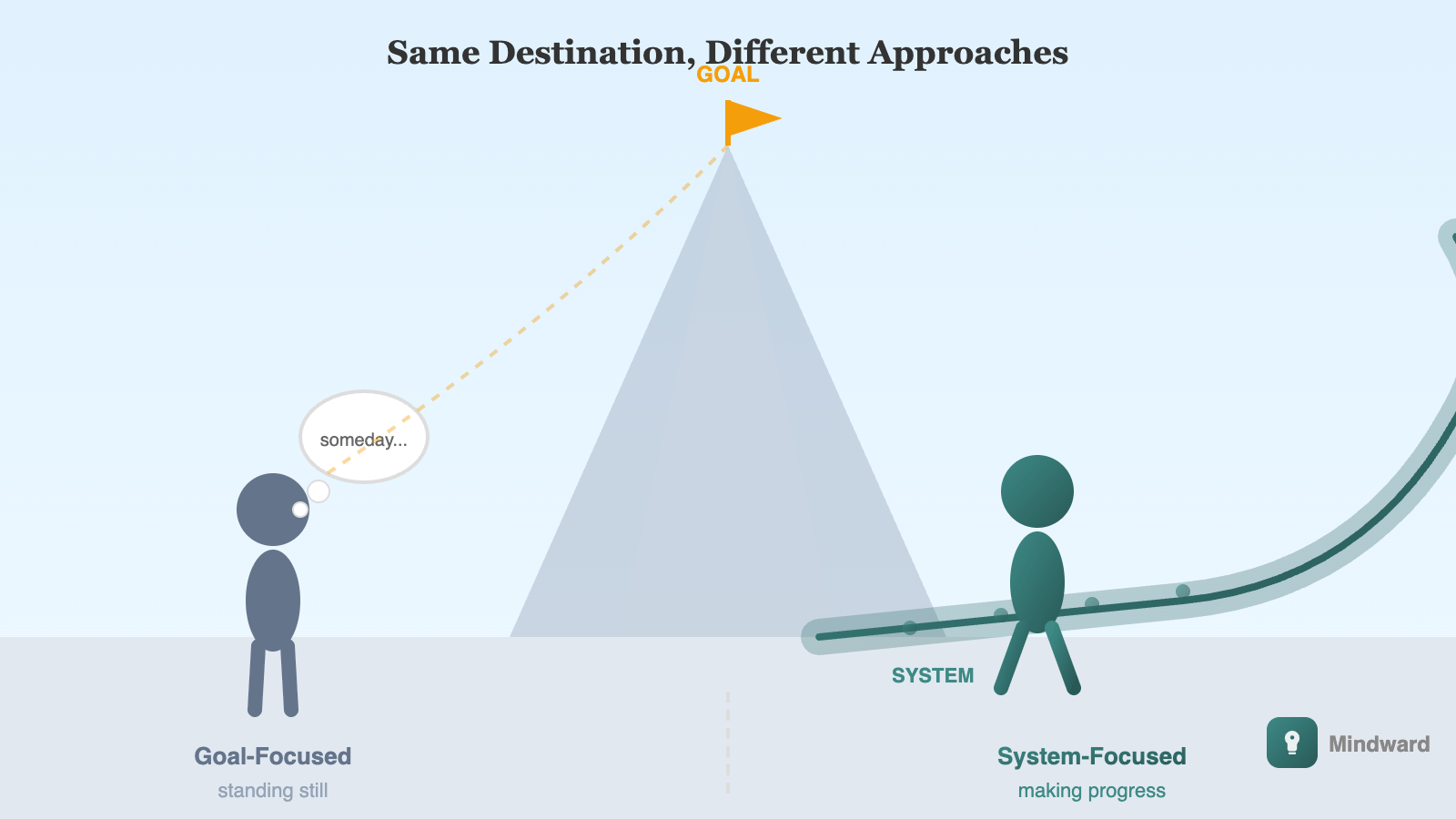
When you fixate on a goal, you tie your satisfaction to an outcome you don't control. You either haven't achieved it yet—which feels like failure—or you've achieved it and the motivation evaporates. Goals create a binary: you're either falling short or you're finished.
Systems work differently. A system is something you do, not something you chase. You don't succeed or fail at a system; you either run it or you don't. The feedback is immediate and within your control.
A goal is a single event. A system is a lifestyle. One gives you a finish line. The other gives you a direction.
Consider two writers. One has a goal: finish a novel by December. The other has a system: write 500 words every morning before work. Who's more likely to actually become a writer?
The goal-setter waits for inspiration, measures progress against a distant target, and feels increasingly anxious as December approaches. The system-follower writes whether they feel like it or not, stacks words into pages, and becomes someone who writes daily. The novel emerges as a byproduct.
Systems Shape Identity
The deepest reason systems outperform goals is identity change.
Goals focus on outcomes—what you want to have or achieve. Systems focus on process—what you want to do and who you want to become. This distinction matters because lasting behavior change is identity change.
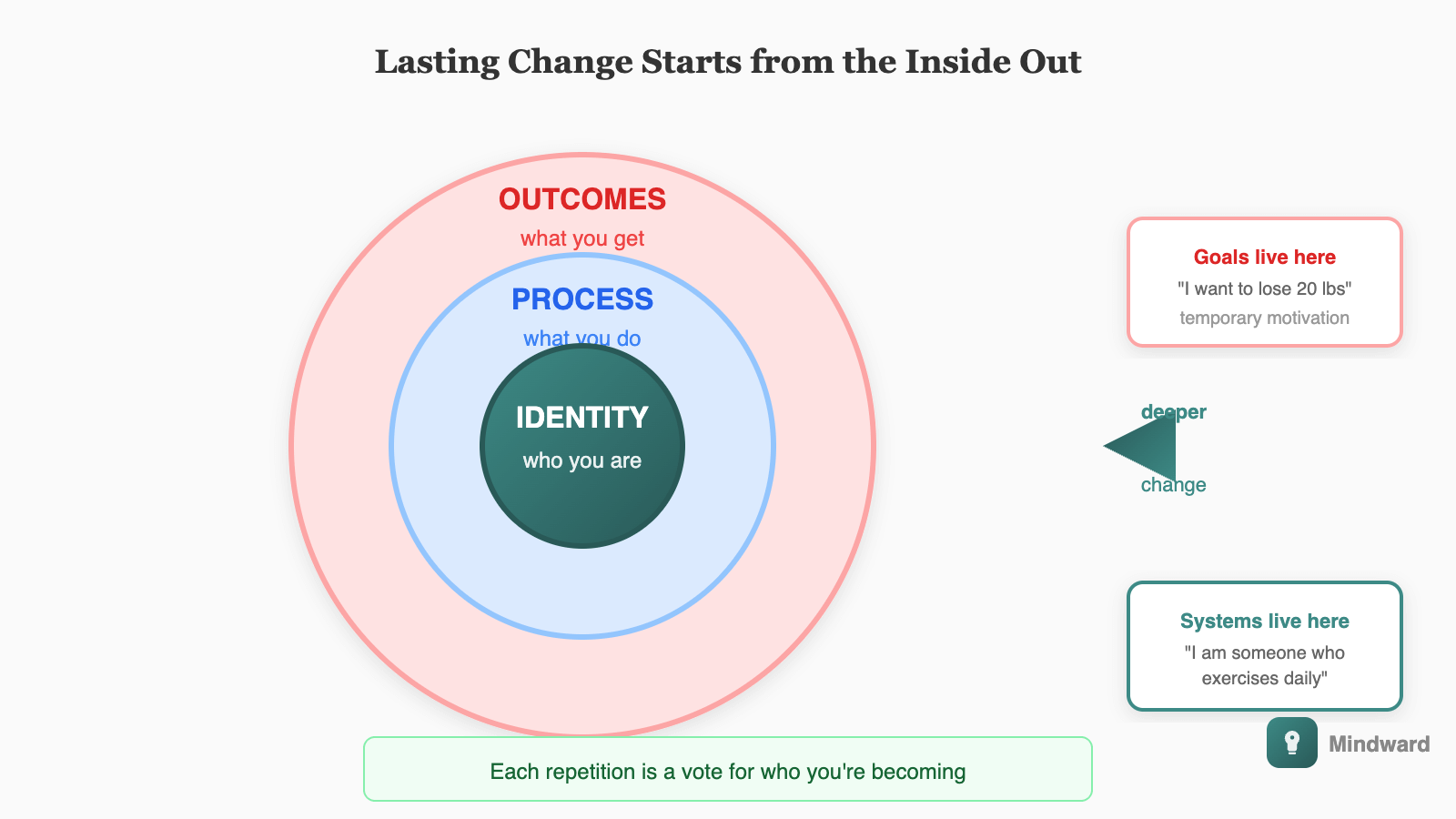
When you set a goal to run a marathon, you're focused on a finish line. When you build a system of daily running, you gradually become a runner. The identity shift is the real transformation. Once you see yourself as a runner, running isn't discipline—it's just what you do.
Your current habits are a reflection of your current identity. To change your habits permanently, you need to change how you see yourself. Systems are the bridge—each repetition is a vote for the person you're becoming.
The Architecture of a Good System
A system isn't just a to-do list or a schedule. It's infrastructure designed for repetition. Good systems share several qualities.
They're specific. "Exercise more" isn't a system. "Do 20 pushups after brushing teeth every morning" is a system. Specificity removes decision-making, which removes friction.
They're tied to triggers. The most reliable systems attach new behaviors to existing routines. Your morning coffee, your commute, your bedtime ritual—these are anchors you can attach new habits to. The trigger happens automatically; the new behavior follows.
- After I pour my coffee, I will write for 15 minutes
- When I sit at my desk, I will identify my top priority before opening email
- After I close my laptop for the day, I will read for 20 minutes
- When I feel the urge to check my phone, I will take three deep breaths first
They're sustainable. The best system is one you'll actually run. An ambitious system you abandon after two weeks loses to a modest system you maintain for years. Start smaller than you think you need to.
The Compound Effect of Daily Practice
Systems leverage the most powerful force in personal development: compounding.
Small improvements accumulate. Getting 1% better each day seems trivial in the moment—you won't notice the difference between today and tomorrow. But over a year, 1% daily improvement compounds to nearly 38x where you started. Over two years, it's over 1,400x.
The math is almost irrelevant. What matters is the principle: tiny actions, repeated consistently, produce results that look like transformation from the outside but feel like inevitability from within.
You don't need to be radically better. You need to be slightly better, repeatedly.
This is why systems beat goals. A goal asks for a dramatic leap. A system asks for a small step—today, and then again tomorrow. The gap between who you are and who you want to be isn't crossed in a single bound. It's closed one rep at a time.
When Systems Meet Reality
No system survives contact with life unchanged. You'll miss days. Circumstances will disrupt routines. The question isn't whether your system will break—it will. The question is how you respond.
The goal-oriented mindset treats a missed day as failure, evidence that you're not disciplined enough, another reason to quit. The system-oriented mindset treats a missed day as data: what broke, how to prevent it next time, and how quickly you can get back on track.
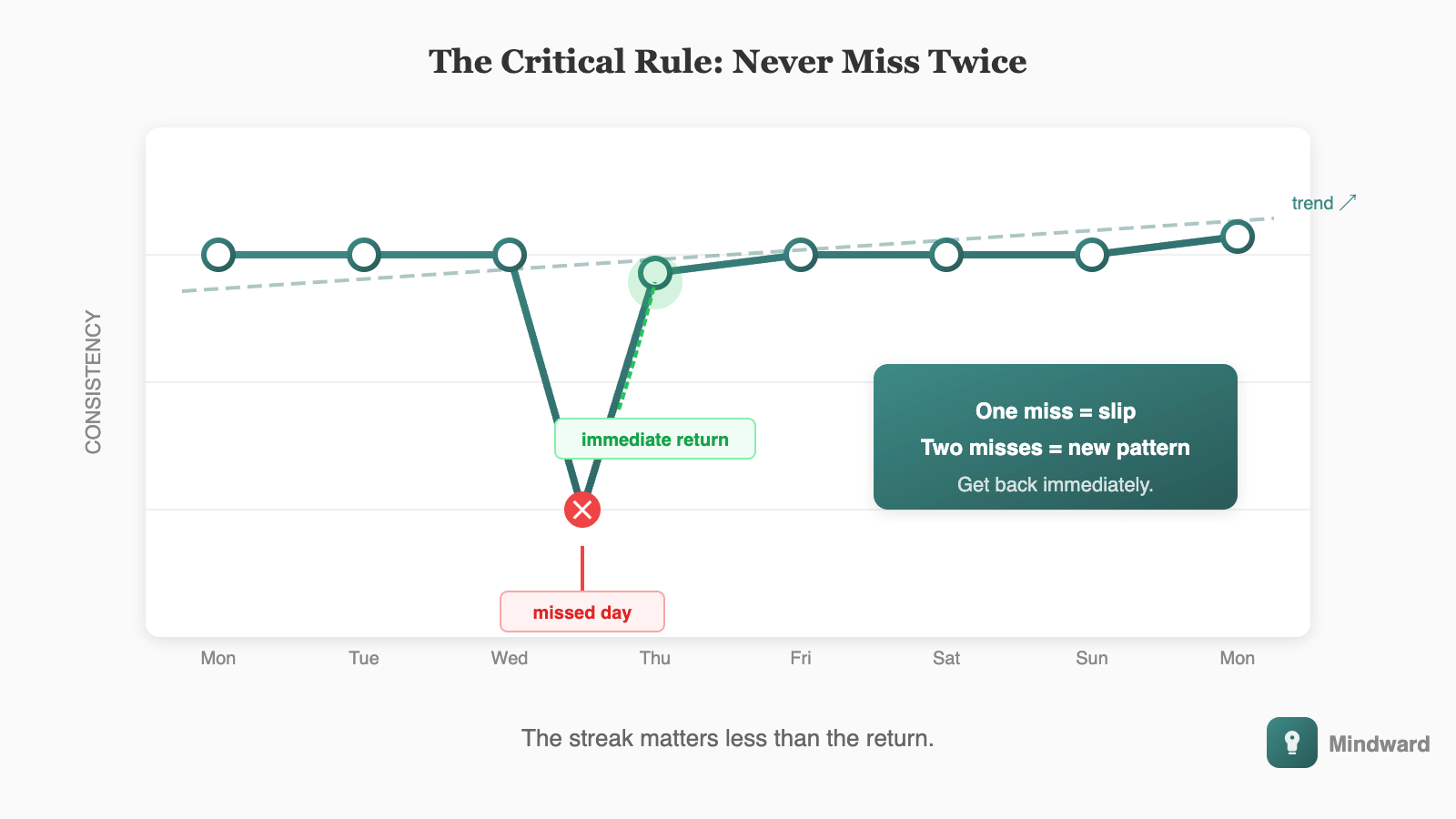
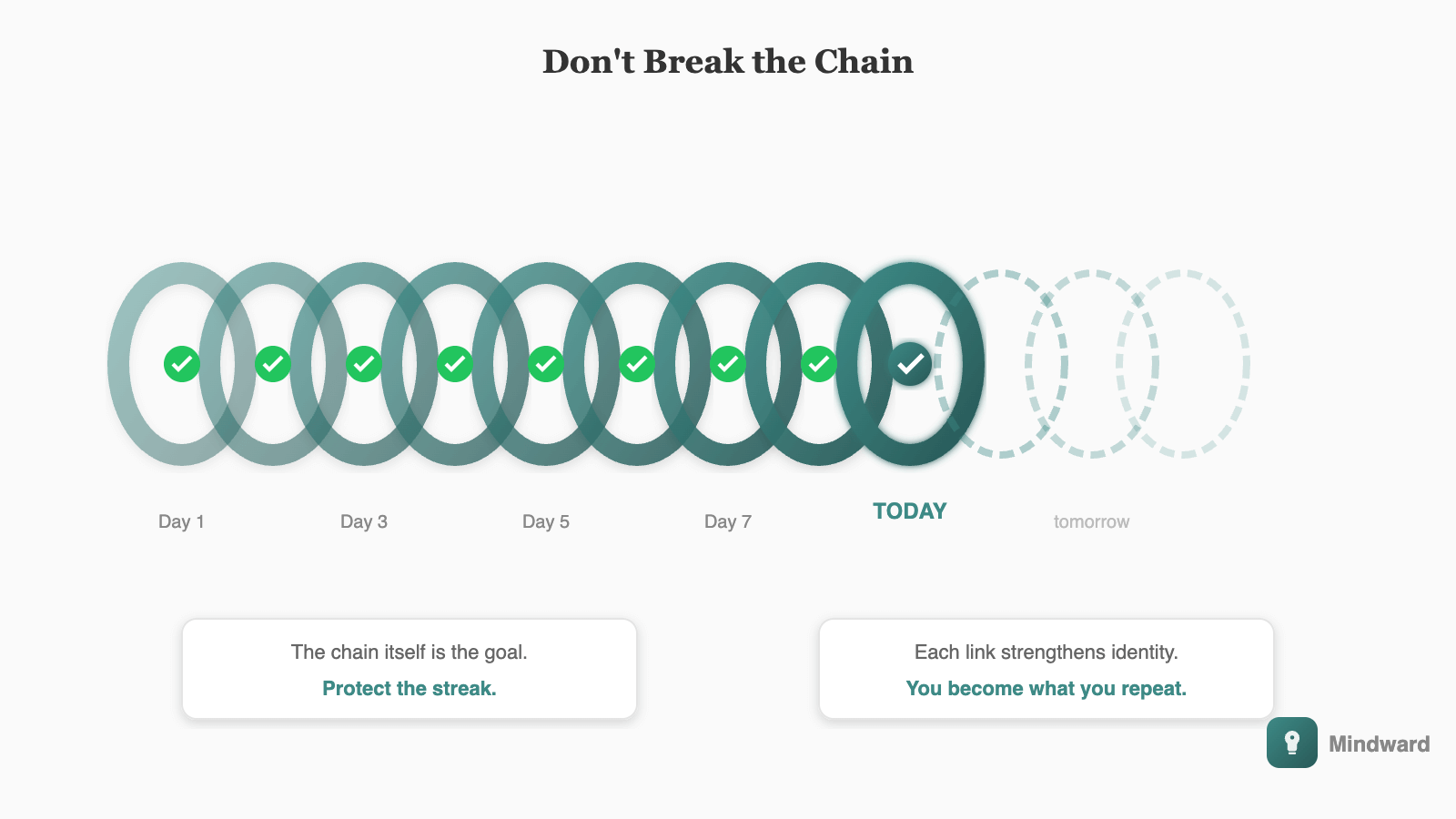
The critical rule: never miss twice. One missed day is a slip. Two missed days is the start of a new pattern. Getting back on track immediately—even imperfectly—preserves the system. The streak matters less than the return.
This is also why your system should include failure protocols. What's the minimum viable version when life gets hard? If you can't do your full workout, can you do five minutes? If you can't write 500 words, can you write one sentence? Staying in motion, even reduced motion, maintains the identity you're building.
From Goals to Systems: A Practical Shift
Take any goal you're holding and translate it into system terms.
Instead of "lose 20 pounds," your system might be: meal prep on Sundays, eat protein with every meal, walk 8,000 steps daily. Instead of "get promoted," your system might be: document one win weekly, have a monthly check-in with your manager, learn one new skill each quarter.
The goal tells you the outcome. The system tells you what to do tomorrow. And tomorrow is the only place change actually happens.
- Goal: Write a book → System: Write 300 words before breakfast
- Goal: Get fit → System: Gym every Monday, Wednesday, Friday at 7am
- Goal: Build wealth → System: Automate 15% of income to investments monthly
- Goal: Learn Spanish → System: 20 minutes of Duolingo during lunch
- Goal: Reduce stress → System: 10-minute meditation after waking
Notice how systems convert vague aspirations into concrete actions. There's nothing to figure out each day—the system tells you what to do. Your job is just to show up.
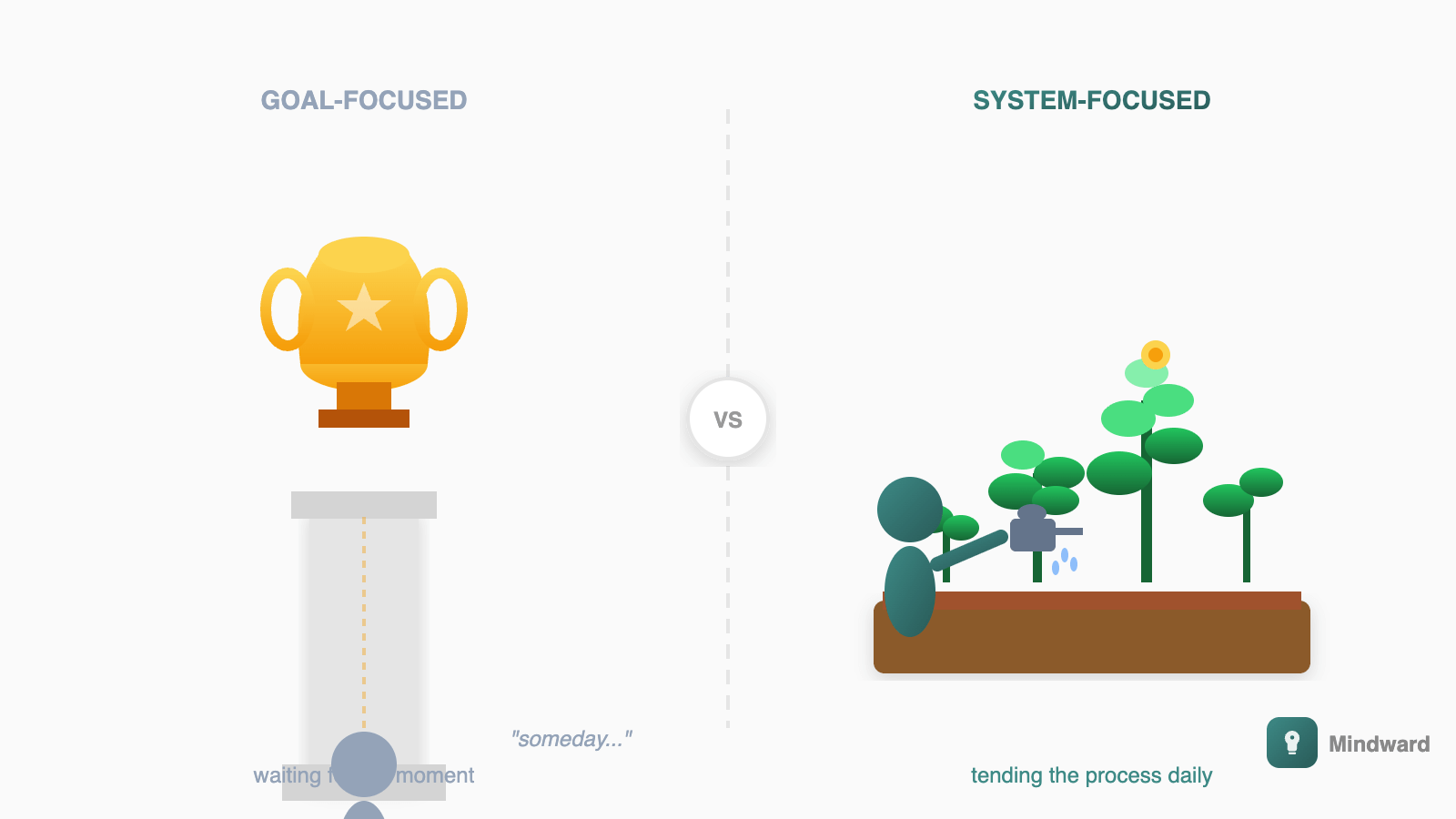
Fall to Your Systems
Under pressure, you don't rise to the occasion. You fall to the level of your systems.
When motivation fades—and it will—your systems catch you. When discipline wavers, when life gets chaotic, when you don't feel like it, the infrastructure you've built carries you forward. This is why preparation matters more than inspiration.
The person you'll be in five years is being built by what you do today. Not what you intend, not what you plan, not what you dream about—what you actually do, repeatedly.
So build the systems. Make them specific, attach them to triggers, start smaller than feels necessary, and protect them when they break. The goals will take care of themselves.
Your future self isn't waiting at some distant destination. Your future self is being constructed, one daily repetition at a time, by the systems you run right now.


Comments
How did you like this article?
No comments yet. Be the first to share your thoughts!