Small Habits Don't Stay Small
The tiny action you dismiss as too small to matter is exactly the one that changes everything over time.
You want to start exercising, so you plan an hour at the gym. You want to read more, so you commit to a book a week. You want to meditate, so you aim for thirty minutes every morning. These feel like real commitments—substantial enough to matter.
Then life happens. The hour becomes impossible. The book feels like pressure. The thirty minutes never materializes. And you conclude, once again, that you're not the kind of person who does these things.
But here's what you missed: the problem wasn't your commitment. It was the size of the commitment. You started too big, failed to sustain it, and quit entirely. Meanwhile, the person doing five minutes a day is still going—and that changes everything.
The Math of Tiny Gains
Small improvements don't add up—they multiply. A one percent improvement every day means you're 37 times better after a year. Not 365 percent better. Thirty-seven times. That's the power of compounding applied to behavior.
The reverse is also true. One percent worse every day, and you're nearly at zero by year's end. Small erosions compound too. The direction matters more than the magnitude.
This is why the size of the habit matters less than its consistency. Ten pushups every day beats a hundred pushups once a week. The daily repetition builds the neural pathway, reinforces the identity, and accumulates results that sporadic effort can't match.

Identity Follows Behavior
Here's what most people don't realize: habits don't just change what you do. They change who you believe you are. Every time you show up—even for two minutes—you cast a vote for a new identity.
The person who reads one page a day becomes "someone who reads." The person who does five pushups becomes "someone who exercises." The label matters because identity drives behavior. Once you see yourself a certain way, actions consistent with that identity become easier.
Big ambitious goals don't shift identity—they just create pressure. Small repeated actions build evidence that you are, in fact, the kind of person who does this thing. That evidence accumulates into belief, and belief makes the behavior automatic.
You don't rise to the level of your goals. You fall to the level of your systems. Build the system small enough to survive your worst days.
Why Small Feels Wrong
Starting small triggers resistance because it feels insufficient. Two minutes of meditation can't possibly matter. One paragraph of writing won't produce a book. Five minutes of exercise won't change your body.
This logic ignores how change actually works. The two minutes isn't the point—showing up is. The paragraph isn't about output—it's about maintaining the habit. The five minutes isn't exercise—it's proving you're the type of person who exercises.
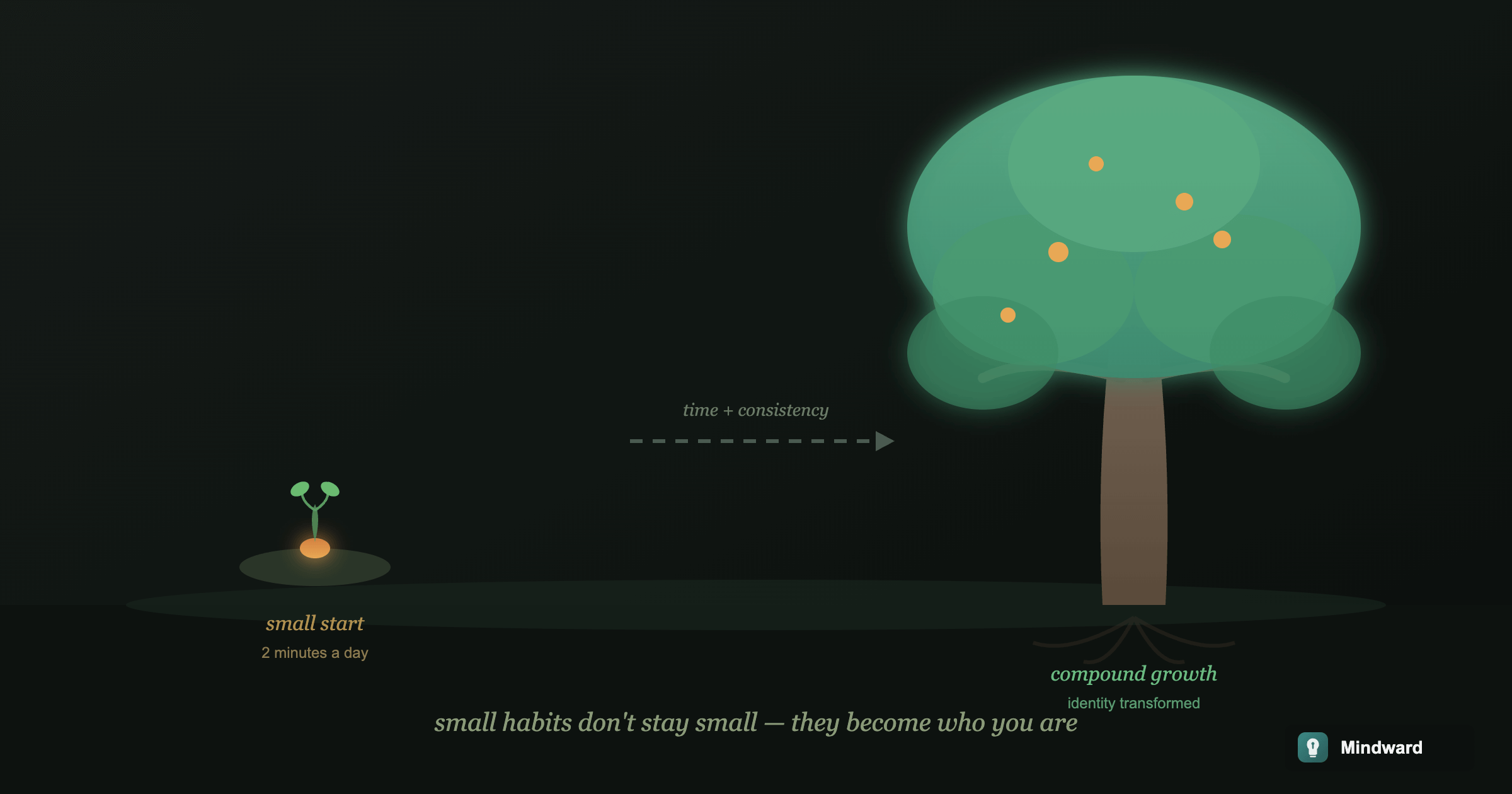
Small habits are strategic, not weak. They're designed to survive resistance, slip under the motivation threshold, and stay alive long enough to grow. The goal isn't to stay small—it's to start small so you don't stop.
The Expansion That Follows
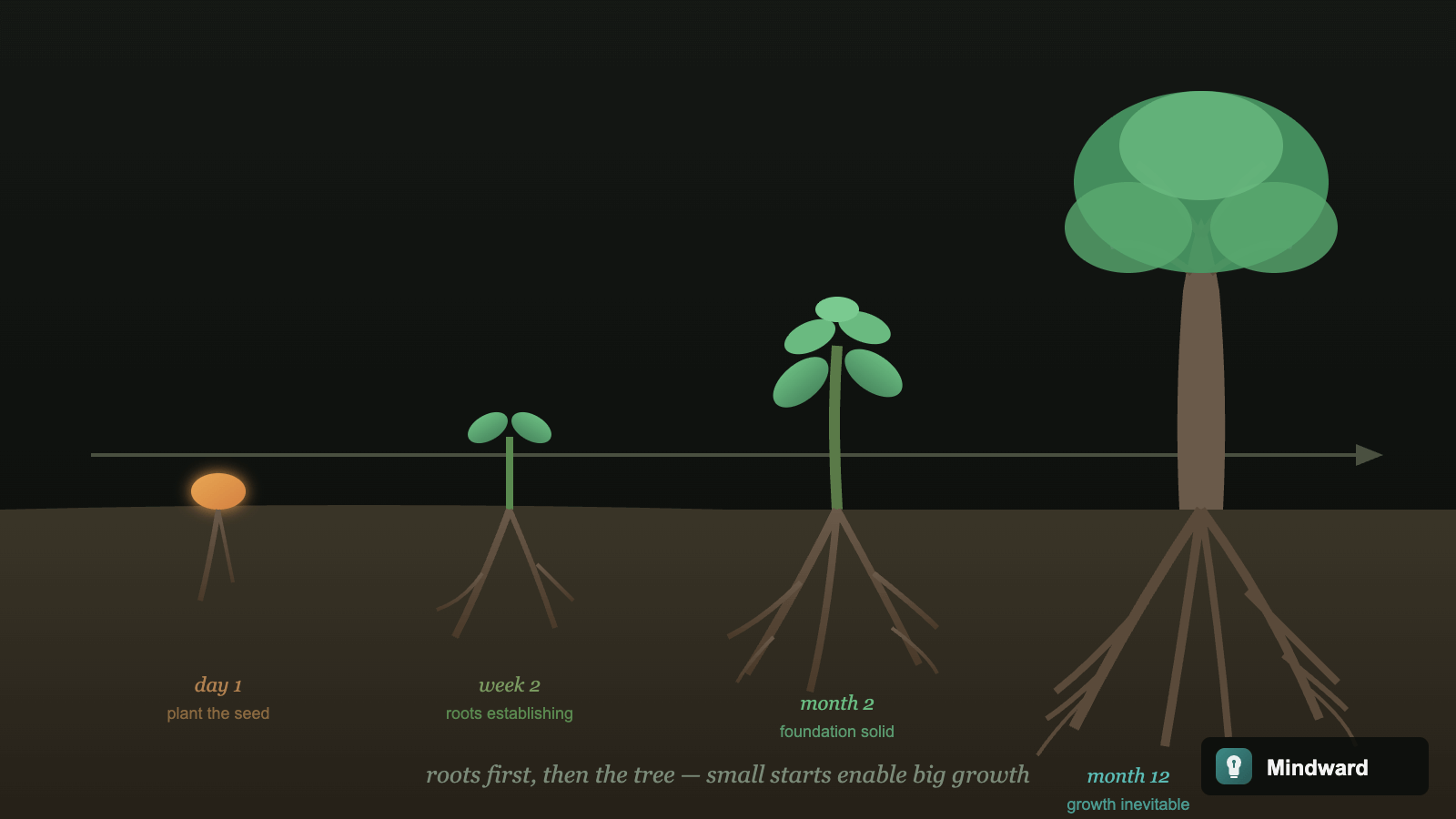
Something interesting happens when you maintain a small habit: it naturally wants to grow. Once showing up is automatic, duration increases on its own. Two minutes becomes five becomes twenty. The habit expands because the foundation is solid.
This is the opposite of the ambitious start. When you begin with an hour, any reduction feels like failure. When you begin with five minutes, any expansion feels like success. The psychological momentum works in your favor instead of against you.
The key is patience. Let the habit establish before you scale it. Prove consistency before you chase intensity. The growth will come—but only if you don't abandon the habit before it takes root.
What Small Looks Like
If you want to read: one page. If you want to exercise: one pushup. If you want to meditate: one minute. If you want to write: one sentence. If you want to learn: one flashcard. These aren't goals—they're entry points.
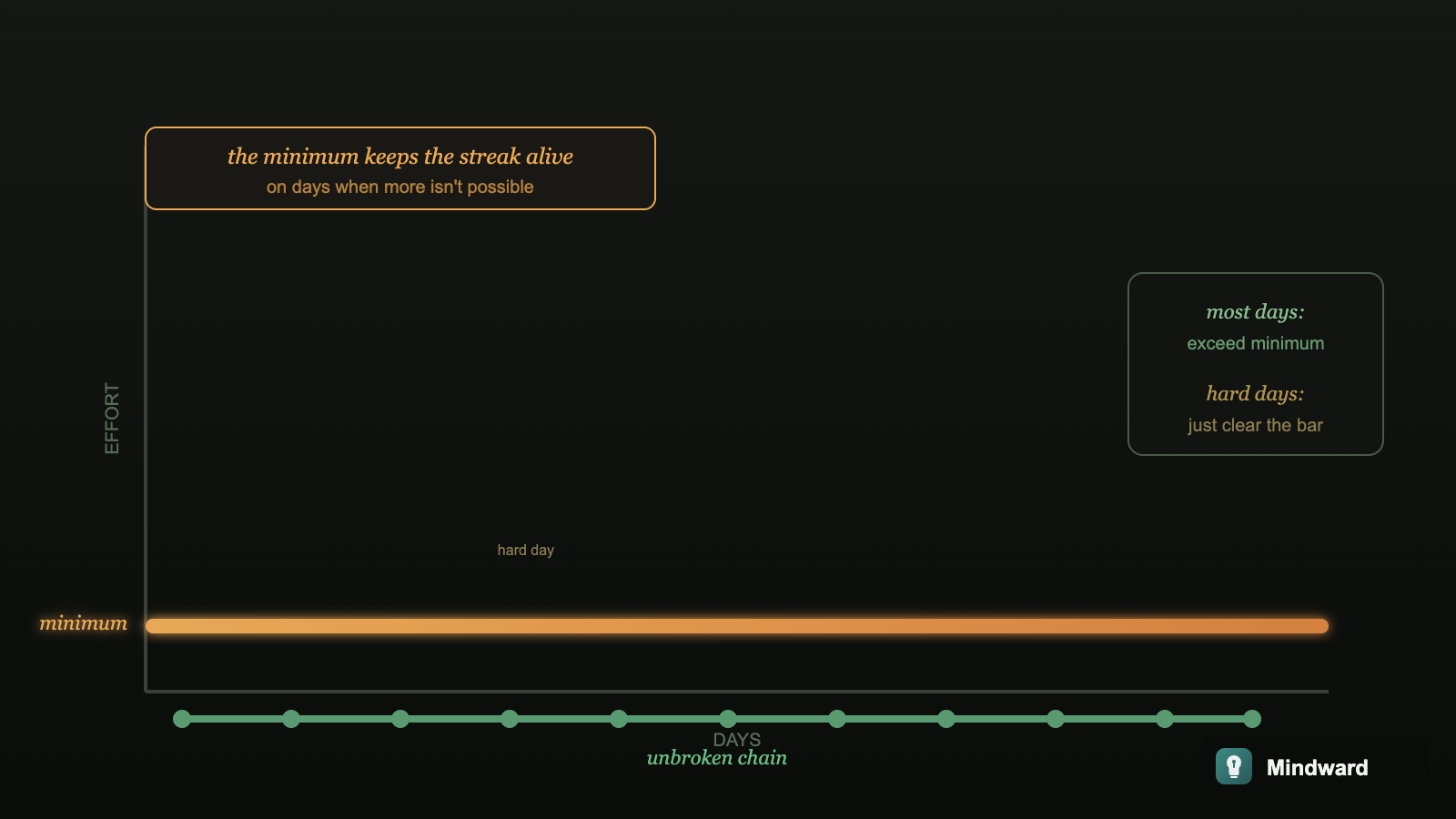
The rule is simple: make it so small you can't say no. Remove every barrier except showing up. Once you've shown up, you're allowed to do more—but you're not required to. The only requirement is the minimum.
Over time, the minimum becomes a floor, not a ceiling. You'll naturally exceed it most days. But on the hard days—the tired days, the busy days, the unmotivated days—the minimum keeps the streak alive. And the streak is everything.
The Long Game
Small habits are a bet on the future. They don't pay off immediately. The results are invisible for weeks, sometimes months. This is why most people quit—they can't see the compounding in progress.
But the people who stick with small habits discover something: one day, they look up and realize they've become someone different. Not through a dramatic transformation, but through a thousand tiny repetitions that added up while they weren't counting.
Small habits don't stay small. They become identity. And identity becomes destiny.
Start smaller than you think you should. Stay longer than you think you need to. The habit that survives is the habit that transforms.


Comments
How did you like this article?
No comments yet. Be the first to share your thoughts!