You Can't Fix Someone By Loving Them Harder
You've tried patience. You've tried understanding. You've tried being enough for both of you. At some point, you have to ask what all this effort is actually changing.
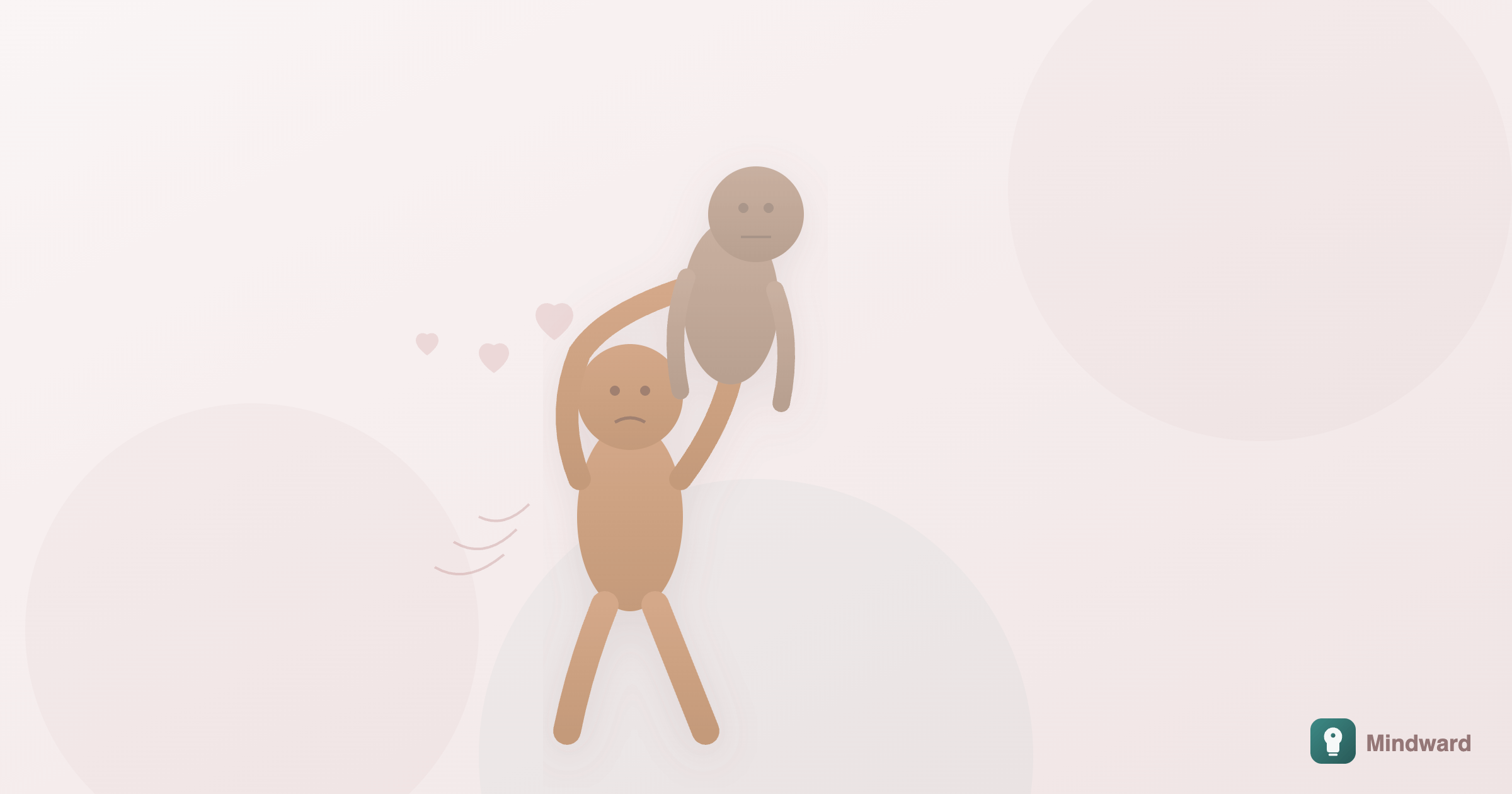
You see their potential so clearly. The person they could be if they just got out of their own way, if they had enough support, if someone believed in them hard enough. So you pour in more—more patience, more understanding, more of yourself.
You absorb their moods. You manage their emotions. You anticipate problems and solve them before they even have to ask. You've become so good at loving around their rough edges that you've forgotten you're contorting yourself to do it.
And somewhere underneath the exhaustion is a hope you don't want to examine too closely: that if you just love them enough, they'll finally become the person you know they can be.
The Fixer's Bargain
This pattern often starts with a reasonable impulse. Someone you care about is struggling, and you have resources to help. Why wouldn't you offer them?
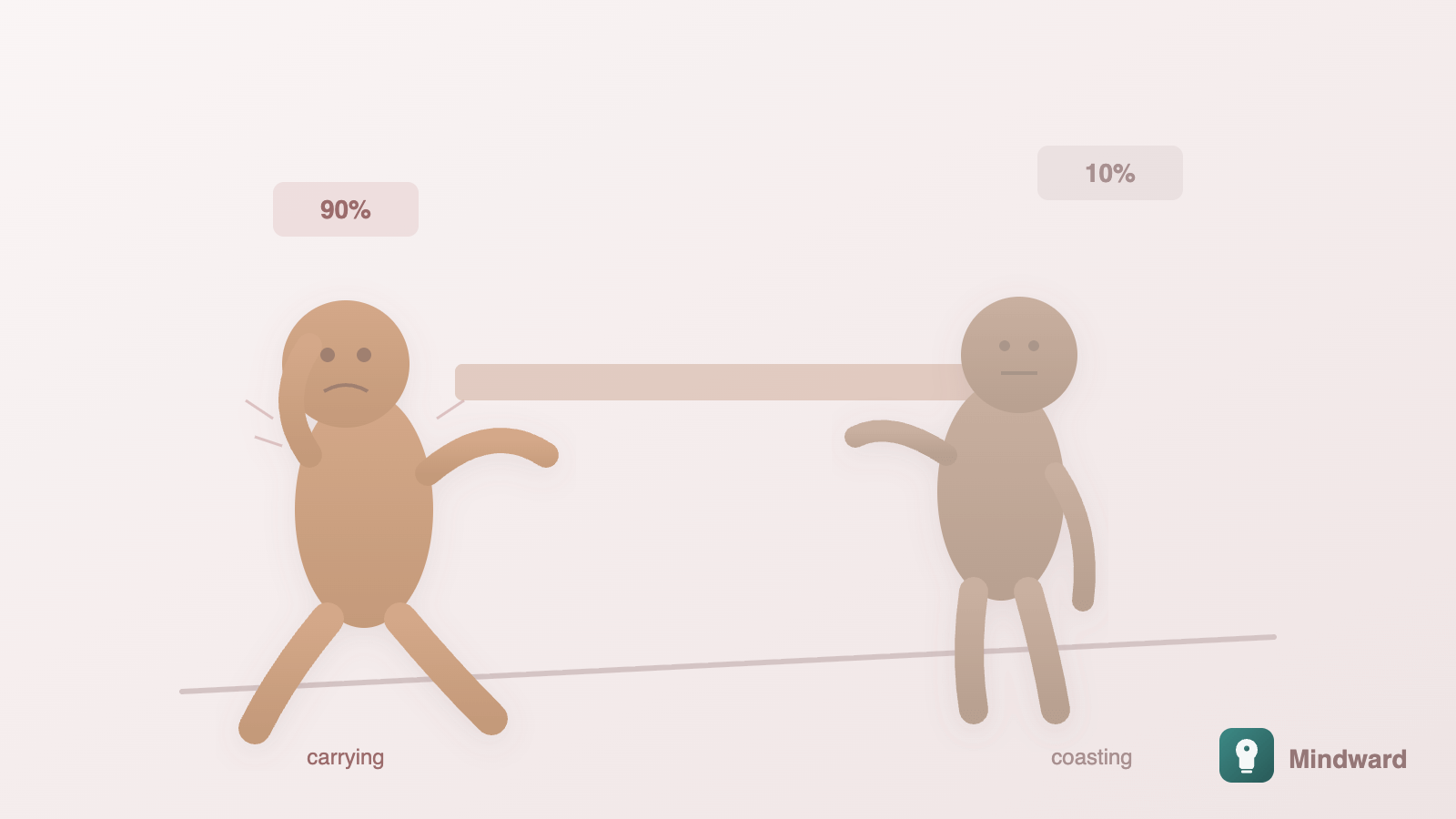
But over time, helping becomes carrying. Supporting becomes managing. And love becomes a project—something you're working on rather than something you're resting in.
The unspoken bargain goes something like this: I will give enough for both of us, and eventually you'll meet me halfway. I will be patient with your growth, and eventually you'll grow. I will love you through this hard season, and eventually the season will end.
The fixer's bargain trades your present for their hypothetical future. And the future keeps getting postponed.
Why More Love Doesn't Create Change
Here's the hard truth: your love, no matter how fierce or patient or unconditional, cannot do someone else's inner work for them.
People change when they feel the weight of their own choices. When the consequences of staying the same become more uncomfortable than the effort of growth. When they decide—for themselves, from inside—that something needs to shift.
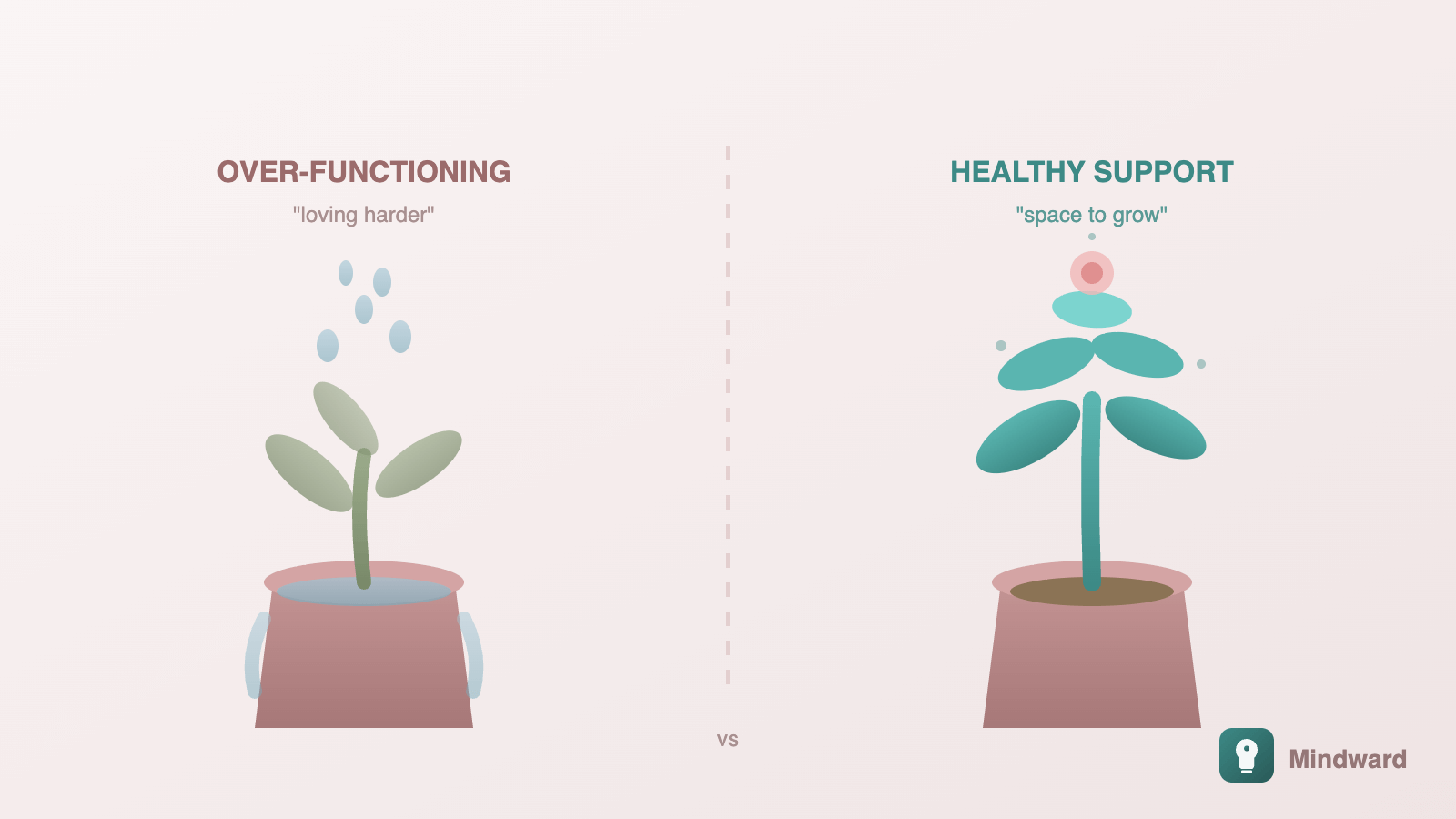
When you absorb all the consequences, manage all the discomfort, and love around all the problems, you're not helping them change. You're making it easier for them to stay the same. Your over-functioning becomes their permission to under-function.
This isn't because they're bad people. It's because humans naturally expand into the space they're given. If someone else is handling the emotional labor, the logistics, the repair work—why would they develop those muscles themselves?
What You're Really Protecting
Chronic fixing often isn't really about them. It's about managing your own anxiety about the relationship.
If you stop carrying, you'll have to see whether they'll carry themselves. If you stop managing, you'll have to witness what they actually choose when left to choose. And that's terrifying—because what if the answer is that they won't step up? What if the relationship can only exist in its current form because you're doing the work of two people?
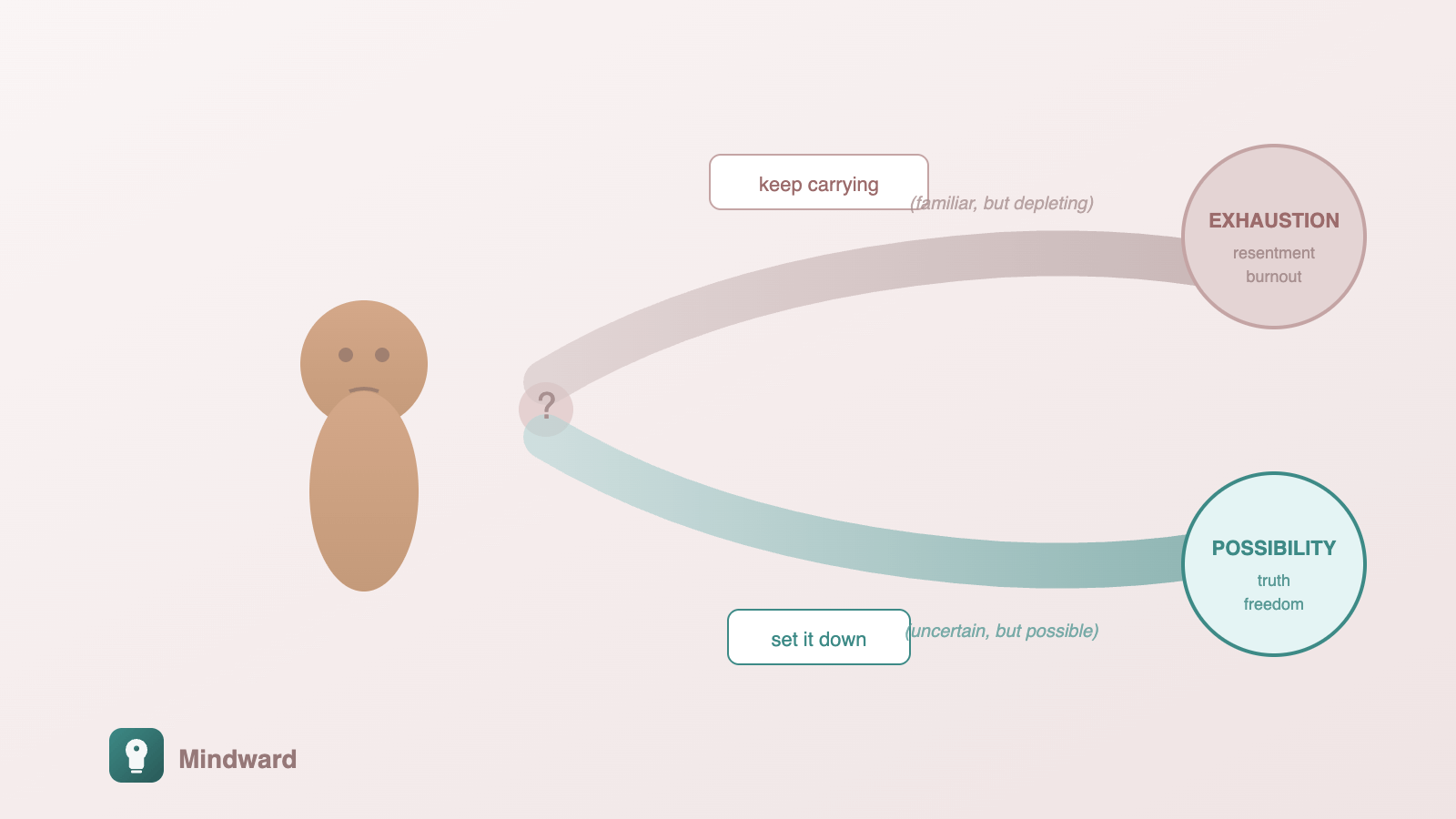
Fixing can be a way of avoiding that knowledge. As long as you're in motion—helping, supporting, improving—you don't have to sit with the reality of what is. You can stay focused on potential instead of pattern.
Sometimes we over-function not because they need it, but because we can't tolerate the truth that would emerge if we stopped.
The Difference Between Support and Carrying
Healthy support looks like standing beside someone while they do hard things. It's offering resources, encouragement, presence—while letting them experience the natural weight of their own life.
Carrying looks like doing the hard things for them. Shielding them from consequences. Making their problems your responsibility to solve.
- Support says: I'm here with you while you figure this out. Carrying says: I'll figure this out so you don't have to.
- Support lets them feel the discomfort that motivates change. Carrying removes the discomfort and removes the motivation.
- Support respects their autonomy. Carrying treats them as a project.
- Support can be sustained. Carrying leads to burnout and resentment.
What Happens When You Stop
Setting down the weight doesn't mean withdrawing love. It means letting love exist without the exhausting labor of constant management.
When you stop over-functioning, one of two things tends to happen. Sometimes the other person rises to meet the space—discovering capabilities they never developed because they never had to. The relationship rebalances into something more mutual, more sustainable.
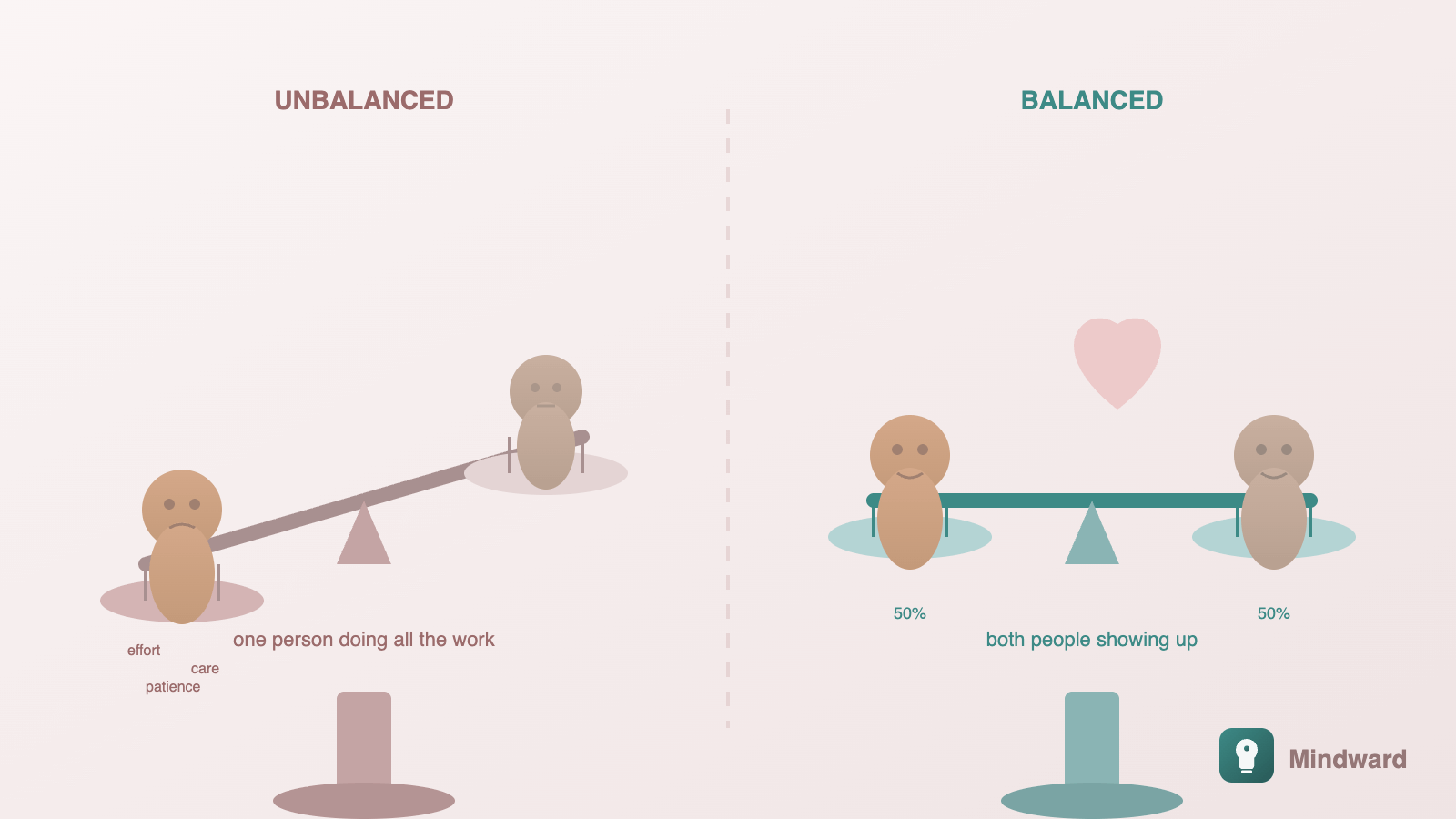
And sometimes they don't rise. Sometimes the relationship was only stable because you were destabilizing yourself to maintain it. That's painful to discover—but it's information you need. A relationship that requires your self-abandonment to survive isn't a relationship that's actually working.
Either way, you get the truth. And the truth, however uncomfortable, is the only foundation you can actually build on.
You can't love someone into becoming who you need them to be. But you can stop losing yourself while you wait for them to change.


Comments
How did you like this article?
No comments yet. Be the first to share your thoughts!