Why You Procrastinate on Things You Actually Want to Do
The project that matters most sits untouched while you clear emails and organize files. It's not laziness. The things we care about are the hardest to start—and there's a reason.
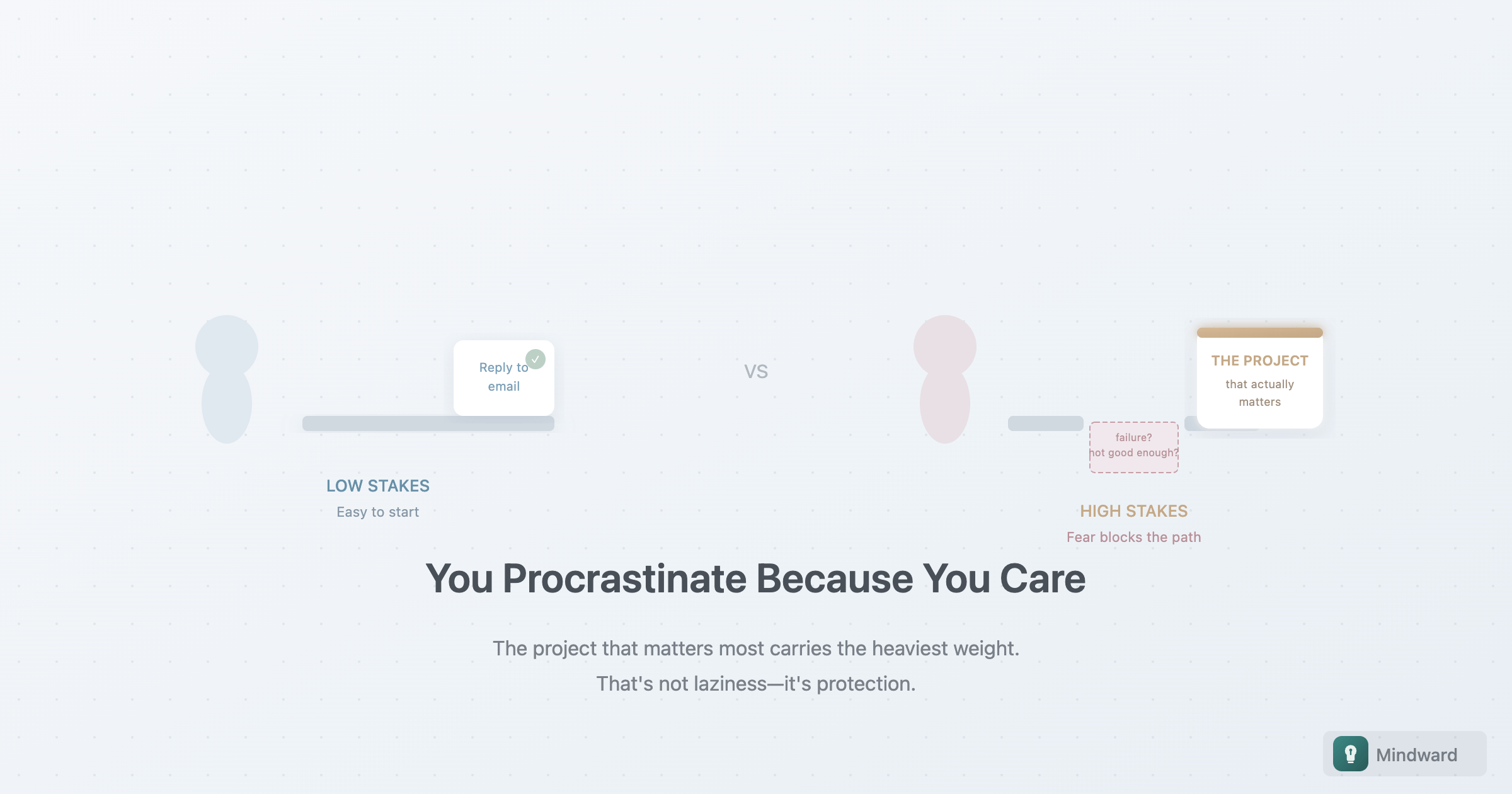
You have a project that matters to you. Something you genuinely want to do—maybe even something you've wanted for years. And yet it sits there, untouched, while you answer emails that don't matter and reorganize things that don't need reorganizing.
This isn't random. You're not procrastinating despite caring. You're procrastinating because you care. The stakes feel different when something matters, and that difference changes everything about how your brain approaches it.
The Paradox of Meaningful Work
Low-stakes tasks are easy to start. If the email isn't perfect, nothing bad happens. If the filing system doesn't work, you can redo it. There's no real consequence to imperfection, so there's no barrier to beginning.
But the project that matters? That carries weight. If you try and it's not good, that means something. If you put yourself into it and it fails, that failure touches your identity. The work stops being just work—it becomes a referendum on whether you're capable of the thing you most want to be capable of.
You're not avoiding the work. You're avoiding what the work might reveal about you.
The Protection of Not Starting
As long as you haven't started, possibility remains intact. The novel could be brilliant. The business could succeed. The art could be everything you imagine. Not starting preserves the fantasy of what it might become.
Starting threatens that. Once you begin, reality enters. The gap between what you imagined and what you can actually produce becomes visible. That gap is uncomfortable—sometimes painfully so.
Procrastination, in this light, isn't laziness. It's protection. Your brain is trying to shield you from disappointment, from self-judgment, from the possibility that the thing you care about might not turn out the way you hoped.
Perfectionism as Paralysis
Perfectionism sounds like high standards. It feels like caring about quality. But in practice, it often functions as a sophisticated avoidance strategy.
If the standard is perfection, and anything less than perfect is failure, then not starting is the only safe option. You can't fail at something you never attempt. The perfectionist isn't protecting quality—they're protecting themselves from the verdict that comes with completion.
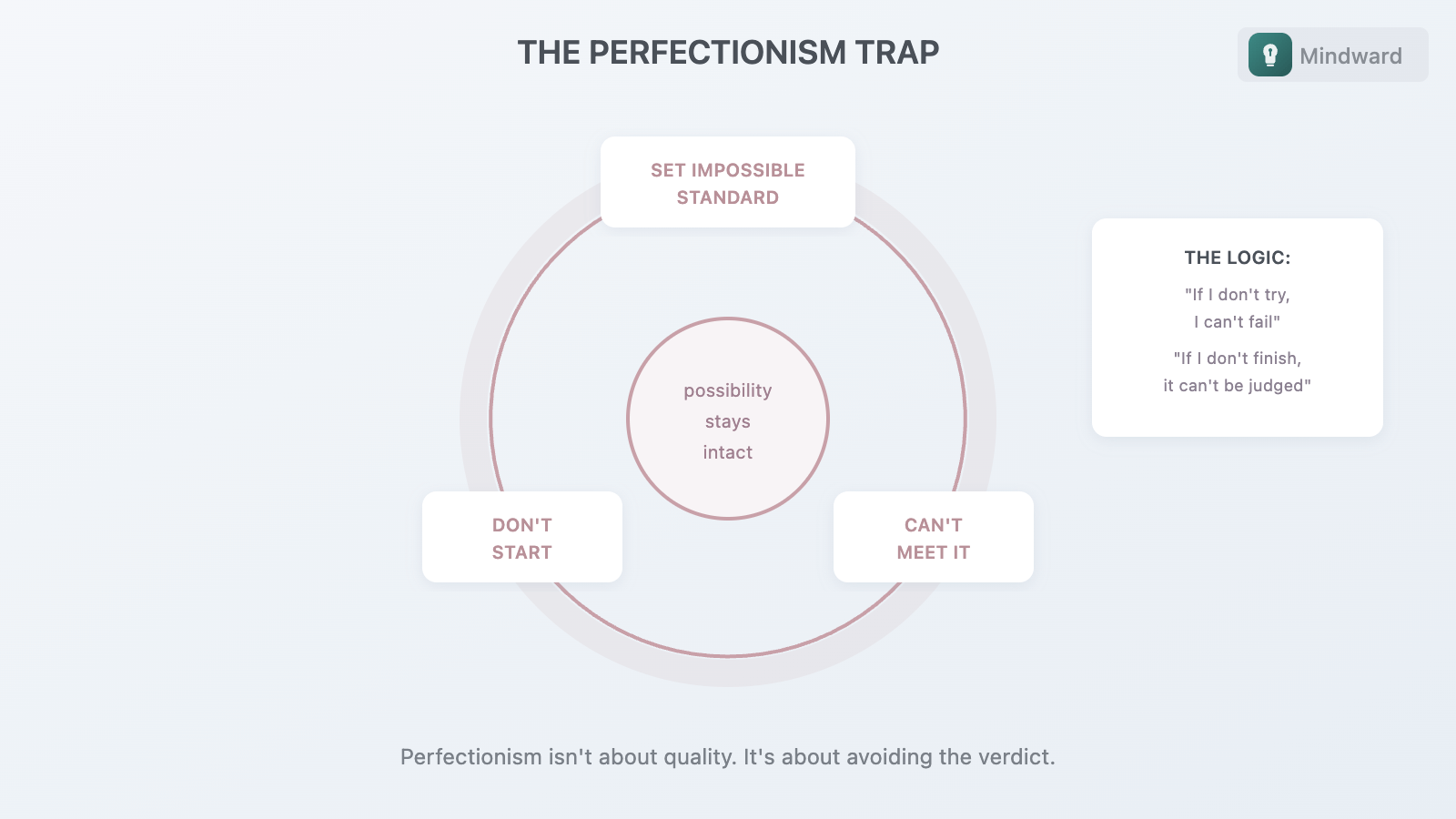
- If I don't try, I can't fail
- If I don't finish, it can't be judged
- If I don't show anyone, I can't be rejected
- If I keep it in my head, it stays perfect
This logic makes emotional sense. It just doesn't lead anywhere.
What Actually Helps
The solution isn't to care less—that's not actually possible for things that genuinely matter to you. The solution is to change your relationship with imperfection and with starting.
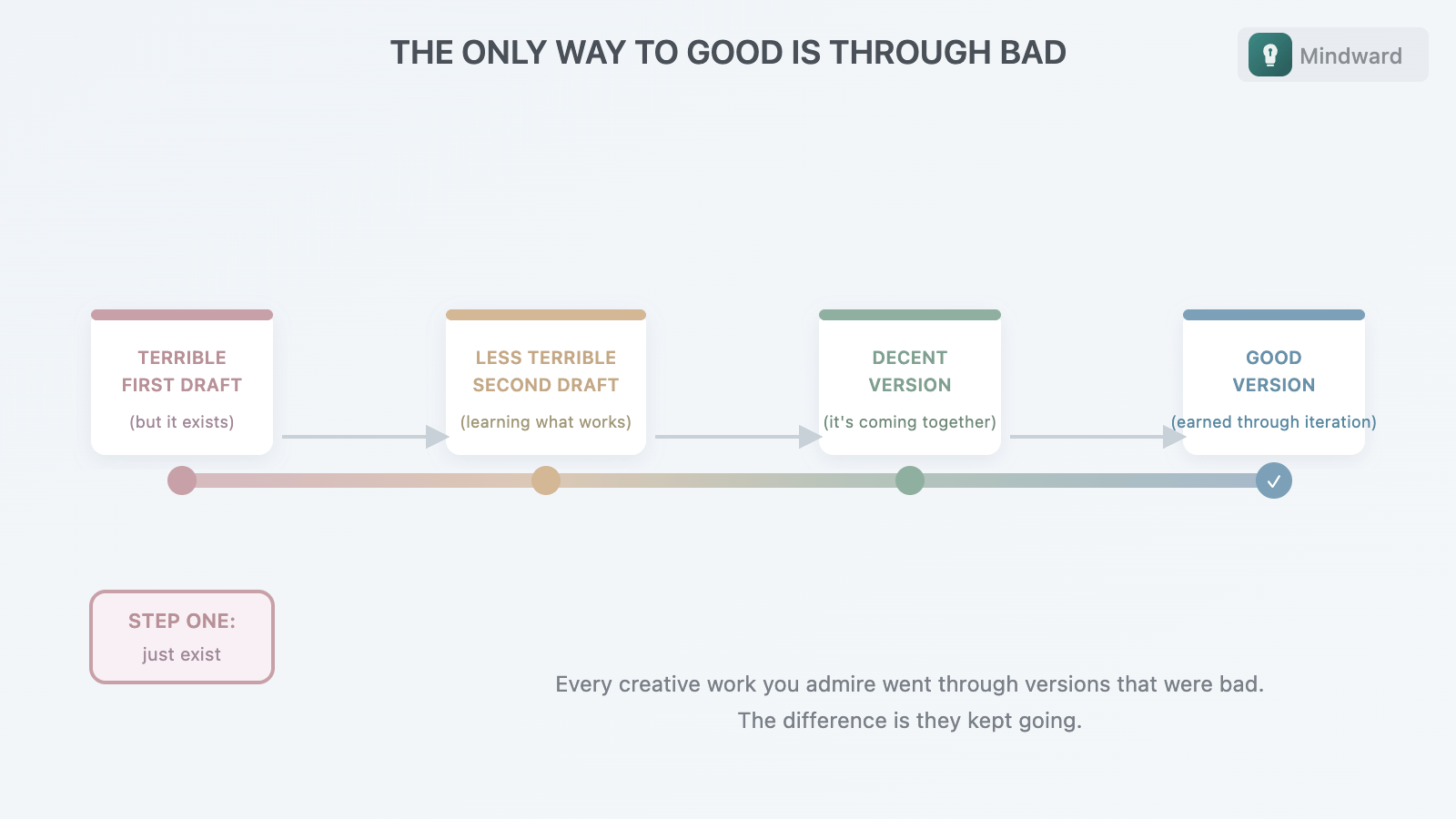
Lower the bar for beginning. The first version doesn't have to be good. It has to exist. Giving yourself permission to create badly is often the only way to create at all. Quality comes from iteration, not from waiting until you're ready to produce something perfect.
Separate identity from outcome. Your worth isn't determined by whether this project succeeds. You're a person who makes things, and some of those things will be better than others. That's not a judgment on you—it's just how creative work functions.
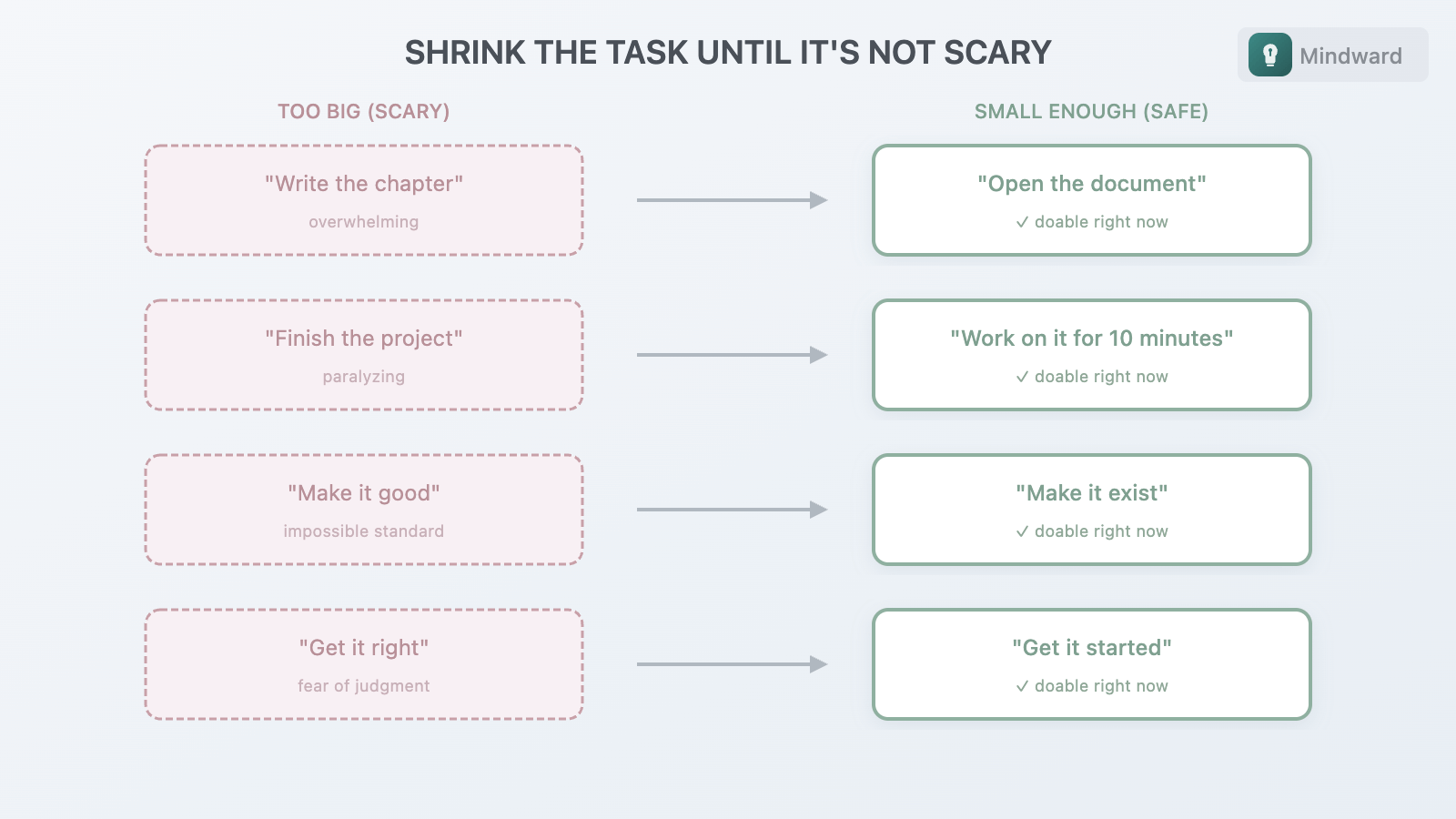
Shrink the task until it's not scary. Instead of 'write the book,' try 'write one bad paragraph.' Instead of 'launch the business,' try 'spend fifteen minutes on one small piece.' Make the first step so small that your brain can't mount a serious objection.
- Not 'write the chapter' but 'open the document'
- Not 'finish the project' but 'work on it for ten minutes'
- Not 'make it good' but 'make it exist'
- Not 'get it right' but 'get it started'
Done Is Better Than Perfect
You've heard this before. But it's worth sitting with why it's true.
A finished imperfect thing can be improved. An unstarted perfect thing remains imaginary. Every creative work you admire went through versions that were bad. The difference between people who make things and people who dream about making things isn't talent—it's willingness to work through the bad versions.
The only way to get to good is through bad. And the only way to get through bad is to start.
Your meaningful project is waiting. Not for the right moment, not for more clarity, not for permission. Just for you to begin—badly, imperfectly, with full acknowledgment that the first attempt won't match your vision. That's not failure. That's how it works.
The thing you're avoiding because it matters? It will keep mattering. The only question is whether you'll keep waiting, or whether you'll finally let yourself start.


Comments (1)
How did you like this article?
Maya
January 1, 2026
I found this helpful. Thank you!