The Power of Finishing: Why Completion Beats Perfection
An imperfect finished project teaches you more and creates more value than a perfect one that never ships. Done is a skill—and it's the one that matters most.
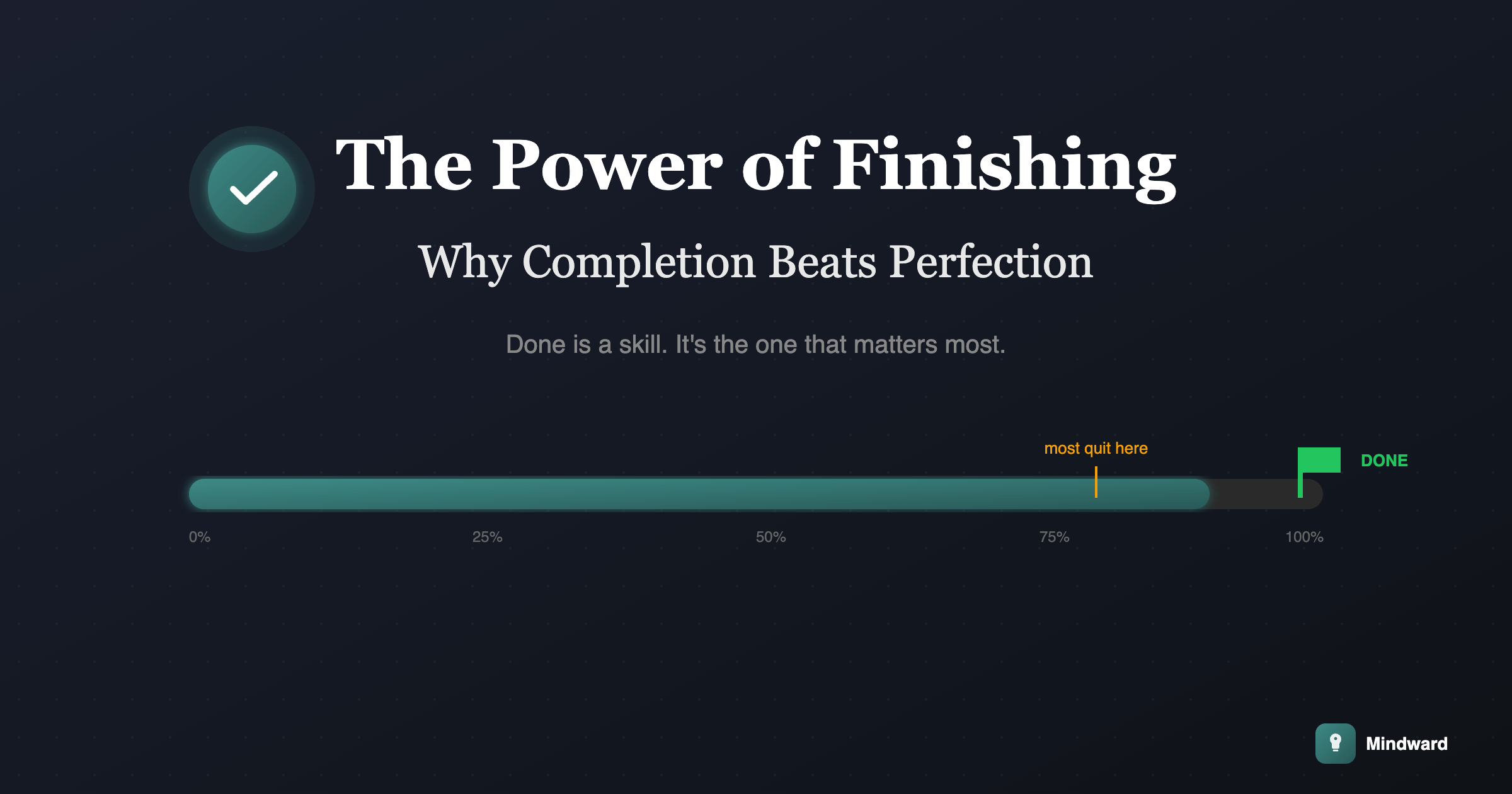
You don't have a starting problem. You have a finishing problem.
Look around your life and count the half-done projects. The draft that's 80% there. The course you stopped halfway through. The side project with a graveyard of uncommitted code. The book outline that never became a book.
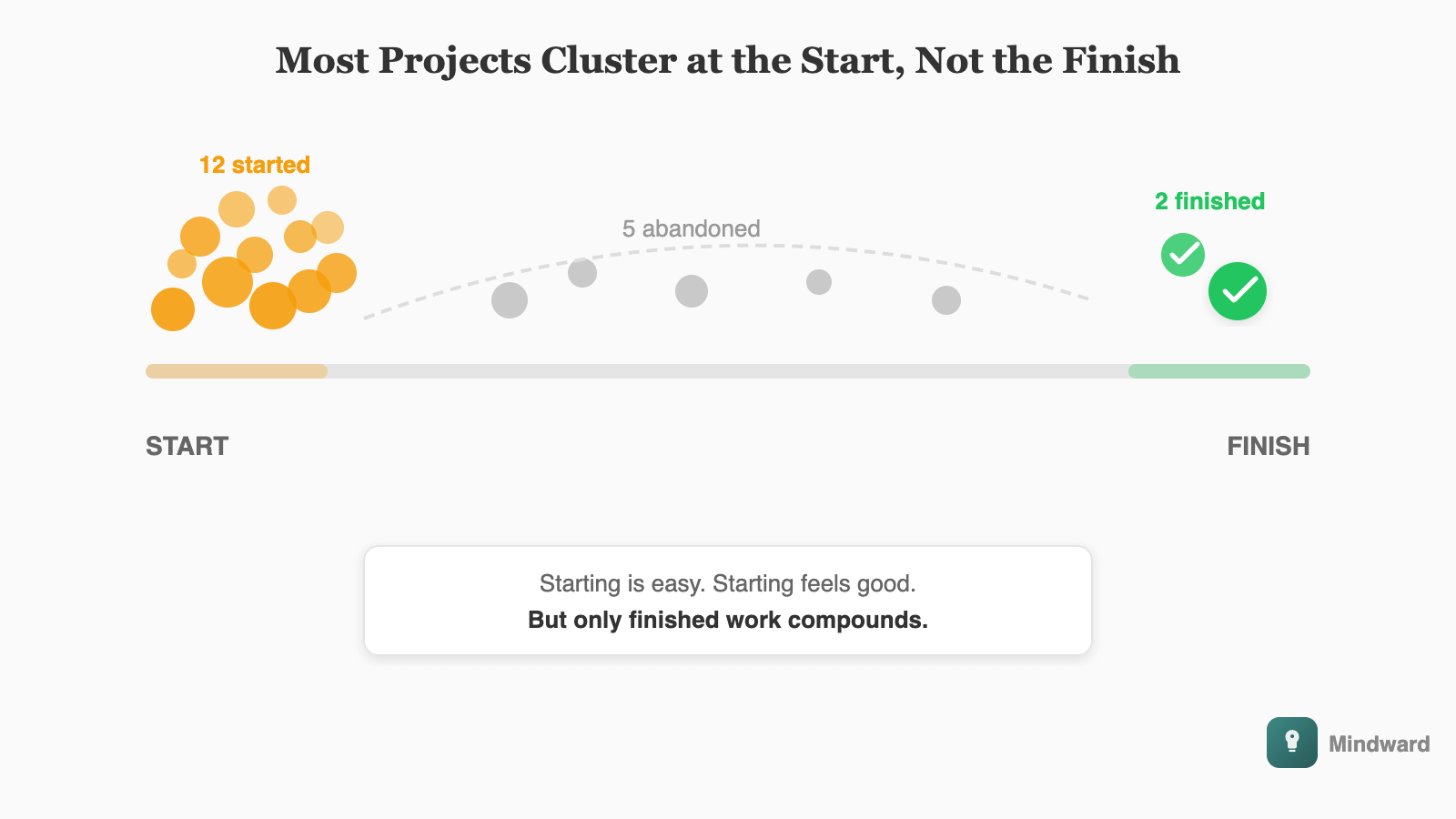
Starting is easy. Starting feels good—all possibility, no friction, pure potential. But potential doesn't compound. Finished work does.
The world doesn't reward your intentions or your almost-dones. It rewards what you ship.
The 90% Trap
Most abandoned projects don't fail at the beginning. They fail in the final stretch.
The first 90% of a project takes 50% of the effort. The last 10% takes the other 50%. This isn't a joke—it's a pattern anyone who finishes things learns to expect. The end is where the real work lives.
That final stretch is where you discover the edge cases, the polish requirements, the integration problems, the decisions you deferred. It's tedious. It's unglamorous. And it's exactly where most people quit to start something new.
New projects are seductive because they let you feel productive without confronting the hard parts of completion.
But if you examine your pattern honestly, you'll notice: the hard parts you're avoiding in the current project will appear in the next one too. The only way out is through.
Why Perfectionism Is Procrastination
Perfectionism disguises itself as high standards. It feels responsible—you're just making sure it's good enough. But perfectionism is fear wearing a productivity mask.
The perfectionist waits until conditions are ideal, until the work is flawless, until they're certain of success. They call this quality control. What it actually controls is output—by reducing it to zero.
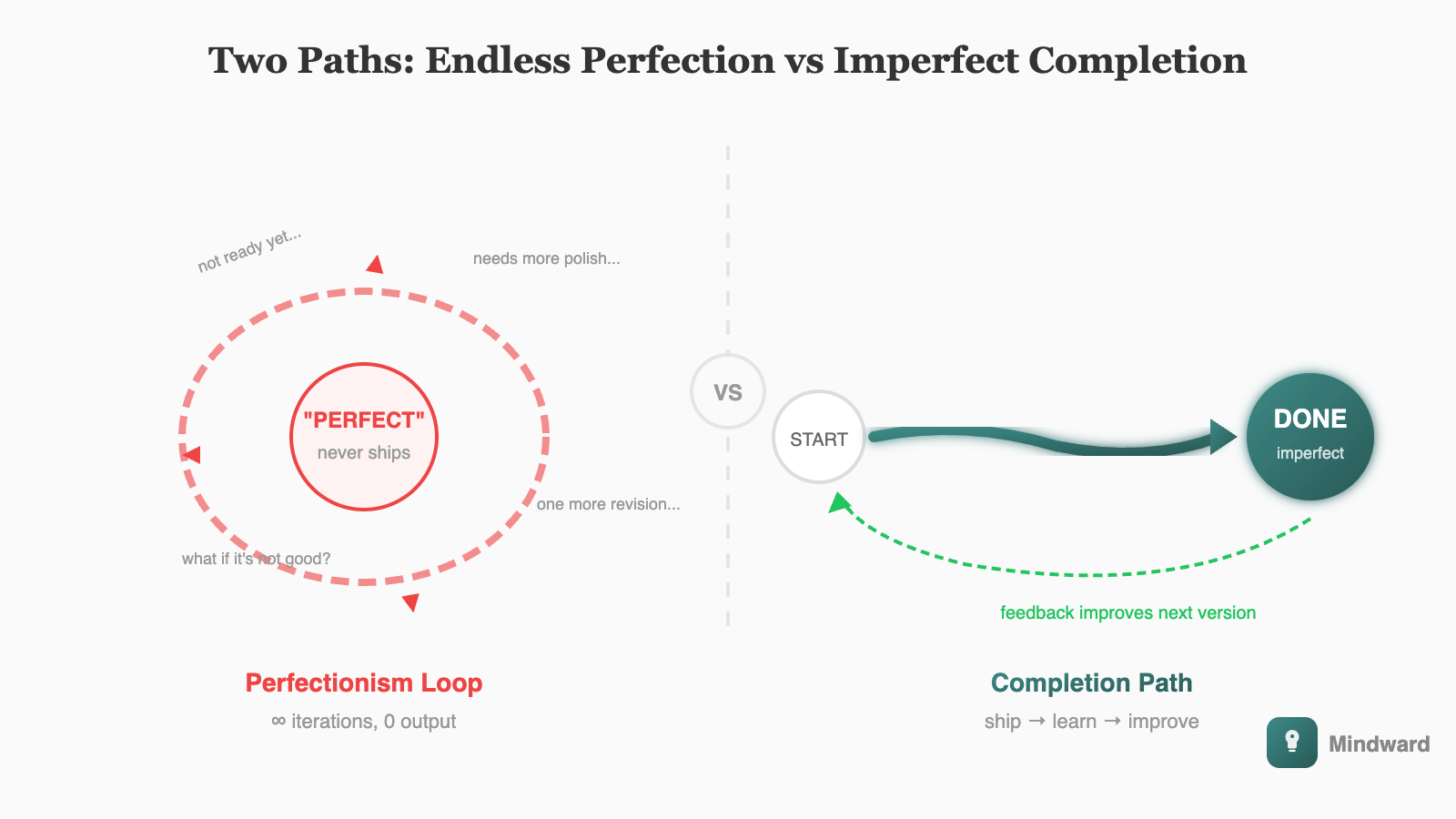
Here's the uncomfortable truth: you cannot know if something is good until it's finished and released. The feedback that improves your work only comes after completion. Polishing in isolation is guessing.
The person who finishes ten imperfect projects will learn more—and produce more value—than the person who perfects one project that never ships.
Done Is a Skill
Finishing isn't a personality trait. It's a skill, which means it can be developed.
People who consistently finish things aren't more disciplined or talented. They've built systems that make completion the default. They've learned to recognize the resistance that appears near the end and push through it anyway.
They've also redefined what 'done' means. Not perfect. Not comprehensive. Not beyond criticism. Just complete enough to ship, learn from, and improve in the next iteration.
- Done means it works, not that it's flawless
- Done means someone else can use it or see it
- Done means you've made the hard decisions instead of deferring them
- Done means you've earned the right to start something new
This isn't about lowering your standards. It's about raising your completion rate—which is the only way to develop the judgment that leads to genuinely high-quality work.
The Compound Returns of Completion
Every finished project creates value that unfinished projects cannot.
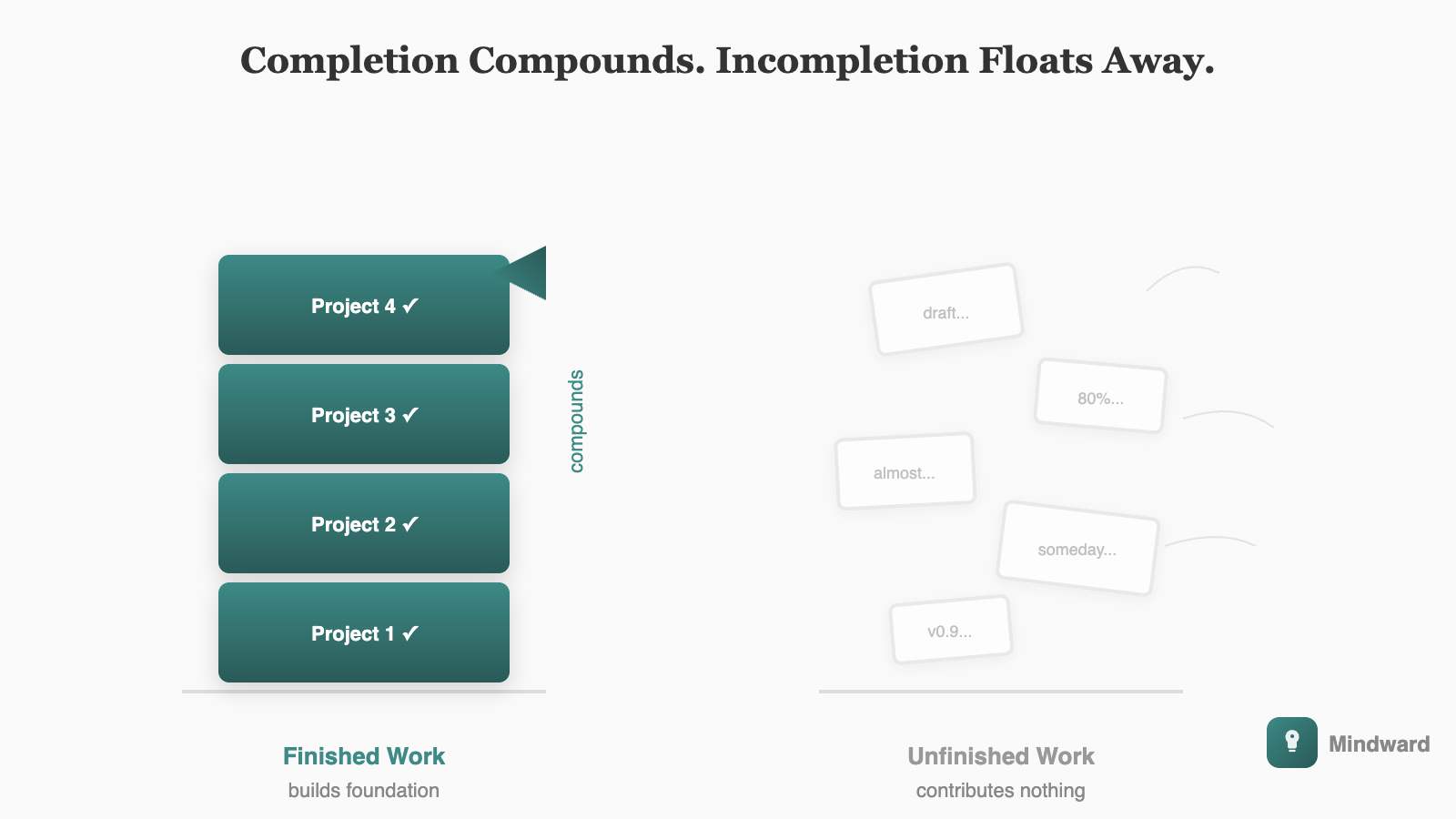
Finished work generates feedback. It shows you what actually resonates versus what you assumed would work. This feedback is gold—it calibrates your instincts for the next project.
Finished work builds reputation. People can't hire you for, recommend you based on, or learn from work that doesn't exist. Shipping is how you become known for your craft.
Finished work compounds. Each completed project becomes a foundation for the next. Skills sharpen, processes improve, and momentum builds. The tenth thing you finish is dramatically better than the first—but only if you finished the first nine.
Most importantly, finished work clears mental space. Incomplete projects occupy cognitive real estate, creating a background hum of guilt and fragmented attention. Completion is liberation.
How to Build the Finishing Habit
If finishing doesn't come naturally yet, you can engineer it.
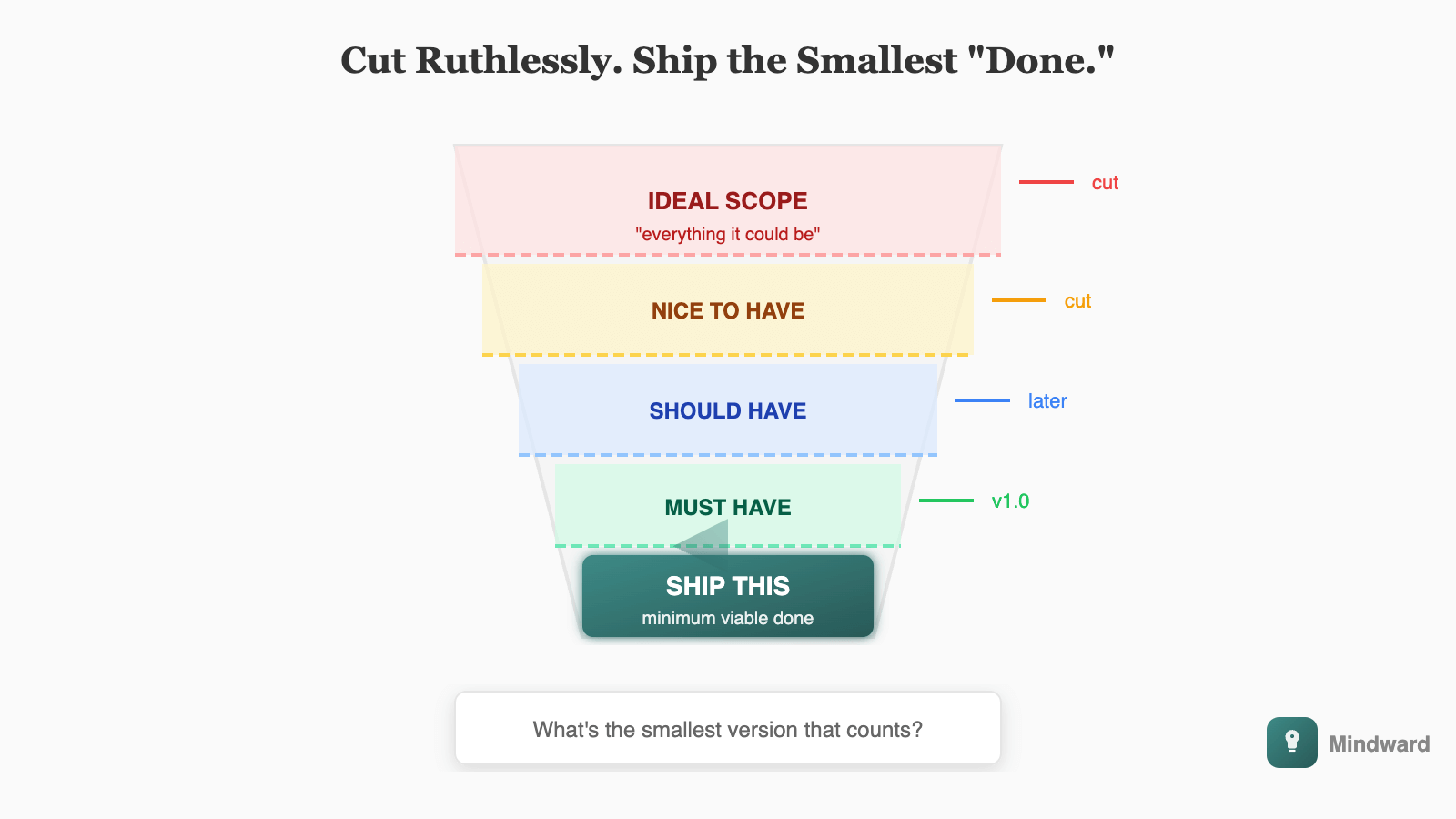
Start by shrinking the scope. The most common reason projects don't finish is that they were too big to begin with. Cut ruthlessly. What's the smallest version that still counts as done? Ship that first.
Set a deadline and treat it as real. Deadlines force decisions. Without them, you'll optimize indefinitely. Pick a date, tell someone, and let the constraint shape your choices.
Work backward from the finish. Instead of starting with what's interesting, identify what completion requires and work toward it. Keep the end state visible at all times.
Recognize the final-stretch resistance. When you feel the urge to start something new or add scope near the end, notice it as a pattern. That's the finishing muscles burning. Push through anyway.
The urge to start something new is often the sign that your current project is about to get good. Don't abandon it at the threshold.
The One-Project Rule
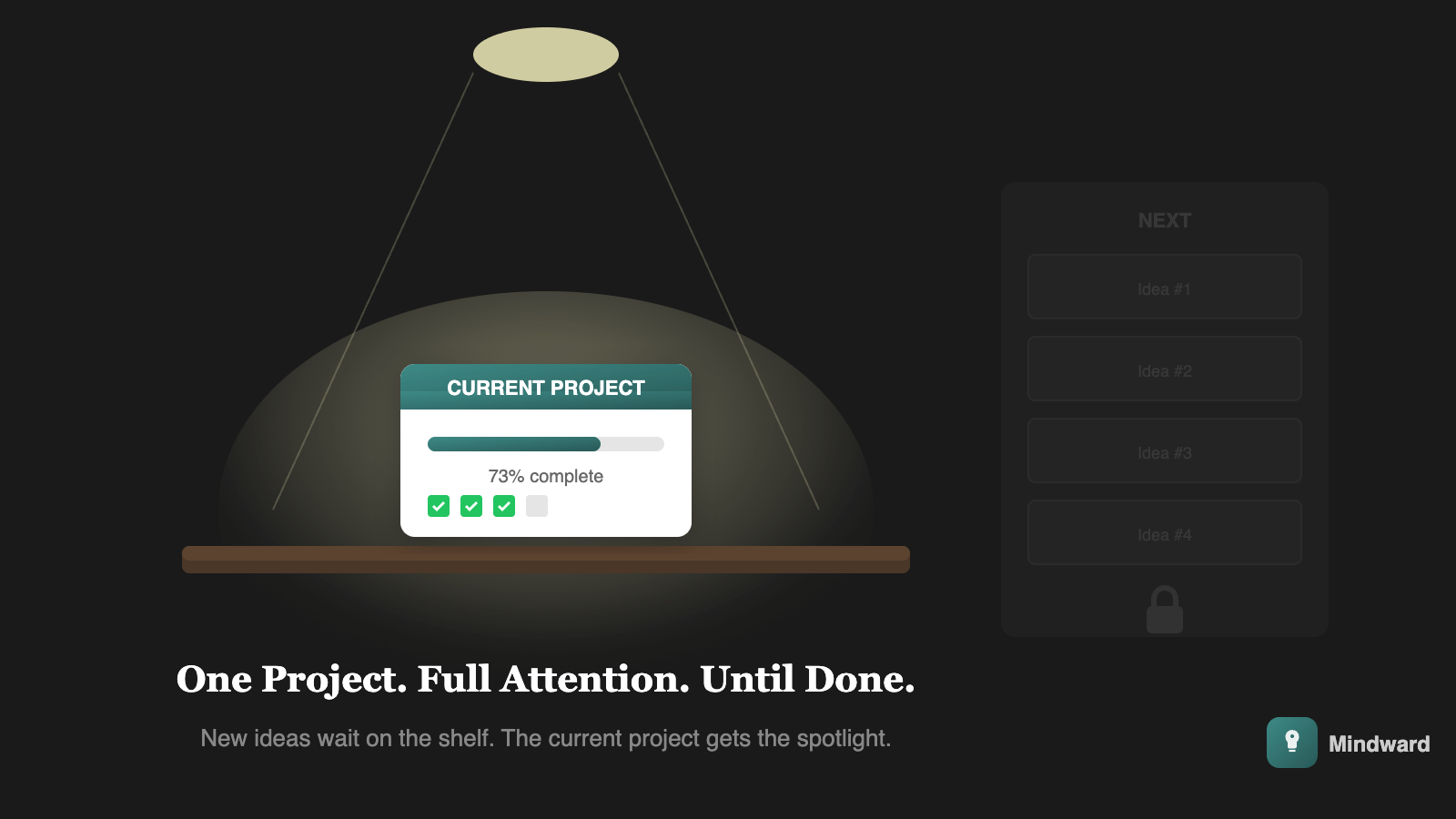
Until you've built the finishing habit, consider a simple constraint: one project at a time.
This sounds limiting because it is. That's the point. Constraints eliminate the escape hatch of starting fresh. When you can't switch projects, the only way forward is through.
You're not forbidden from capturing new ideas—write them down for later. But active work stays focused on one thing until it ships. Then, and only then, do you choose the next project from your list.
This single constraint will teach you more about finishing than any productivity system. It removes the option that kills most projects: abandonment disguised as prioritization.
Ship It
Somewhere in your life right now, there's a project that's almost done. It's been almost done for weeks or months. You know which one it is.
That project is your teacher. Not a new one, not a better one—that one. The one you've been avoiding because the end is where the hard decisions live.
Finish it. Not perfectly. Just done.
The gap between where you are and where you want to be isn't filled with more plans or better ideas. It's filled with finished work. One completed project at a time, stacking into something that matters.
Start finishing.


Comments
How did you like this article?
No comments yet. Be the first to share your thoughts!