Walking Is the Most Underrated Health Habit
We overcomplicate fitness. The most effective exercise isn't the most intense—it's the one you'll actually do. Walking delivers extraordinary benefits with zero barriers to entry.
We've been sold the idea that exercise needs to hurt. That it needs to leave you breathless, sore, and exhausted. That if you're not pushing limits, you're not making progress.
This belief keeps millions of people sedentary. The gap between doing nothing and doing an intense workout feels too wide to cross. So they don't cross it. They wait for motivation that never comes, for time that never appears, for a version of themselves that enjoys suffering.
Meanwhile, the most effective exercise for most people requires no equipment, no gym membership, no special clothing, no recovery time, and no willpower. You already know how to do it. You've been doing it since you were a toddler.
Walking. Just walking. It's not sexy. It won't get you Instagram followers. But the research is overwhelming: regular walking transforms health in ways that rival or exceed high-intensity exercise—with a fraction of the barriers.
What Walking Actually Does
Walking isn't exercise-lite. It's a full-system intervention that touches nearly every aspect of health.
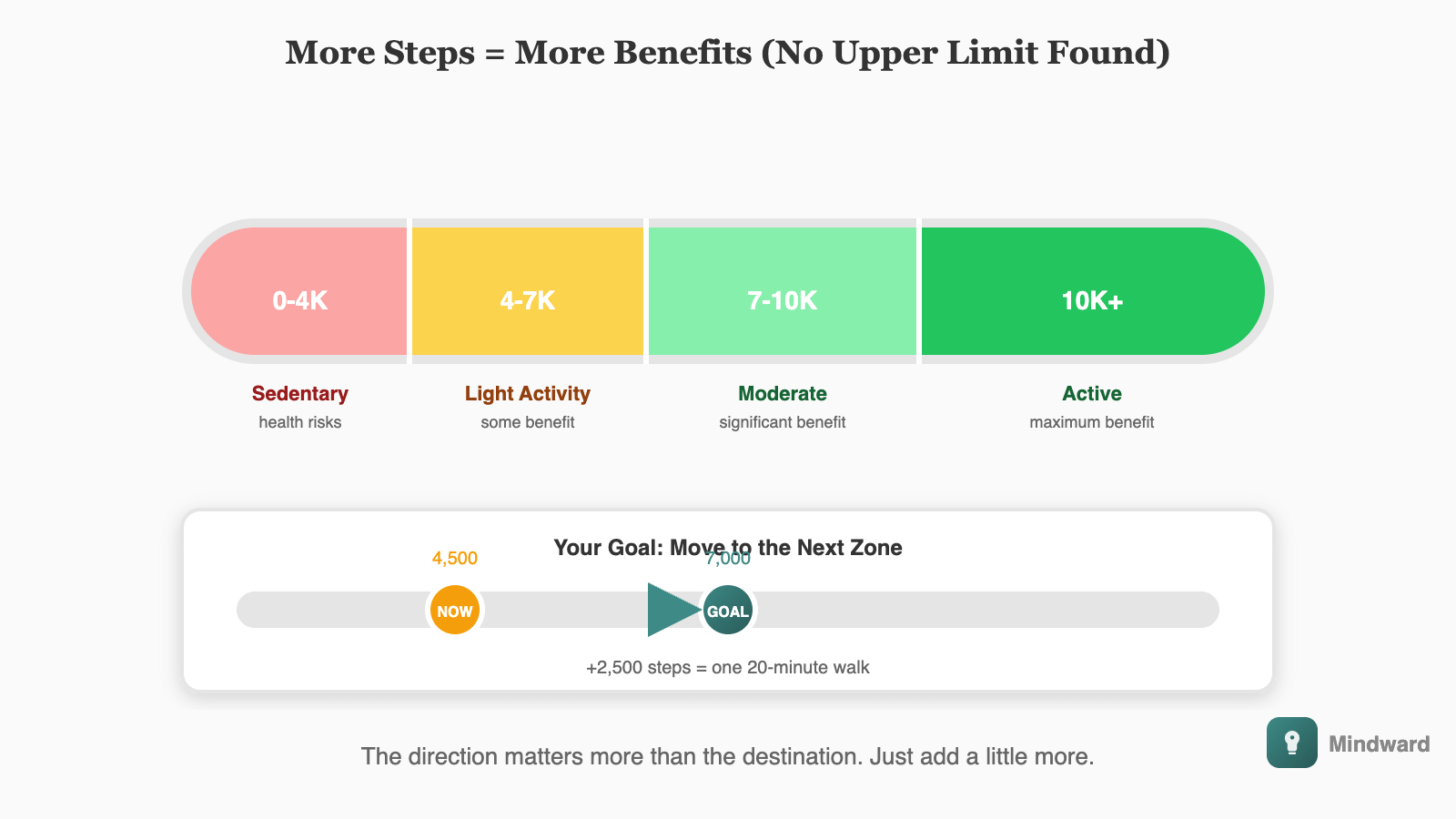
Cardiovascular benefits accumulate with every step. Your heart becomes more efficient. Blood pressure drops. Circulation improves. A landmark study found that walking just 4,000 steps per day—less than two miles—significantly reduced the risk of dying from any cause. More steps brought more benefits, with no upper limit found.
Metabolic health improves even from brief walks. A short walk after meals helps regulate blood sugar, reducing the spike that follows eating. This effect is so reliable that researchers suggest a ten-minute post-meal walk may be more effective for blood sugar control than a single longer workout.
Walking isn't a compromise. It's a complete health intervention hiding in plain sight.
Your brain benefits immediately and cumulatively. Walking increases blood flow to the brain, promotes the release of neurotrophic factors that support brain cell health, and has been shown to improve memory, attention, and processing speed. Long-term, regular walkers show lower rates of cognitive decline and dementia.
The Mood Medicine
If walking were a pill, it would be the most prescribed medication on earth.
Walking triggers the release of endorphins and endocannabinoids—the same neurochemicals responsible for runner's high, just at a gentler dose. It reduces cortisol, the stress hormone that keeps you wound up. It activates the parasympathetic nervous system, shifting your body from fight-or-flight to rest-and-digest.
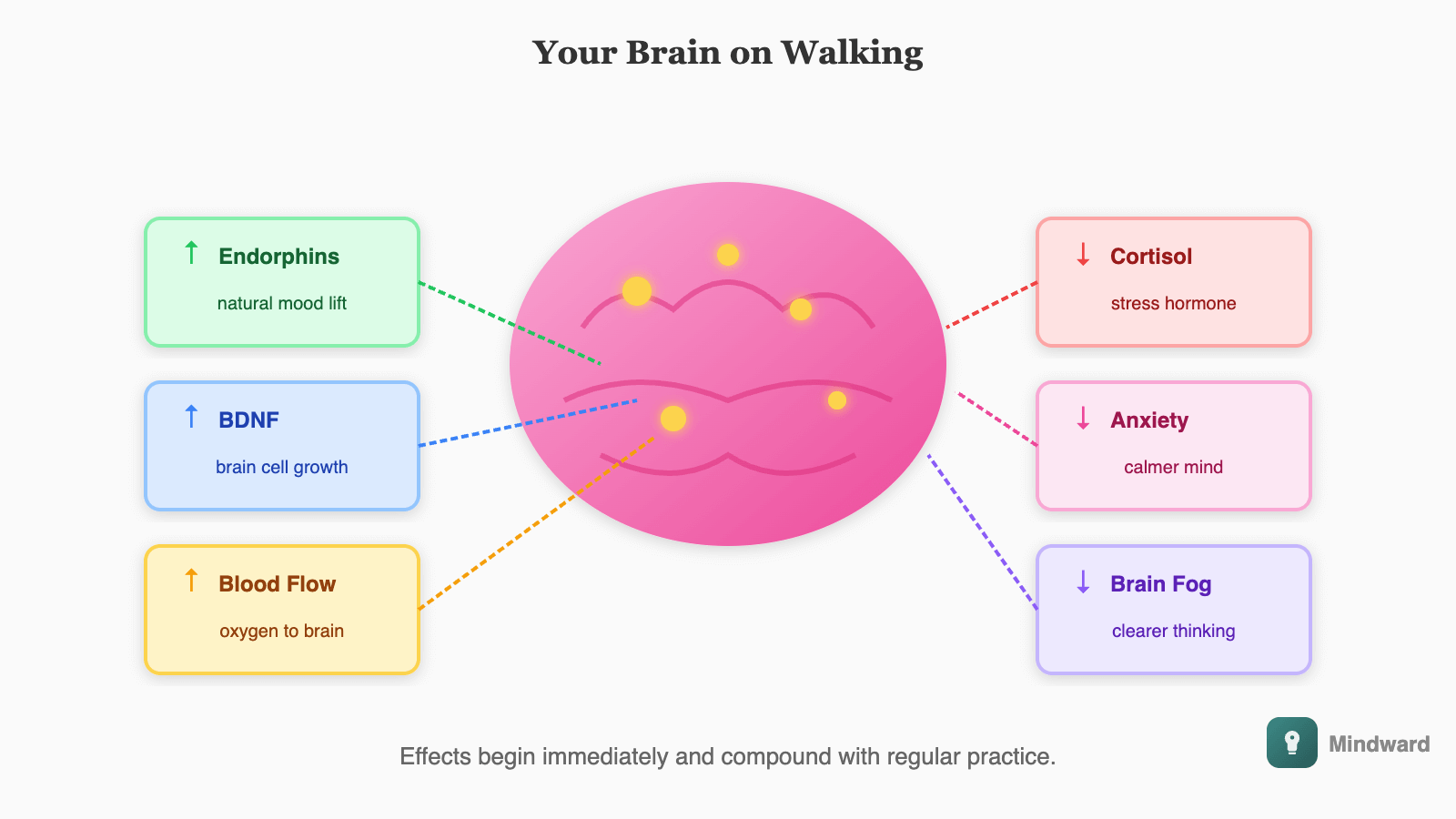
Studies consistently show that walking reduces symptoms of depression and anxiety. Not just as a supplement to treatment, but sometimes as effectively as medication. A Duke University study found that thirty minutes of walking three times per week was as effective as antidepressants for treating major depression—with lower relapse rates.
This doesn't mean walking replaces professional treatment. It means walking is medicine, and we should treat it that way.
Walking and Creativity
There's a reason philosophers walked. Nietzsche, Kierkegaard, Thoreau—they didn't pace for exercise. They paced to think.
Stanford research confirmed what thinkers have known for centuries: walking boosts creative output by an average of 60%. Not during the walk, but during and after. The effect persists even after you sit back down. The mechanism isn't fully understood, but the result is consistent—walking unlocks ideas that sitting suppresses.
This works indoors on a treadmill, but outdoor walking amplifies the effect. Nature adds its own cognitive benefits—reduced mental fatigue, improved attention, enhanced mood. The combination of movement and environment creates conditions where insight flows more freely.
Stuck on a problem? Walk. The answer often arrives mid-stride or shortly after.
The Sustainability Advantage
High-intensity exercise works—when you do it. The problem is adherence. Most people who start intense workout programs quit within weeks. The barrier is too high, the recovery too demanding, the lifestyle change too dramatic.
Walking has almost no barrier. You can walk in any clothes. You can walk at any fitness level. You can walk while tired, while stressed, while traveling. You can walk in five-minute chunks or hour-long sessions. You can walk alone or with others. You can walk while taking calls or listening to audiobooks or thinking through problems.
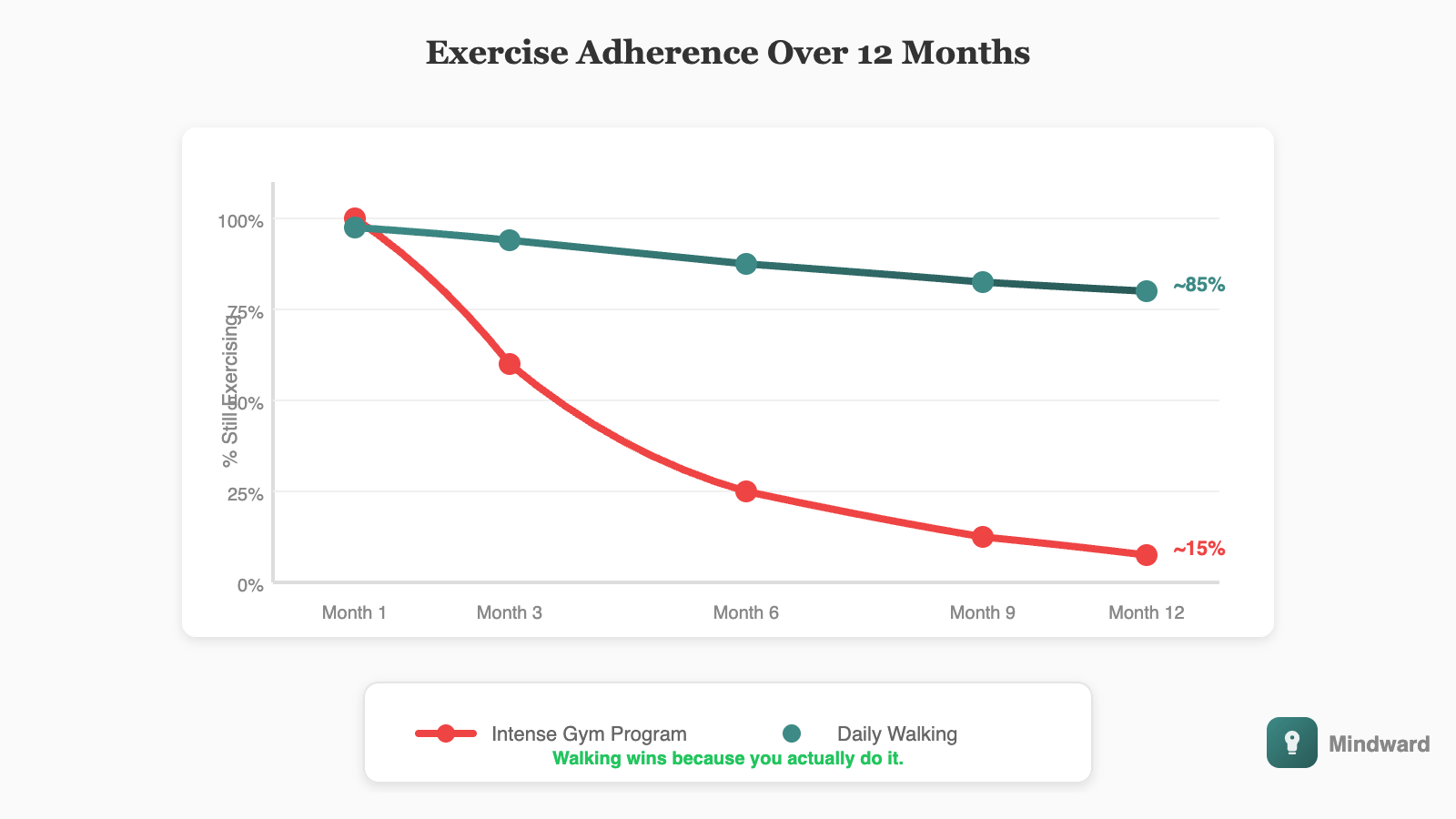
This sustainability compounds over years. Someone who walks daily for a decade will accumulate more health benefits than someone who does intense workouts sporadically. Consistency beats intensity when intensity can't be maintained.
Building the Walking Habit
The goal isn't to add walking to your to-do list. It's to weave walking into your existing life until it becomes invisible.
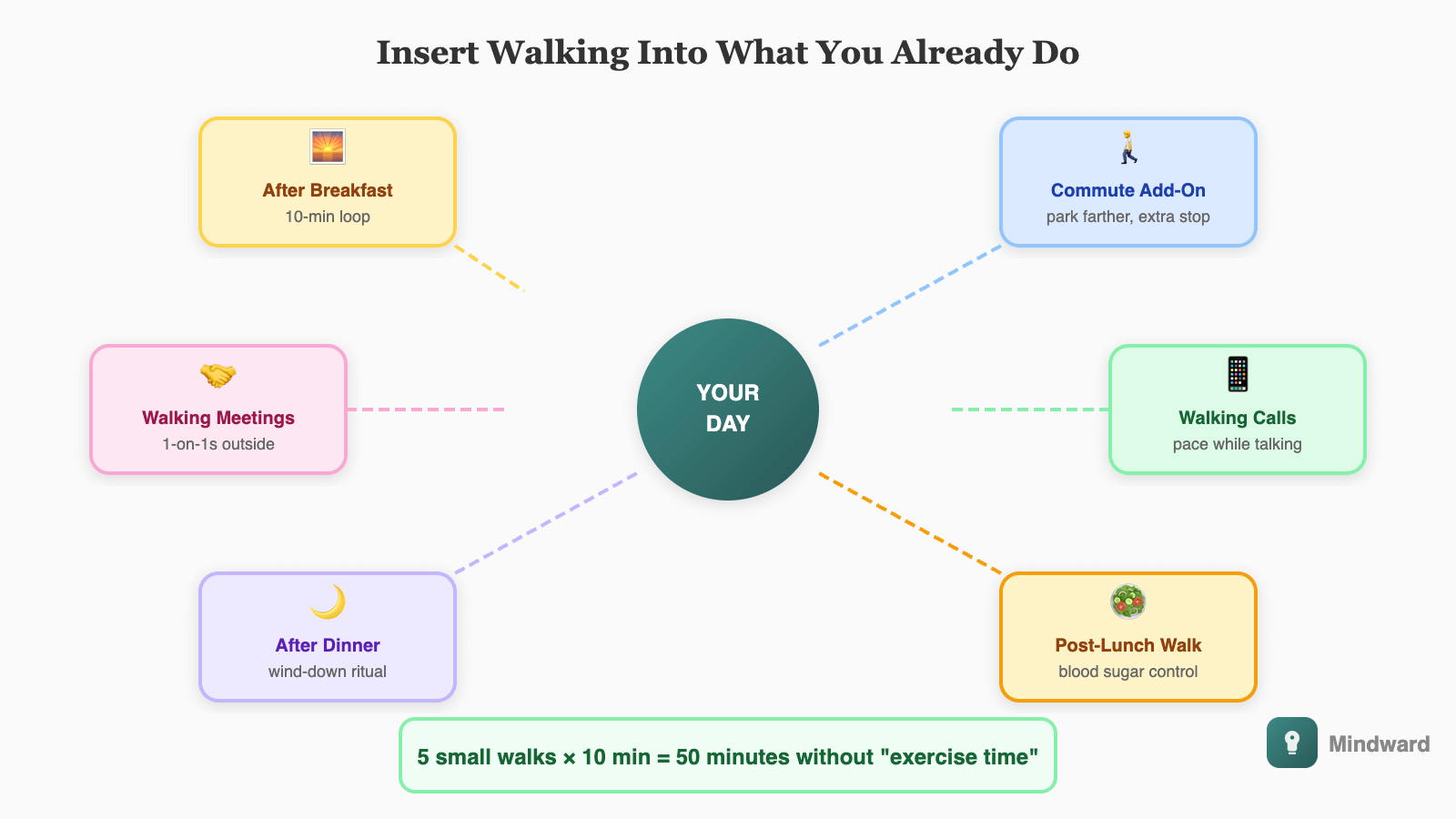
Start with what's easy. A five-minute walk after one meal. A walking meeting instead of a sitting one. Parking farther away. Taking stairs when there are only a few flights. These small insertions accumulate without requiring dedicated workout time.
- After breakfast → 10-minute walk around the block
- Phone calls → walking calls instead of sitting calls
- Commute → walk to a farther transit stop, or add a loop before entering the office
- Lunch → eat, then walk for remaining break time
- After dinner → evening walk as wind-down ritual
- Weekends → replace one errand drive with a walking errand
The key is attachment. Link walking to things you already do. After finishing lunch, you walk. When the phone rings, you stand and move. The trigger is built into existing behavior, so you don't need to remember or motivate.
Making It Count
You don't need to track obsessively, but awareness helps. Most phones already count steps passively. A glance at the end of the day tells you whether you moved or sat.
There's no magic number, but the research suggests meaningful benefits start around 4,000 steps and continue increasing past 10,000. If you're currently at 2,000, aim for 4,000. If you're at 6,000, push toward 8,000. The direction matters more than the destination.
Pace matters less than you think for health benefits. A leisurely stroll still counts. But if you want to maximize cardiovascular gains, occasionally push the pace until you're slightly breathless—not gasping, just aware of your breathing. This doesn't need to be the whole walk. A few faster intervals mixed into an easy walk gets you most of the intensity benefits.
The Long Game
Walking is playing the long game with your body. The benefits aren't dramatic day to day. You won't feel transformed after a single walk. But the compound effect over months and years is profound.
People who walk regularly live longer. They have fewer chronic diseases. They maintain cognitive function further into old age. They report higher life satisfaction. They spend fewer years disabled at the end of life.
This isn't about optimizing performance or achieving fitness goals. It's about maintaining a body and mind that work well for as long as possible. Walking is how you buy time—not in a desperate, anxious way, but in a calm, sustainable way that fits into real life.
You don't need to run marathons. You don't need to lift heavy weights. You don't need to master complex movements or endure punishing workouts. You just need to walk—regularly, consistently, as a non-negotiable part of how you move through the world.
The most powerful health habit is also the simplest. Put one foot in front of the other. Repeat.


Comments
How did you like this article?
No comments yet. Be the first to share your thoughts!