The Two-Minute Rule That Actually Works
Most productivity advice fails because it asks too much. The two-minute rule succeeds because it asks almost nothing—and that's exactly why it changes everything.
You already know what you should be doing. The problem isn't information—it's initiation. That gap between knowing and doing isn't closed by better plans or stronger willpower. It's closed by making the first step so small that your brain stops resisting it.
This is the core insight behind the two-minute rule: if something takes less than two minutes, do it now. But the deeper application—the one that actually transforms productivity—is using two minutes as your entry point for everything.
Why Your Brain Fights Big Tasks
When you think about a large task, your brain performs a rapid cost-benefit calculation. It weighs the effort required against the reward, and if the effort feels overwhelming, it triggers avoidance. This isn't weakness. It's neurological efficiency—your brain conserving resources for threats and opportunities it deems more immediate.
The problem is that modern goals don't fit this ancient system. Writing a report, exercising, learning a skill—these have delayed rewards and upfront costs. Your brain sees "write the report" and translates it to "spend hours doing something difficult for a payoff you can't feel yet." Resistance is the rational response.
The Entry Point Principle
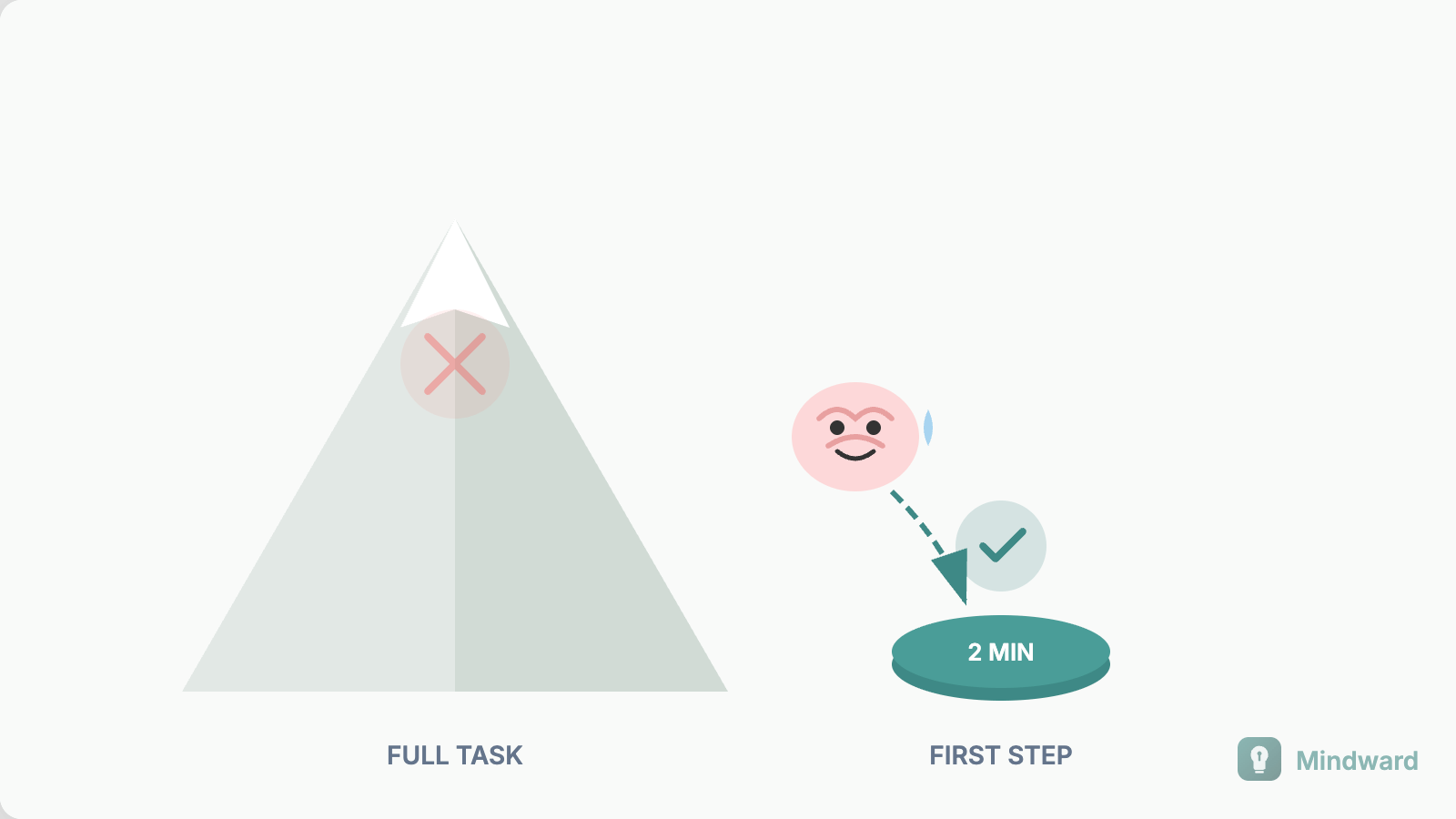
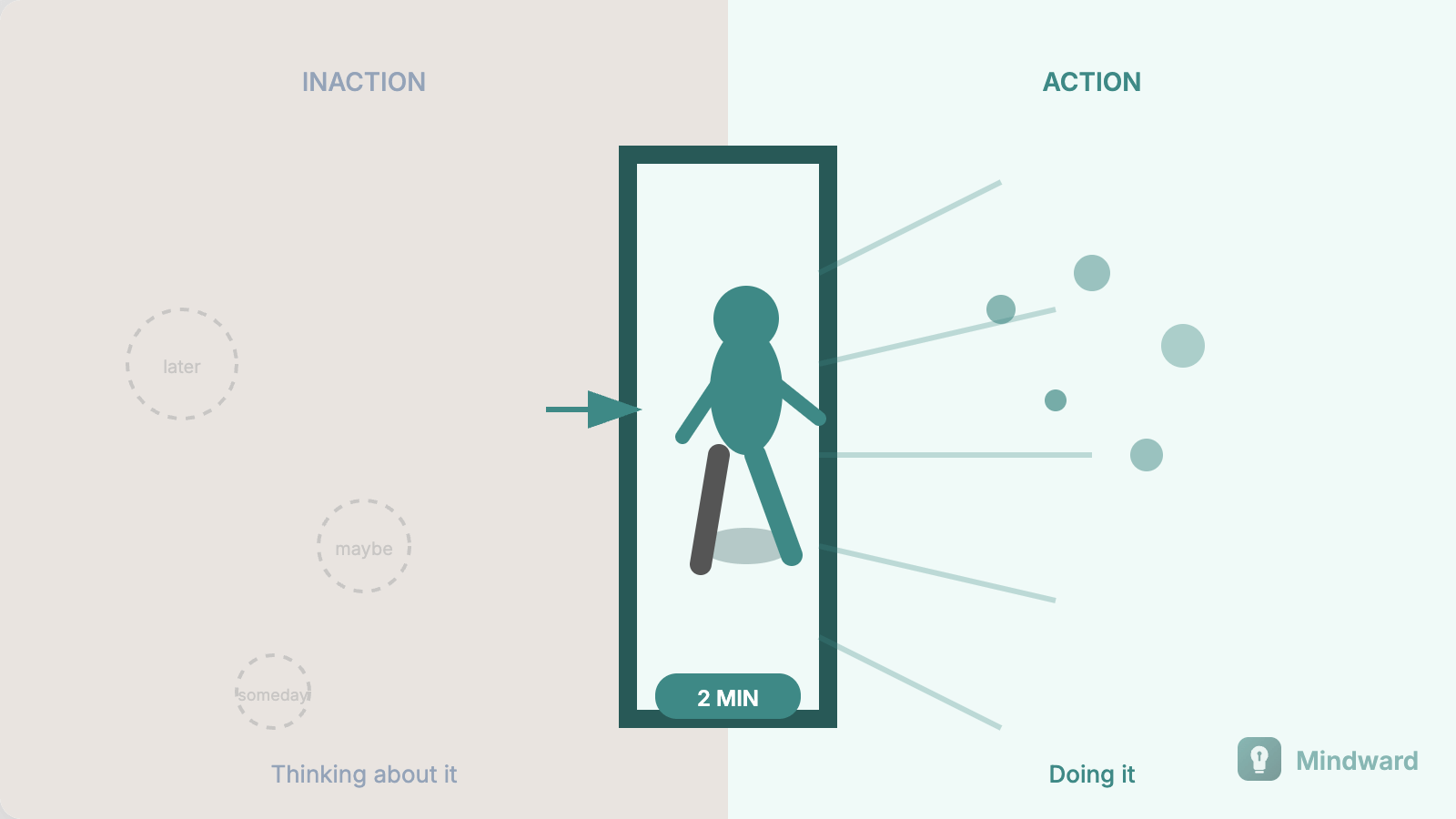
The two-minute rule works because it bypasses this calculation entirely. Two minutes isn't enough time to trigger resistance. Your brain categorizes it as negligible—not worth fighting. And once you've started, something shifts.
Starting changes your relationship to the task. A task you haven't begun is an obstacle. A task you've started is a project in motion. Momentum is real, and it begins with the smallest possible action.
This isn't about tricking yourself. It's about understanding that the barrier to most tasks isn't the task itself—it's the transition from not-doing to doing. The two-minute rule eliminates the transition cost.
How to Apply It to Any Task
The method is simple: reduce any task to its two-minute version. Not the whole task—just the entry point. What's the smallest action that moves you from zero to started?
- Want to exercise? Put on your workout clothes.
- Need to write? Open the document and write one sentence.
- Have to clean? Clear one surface.
- Should study? Read one page.
- Need to email? Write the subject line.
The key is that you're not committing to finish. You're only committing to start. Most days, you'll continue past two minutes because the hardest part—beginning—is already done. Some days, you'll stop at two minutes, and that's fine. You still moved forward. You still maintained the pattern.
The Compound Effect of Showing Up
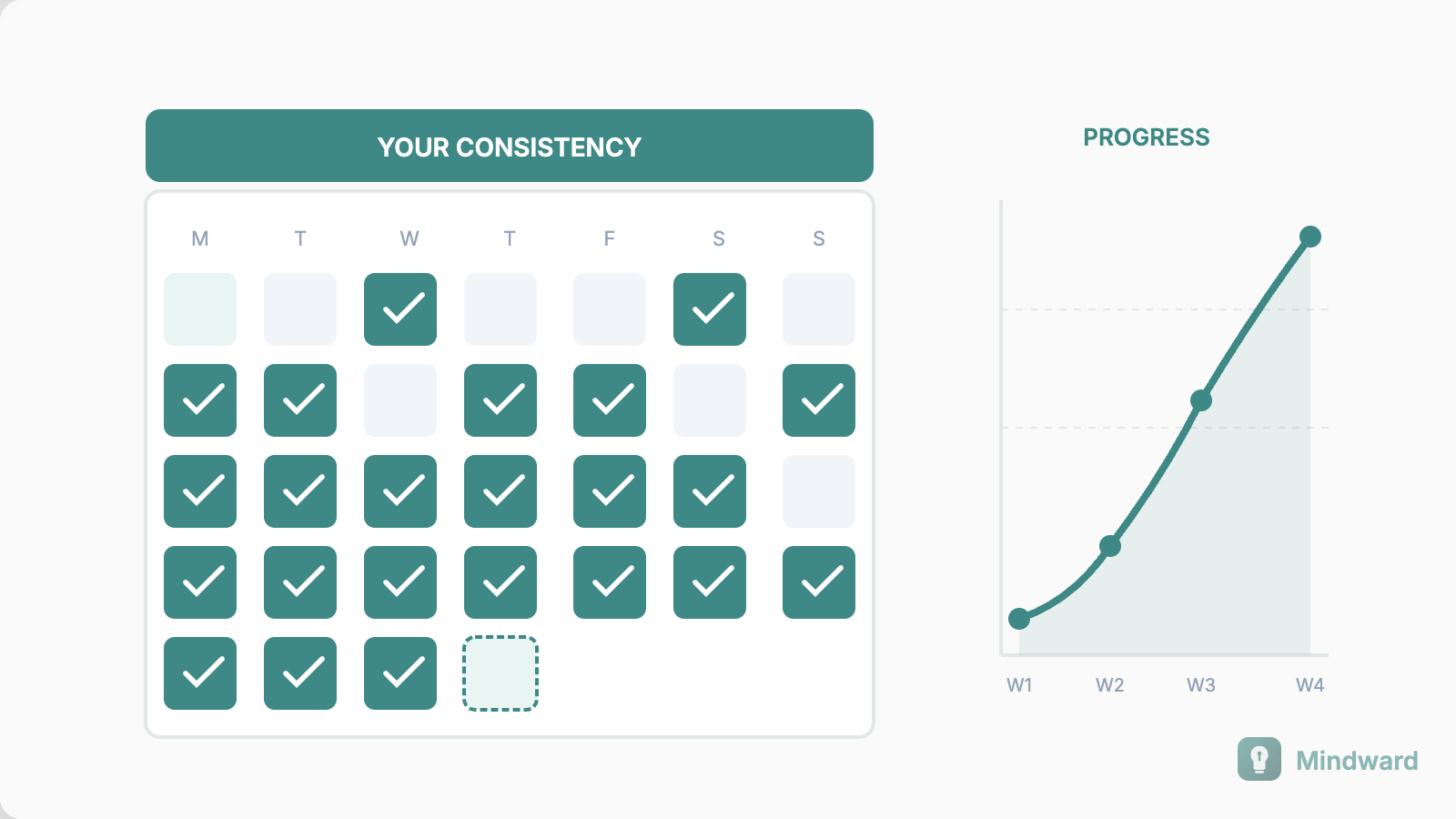
What matters more than any single session is the consistency of showing up. A two-minute workout is infinitely more valuable than an hour-long workout you skip. One sentence written daily becomes a book. One page read becomes a library.
Your brain learns from patterns. When you repeatedly start a task—even briefly—you're training yourself to see that task as something you do. Identity follows behavior. You become a person who writes, who exercises, who studies. Not because you forced yourself through willpower, but because you made starting automatic.
You don't rise to the level of your goals. You fall to the level of your systems. The two-minute rule is a system that makes your floor high enough that progress becomes inevitable.
When to Stop Using Training Wheels
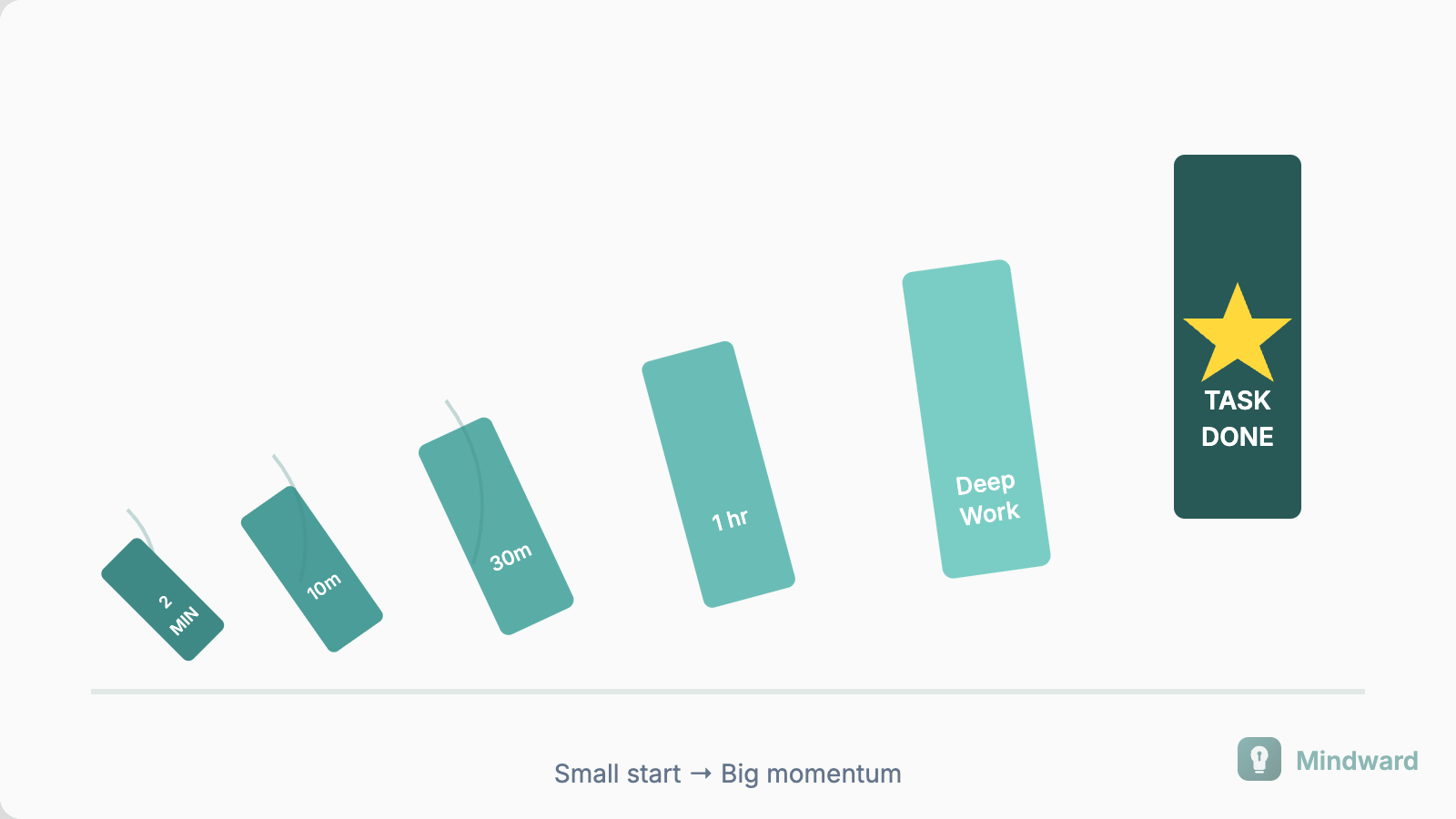
The two-minute rule is a starting strategy, not a permanent limitation. As you build consistency, you'll naturally extend your sessions. The person who started with "open the document" will eventually sit down and write for an hour without thinking about it.
But here's what experienced practitioners know: even after years, the two-minute rule remains useful. Bad days happen. Energy fluctuates. When motivation disappears, the two-minute version is always available. It's your floor—the minimum viable action that keeps the chain unbroken.
Start Today, Not Tomorrow
Pick one task you've been avoiding. Not your biggest task—just one that's been sitting on your mental list, creating friction. Now identify its two-minute version. The absolute smallest action that qualifies as starting.
Don't plan to do it tomorrow. Don't add it to a system. Just do it now, in the next two minutes, before your brain has time to negotiate.
That's the real lesson of the two-minute rule: it's not about time management or productivity hacks. It's about collapsing the distance between intention and action. Two minutes is short enough that "later" loses its power. And once you've started, you're no longer someone who's going to do it. You're someone who's doing it.


Comments
How did you like this article?
No comments yet. Be the first to share your thoughts!