The Power of Single-Tasking in a Distracted World
Multitasking feels productive but costs you hours. Single-tasking feels slow but compounds into mastery.
You're reading this while something else waits in another tab. Maybe a message you haven't responded to, a document you were editing, a video paused halfway through. This is the default state now—partial attention distributed across multiple demands, none of them receiving your full presence.
We call this multitasking and treat it as a skill. It's actually a tax. Every time you split your focus, you pay a cognitive toll that accumulates throughout the day, leaving you exhausted from effort but uncertain about what you actually accomplished.
The Multitasking Myth
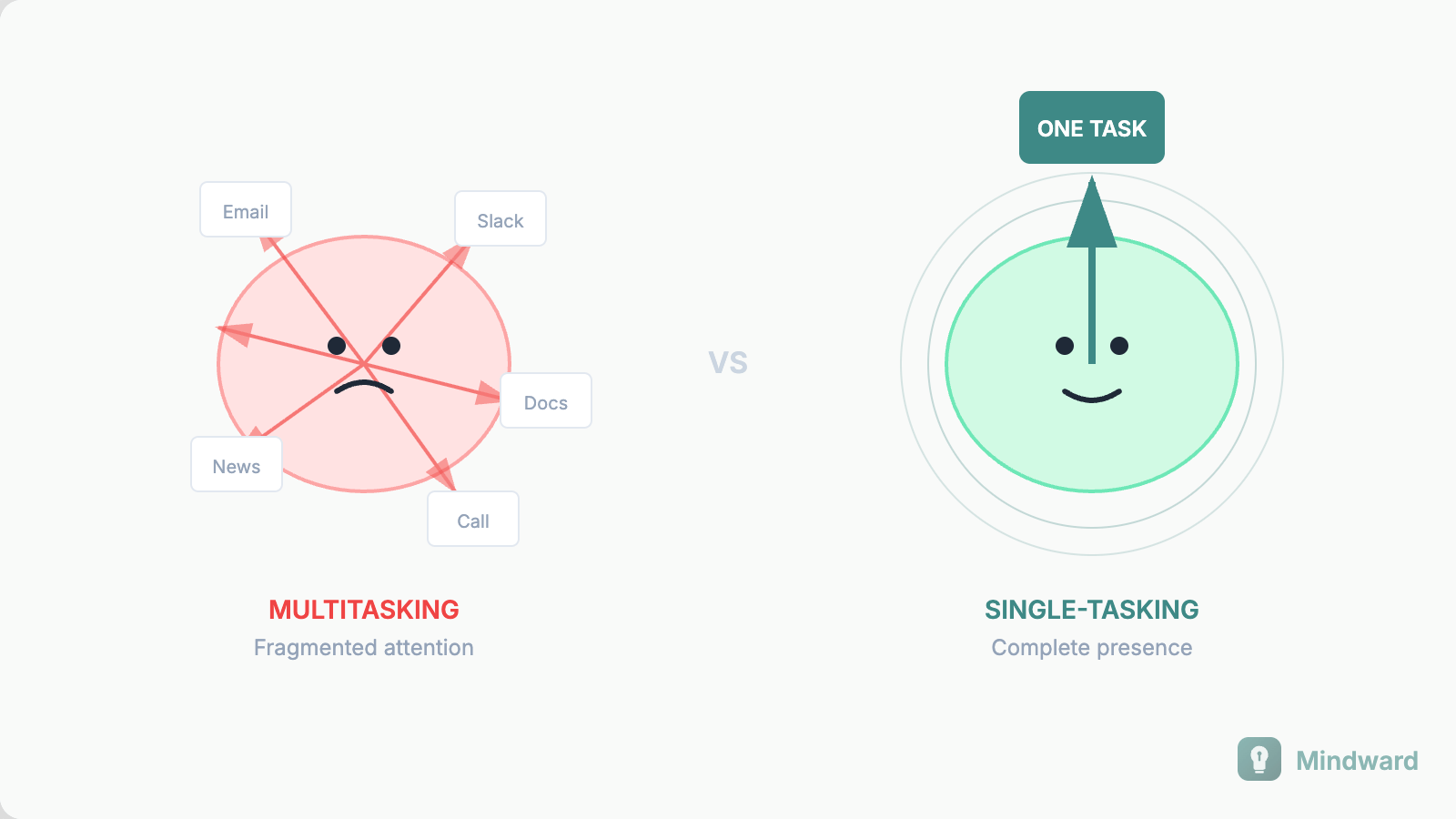
Your brain cannot process two cognitive tasks simultaneously. What feels like multitasking is actually rapid task-switching—your attention bouncing between contexts, reloading information each time, losing momentum with every jump.
Research consistently shows this switching cost. It takes an average of 23 minutes to fully regain focus after an interruption. If you switch tasks ten times in a day, that's nearly four hours of compromised cognition. You're not doing more. You're doing everything worse.
What Single-Tasking Actually Means
Single-tasking isn't about doing less. It's about doing one thing at a time with complete engagement. You still have a full task list. You just move through it sequentially rather than simultaneously.
This means when you write, you only write. When you're in a meeting, you're fully in the meeting. When you're thinking through a problem, you're not also checking notifications. Each task gets your undivided presence for a defined period.
Single-tasking is not slower. It feels slower because you're aware of everything you're not doing. But the work itself moves faster, and the quality is incomparably higher.
The Compound Effect of Deep Focus
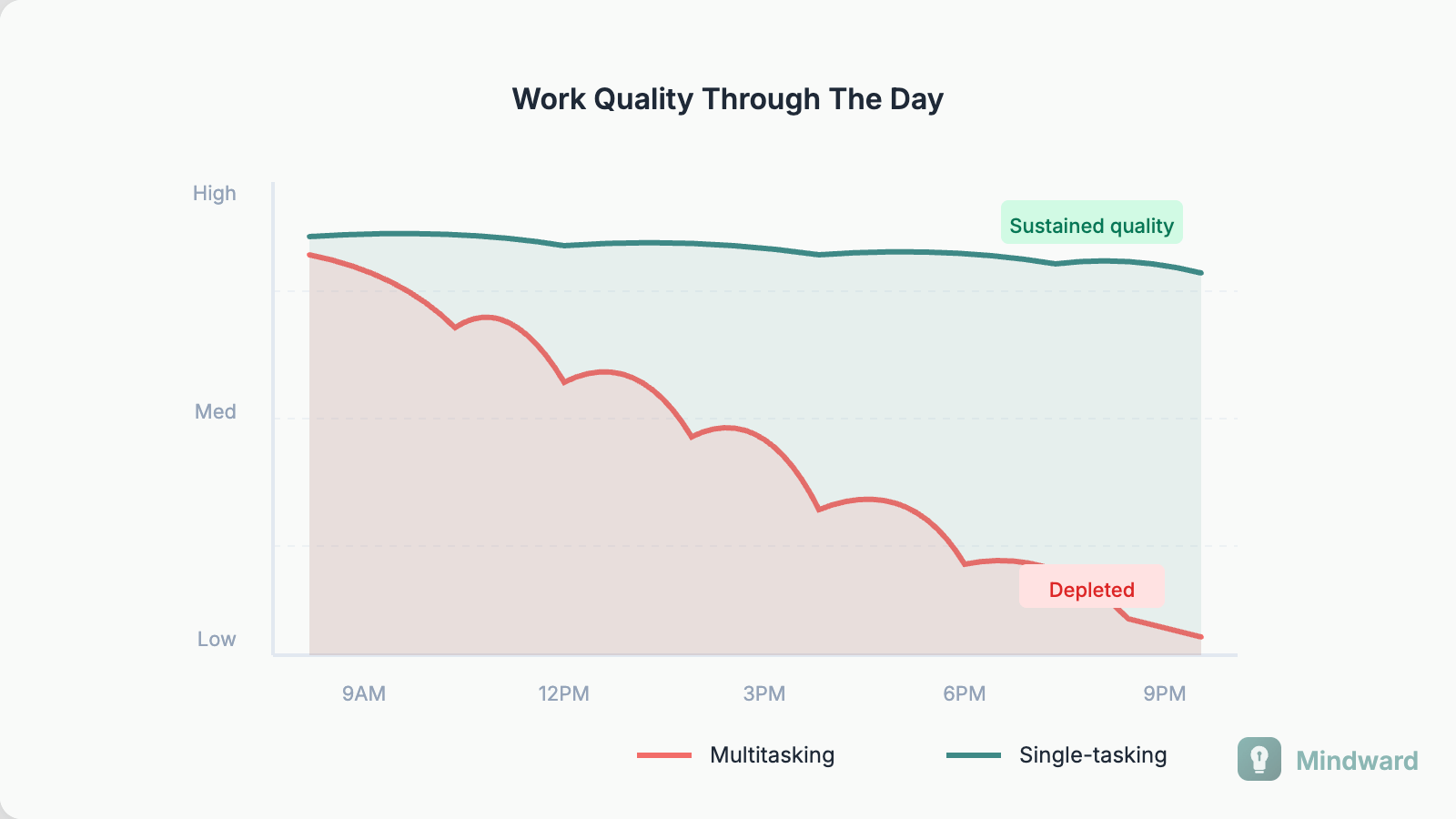
When you give a task complete attention, something shifts. You enter a state of flow where solutions emerge more easily, where the work itself becomes absorbing rather than draining. This isn't mystical—it's what happens when your full cognitive capacity engages with a single problem.
Over time, this compounds. The person who single-tasks for three hours accomplishes more than the person who multitasks for eight. They also end the day with energy remaining, while the multitasker is depleted from the constant cognitive friction.
How to Start Single-Tasking
The shift isn't complicated, but it does require intention. Your environment and habits are optimized for distraction. You need to actively create conditions for focus.
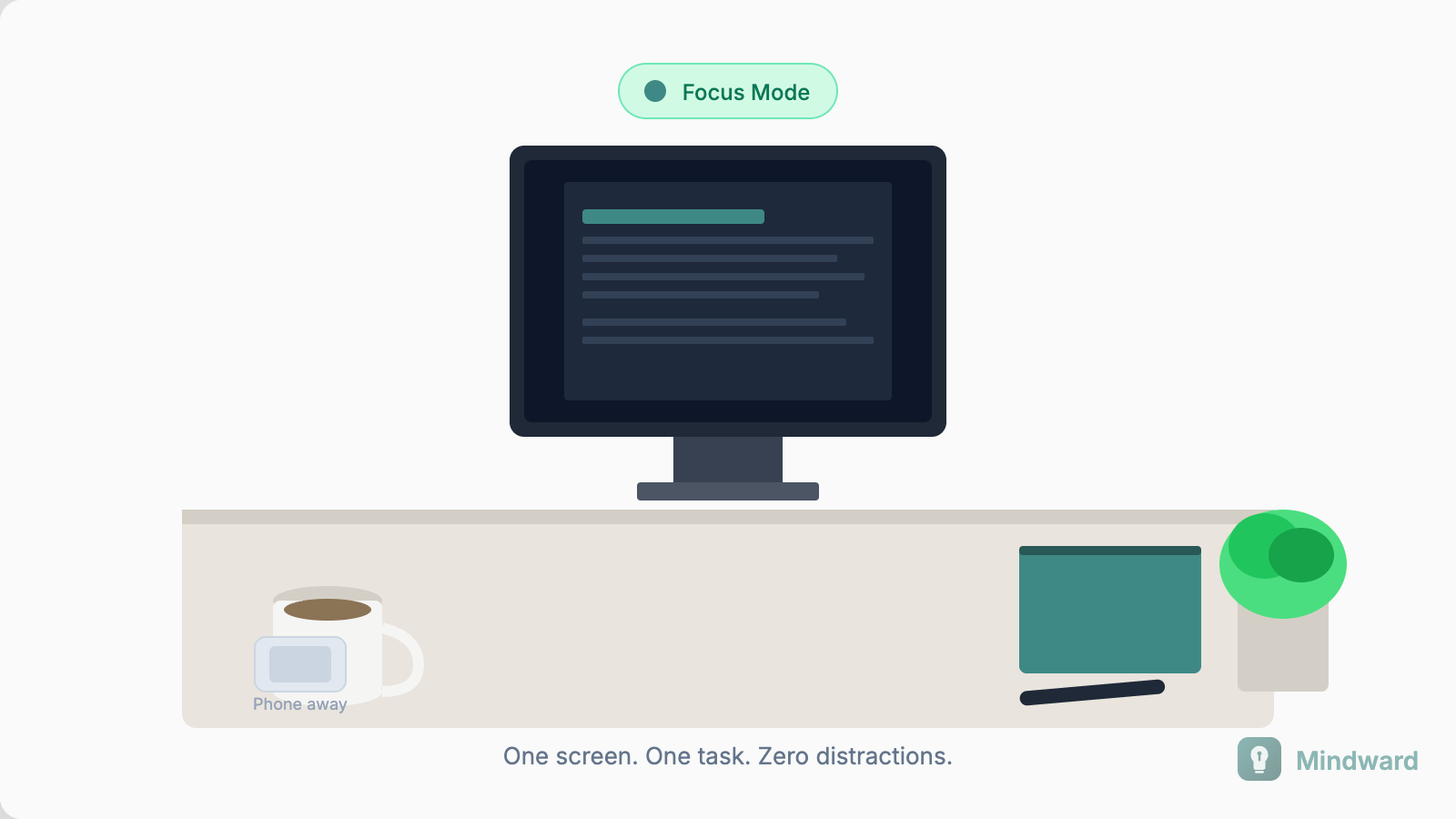
- Close every tab except the one you need right now.
- Put your phone in another room, not just face-down.
- Set a specific duration—even 25 minutes—for undivided focus.
- Write down interrupting thoughts instead of acting on them.
- Batch similar tasks together to reduce context switching.
Start with one single-tasking session per day. Protect it completely. Notice how much you accomplish in that window compared to your scattered hours. Let the contrast teach you.
Handling the Discomfort
Single-tasking will feel uncomfortable at first. You'll experience a pull toward your phone, toward checking email, toward the relief of switching to something easier. This discomfort is withdrawal from stimulation addiction, and it passes.
The urge to switch is often an avoidance response—your brain seeking escape from cognitive effort. Recognize it, let it pass, and return to the task. Each time you do this, you strengthen your capacity for sustained attention.
The ability to focus on one thing is now a competitive advantage. Most people have lost it. Those who rebuild it can accomplish in hours what others struggle to finish in days.
Make It Your Default
The goal isn't occasional deep focus sessions. It's making single-tasking your default mode of operation. This doesn't happen through willpower alone—it happens through environment design and habit formation.
Remove friction from focus: keep your phone charged in another room, use website blockers during work hours, schedule specific times for email instead of living in your inbox. Add friction to distraction: make it slightly harder to access the things that pull you away.
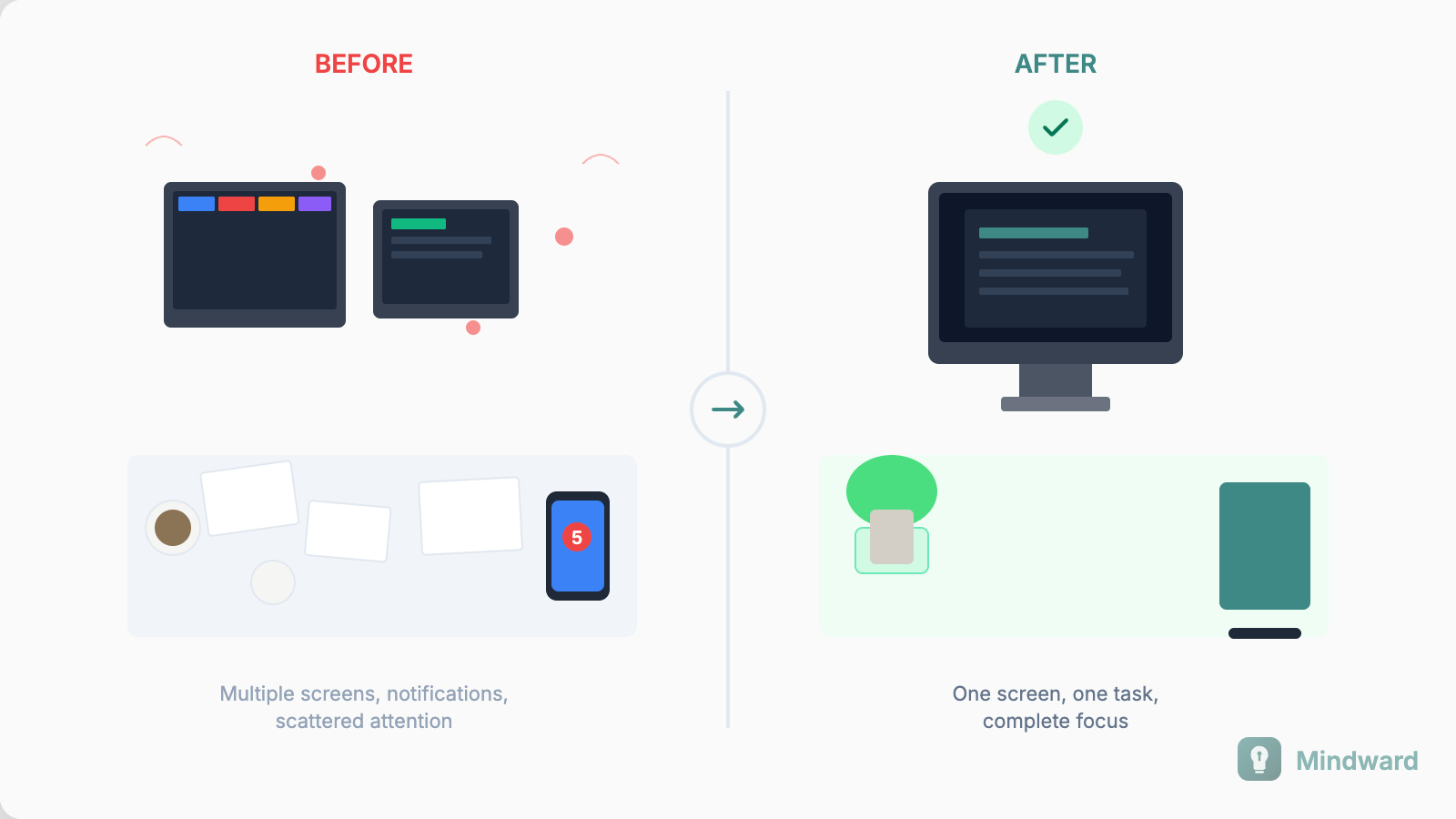
What you practice becomes automatic. Practice fragmented attention and it becomes your default. Practice single-tasking and depth becomes natural. The choice is less about any single moment and more about what pattern you're reinforcing with your days.
Start now. Close the other tabs. Give this one thing your full attention. Notice how different it feels when you're actually present with what you're doing. That feeling is available for everything—you just have to stop dividing yourself to access it.


Comments
How did you like this article?
No comments yet. Be the first to share your thoughts!