The Cost of Keeping Your Options Open
You think flexibility is freedom. But refusing to commit is its own kind of trap — one where you pay for options you never use while the best ones quietly expire.
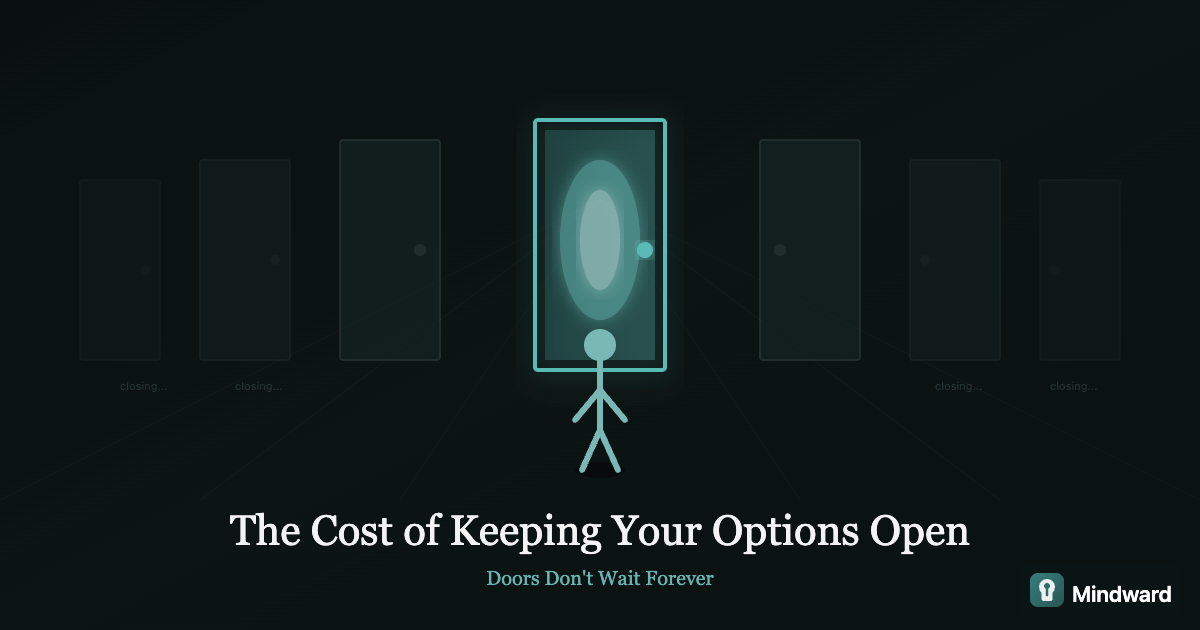
You're not deciding. You're waiting.
Waiting for more information. Waiting for certainty. Waiting until the right choice becomes obvious and the wrong ones fall away. You tell yourself you're being smart — keeping doors open, staying flexible, not rushing into anything you might regret.
But the doors don't stay open forever. And while you're standing in the hallway, something is quietly being taken from you.
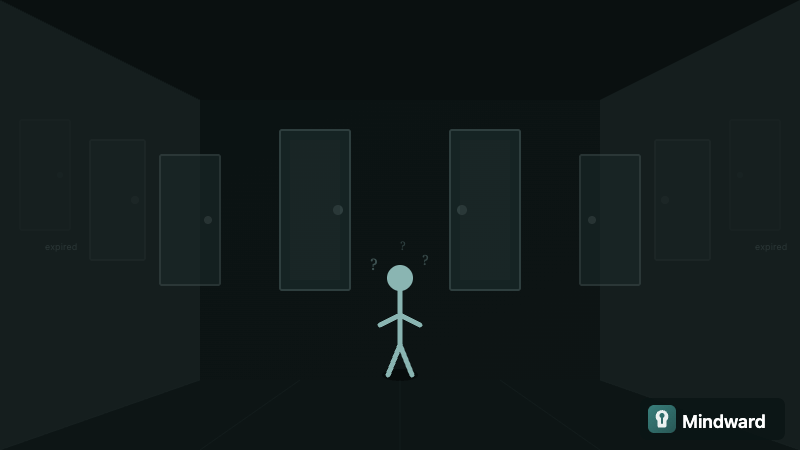
Optionality has a cost. And most people never see the bill until it's too late.
The Illusion of Free Options
Options feel free. They feel like pure upside — possibility without commitment, potential without risk. What could be wrong with having more choices?
But options are never free. Every option you keep open costs attention to maintain. It costs energy to keep evaluating. It costs the depth you'd gain from committing. And most importantly, it costs time — the one resource you cannot earn back.
An option you never exercise isn't an asset. It's a tax on your focus that you pay every day until it expires.
The person juggling five possible career paths isn't five times more likely to find the right one. They're dividing their energy by five, making progress in none, and watching all five options slowly degrade as time passes and circumstances change.
Why We Hoard Choices
If keeping options open is so costly, why do we do it? Because closing a door is painful in a way that leaving it open is not.
Psychologists call this loss aversion. We feel losses more intensely than equivalent gains. Choosing one path means losing the others, and that loss registers even when the paths we're giving up weren't particularly good.
There's also the fantasy of the unchosen option. The job you didn't take gets to remain perfect in your imagination. The city you didn't move to never has bad weather. As long as you don't choose, you get to keep the fantasy intact.
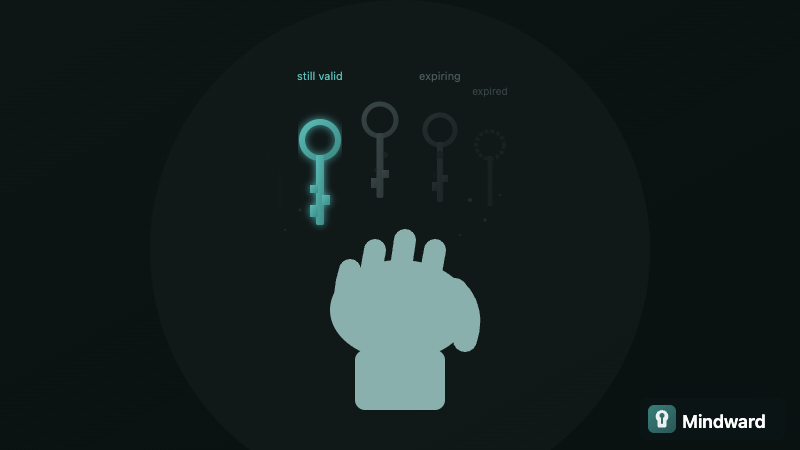
But fantasies don't compound. Only real investments do.
The Hidden Math of Commitment
Here's what optionality obscures: commitment unlocks value that flexibility never can.
When you commit to a skill, you pass through the frustrating early phase and reach the part where it becomes genuinely useful. When you commit to a relationship, you access depths that casual connection never reveals. When you commit to a place, you build the kind of roots that transient people never develop.
Depth requires commitment. Mastery requires commitment. Trust requires commitment. Almost everything worth having exists on the other side of a closed door.
- The musician who committed to one instrument plays in the band. The one who kept switching is still a beginner at three.
- The entrepreneur who committed to one idea built something real. The one with twelve ideas in rotation built nothing.
- The person who chose a city and stayed built a community. The one who kept their options open has contacts everywhere and friends nowhere.
Commitment isn't the opposite of freedom. It's the price of depth. And depth is where the value lives.
The Expiration Problem
Options don't wait for you. They decay.
The career pivot that was possible at 28 becomes harder at 38 and implausible at 48. The relationship that was available last year found someone else. The market that was open for your idea closed when a competitor moved first.
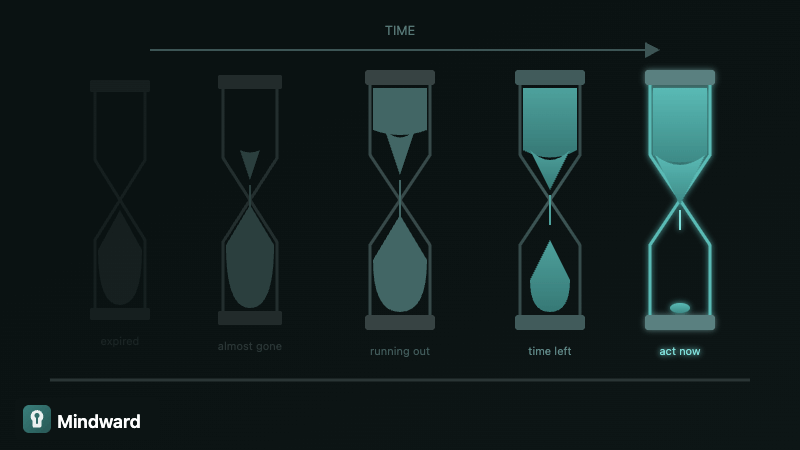
Every option has a shelf life. And because we're not forced to confront this, we act as if our choices will wait forever. They won't. The menu is always shrinking, whether you're ordering or not.
Indecision feels like postponing a choice. In reality, it's making one — you're choosing delay, and delay has consequences.
How to Choose When You Can't Know
The fear behind indecision is usually this: what if I choose wrong?
But this frames the problem incorrectly. The goal isn't to find the perfect option. It's to choose a good enough option and make it great through commitment. Most paths can lead somewhere meaningful if you actually walk them. The variable isn't the path — it's whether you commit.
Research on decision-making consistently shows that people overestimate how much the choice matters and underestimate how much their engagement after the choice matters. The decision gets you in the door. What you do inside determines the outcome.
- Set a deadline. Decisions expand to fill the time allowed. Give yourself a forcing function.
- Accept good enough. You're not looking for the best option. You're looking for one that clears the bar — then you clear the rest.
- Close doors deliberately. Don't let options die from neglect. Choose to end them so you can stop paying the maintenance cost.
- Trust future you. You will adapt. You will make it work. You've done it before.
The Freedom on the Other Side
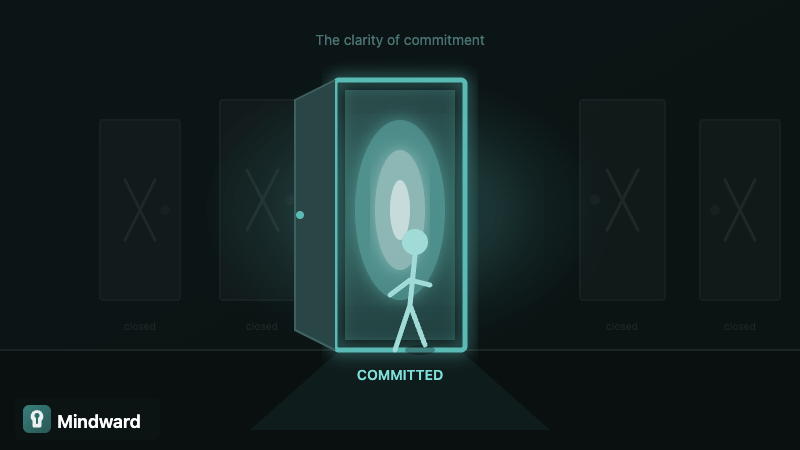
There's a strange thing that happens when you finally commit. The anxiety of choosing dissolves. The mental tabs close. Energy that was scattered across possibilities concentrates into momentum.
People describe it as relief. As clarity. As freedom — real freedom, not the false freedom of infinite options, but the freedom to build, to go deep, to actually move.
The hallway is not the destination. At some point, you have to walk through a door.
Choose one. Close the others. And discover what becomes possible when you stop hedging and start building.


Comments
How did you like this article?
No comments yet. Be the first to share your thoughts!