Perfectionism Isn't High Standards. It's Fear Wearing a Mask.
You think you're being thorough. You think you're holding yourself to excellence. But perfectionism isn't about quality—it's about avoiding the vulnerability of being seen.
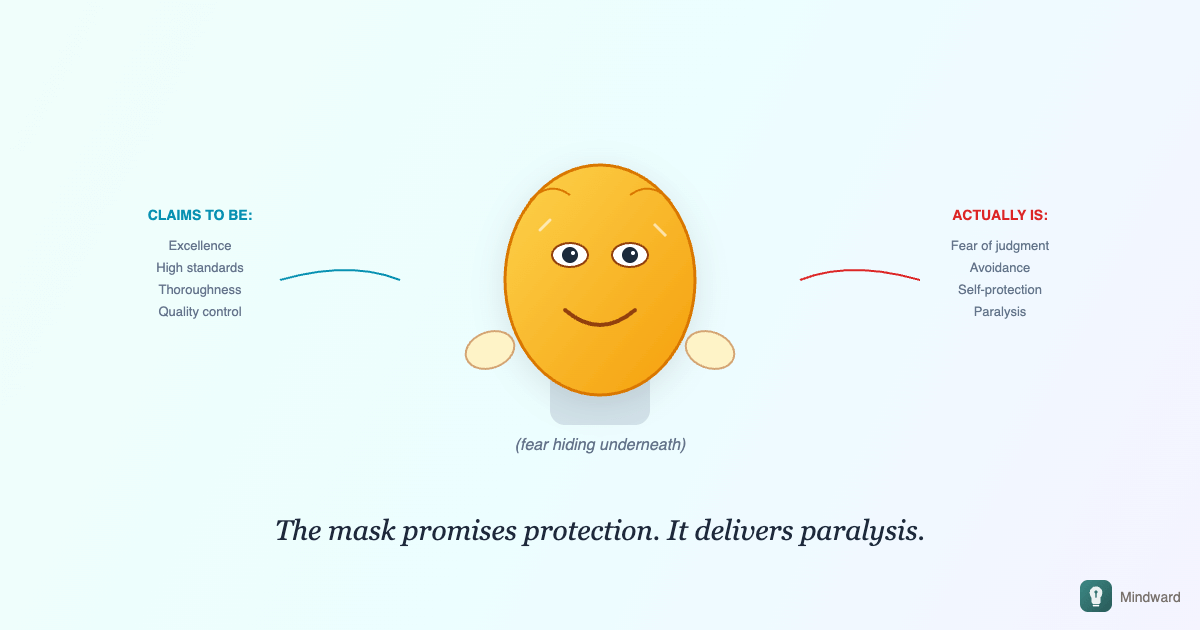
You've been working on the same project for weeks. It's almost done—90% complete—but you keep finding things to fix, adjust, improve. You tell yourself you're being thorough. You tell yourself you have high standards. But the real reason you won't finish is simpler and harder to admit: if it's never done, it can never be judged.
Perfectionism presents itself as a virtue. It sounds like excellence, like caring deeply about quality. But perfectionism and high standards aren't the same thing. High standards push you to do your best work. Perfectionism stops you from ever finishing it.
The Real Function of Perfectionism
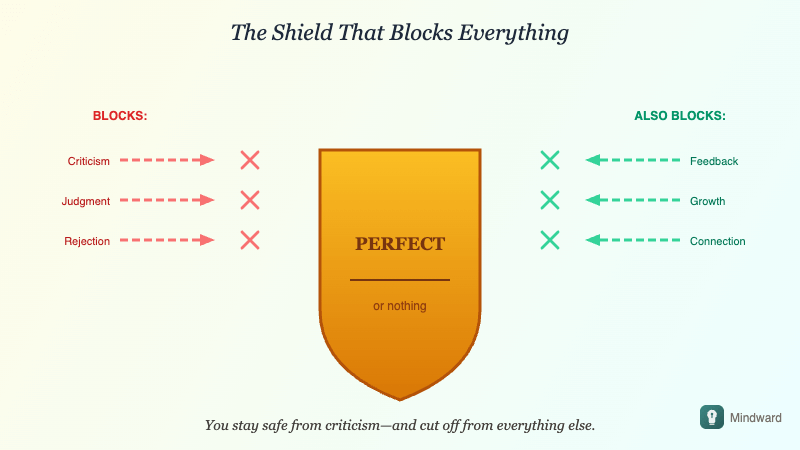
Perfectionism is a defense mechanism. Its job isn't to make your work better—it's to protect you from the vulnerability of being evaluated. If you never ship the project, no one can criticize it. If you never publish the writing, no one can reject it. If you never launch the business, you never have to watch it fail.
The perfectionist's logic runs like this: If I can make it perfect, no one can find fault. If no one can find fault, I won't be exposed. The problem is that perfection doesn't exist, so the work never ends, and the exposure never comes. You stay safe—and stuck.
High Standards vs. Perfectionism
People with high standards focus on the work. They want to create something excellent, and they're willing to be seen doing it imperfectly along the way. They iterate, get feedback, improve. Their self-worth isn't on the line with every output.
Perfectionists focus on themselves. The work becomes a proxy for their value as a person. A flawed output feels like evidence of a flawed self. This raises the stakes unbearably high, making every project feel like an identity referendum rather than a thing to be completed and learned from.
High standards say: I want this to be excellent. Perfectionism says: If this isn't perfect, I'm not enough.
The Productivity Paradox
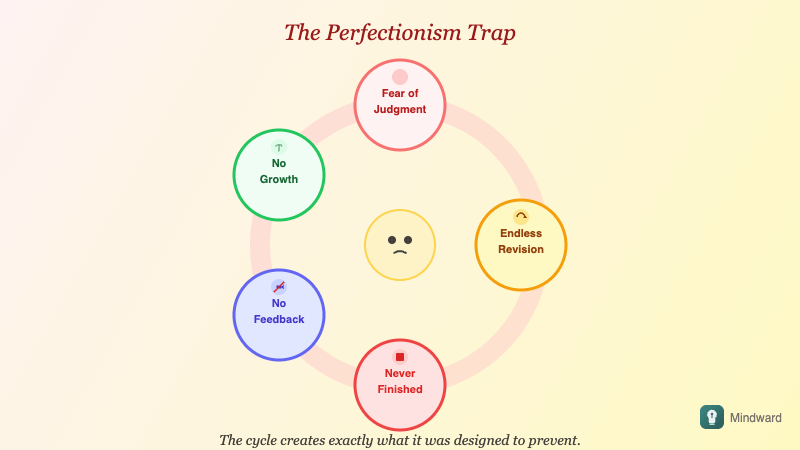
Perfectionism destroys the very productivity it claims to serve. The perfectionist produces less, not more—because finishing is too threatening. They spend hours on details that don't matter while avoiding the core work that does. They miss deadlines not from carelessness but from caring too much in the wrong way.
The cruel irony is that perfectionists are often seen as unreliable, when reliability is exactly what they're trying to prove. By never finishing, they confirm the inadequacy they were trying to hide. The defense mechanism creates the outcome it was designed to prevent.
Done Is a Decision
Nothing is ever objectively finished. There's always something that could be better, another draft that could be written, another feature that could be added. Completion isn't a state you discover—it's a decision you make. You choose to call it done, knowing it's imperfect, and release it anyway.
This feels dangerous to the perfectionist because it means taking responsibility. You can't blame the unfinished state anymore. You have to say: this is what I made, and it's good enough. That 'good enough' is where the vulnerability lives—and also where growth happens.
Iteration Beats Perfection
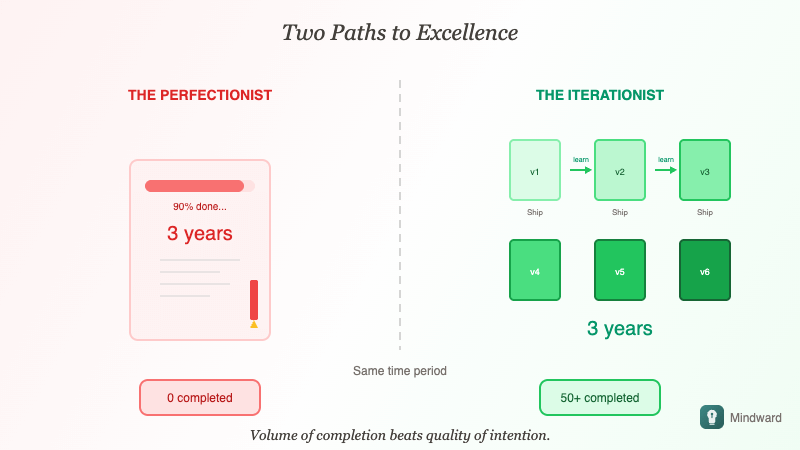
The best work isn't made in isolation, polished until flawless. It's made through iteration—releasing something imperfect, learning from the response, and improving. Each cycle teaches you things that endless internal refinement never could. Feedback is information. Withholding your work withholds the information you need.
The writer who publishes fifty imperfect essays learns more than the one who's been perfecting the same piece for three years. The entrepreneur who launches three failed products understands the market better than the one still tweaking their business plan. Volume of completion beats quality of intention.
What Perfectionism Is Protecting
Underneath perfectionism is usually a belief absorbed long ago: that love or approval is conditional on performance. That mistakes mean rejection. That you are only as worthy as your last achievement. These beliefs don't respond to logic—they respond to experience. You have to risk being imperfect and discover that you survive it.
This doesn't mean lowering your standards. It means separating your standards for your work from your standards for yourself. Your work can be imperfect and you can still be worthy. These were never supposed to be the same thing.
You are not your work. Your worth isn't determined by your output. Completing something imperfect doesn't make you an imperfect person.
The mask of perfectionism is exhausting to wear. It promises protection but delivers paralysis. Taking it off means accepting that you'll be seen—imperfect work, learning in public, mistakes visible to others. But that's also where connection, growth, and actual excellence become possible. Not excellence as a shield, but excellence as something you build through iteration, feedback, and the courage to be done.


Comments
How did you like this article?
No comments yet. Be the first to share your thoughts!