Discomfort Is Not a Signal to Stop
That uneasy feeling when you're stretching beyond what's familiar? It's not a warning. It's the sensation of becoming someone new.
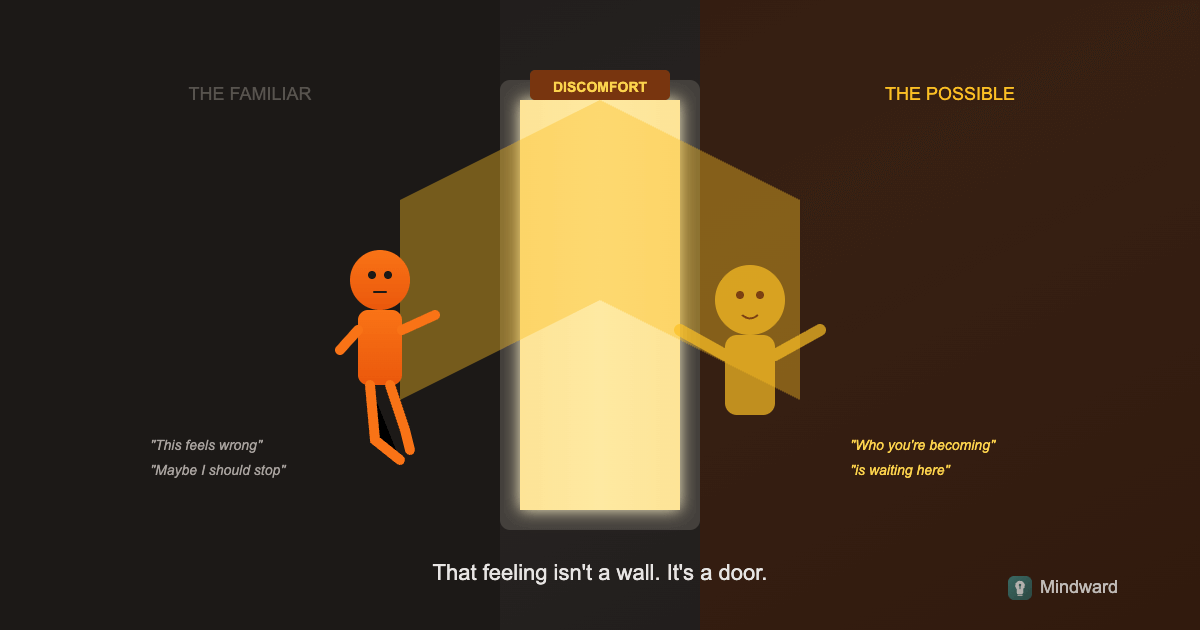
You started the new habit, the difficult conversation, the project that scared you. And then the discomfort arrived—that tightness in your chest, the urge to retreat, the voice suggesting maybe this isn't for you after all.
So you stopped. Not because you failed, but because something felt wrong. The discomfort seemed like a signal, a warning from some deeper part of yourself that you were on the wrong path. But what if that interpretation is exactly backward?
We Misread the Signal
Your nervous system evolved to keep you alive, not to help you grow. It registers unfamiliarity as threat. New situations, uncertain outcomes, identity shifts—these trigger the same alert systems as actual danger. Your body doesn't distinguish between "this might hurt me" and "this might change me."
The problem is that growth requires unfamiliarity. Becoming someone new means leaving behind who you've been. And that departure—even when it's toward something better—registers as loss. Your system flags it, urges retreat, whispers that safety lies in the familiar.
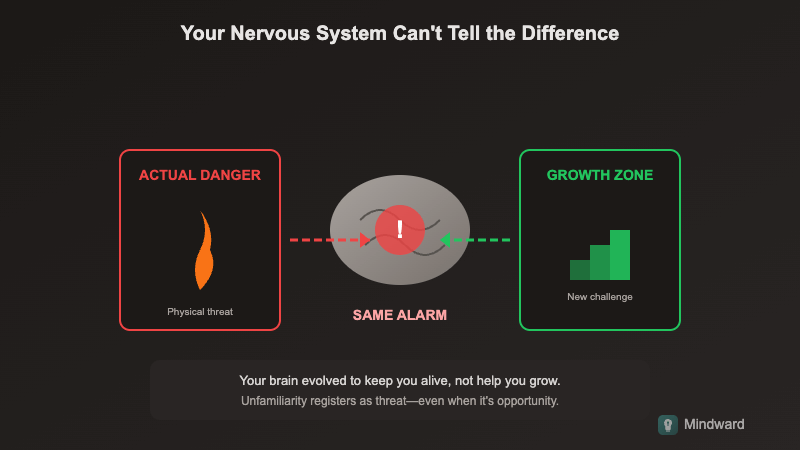
Discomfort during expansion isn't a sign you're doing something wrong. It's a sign you're doing something new.
The Comfort Zone Isn't Neutral
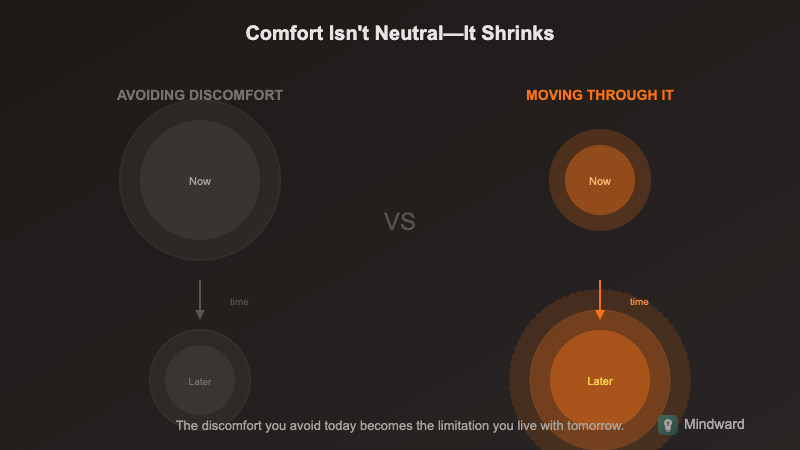
We talk about the comfort zone like it's a safe haven—a reasonable place to rest. But comfort that never gets challenged becomes its own kind of trap. What feels safe is often just familiar, and familiar isn't the same as good.
Staying comfortable means staying the same. And staying the same, in a life that keeps asking more of you, eventually becomes its own source of suffering. The discomfort you avoid by not growing gets replaced by the discomfort of stagnation, regret, and wondering what might have been.
Two Kinds of Discomfort
Not all discomfort is growth. Learning to tell the difference matters. There's the discomfort of expansion—the stretch of doing something hard but aligned with who you want to become. And there's the discomfort of violation—the signal that something is genuinely wrong, misaligned, or harmful.
Expansion discomfort feels like fear mixed with aliveness. You're scared, but also a little exhilarated. Part of you wants to run, but another part knows this matters. Violation discomfort feels like dread mixed with shrinking. You feel smaller, not stretched. Compromised, not challenged.
- Expansion: anxiety before a difficult conversation that needs to happen
- Violation: dread about a relationship that consistently diminishes you
- Expansion: nervousness starting a project beyond your current skill
- Violation: exhaustion from work that conflicts with your values
- Expansion: fear of being seen in a new way
- Violation: shame from hiding who you actually are
The first type deserves your courage. The second deserves your attention—it's pointing to something that needs to change, not something to push through.
Building Tolerance for the Stretch
You can expand your capacity for growth discomfort. It's like building any other tolerance—through graduated exposure, not through force. Small stretches, consistently practiced, teach your nervous system that unfamiliarity doesn't equal danger.
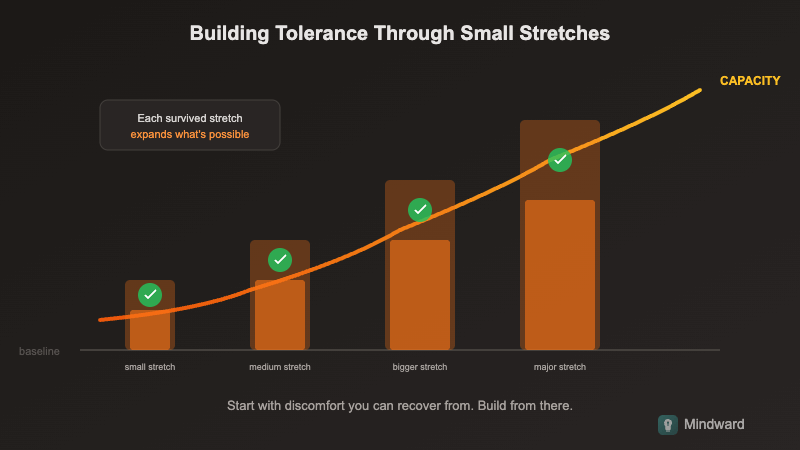
Start with discomfort you can recover from quickly. A conversation that's slightly awkward. A task that's slightly beyond your current ability. A small visibility that makes you slightly nervous. Each time you move through it and survive, you're updating your internal map of what's actually dangerous versus what's just new.
Courage isn't the absence of fear. It's the willingness to feel afraid and move forward anyway—because what's on the other side matters more than the discomfort of getting there.
The Discomfort of Becoming
Every version of yourself that you admire—more confident, more skilled, more authentic—lives on the other side of discomfort you haven't yet been willing to feel. The person who speaks up, who creates, who leads, who loves fully—they didn't get there by avoiding what felt hard.
This isn't about glorifying struggle or pretending pain is always productive. It's about recognizing that the specific discomfort of growth has a different quality than the discomfort of harm—and learning to move toward it rather than away.
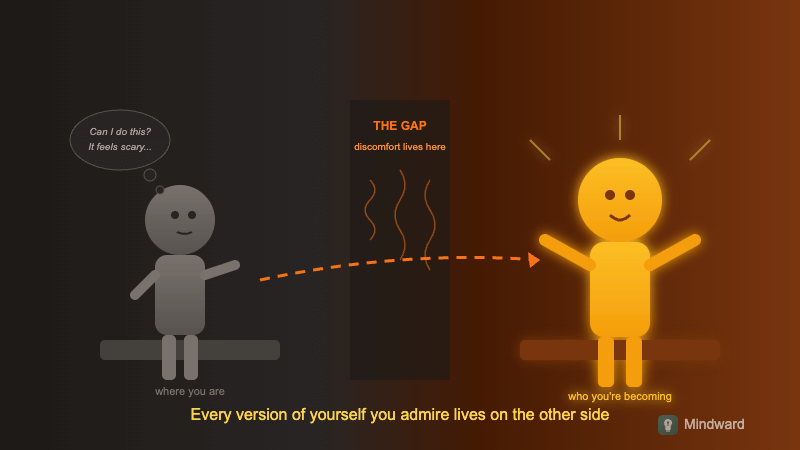
The tightness in your chest might not be telling you to stop. It might be telling you that you're finally moving—that you're leaving the familiar behind for something you haven't yet become.
That feeling isn't a wall. It's a door.


Comments
How did you like this article?
No comments yet. Be the first to share your thoughts!