Start So Small It Feels Ridiculous
The secret to building habits isn't motivation or discipline. It's making the behavior so tiny that not doing it feels harder than doing it.
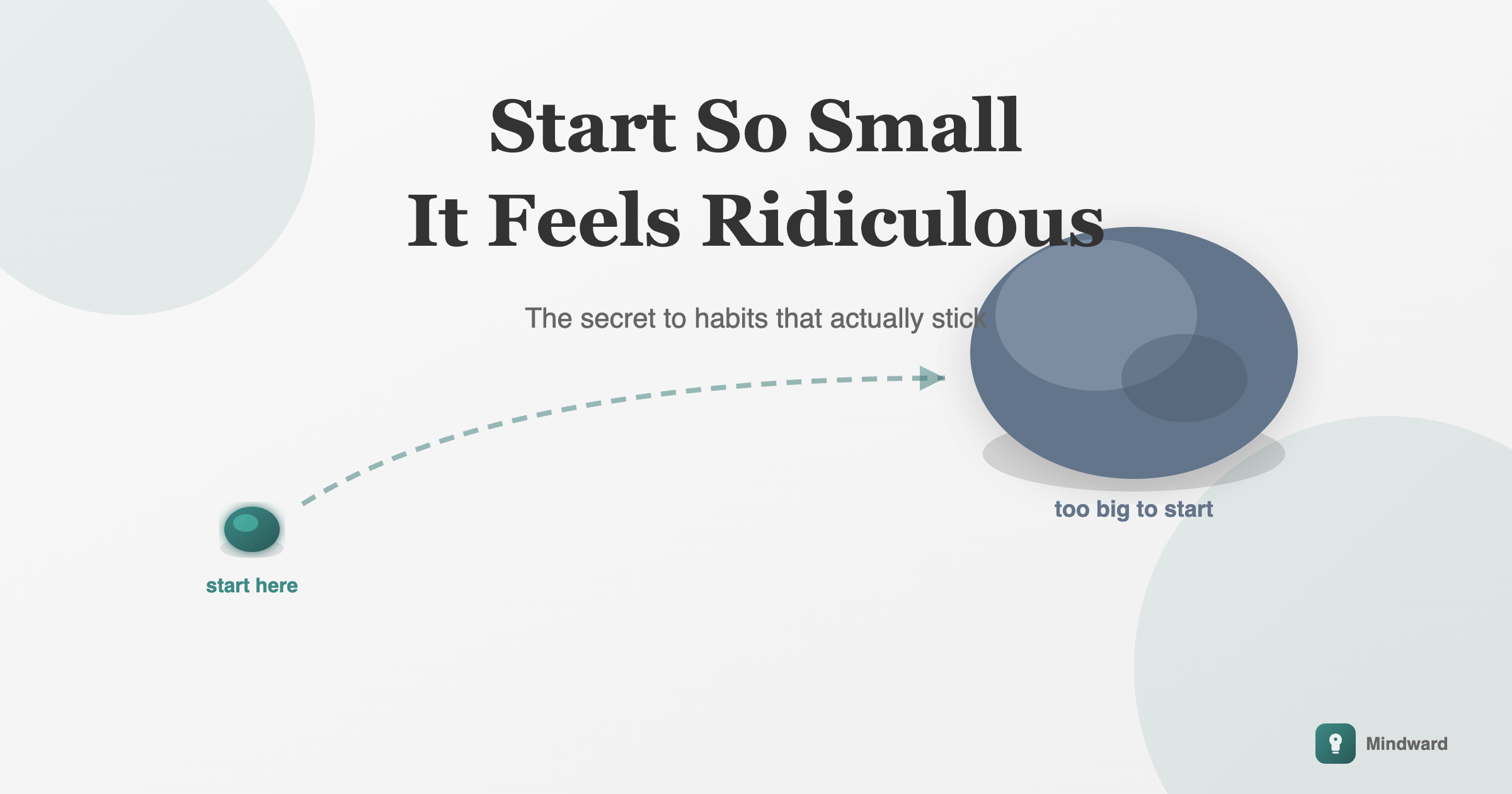
You don't need more motivation. You need a smaller target.
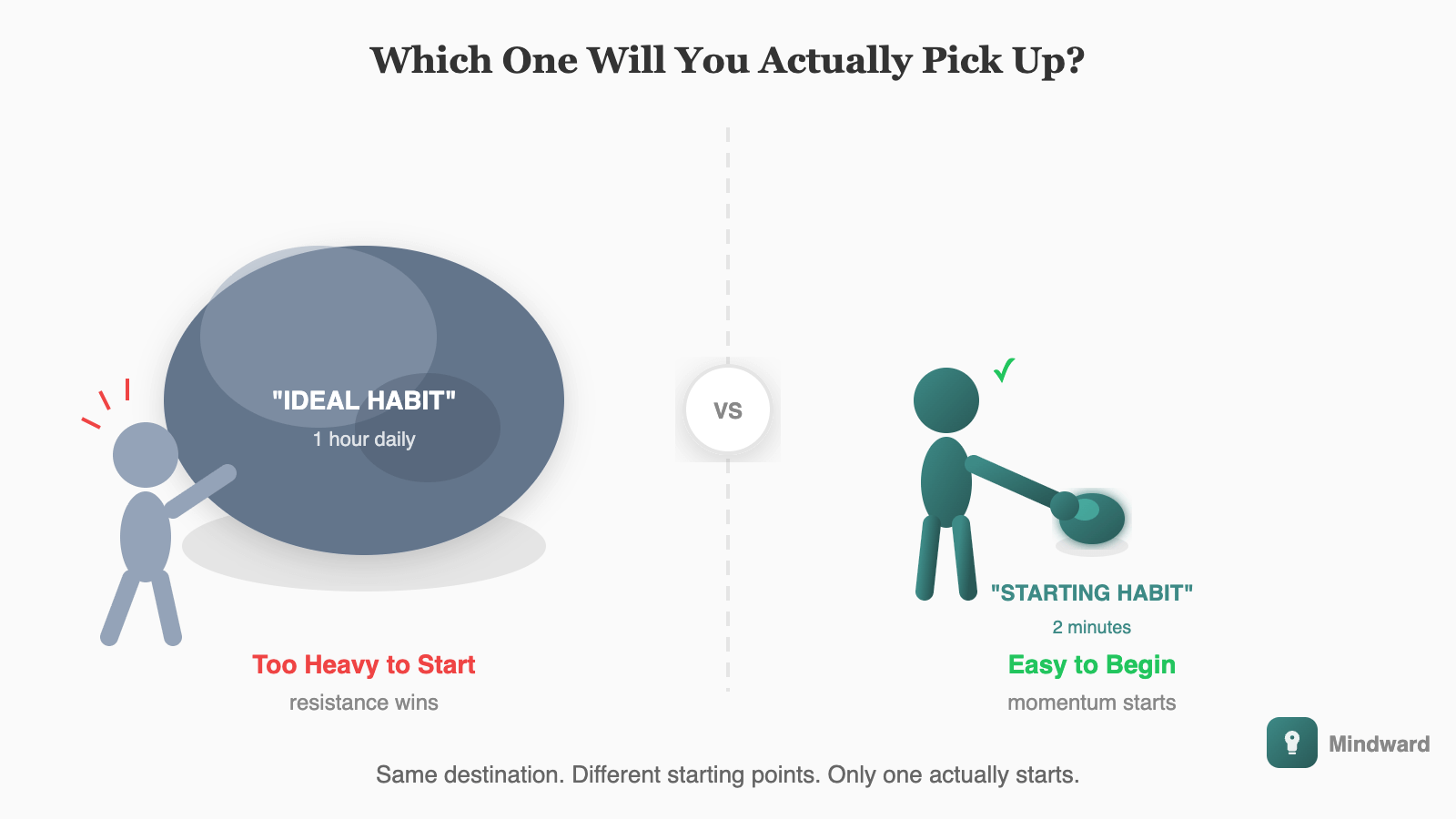
Every failed habit shares a common origin: it started too big. You committed to an hour at the gym, thirty minutes of meditation, writing two thousand words a day. Noble intentions, impossible execution. Within weeks—sometimes days—the habit collapsed under its own weight.
The fix isn't trying harder. It's starting smaller. So small it feels almost embarrassing to admit. So small that failure becomes nearly impossible.
This isn't about lowering your standards. It's about understanding how habits actually form—and using that knowledge to build behaviors that stick.
Why Big Starts Fail
Ambitious habits fail for a simple reason: they require resources you don't reliably have.
An hour at the gym requires time, energy, motivation, and the absence of competing priorities—all at once, every single day. When any one of these resources runs low, the habit breaks. And resources always run low eventually.
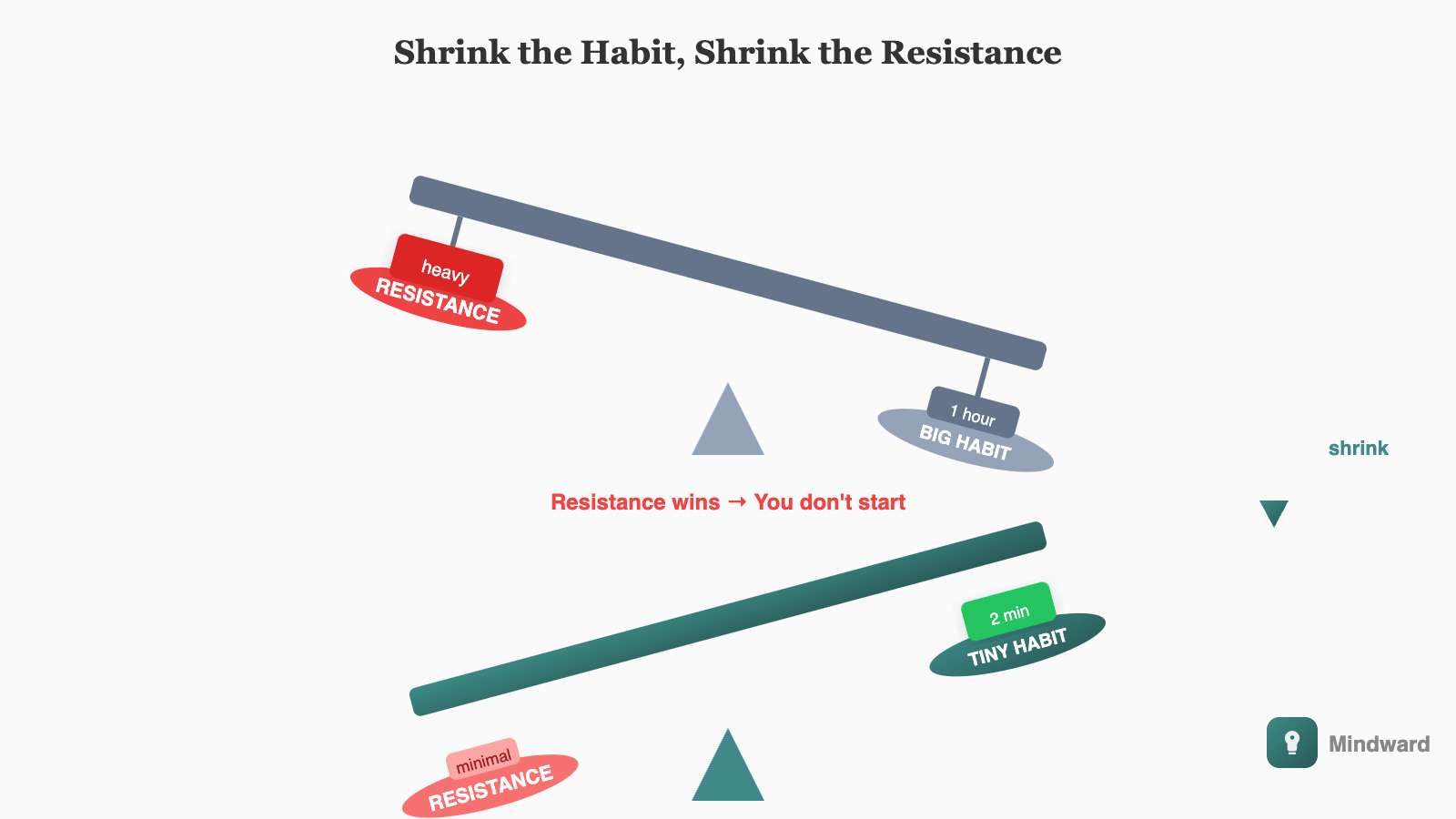
Big habits also trigger resistance. Your brain perceives them as threats to comfort, drains on energy, disruptions to routine. The larger the commitment, the louder the internal objection. Before you even start, part of you is already negotiating an exit.
The size of the habit determines the size of the resistance. Shrink the habit, shrink the resistance.
This is why willpower-based approaches eventually fail. You're fighting your own psychology with a resource—willpower—that depletes throughout the day. It's an unfair fight with a predictable outcome.
The Power of Tiny
A habit so small it takes two minutes or less doesn't trigger resistance. It slips under the brain's defense systems.
One pushup. One paragraph. One minute of meditation. Put on your running shoes. Open your journal. These aren't impressive. That's exactly the point.
When the ask is tiny, excuses evaporate. You can't credibly claim you don't have time for one pushup. You can't argue that you're too tired to open a book. The behavior is so minimal that refusing it reveals the resistance for what it is—not a practical objection, but emotional avoidance.
Tiny habits also build the most important thing: identity. Every time you do the small behavior, you cast a vote for being the kind of person who does that thing. One pushup still makes you someone who exercises. One paragraph still makes you someone who writes. The repetition matters more than the duration.
The Two-Minute Rule
Here's a practical filter: scale any habit down until it takes two minutes or less to complete.
- "Read before bed" becomes "read one page"
- "Run three miles" becomes "put on running shoes"
- "Study for class" becomes "open my notes"
- "Meditate for twenty minutes" becomes "sit in meditation posture"
- "Write every day" becomes "write one sentence"
- "Eat healthy" becomes "eat one vegetable with dinner"
This feels like cheating. It feels too easy to matter. That skepticism is exactly why it works—it's too easy for your brain to mount a serious objection.
The two-minute version isn't the end goal. It's the entry point. You're not trying to build a two-minute habit forever. You're trying to master the art of showing up. Once showing up becomes automatic, expansion happens naturally.
A habit must be established before it can be improved. You can't optimize what doesn't exist.
The Gateway Effect
Something interesting happens when you commit to tiny habits: you usually do more.
You tell yourself you'll do one pushup, and once you're on the floor, you do ten. You commit to one page, and twenty minutes later you're still reading. You promise yourself one sentence, and a full paragraph emerges.
This isn't failure to stick to the plan—it's the plan working perfectly. The tiny commitment was never about limiting your output. It was about eliminating the barrier to starting.
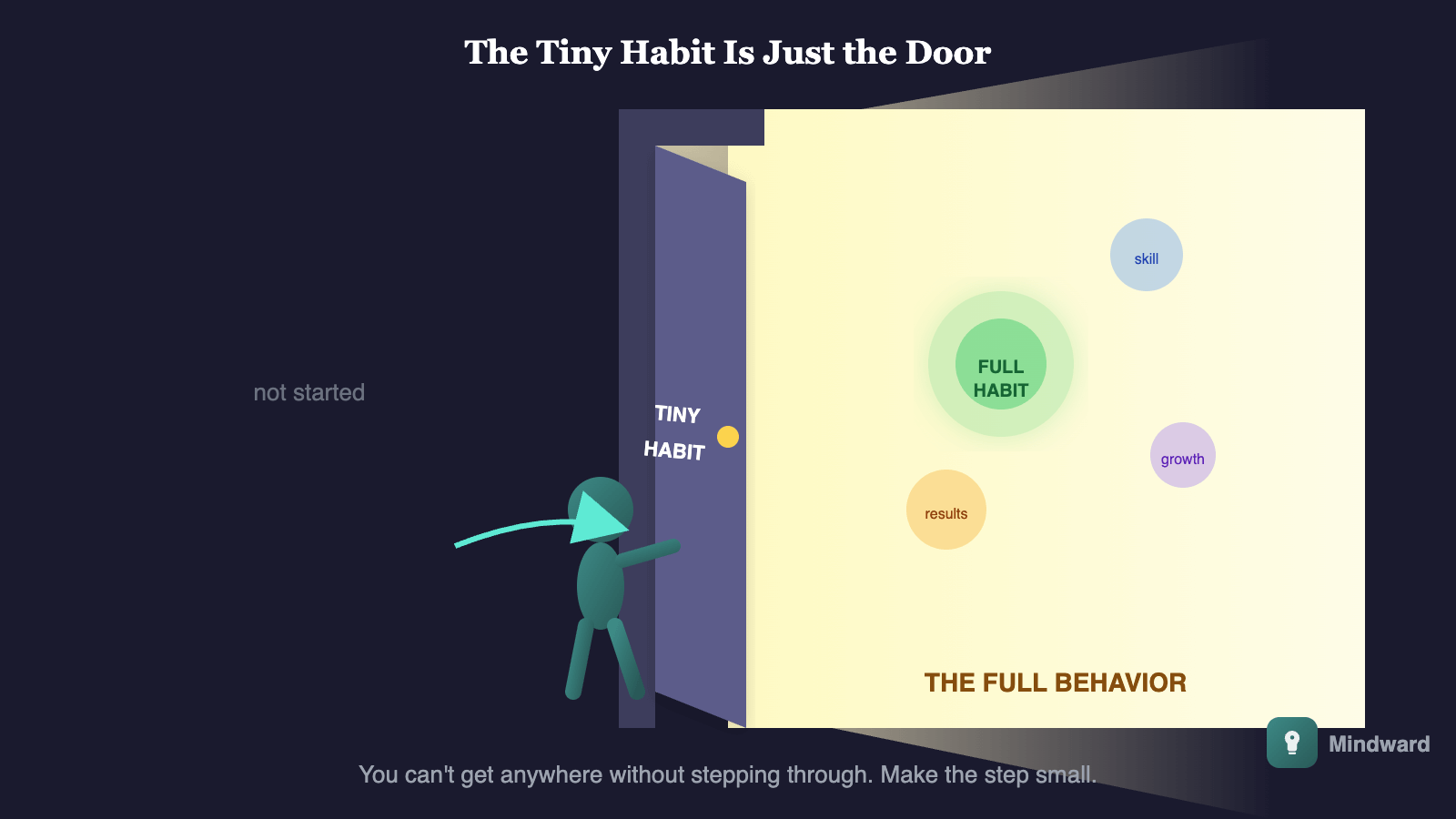
Starting is almost always the hardest part. Once you've begun, momentum carries you forward. The two-minute habit is a gateway—it gets you through the door. What you do after you're through is up to you, but you can't get anywhere without entering.
On good days, you'll blow past your tiny minimum. On bad days, you'll hit exactly two minutes and stop. Both count. Both maintain the streak. Both reinforce identity. The minimum ensures you never drop to zero.
Consistency Over Intensity
Our culture worships intensity. Go hard or go home. No pain, no gain. Maximum effort, maximum results.
This philosophy works for single events. It fails catastrophically for habit formation.
Habits aren't built in heroic bursts. They're built in boring repetitions. The person who exercises for ten minutes every day will outperform the person who crushes it for two hours once a week—not just in total volume, but in habit strength, identity formation, and long-term sustainability.
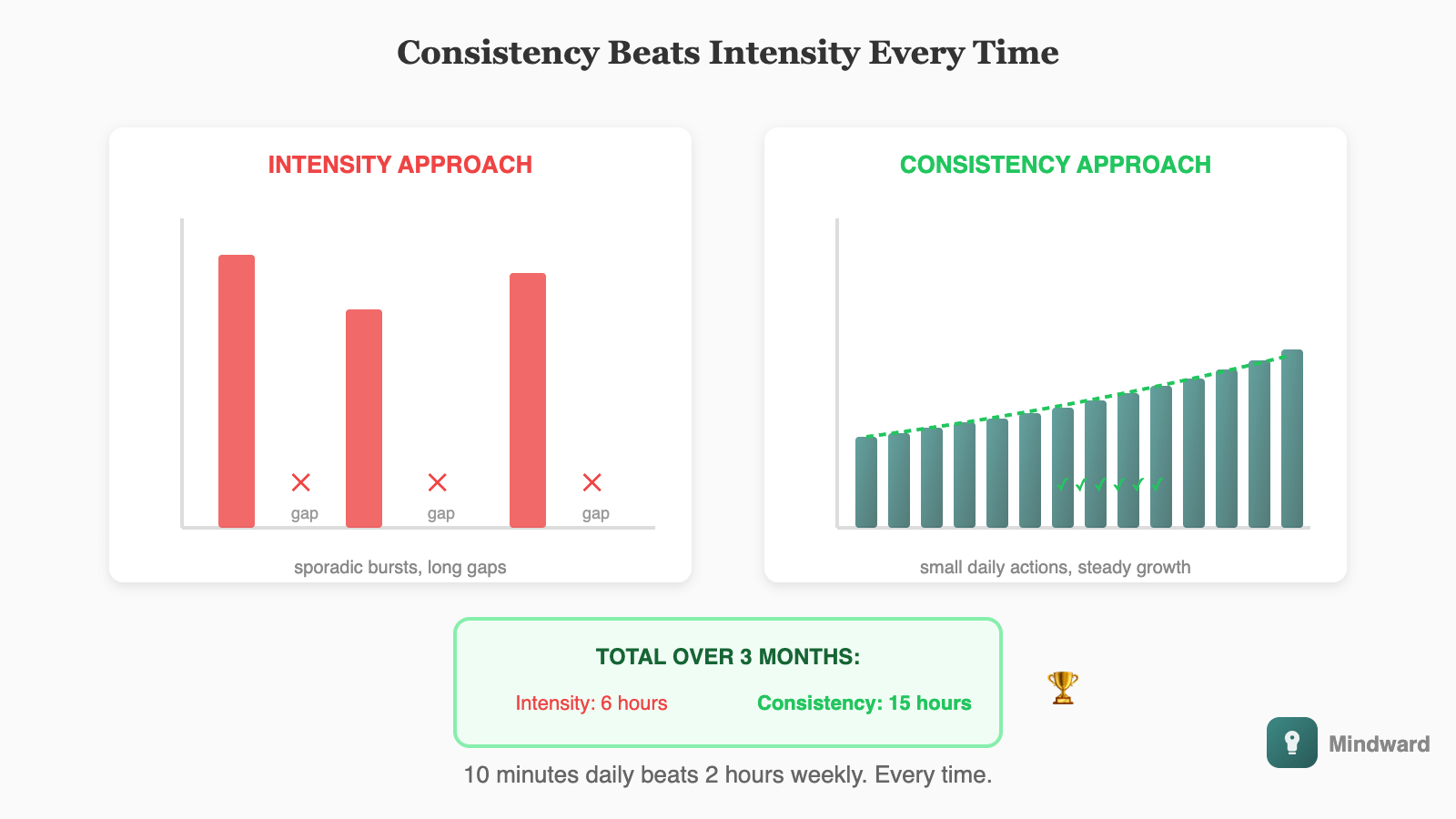
Intensity is unsustainable by definition—that's what makes it intense. But habits need to be sustainable. They need to survive bad days, low energy, competing demands, and inevitable disruptions. Only the smallest version of a habit can weather all conditions.
The goal isn't to do as much as possible on any given day. It's to do something on every given day.
Scaling Up (Eventually)
Tiny habits don't stay tiny forever—unless you want them to.
Once the behavior becomes automatic, once showing up requires no debate, you can begin expanding. Add a minute. Add a rep. Add a page. The expansion should be gradual enough that it doesn't reactivate resistance.
A useful rule: never increase by more than you could sustain on your worst day. If you've been doing five minutes of meditation, don't jump to twenty. Try six. Try seven. Let the habit grow at the pace your identity can absorb.
Some people never scale up much—and that's fine. A daily ten-minute walk maintained for decades beats an ambitious running program abandoned after months. The consistency is the achievement, not the intensity.
- Week 1-2: One pushup after waking
- Week 3-4: Five pushups after waking
- Month 2: Ten pushups after waking
- Month 3: Ten pushups plus five squats
- Month 6: Full 15-minute morning routine
Start Today, Start Tiny
Pick one habit you've been meaning to build. Now shrink it until it sounds almost silly. That's your starting point.
Don't negotiate with yourself about whether you could handle more. Don't let ego convince you that small doesn't count. The graveyard of abandoned habits is filled with ambitious plans. The people who actually change their lives are the ones humble enough to start with what works.
One pushup. One page. One minute. One sentence. One rep.
That's not where you'll stay. That's where you'll start. And starting—actually starting, not planning to start—is the only thing that matters.
Make it so small it feels ridiculous. Then do it anyway. Then do it again tomorrow. The ridiculous smallness is exactly what makes it possible—and possibility is all a habit needs to take root.


Comments
How did you like this article?
No comments yet. Be the first to share your thoughts!