Sleep Is the Multiplier: Why Everything Works Better When You're Rested
Sleep isn't a luxury you earn after productivity. It's the foundation that makes productivity possible. When sleep suffers, everything suffers—and no amount of caffeine, discipline, or optimization can compensate.
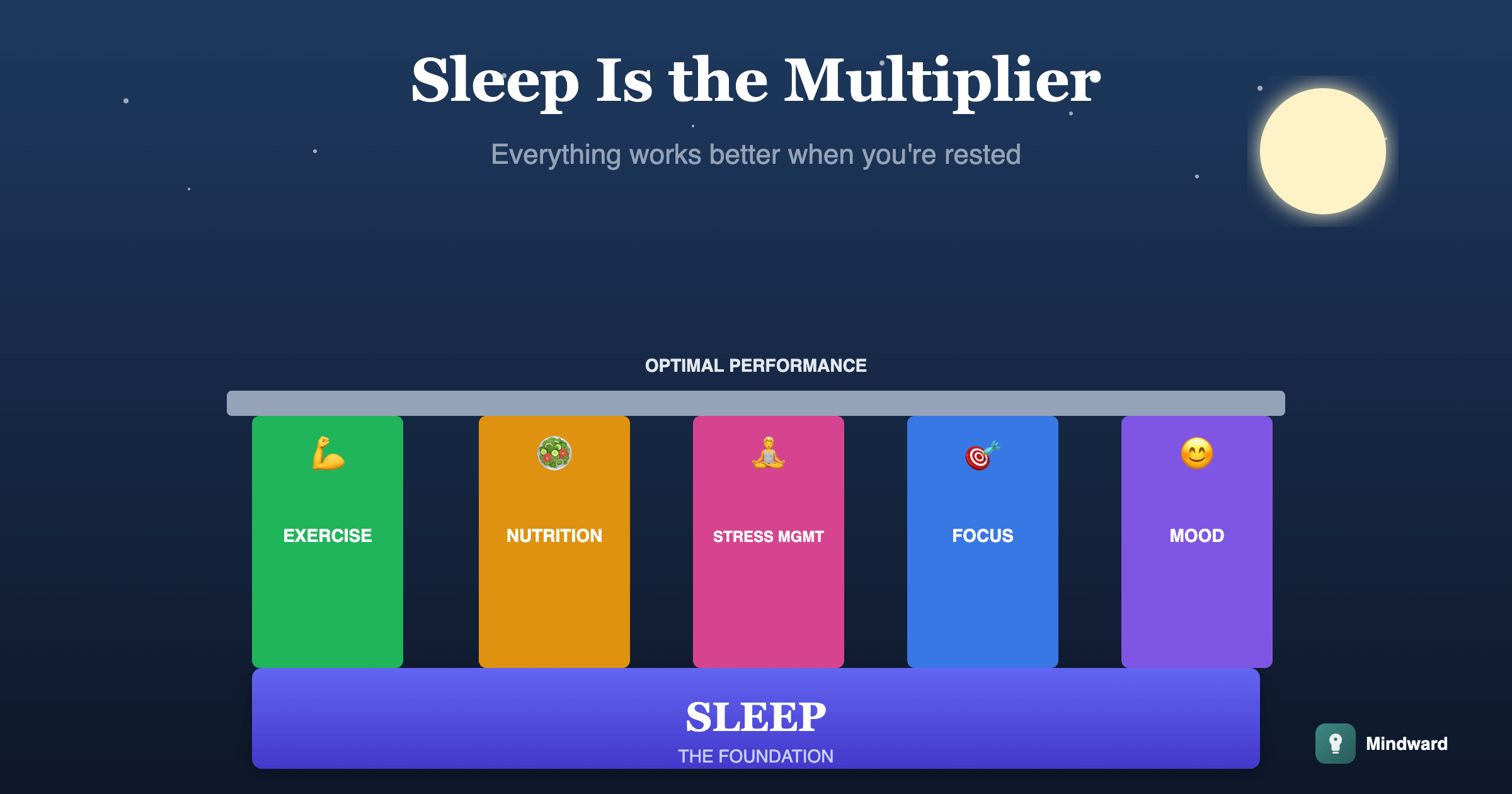
You can eat perfectly. You can exercise daily. You can meditate, journal, and optimize every system in your life. But if you're not sleeping enough, none of it works the way it should.
Sleep isn't one health habit among many. It's the multiplier that determines how well all the others function. Get it right, and everything else gets easier. Get it wrong, and everything else gets harder—often without you realizing why.
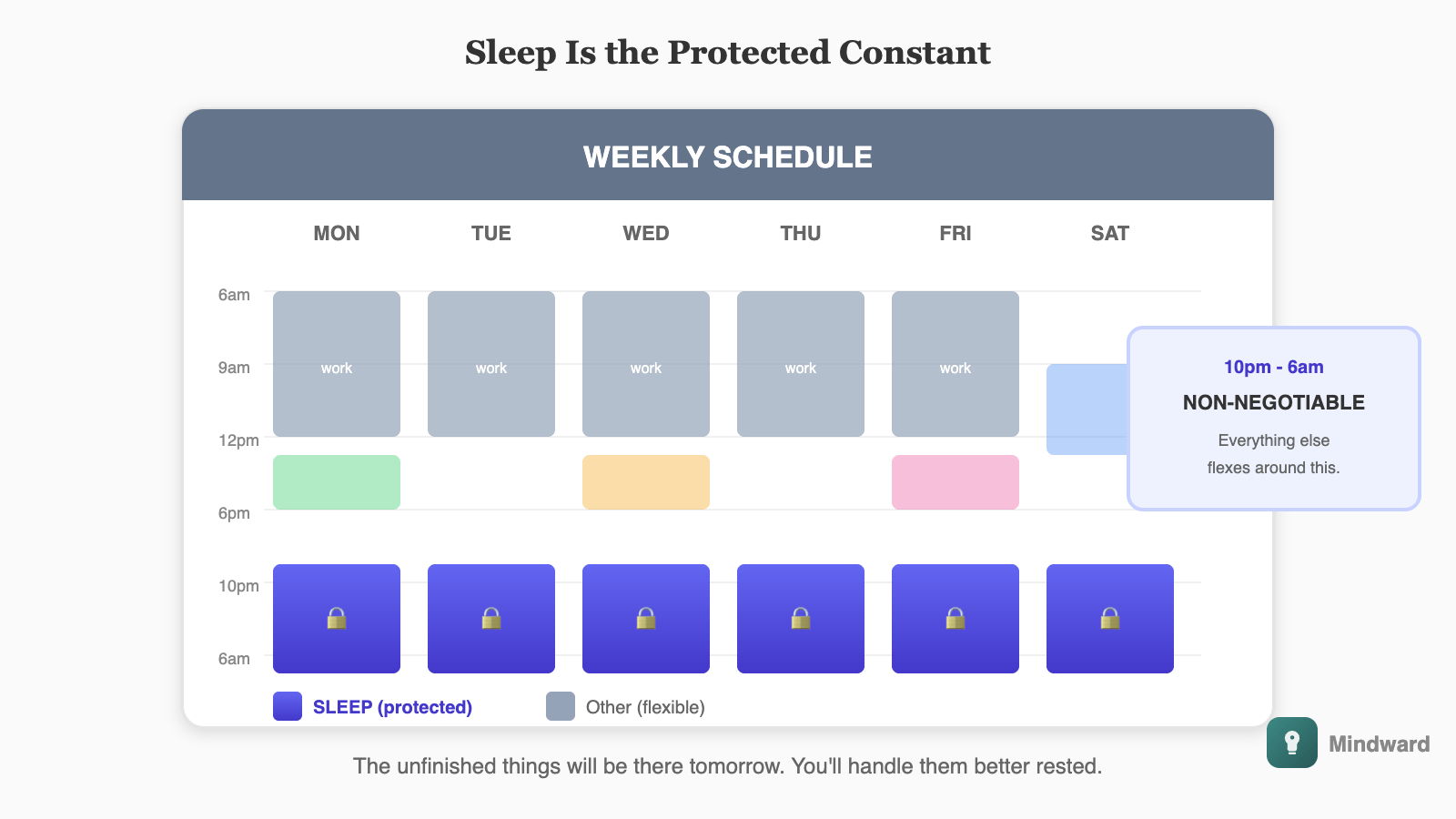
Most people treat sleep as the flexible variable—the thing that shrinks when life gets busy. This is backwards. Sleep should be the protected constant. Everything else should flex around it.
What Sleep Actually Does
Sleep isn't passive. It's when your body and brain do their most critical maintenance work.
During sleep, your brain clears metabolic waste through the glymphatic system—a cleanup process that only runs efficiently when you're unconscious. Your body releases growth hormone for tissue repair. Your immune system produces cytokines that fight inflammation and infection. Your brain consolidates memories, transferring learning from short-term to long-term storage.
Skip sleep, and you skip all of this. The waste accumulates. The repairs don't happen. The memories don't consolidate. You're not just tired—you're running on a system that hasn't been maintained.
Sleep isn't downtime. It's when the real work happens.
The Cascade of Sleep Debt
Sleep deprivation doesn't just make you tired. It triggers a cascade that touches every system in your body.
Your prefrontal cortex—the part of your brain responsible for decision-making, impulse control, and focus—is the first to suffer. This is why sleep-deprived people make worse decisions, eat more junk food, skip workouts, and struggle to concentrate. The very part of the brain you need to make good choices is compromised.
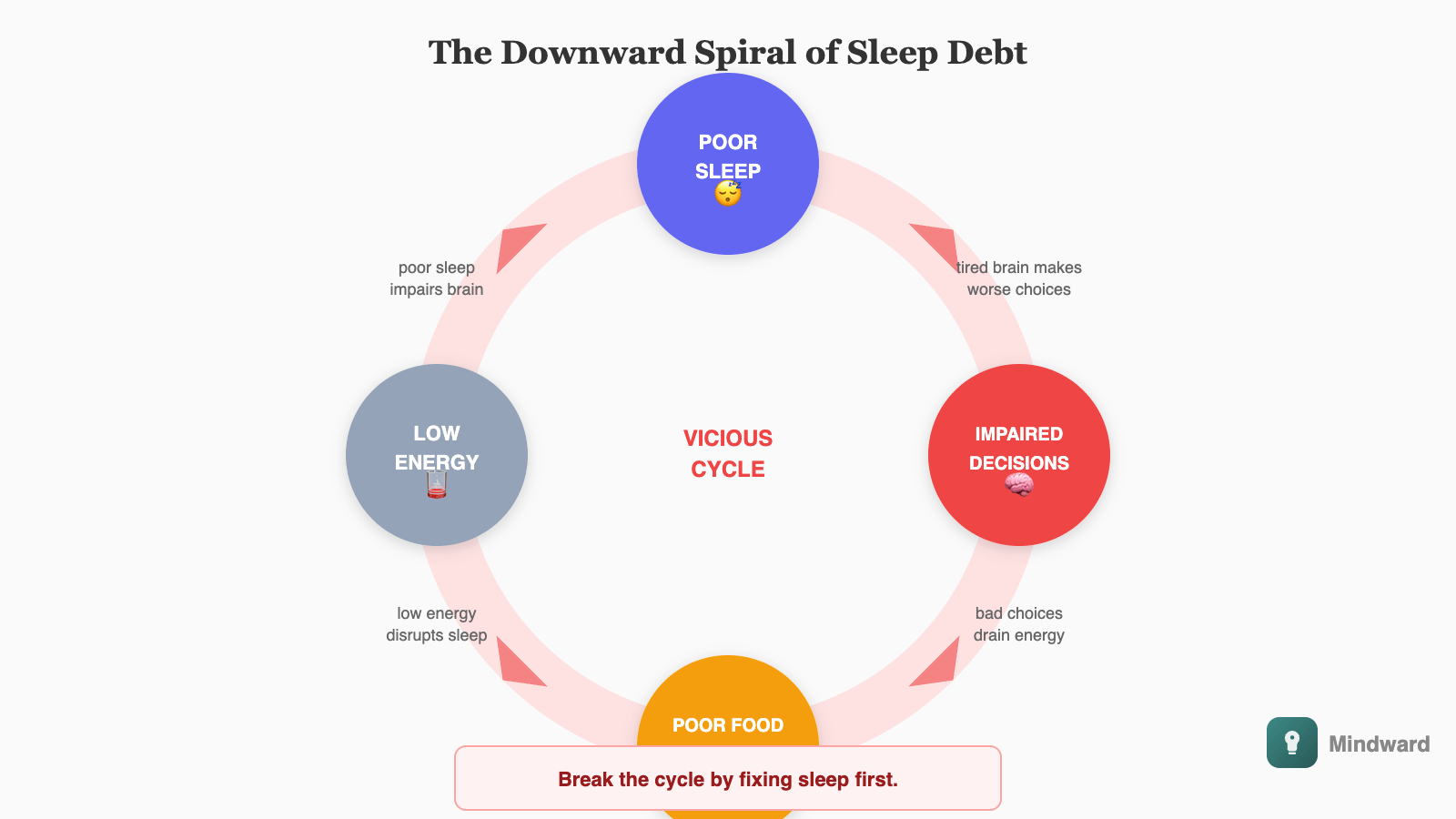
Hormones shift in unfavorable directions. Cortisol rises, keeping you in a stress state. Leptin drops, making you feel hungrier. Ghrelin increases, amplifying cravings. Insulin sensitivity decreases, pushing your body toward fat storage. One night of poor sleep can measurably change your metabolic profile.
Your emotional regulation suffers. The amygdala—your brain's alarm system—becomes hyperactive while your prefrontal cortex loses its ability to calm it down. This is why everything feels more overwhelming, more irritating, more hopeless when you're tired. You're not weak. Your brain is literally less able to regulate emotions.
The Performance Tax
Here's what most people miss: you don't feel as impaired as you actually are.
Studies show that after several days of six hours of sleep, cognitive performance drops to the level of someone who's been awake for 24 hours straight. But subjective sleepiness plateaus—people stop feeling proportionally tired. They've adapted to impairment without realizing they're impaired.
This is the danger zone. You think you're functioning fine. You're not. You're paying a performance tax on everything you do—slower thinking, weaker memory, worse judgment—without any awareness that you're paying it.
You can't tell how sleep-deprived you are when you're sleep-deprived. Your perception of your own impairment is itself impaired.
The people who say they do fine on five hours aren't doing fine. They've just forgotten what fine feels like.
Protecting Sleep Like It Matters
If sleep is this important—and it is—then it deserves protection. Not the leftovers of your day, but deliberate, structural protection.
This starts with treating your sleep time as non-negotiable. Not "I'll try to get to bed early" but "I am in bed at this time, every night, regardless of what's unfinished." The unfinished things will be there tomorrow, and you'll handle them better rested.
- Set a non-negotiable bedtime and work backward from it
- Treat the hour before bed as wind-down time, not productive time
- Remove screens from the bedroom or use aggressive night modes
- Keep the room cold, dark, and quiet—environment matters more than you think
- Limit caffeine to the first half of the day
- Expose yourself to bright light in the morning to anchor your circadian rhythm
These aren't optional nice-to-haves. They're the systems that make consistent sleep possible. Without systems, you're relying on willpower—and willpower is exactly what fails when you're tired.
The Wind-Down Buffer
You can't go from high stimulation to sleep instantly. Your nervous system needs transition time.
The hour before bed should be boring by design. No work emails. No intense shows. No scrolling feeds designed to capture attention. These activities keep your brain in activation mode, delaying the natural wind-down that precedes good sleep.
Replace stimulation with deceleration. Reading physical books. Light stretching. Journaling. Conversation. A warm shower. Activities that signal to your nervous system that the day is ending and it's safe to power down.
This buffer isn't wasted time. It's the transition that makes sleep possible. Skip it, and you'll lie awake wondering why you can't fall asleep—your brain still running at daytime speed.
The Consistency Principle
Your body runs on rhythms. The more consistent your sleep schedule, the more those rhythms work for you instead of against you.
Going to bed and waking up at the same time—even on weekends—trains your body to expect sleep. Melatonin releases at the right time. Cortisol rises when you need to wake. The transitions become smoother because your body knows what's coming.
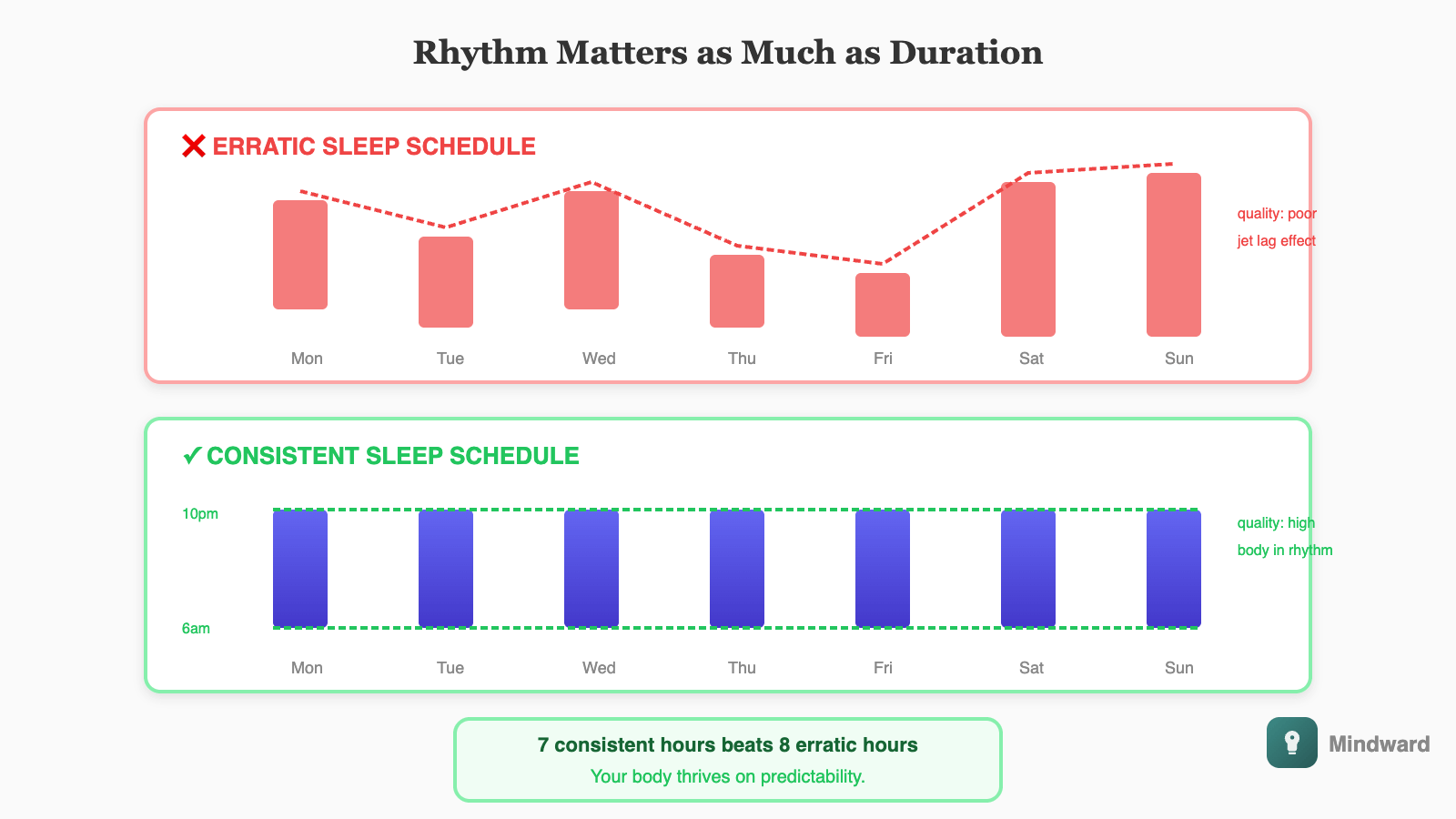
Irregular sleep schedules create a kind of constant jet lag. Every time you shift your sleep window dramatically, your circadian rhythm has to readjust. This costs energy and disrupts the quality of whatever sleep you do get.
Seven consistent hours often beats eight erratic hours. Rhythm matters as much as duration.
When You Can't Sleep Enough
Life isn't always controllable. New parents, shift workers, people with medical conditions—sometimes optimal sleep isn't available. This doesn't mean you're doomed.
When quantity is limited, focus on quality. A dark, cool room. Consistent timing within your constraints. Avoiding alcohol and heavy meals before bed. These interventions can improve the restorative value of whatever sleep you do get.
Naps can help, used strategically. Twenty to thirty minutes in the early afternoon can restore alertness without disrupting nighttime sleep. Longer naps or late naps tend to backfire, making it harder to sleep at night.
And when the constraints lift—when the baby starts sleeping through the night, when the project ends, when the crisis passes—prioritize recovery. Sleep debt is real, and it takes time to pay back. Give yourself that time without guilt.
The Return on Rest
Better sleep doesn't just remove negatives. It creates positives. Energy you didn't know you were missing. Clarity you forgot was possible. Emotional resilience that makes hard things easier.
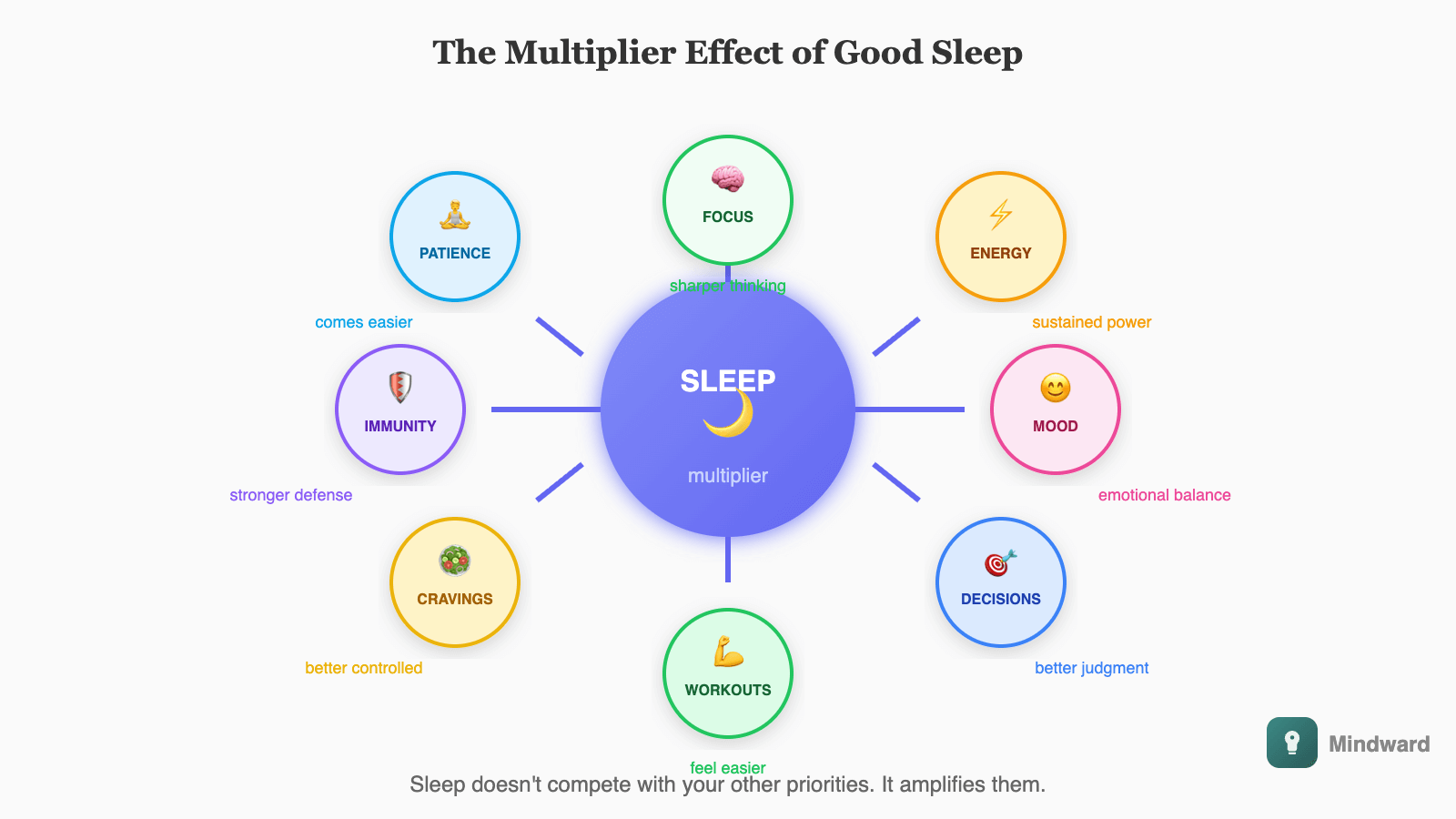
When you're well-rested, good decisions come more naturally. Workouts feel less like a battle. Healthy food feels more appealing. Patience comes easier. Focus sharpens. The things you're trying to do with willpower start happening with less effort.
This is the multiplier effect. Every other investment in your health and performance yields higher returns when you're rested. Sleep doesn't compete with your other priorities. It amplifies them.
You're not sleeping to escape your life. You're sleeping to show up for it—fully present, fully capable, fully yourself. That's not a luxury. That's the foundation everything else is built on.


Comments
How did you like this article?
No comments yet. Be the first to share your thoughts!