Motivation Follows Action, Not the Other Way Around
You're not waiting for motivation. You're waiting for permission. The energy to continue comes after you start — not before.
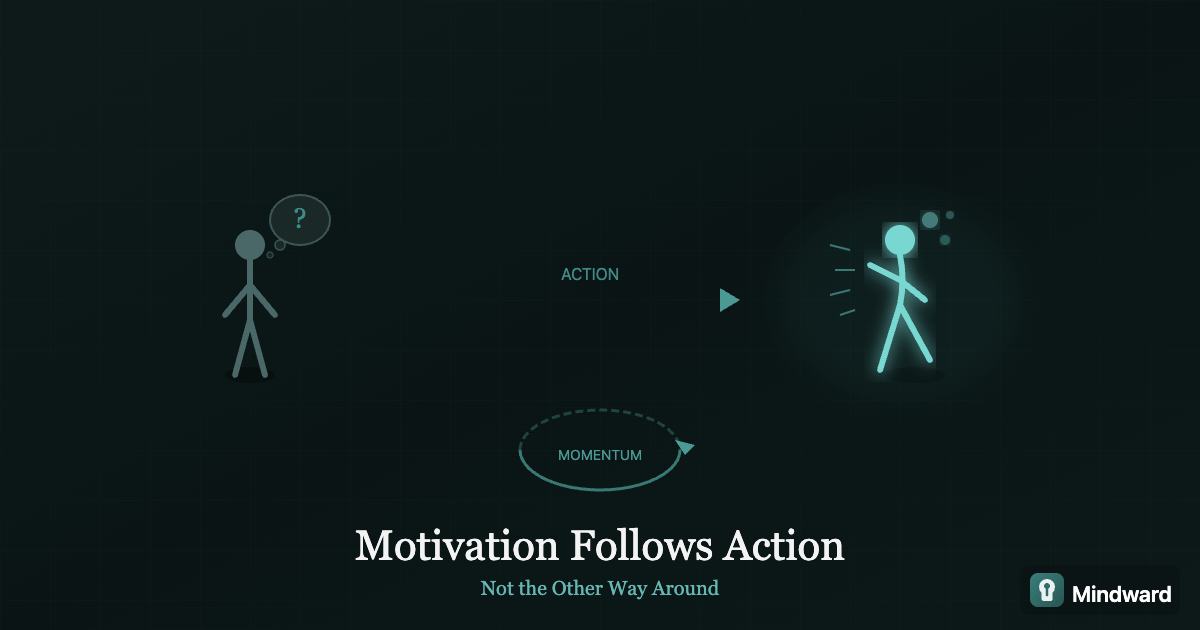
You're sitting there waiting to feel like it.
Waiting for the spark. The surge. The moment when doing the thing finally feels easier than avoiding it. You tell yourself you'll start when you're motivated — when you have energy, when you're in the right headspace, when conditions align.
You might be waiting forever.
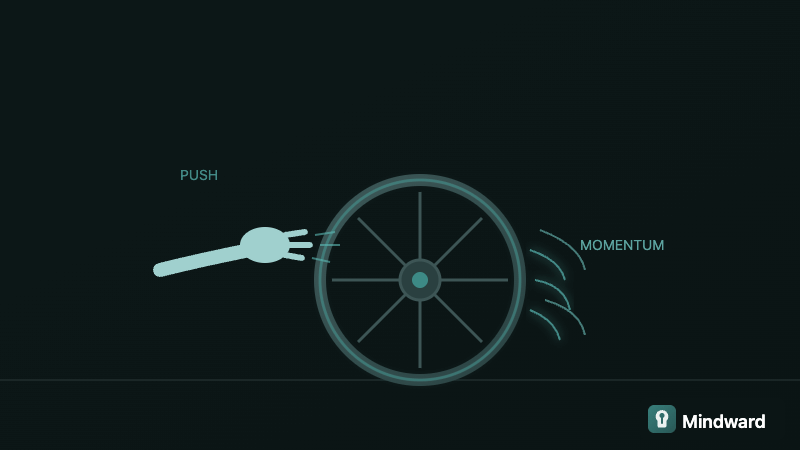
The assumption that motivation precedes action is one of the most common — and most costly — misunderstandings about how humans actually work. It feels true. It seems obvious. But it's backwards.
Motivation doesn't produce action. Action produces motivation.
The Motivation Myth
Somewhere along the way, we absorbed the idea that productive people feel motivated and unproductive people don't. That the difference between someone who exercises regularly and someone who doesn't is that one of them wakes up wanting to go to the gym.
This is almost entirely false.
People who consistently do hard things don't feel more motivated than you do. They've just stopped waiting for motivation to show up first. They've learned — often through trial and error — that the feeling follows the action, not the other way around.
You don't wait until you feel like doing something. You do it until you feel like continuing.
Behavioral psychology calls this the "action-motivation cycle." The conventional view is linear: motivation → action → result. But research consistently shows it's circular: action → motivation → more action. The spark you're waiting for is generated by movement, not by waiting.
Why Starting Is the Hardest Part
There's a reason the first minute is the worst. Your brain is wired to conserve energy and avoid uncertainty. Before you start, the task exists only as an abstraction — and your mind fills that abstraction with resistance.
But something shifts once you begin. Psychologists call it the Zeigarnik effect: incomplete tasks occupy mental space and create a pull toward completion. Once you've started, your brain switches from "should I do this?" to "how do I finish this?" The question changes. The resistance drops.
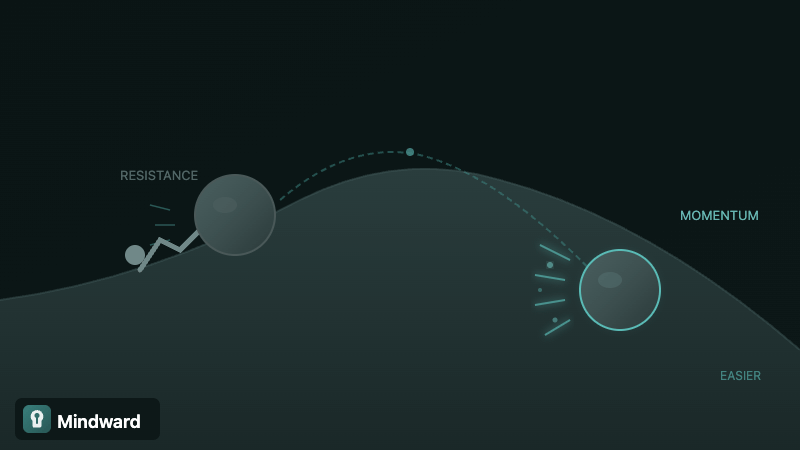
This is why the advice to "just start for two minutes" actually works. It's not a trick. It's not about fooling yourself. It's about crossing the threshold where motivation can actually be generated. You can't manufacture motivation while standing still.
The Energy Paradox
"I don't have the energy" might be the most repeated excuse for inaction. And it feels real — the fatigue, the heaviness, the sense that you've got nothing left to give.
But here's what's counterintuitive: action often creates energy rather than depleting it. Movement generates momentum. Starting a task recruits focus. Exercise — the thing you're too tired to do — is one of the most reliable ways to reduce fatigue.
What feels like an energy problem is often an activation problem. You have more capacity than you think. It's just locked behind the gate of starting.
The energy you're waiting for is on the other side of beginning.
How to Act Before You Feel Like It
If motivation follows action, then the skill isn't generating motivation — it's starting without it. Here's what actually helps:
- Shrink the start. Don't commit to the whole task. Commit to sixty seconds of it. Open the document. Put on the shoes. The rest tends to follow.
- Remove the decision. Decide in advance when and where you'll act, so you're not relying on willpower in the moment.
- Expect resistance. The discomfort before starting isn't a sign something's wrong. It's the normal activation cost. It passes.
- Notice the shift. Pay attention to how you feel two minutes in versus two minutes before. Let that evidence update your belief about how motivation works.
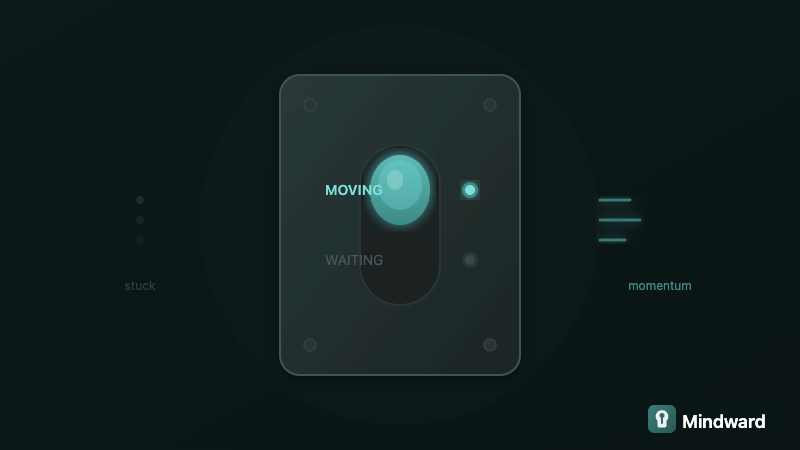
You don't need to feel ready. You don't need to want it. You only need to begin — and let the wanting catch up.
What This Changes
When you stop waiting for motivation, something fundamental shifts in how you relate to yourself and your goals.
First, you stop blaming yourself for not feeling motivated. Motivation isn't a character trait. It's not something you have or lack. It's a response that emerges under specific conditions — conditions you can create.
Second, you become less dependent on feeling good to do good work. Mood becomes weather, not destiny. You learn to act across a wider range of internal states, which makes you significantly more consistent.
Third, you build a different kind of confidence. Not confidence that you'll always feel ready. Confidence that you can start anyway — and that starting is enough.
Start Before You're Ready
The feeling you're waiting for isn't coming — at least not while you're waiting. It's not a prerequisite you lack. It's a response you haven't triggered yet.
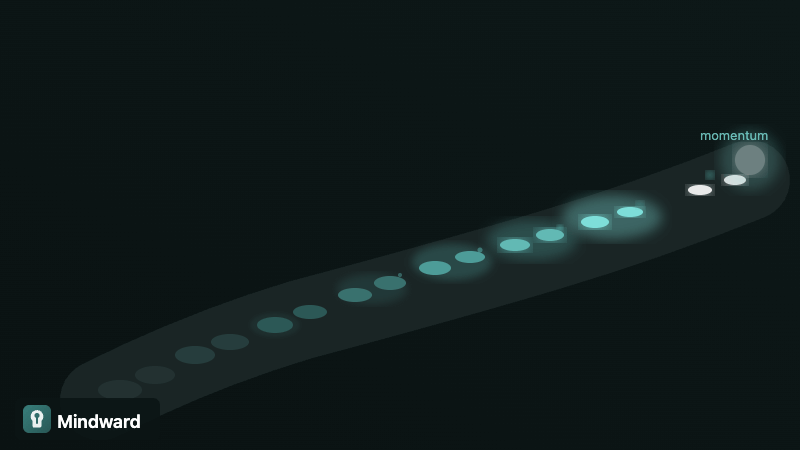
Motivation is not the fire that starts the engine. It's the heat the engine produces once it's running.
So stop waiting to feel like it. Start before you're ready. Move before you want to.
The spark will catch. It always does.


Comments
How did you like this article?
No comments yet. Be the first to share your thoughts!