Morning Sunlight Is a Drug. You Should Be Taking It.
The most powerful signal for energy, mood, and sleep quality costs nothing and takes ten minutes. Most people haven't gotten it in years.
You wake up groggy. You drag through the morning. By afternoon you're finally alert, but by evening you can't wind down. You lie in bed, tired but wired, scrolling until exhaustion finally wins. The next morning, it repeats.
This pattern feels like a willpower problem or a sleep problem. It's actually a light problem.
Your body runs on a 24-hour internal clock—the circadian rhythm. This clock regulates when you feel alert, when you feel tired, when hormones release, when your body temperature rises and falls. When the clock is synchronized properly, energy and sleep come naturally. When it's not, everything feels harder than it should.
The primary signal that sets this clock is light. Specifically, bright light in the morning. And most people aren't getting nearly enough of it.
What Morning Light Actually Does
When bright light hits your eyes in the morning, it triggers a cascade of effects that ripple through the entire day.
First, it spikes cortisol. Not the chronic stress cortisol you've heard is bad—this is the healthy, pulsatile cortisol that's supposed to rise in the morning. This spike makes you alert, focused, and energized. It's your body's natural caffeine, released on schedule when the system works correctly.
Second, it starts a timer for melatonin. Roughly 12-14 hours after that morning light exposure, your body will begin releasing melatonin, the hormone that makes you sleepy. Get light at 7am, and you'll naturally start winding down around 9pm. Miss that morning light, and the timer never starts properly. You won't feel tired until much later—if at all.
Morning light doesn't just help you wake up. It determines how easily you'll fall asleep that night.
Third, it regulates mood. Light exposure triggers serotonin production, the neurotransmitter associated with wellbeing and emotional stability. This is why seasonal depression hits in winter, when morning light is weak and scarce. It's not just the cold—it's the darkness.
Why Indoor Light Doesn't Count
You might think you're getting enough light. You're awake during the day, after all. The lights are on. But indoor lighting is shockingly dim compared to natural sunlight.
A typical office is around 300-500 lux. A cloudy day outside is 1,000-2,000 lux. Direct sunlight on a clear morning is 10,000-100,000 lux. Your circadian system evolved to expect that bright outdoor signal. Indoor light barely registers.
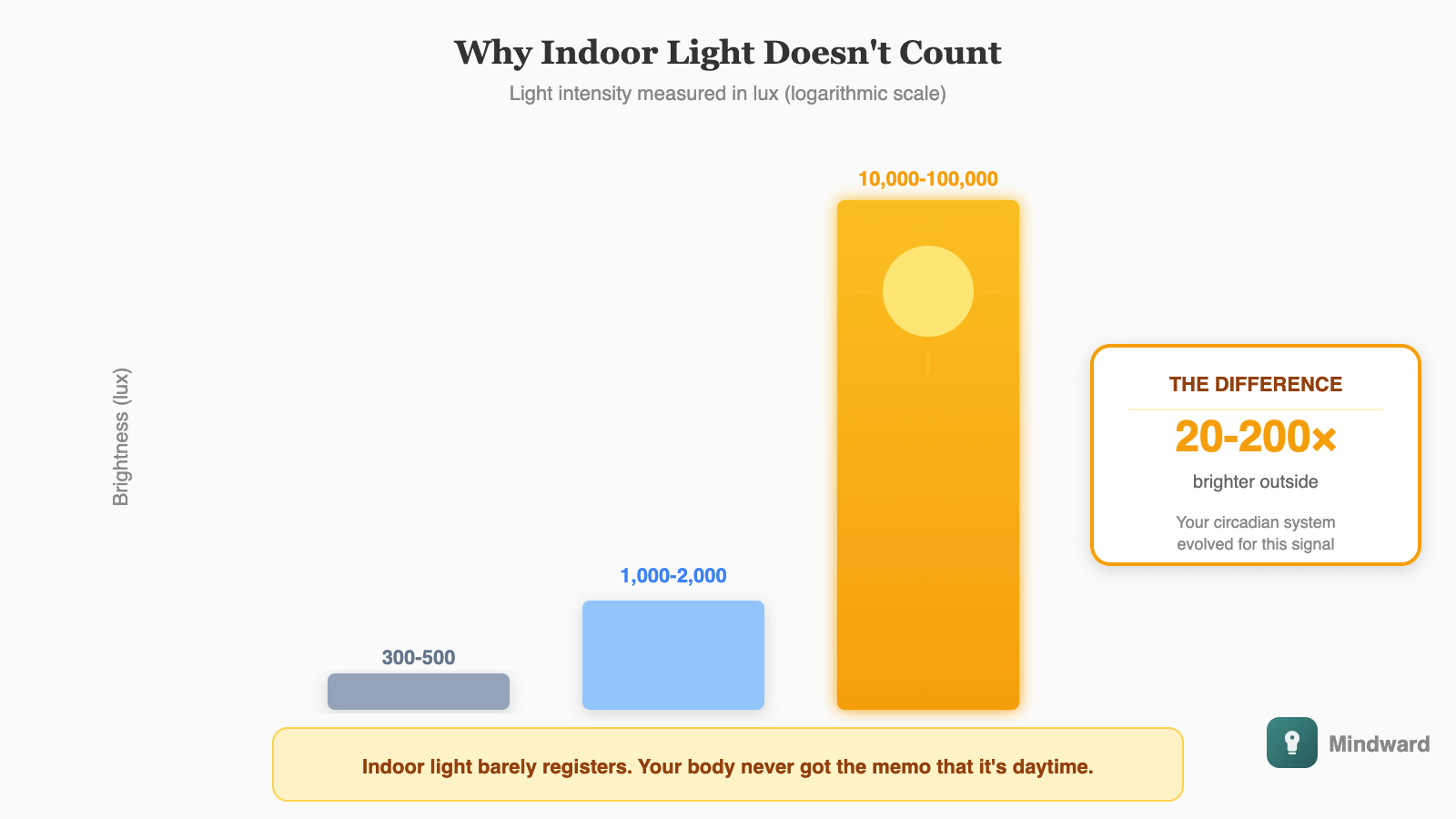
This is why you can spend all day under fluorescent lights and still feel like your body never fully woke up. The signal never arrived. Your system is running on yesterday's settings—or no settings at all.
Looking at your phone first thing in the morning is particularly counterproductive. The light from screens is bright enough to affect your circadian system, but in the wrong way at the wrong time. It disrupts without synchronizing.
The Protocol
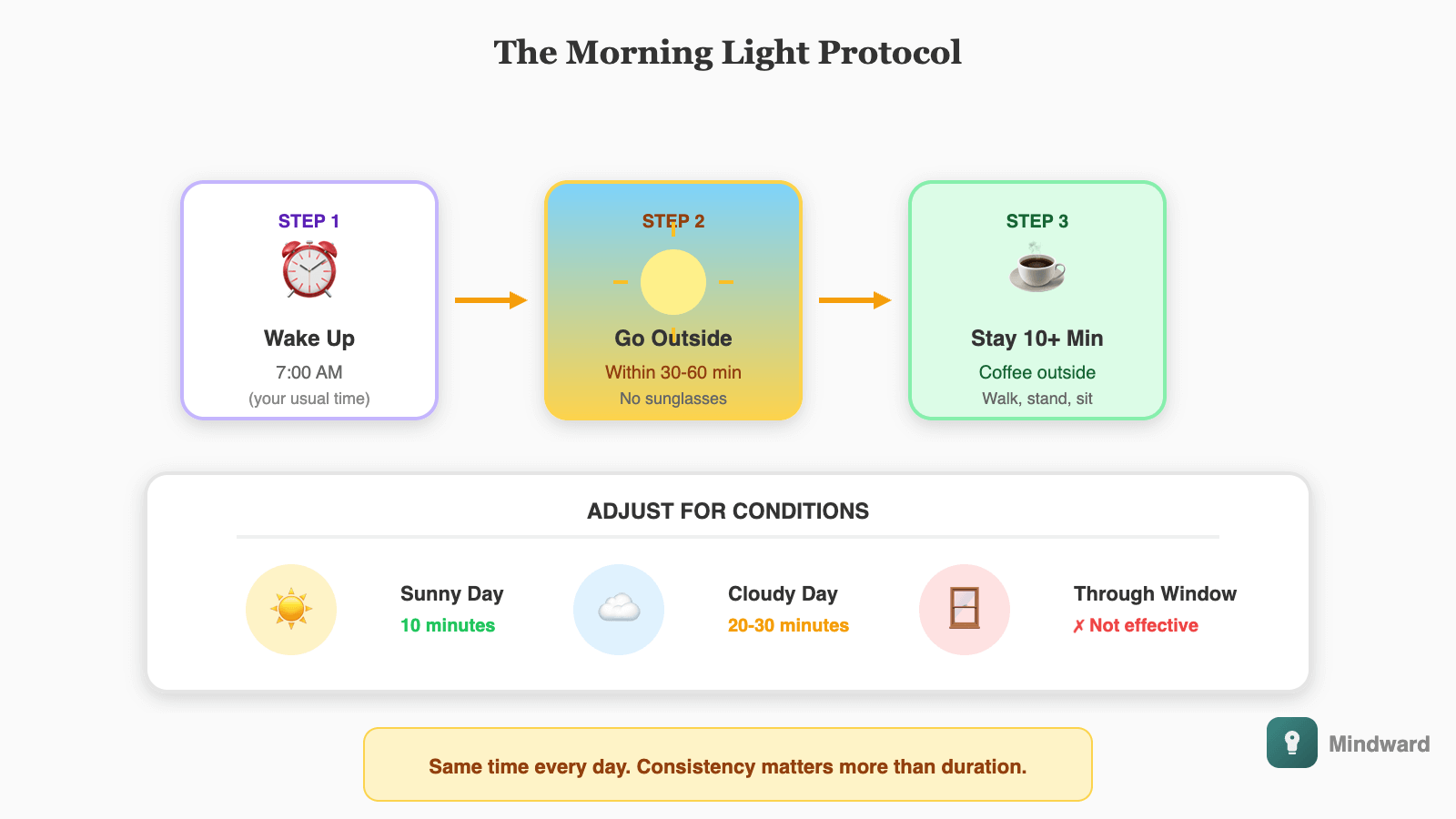
The fix is simple, but it requires actually doing it. Within the first hour of waking—ideally within 30 minutes—get outside and expose your eyes to natural light for at least 10 minutes.
You don't need to stare at the sun. You shouldn't. Just be outside with your eyes open. Face toward the sun's general direction. Let the brightness enter your eyes naturally. Sunglasses block the signal, so leave them off during this morning exposure.
- Wake up → go outside within 30-60 minutes
- 10 minutes minimum on sunny days
- 20-30 minutes on cloudy days (clouds reduce but don't eliminate the signal)
- No sunglasses (regular glasses or contacts are fine)
- Facing toward the sun (not directly at it)
- Even overcast light is far brighter than indoors
Combine this with something you already do. Morning coffee on the porch instead of at the kitchen table. A brief walk around the block. Standing in your backyard while you check your phone. The activity doesn't matter—the light does.
Windows Don't Work
Sitting by a window feels bright, but glass filters out many of the wavelengths your circadian system needs. Studies show that light through windows is significantly less effective than direct outdoor exposure.
If you absolutely cannot get outside, opening the window helps. A light therapy box (10,000 lux) can partially substitute on dark winter mornings. But nothing fully replaces actual outdoor light. The system evolved outdoors; it expects outdoor signals.
The Evening Counterpart
Morning light is half the equation. The other half is reducing light at night.
After sunset, bright light—especially the blue-enriched light from screens—tells your brain it's still daytime. Melatonin production gets suppressed. Your body doesn't prepare for sleep because it thinks sleep isn't coming.
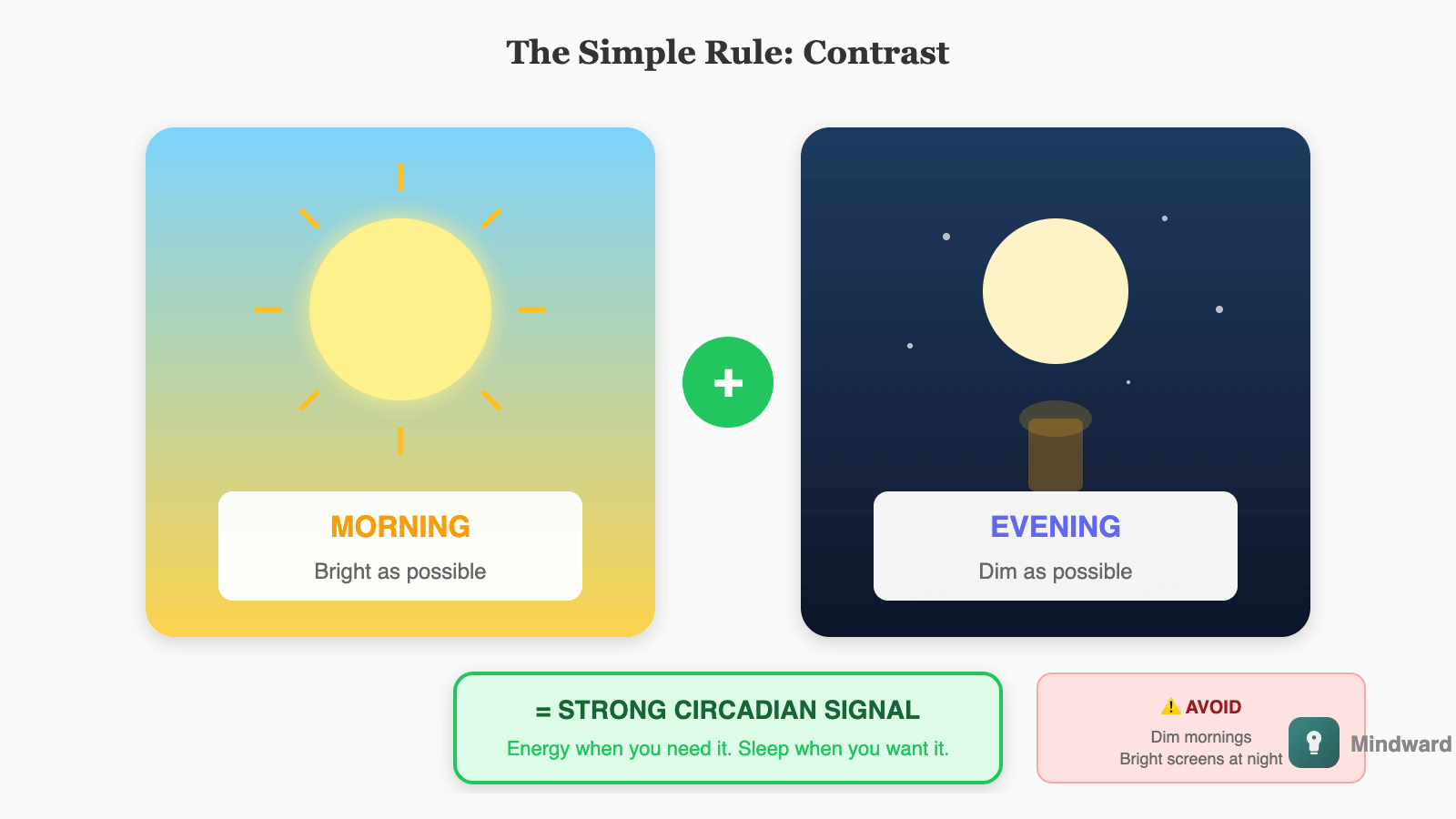
Dim your environment in the hours before bed. Use warm, low lighting. If you're on screens, use night mode or blue-light filtering. The contrast between bright mornings and dim evenings is what strengthens the circadian signal.
Bright mornings + dim evenings = strong circadian rhythm. Dim mornings + bright evenings = circadian chaos.
What Changes
People who implement consistent morning light exposure typically report effects within a few days.
The most immediate change is morning alertness. The grogginess fades faster. You feel genuinely awake earlier, not just technically conscious. Energy arrives on schedule rather than trickling in by noon.
Sleep improves next. You'll start feeling tired at an appropriate hour. Falling asleep becomes easier—not through exhaustion but through proper melatonin timing. Sleep quality often improves as the body hits its natural sleep window.
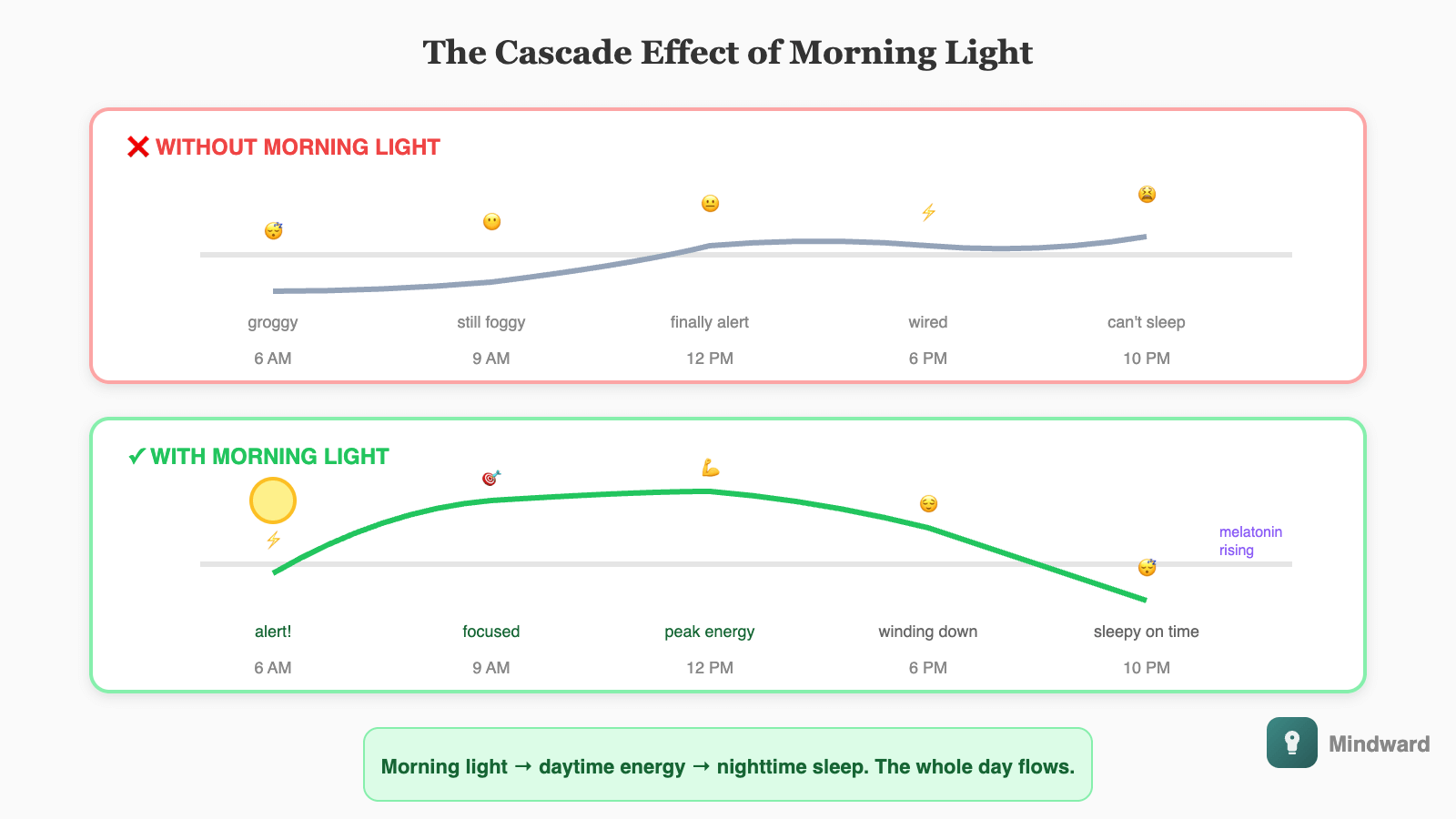
Mood stabilizes. The serotonin boost is subtle but cumulative. People report feeling more emotionally even, less prone to afternoon dips and evening irritability. For those with seasonal patterns, the effect can be dramatic.
The Simplest Upgrade
This is perhaps the highest-return health behavior that most people completely ignore. It costs nothing. It takes minutes. It's available every single day. And its effects cascade through energy, mood, and sleep.
Tomorrow morning, before you do anything else, step outside. Just for ten minutes. Let the light in. Notice what changes by the time evening comes.
Your body has been waiting for this signal. Give it what it needs, and it knows exactly what to do.


Comments
How did you like this article?
No comments yet. Be the first to share your thoughts!