Friction Is the Real Enemy of Productivity
Motivation fades. Willpower depletes. But when you reduce the friction between you and your work, productivity becomes the path of least resistance.
You don't have a motivation problem. You have a friction problem.
Every task you avoid, every project that stalls, every intention that dissolves before action—there's friction somewhere in the path. Not laziness. Not lack of discipline. Just too many steps, too many decisions, too many small obstacles between where you are and where you need to be.
The most productive people aren't more motivated than you. They've just gotten better at removing the resistance that stands between intention and action.
What Friction Actually Looks Like
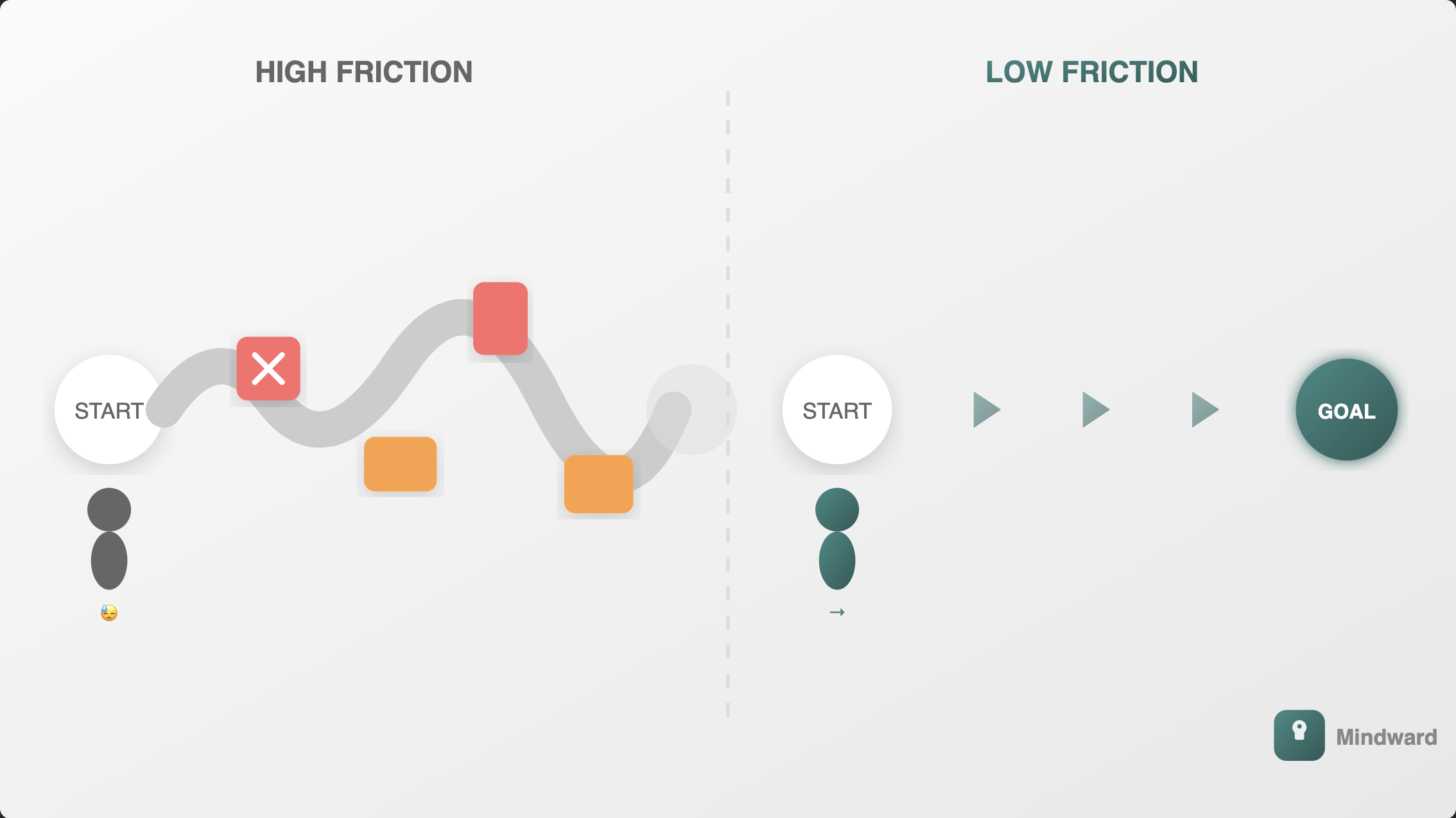
Friction isn't always obvious. It's rarely a single massive barrier. More often, it's an accumulation of tiny resistances that compound into inaction.
Your running shoes are in the closet, behind boxes. Your document is buried in a folder structure you can't remember. Your workspace is cluttered, so starting work means clearing space first. Your phone is within arm's reach, offering an easier dopamine hit than the difficult task in front of you.
Each obstacle is small. Individually, none of them should stop you. But your brain is constantly running calculations about effort versus reward, and friction tips the scale toward avoidance every time.
Friction compounds. Five small obstacles don't feel like five—they feel like one insurmountable wall.
Research in behavioral science consistently shows that even minor increases in effort dramatically reduce follow-through. In one study, moving a salad bar six feet further from diners reduced salad consumption significantly. The food was the same. The desire was the same. Six feet made the difference.
Your goals work the same way.
The Willpower Trap
The conventional approach to productivity puts willpower at the center. If you're not getting things done, you need more discipline. Try harder. Want it more.
This advice fails for a simple reason: willpower is a limited resource.
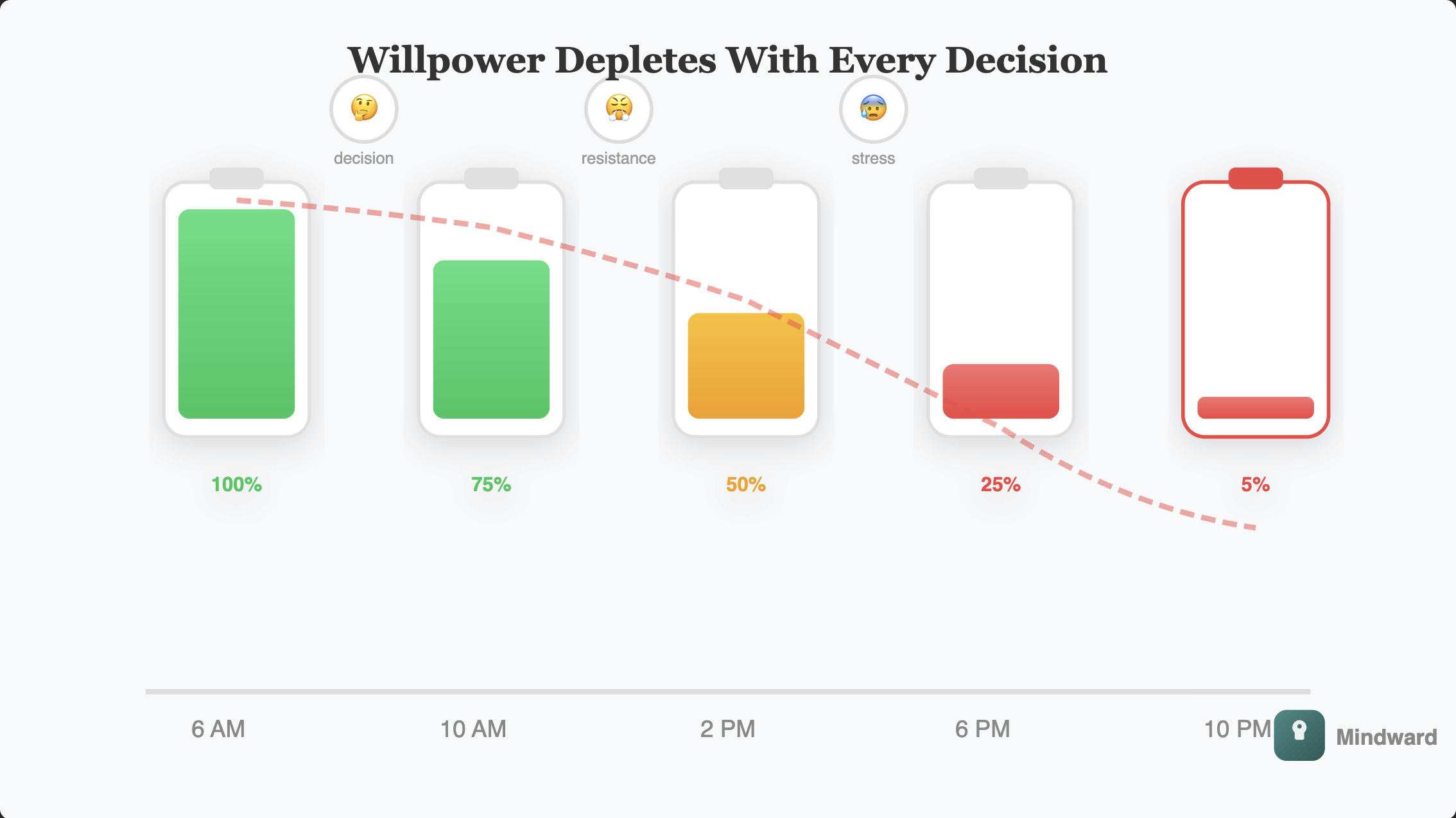
Psychologist Roy Baumeister's research on ego depletion showed that self-control draws from a finite pool. Every decision, every act of restraint, every push through resistance depletes it. By evening, you're running on empty—which is why you're more likely to skip the gym, eat poorly, or abandon your planned work at the end of the day.
Relying on willpower means fighting friction with a resource that's guaranteed to run out. It's an exhausting strategy, and it doesn't scale.
The alternative isn't to build more willpower. It's to need less of it.
Environment Over Intention
If friction is the enemy, environment design is your primary weapon.
Your environment shapes behavior more than your intentions do. This isn't a character flaw—it's how human cognition works. We're built to conserve energy, to follow the path of least resistance, to default to whatever is easiest. Fighting this programming is possible but costly. Working with it is sustainable.
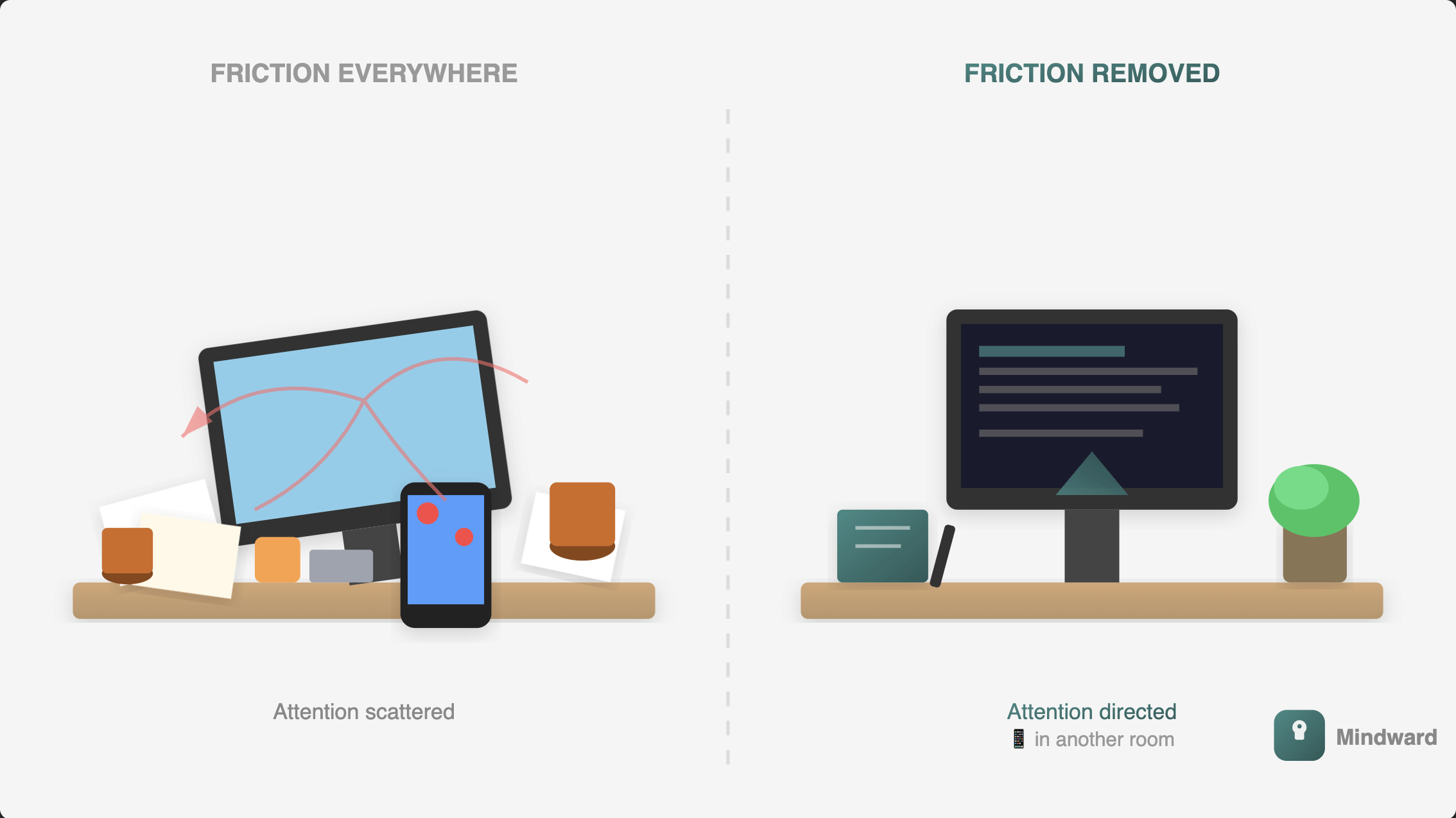
Environment design means structuring your physical and digital spaces so the productive choice is also the easy choice. It means reducing steps, removing obstacles, and making the right behavior the default.
- Put your workout clothes next to your bed so they're the first thing you see
- Keep your phone in another room during focused work
- Close all browser tabs except what you need for your current task
- Prepare your workspace the night before so you can start immediately
- Use website blockers to add friction to distractions instead of removing it from work
None of these require discipline to maintain. You set them up once, and they work automatically. The friction that was blocking your productive behaviors now blocks your unproductive ones.
The Two-Minute Setup
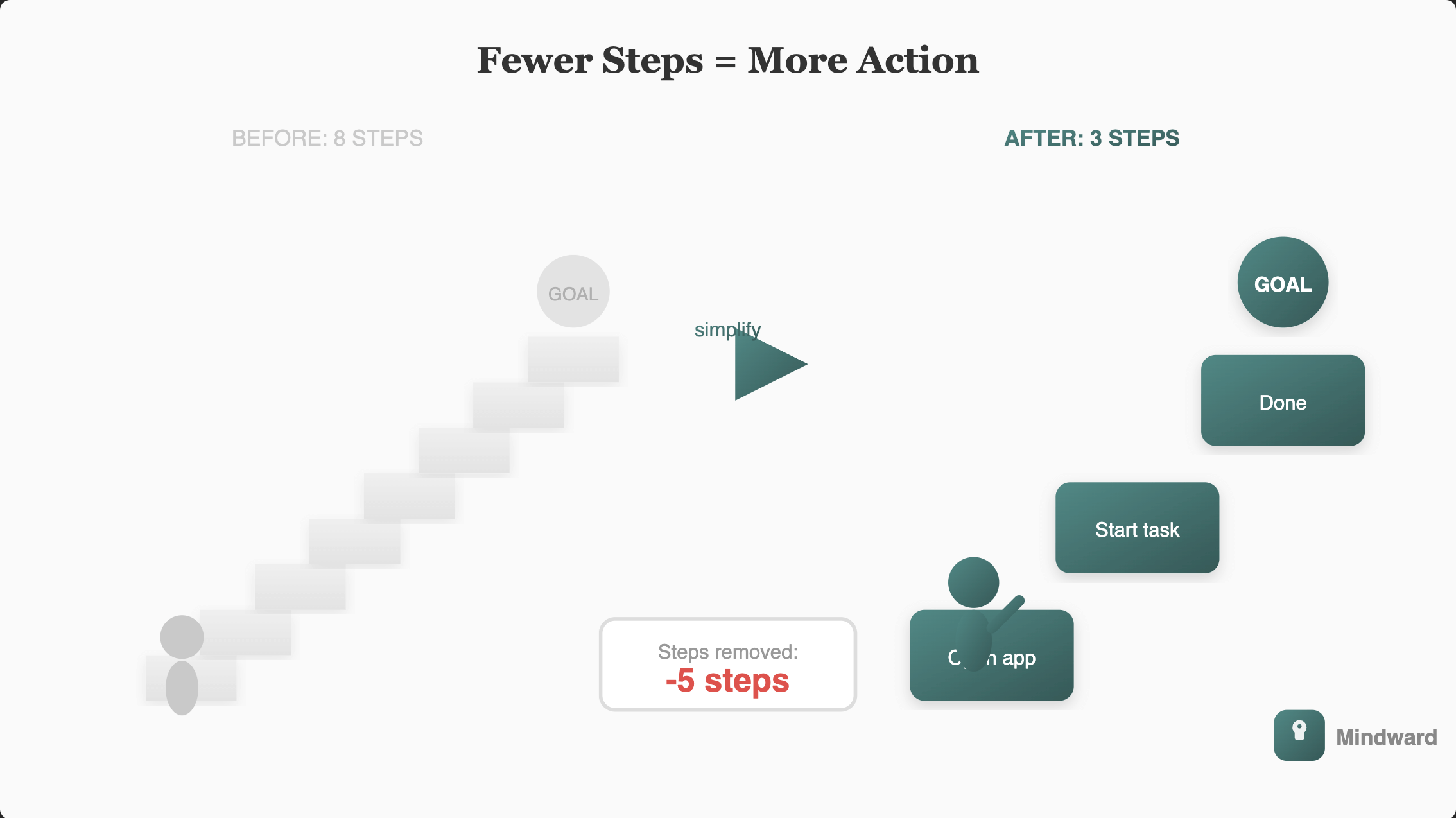
Start by identifying where you lose momentum. Think about the tasks you consistently avoid or the habits that never stick. Then ask: what are all the steps between deciding to do this and actually doing it?
Write them down. You'll usually find more steps than you expected.
Now eliminate as many as possible. Combine steps. Pre-position tools and materials. Automate what can be automated. Your goal is to make starting feel effortless.
The best productivity system is the one you don't have to think about. When action requires fewer decisions, you act more.
James Clear, author of Atomic Habits, calls this 'reducing the number of steps between you and your good habits, and increasing the number of steps between you and your bad ones.' It's deceptively simple advice that works precisely because it doesn't rely on you being more disciplined tomorrow than you are today.
Friction Works Both Ways
Just as you can reduce friction for behaviors you want, you can increase it for behaviors you don't.
Uninstalling social media apps adds friction. Keeping junk food out of your house adds friction. Logging out of streaming services after each use adds friction. None of these make the unwanted behavior impossible—they just make it slightly harder. Often, that's enough.
You're not relying on willpower to resist. You're relying on mild inconvenience to make the decision for you before willpower even enters the equation.
This is how you build a lifestyle that supports your goals instead of working against them. Not through heroic effort, but through strategic laziness—designing your world so the easy choice and the right choice are the same thing.
Start Where You Are
You don't need to overhaul your entire life. Pick one behavior—something you want to do more of, or something you want to do less of. Identify the friction points. Change one thing.
Maybe it's putting your book on your pillow so you read before bed instead of scrolling. Maybe it's deleting one app that consistently wastes your time. Maybe it's setting out tomorrow's clothes tonight.
Small changes. Minimal effort. Real results.
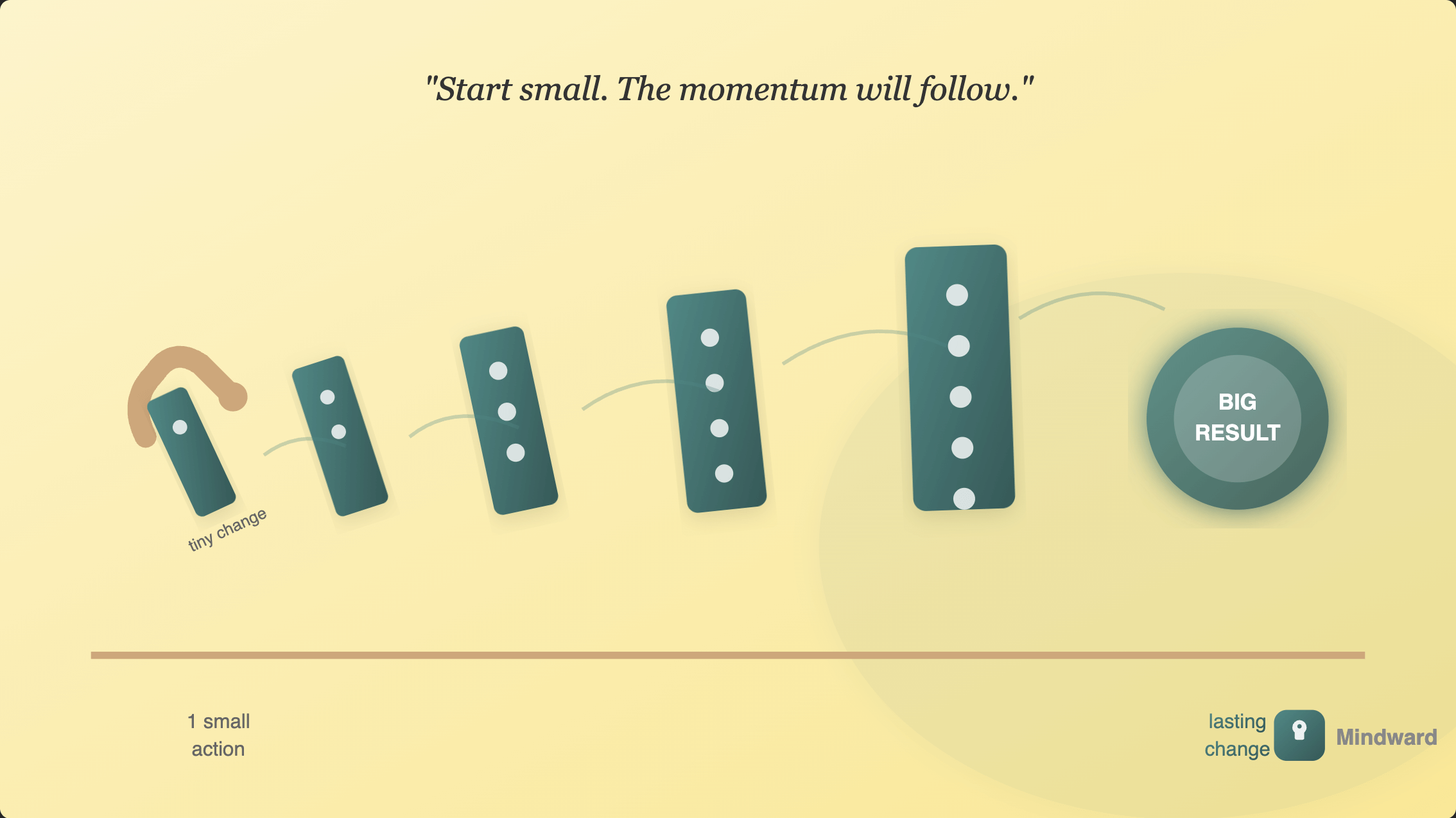
Productivity isn't about forcing yourself through resistance day after day. It's about being honest that resistance exists, understanding how it works, and systematically dismantling it.
The friction between you and your best work is real. But it's also changeable. And once you start noticing it, you can't stop seeing opportunities to remove it.
Your environment is always shaping your behavior. The only question is whether you're designing it intentionally.


Comments
How did you like this article?
No comments yet. Be the first to share your thoughts!