Your To-Do List Is Working Against You
The problem isn't that you have too much to do. It's that your list is structured in a way that guarantees you'll feel overwhelmed before you begin.
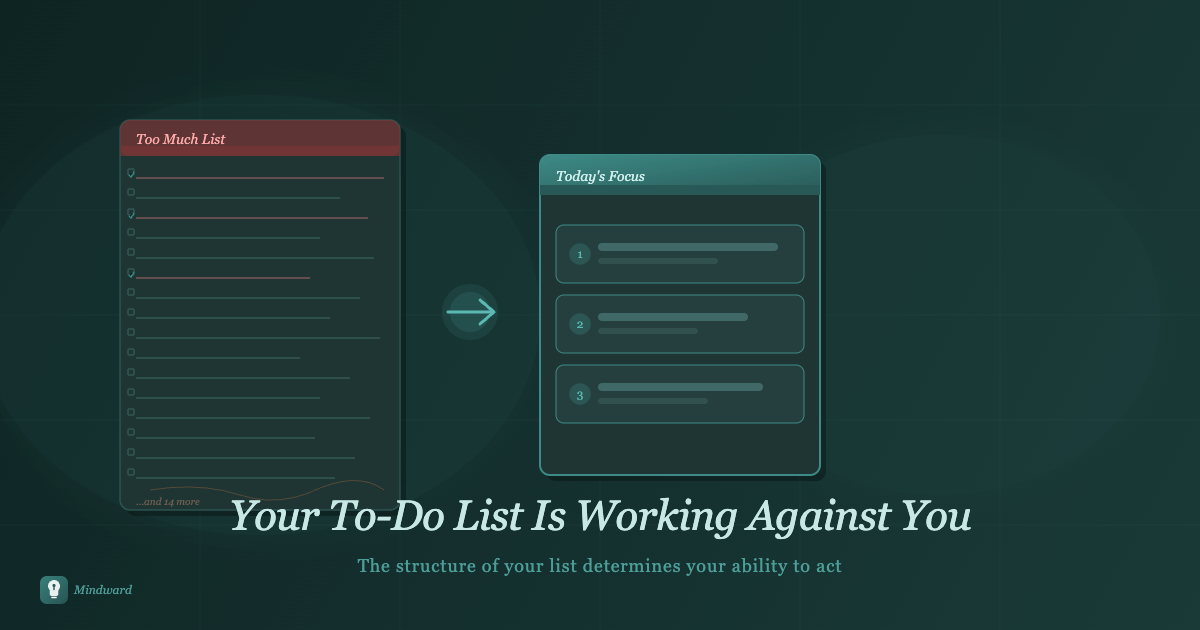
You wrote everything down. You have a list. And somehow, you still don't know where to start. You open it in the morning, scan it, feel a low-grade dread settle in, and close it to check email instead. The list was supposed to make things clearer. Instead, it's become the thing you're avoiding.
This isn't a discipline problem. It's a structural one. The way most people build to-do lists — long, undifferentiated, never-ending — is almost perfectly designed to trigger overwhelm rather than action. The list itself has become the obstacle.
The Hidden Cost of a Long List
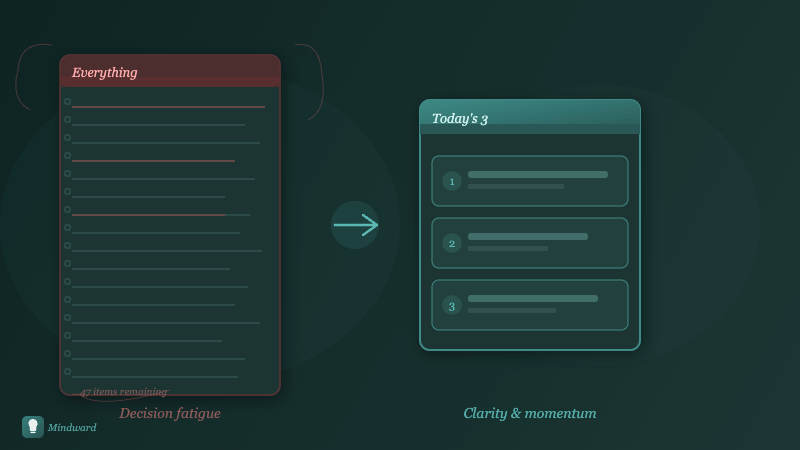
Every item on your to-do list is an open decision. When you sit down to work, you don't just do the task — you first have to decide which task. Then you second-guess it. Then you wonder if there's something more urgent. That mental process, repeated dozens of times a day, depletes the same cognitive resource you need to actually do the work.
Psychologists call this decision fatigue. The research behind it is consistent: the more decisions you make, the worse your subsequent decisions become. A to-do list with 30 items doesn't give you 30 options — it forces you to make a decision every time you glance at it. By mid-morning, you're already running on fumes you don't know you've spent.
The Illusion of Productivity That Lists Create
There's something that feels productive about maintaining a comprehensive list. Capturing everything. Keeping it all in one place. The act of writing things down creates a sense of control, even when nothing has actually moved. This is the list's most insidious feature: it lets you feel organized while making it harder to act.
A backlog of 47 tasks isn't a productivity system. It's a record of everything you've been meaning to do. Those are different things. One clarifies your next action. The other documents your accumulated intentions — and quietly reminds you of all the things you haven't done yet every time you open it.
The goal of a task system isn't to capture everything. It's to make your next action obvious.
What Actually Works: The Daily Short List
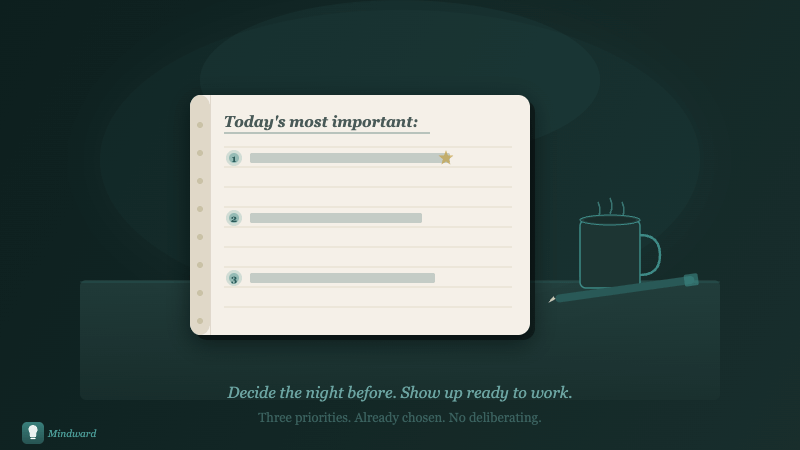
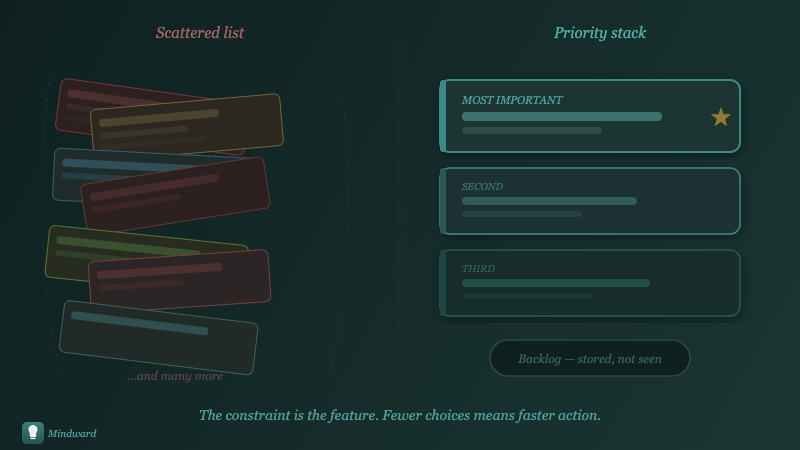
The fix isn't to abandon lists. It's to separate storage from execution. Your full backlog — the place where everything lives — is a reference tool, not a working tool. What you work from each day should be a short, intentional list of three to five tasks you've already decided are the priority. The decision was made the night before or the morning before you sit down. When it's time to work, there's no choosing. You already chose.
This changes the psychological experience of starting. Instead of opening a 30-item list and scanning for what feels most approachable, you open a list of five and begin. The friction is almost gone, because the hard cognitive work — prioritization — already happened when you had more bandwidth to do it well.
How to Prioritize Without Agonizing
The reason most people avoid prioritizing is that it feels like a high-stakes decision. What if you pick the wrong thing? What if something urgent comes up? This anxiety keeps the list long and vague, which is worse than any imperfect priority decision you could make.
A useful question to cut through it: if you only finished one thing today, what would make the day feel like it counted? Start there. Then ask it again for a second item. That's often enough. You're not trying to organize your entire week — just the next eight hours. Smaller scope makes clearer choices.
- Keep a backlog (capture everything) separate from your daily list (what you'll actually do today)
- Limit your daily list to three to five items maximum
- Set your daily list the evening before or first thing in the morning — not when it's time to work
- Ask yourself: if I only finish one thing today, what matters most?
- Leave buffer — tasks almost always take longer than expected
The Unexpected Benefit of Constraints
Something shifts when you commit to a short list. Because you can only choose a few things, you're forced to think harder about what actually matters. The tasks you keep deferring — the ones that stay on the backlog week after week — eventually reveal themselves for what they are: things you either need to do, delegate, or delete. The short list doesn't let you hide from those decisions indefinitely.
A constrained list also makes completion realistic. When your daily list has five things and you finish four, you end the day with a sense of progress. When your list has 30 things and you finish eight, the day feels like failure — even if those eight things were meaningful. The math of your list shapes how you feel about your work.
Start With Less Than You Think You Need
If you're used to a long list, moving to three daily priorities will feel wrong at first. It will feel like you're not doing enough, like things will fall through the cracks, like you're somehow cheating the system. That feeling is the weight of a habit, not evidence that the approach is flawed.
Give it a week. Notice how it feels to start the day knowing exactly what you're working on. Notice how different it is to finish the list instead of abandoning it. Notice how much of the old list was noise masquerading as necessity. The goal was never to do more things. It was to do the right things without burning out deciding which they were.
A shorter list isn't a sign that you're doing less. It's a sign that you've gotten honest about what actually moves things forward.


Comments
How did you like this article?
No comments yet. Be the first to share your thoughts!