Your Body Keeps Score of the Small Things Too
It's not just trauma that accumulates. The skipped meals, shallow breaths, and tension you ignore are adding up whether you notice or not.
You've heard that the body keeps score—that trauma lives in the tissues, that stress gets stored. It's true, and it's become common knowledge. What's less discussed is that your body keeps score of everything, not just the big events.
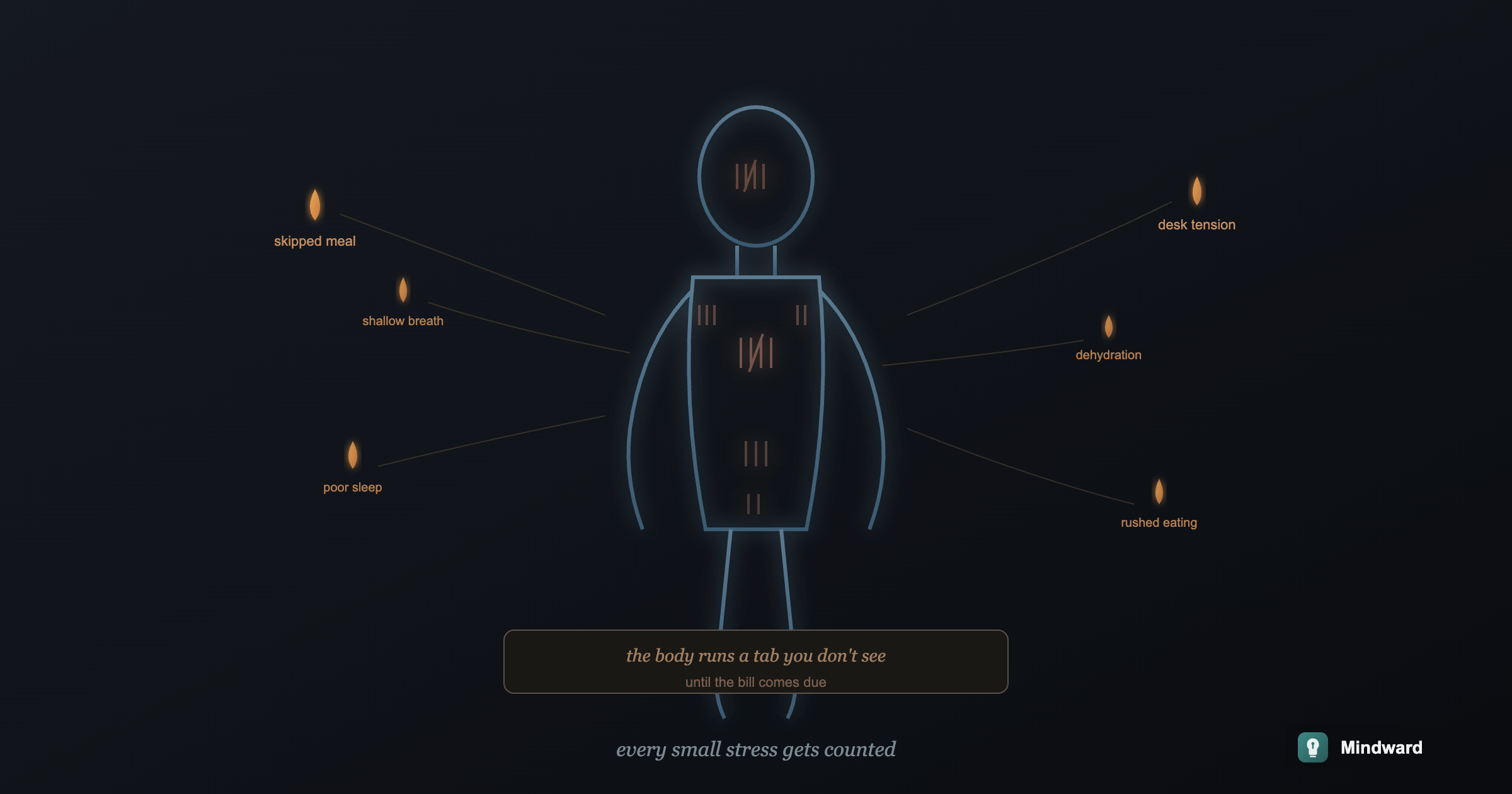
The meal you skipped because you were busy. The shallow breathing you've been doing all day without realizing. The tension in your shoulders you've been carrying for weeks. The extra hour of sleep you've been shorting yourself every night. None of these feel significant in the moment.
But they're being counted. Your body is running a tab you don't see—until the bill comes due.
The Accumulation You Don't Notice
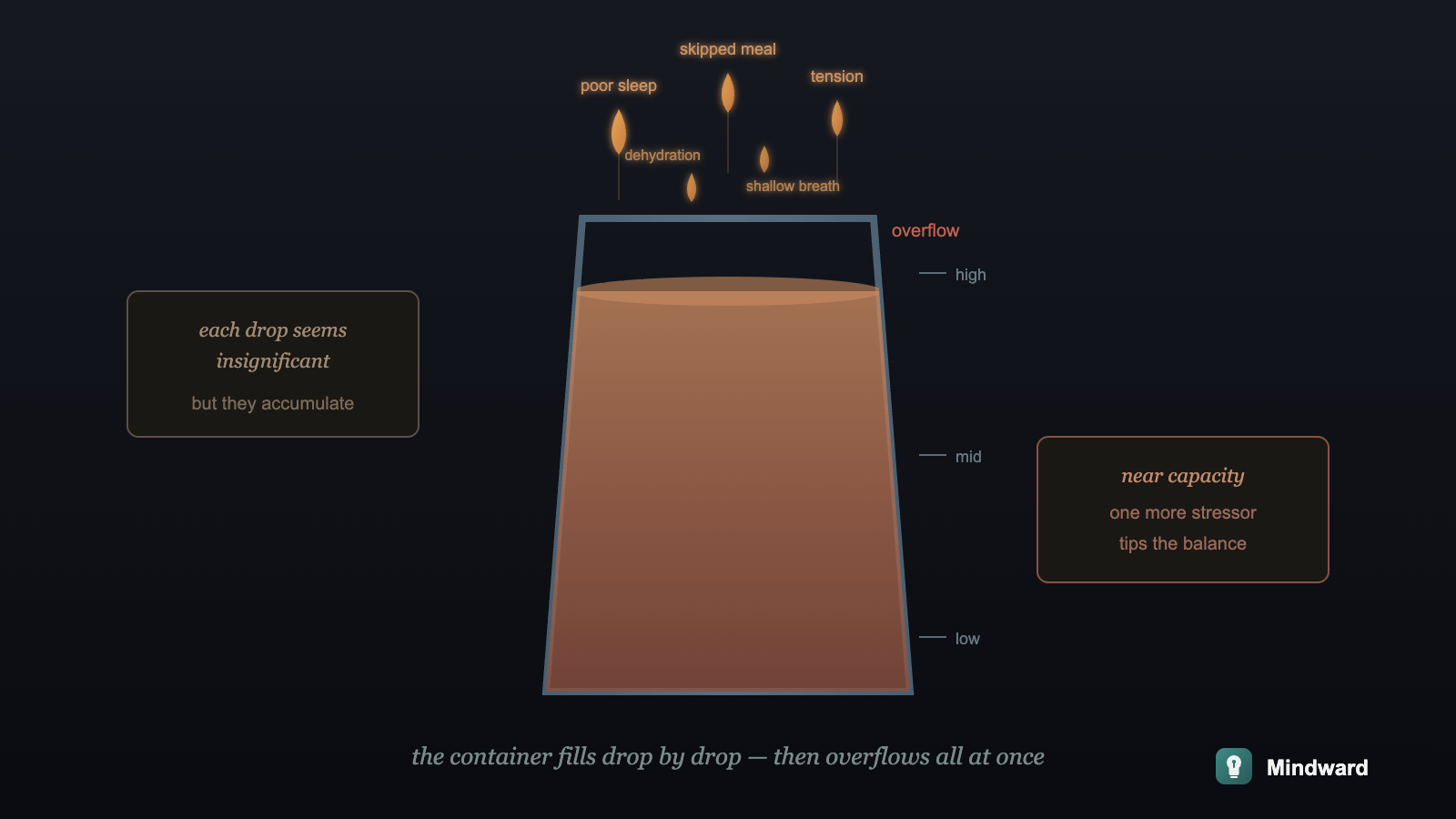
Small stressors don't announce themselves. They slip under the threshold of awareness. You don't feel one night of bad sleep the way you feel three weeks of it. You don't notice the first hour of sitting hunched, but your back knows about the thousandth.
This is what makes chronic stress so insidious. It's not one thing—it's everything, compounding quietly. The body adapts to each small insult, adjusts its baseline, and keeps functioning. Until it can't.
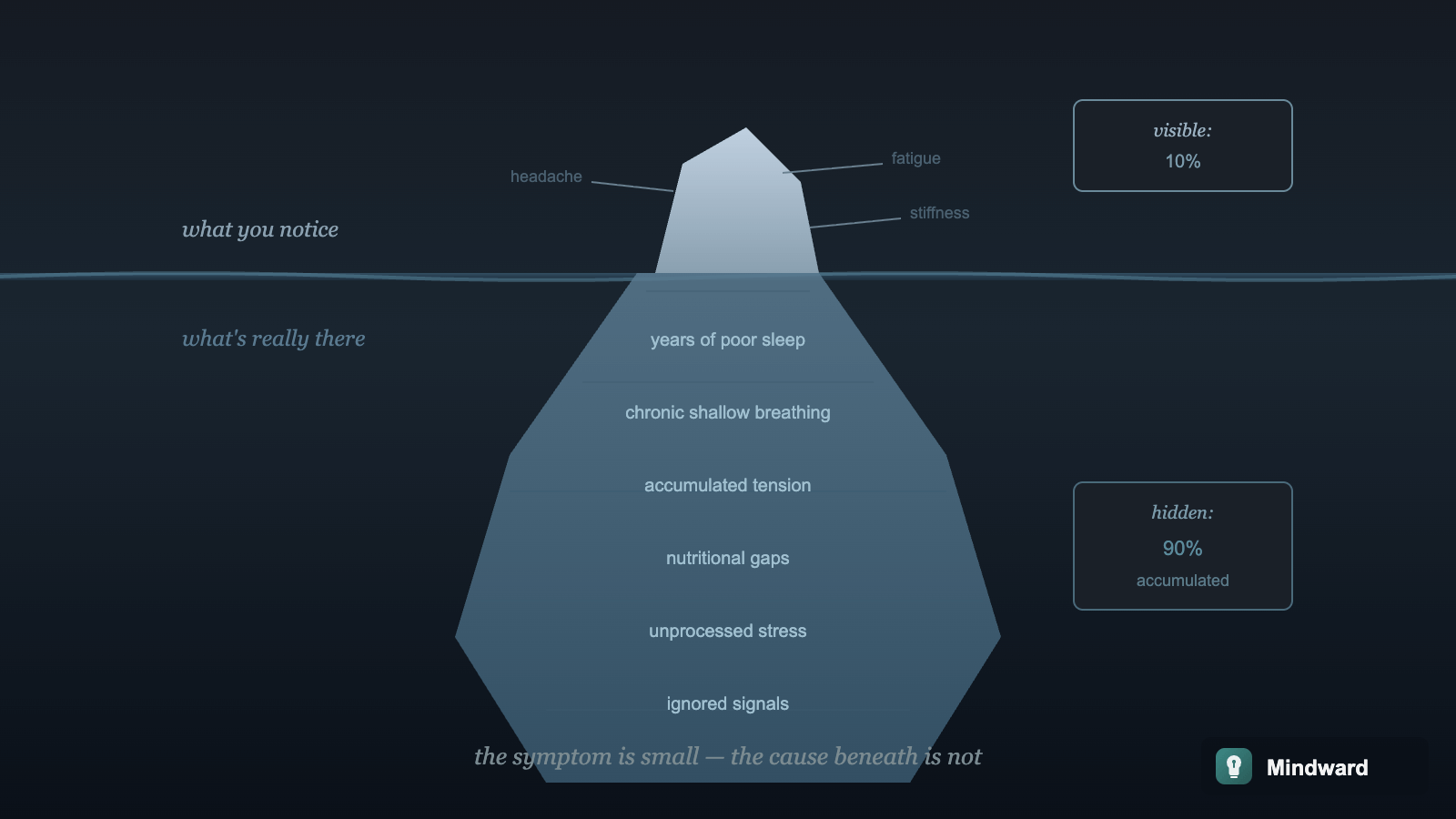
The headaches that became normal. The fatigue you've accepted as your default. The stiffness you assume is just aging. These aren't inevitable—they're signals that the accumulation has reached a point your body can't silently absorb anymore.
What Gets Counted
Your body tracks inputs and outputs with perfect accuracy. It doesn't care about your intentions or your schedule. It only knows what it receives and what it's asked to do.
Sleep debt accumulates. You can't catch up on weekends the way you think you can—the deficit carries forward. Nutritional gaps compound. Missing one nutrient affects how you absorb others. Chronic tension creates patterns. Muscles that stay tight reshape how you move, which creates new tension elsewhere.
Even your breathing matters more than you'd expect. Shallow chest breathing keeps the nervous system slightly activated. Do it for years and your baseline shifts toward anxiety without any external cause.
The body doesn't distinguish between one big stress and a thousand small ones. It just tracks the total load.
Why We Miss the Connection
The delay between cause and effect makes it hard to see what's happening. You don't feel tired the moment you stay up late—you feel it two days later and blame something else. You don't connect the headache to the water you didn't drink yesterday.
We're also conditioned to push through. The small stuff doesn't seem worth addressing. You're not sick, you're not injured—so you keep going. The culture rewards ignoring your body's early signals, right up until those signals become impossible to ignore.
By the time you notice, you're not dealing with one skipped meal or one bad night. You're dealing with months or years of accumulated deficit. The recovery isn't proportional to the last stressor—it's proportional to the total debt.
Reading the Early Signals
Your body sends warnings before it sends alarms. The problem is that warnings are quiet and alarms are loud—so we only respond to alarms.
Early signals include: energy that dips at predictable times, sleep that doesn't feel restorative, recovery from minor illness that takes longer than it used to, mood shifts that seem disconnected from circumstances, cravings that persist regardless of what you eat.
These aren't character flaws or signs of weakness. They're information. The body is telling you the account is getting low before it's overdrawn. The question is whether you're listening.
Small Deposits Matter
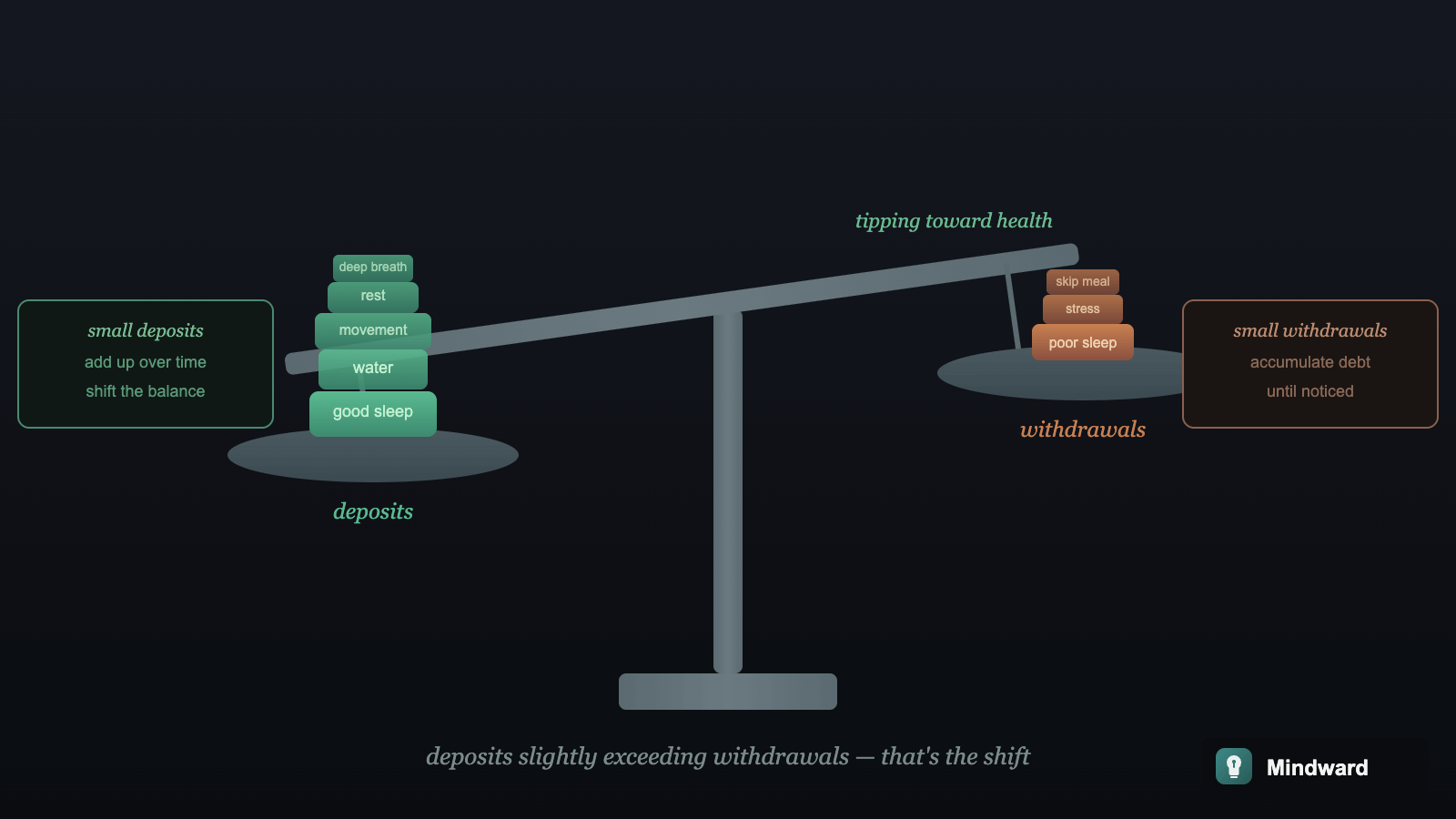
If small withdrawals accumulate, so do small deposits. You don't need a wellness overhaul. You need consistent small investments that add up the same way the deficits did.
Ten minutes of walking doesn't seem significant—but it is if it happens daily. An extra glass of water won't transform you overnight—but chronic mild dehydration won't fix itself either. Five minutes of stretching won't undo years of tension—but it stops adding more.
The goal isn't perfection. It's shifting the balance so deposits slightly exceed withdrawals. Over time, that's the difference between accumulating debt and building reserves.
The Body's Memory
Your body remembers what your mind forgets. The stress from five years ago still shows up in how you hold your jaw. The sleep you lost last month is still affecting your immune response. The meals you've been rushing still influence how you digest food today.
This isn't meant to overwhelm you—it's meant to validate what you might already sense. If you feel more tired than your current lifestyle explains, it's because your body is accounting for more than just this week.
You're not imagining it. The body keeps score of the small things too. Start making deposits, and watch the balance shift.
The body that tracked every deficit will track every investment just as faithfully. The math works in both directions.


Comments
How did you like this article?
No comments yet. Be the first to share your thoughts!