The Person You Keep Choosing Says Something About You
You've been with different people, but somehow the story ends the same way. That's not bad luck. That's a pattern — and patterns have origins.
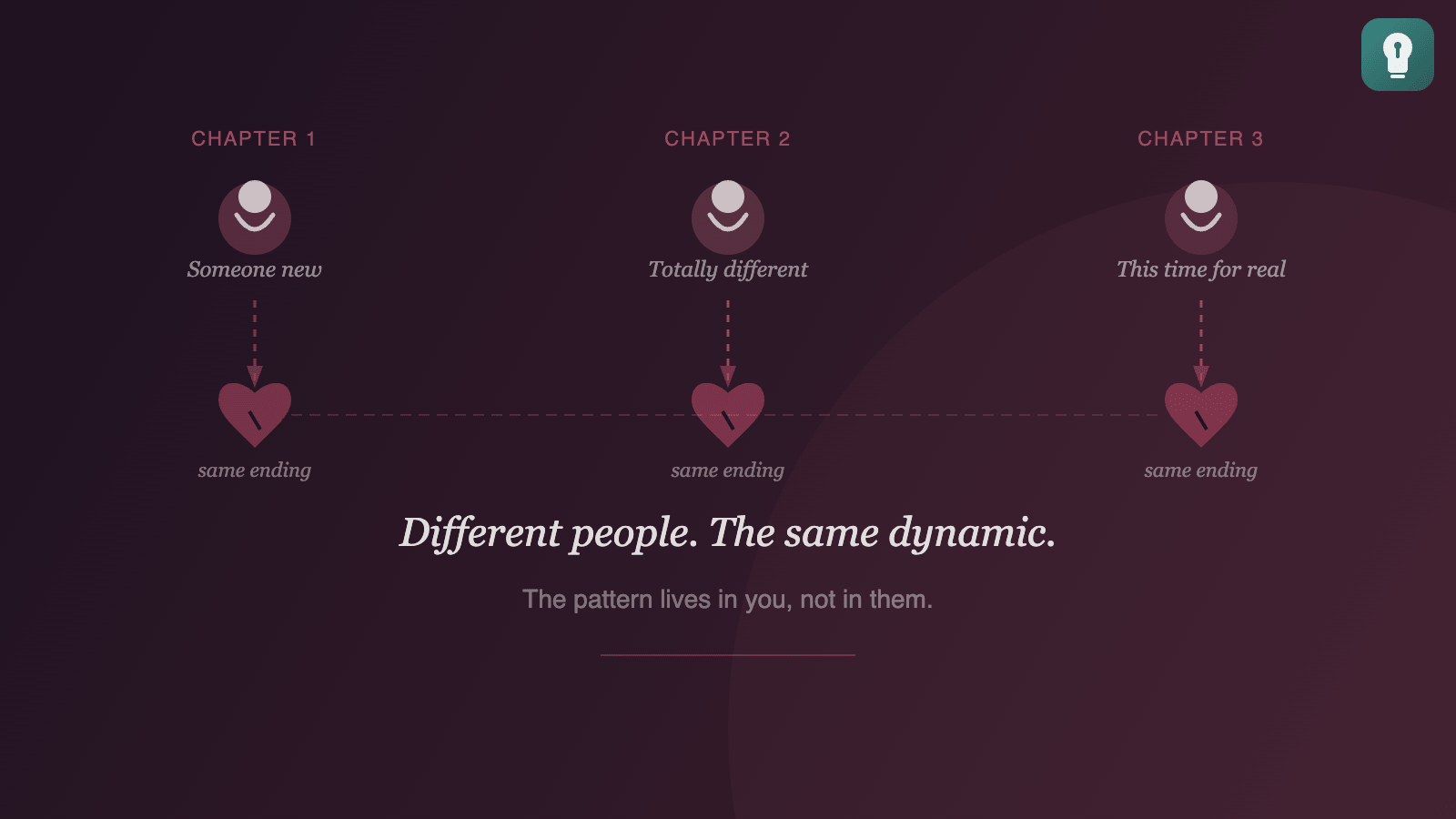
You end one relationship, convinced this time you've learned something. You choose differently. Someone new, someone who seems nothing like the last person. And then, six months or a year in, you notice it: the same distance, the same ache, the same ending in a different costume. It's disorienting — and easy to write off as bad luck. But it isn't luck. It's pattern. And patterns don't come from nowhere.
Why You're Drawn to What's Familiar
Your nervous system learned what "relationship" feels like long before you could name it. The emotional texture of your earliest close bonds — how safe they felt, how consistent, how much you had to manage the other person's moods — became a kind of internal template. Psychologists call this your attachment style. But a simpler way to think about it: your brain learned what love feels like, and it keeps looking for that feeling. Even when that feeling was painful. Especially when it was painful.
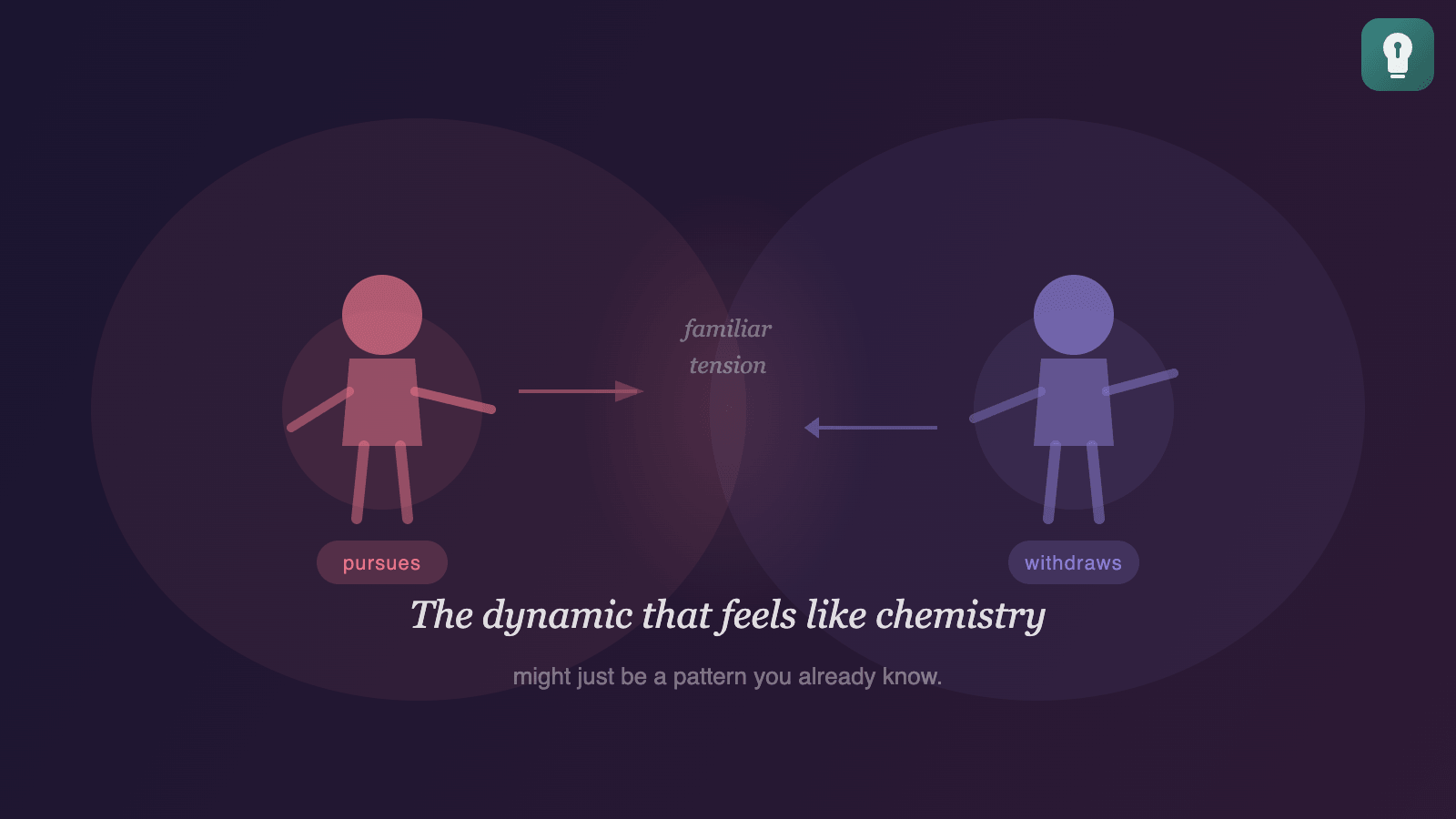
This isn't a character flaw. It's how humans are wired. Familiarity registers as safety to the nervous system, even when it objectively isn't. So the person who feels exciting and a little uncertain might be triggering the same emotional circuitry as someone who was inconsistent with you early in life. The chemistry you mistake for compatibility might actually be recognition — your nervous system saying "I know this feeling." That's worth sitting with.
The chemistry you mistake for compatibility might actually be recognition — your nervous system saying "I know this feeling."
The Pattern Is in the Dynamic, Not the Person
People often think they have a "type" in terms of appearance or personality. But the pattern that matters runs deeper than that. It lives in the dynamic — who pursues, who pulls back, who manages the emotional temperature of the relationship, who needs more reassurance, who gives more than they receive. You can change every surface feature of who you choose and still recreate the exact same dynamic with someone who looks completely different on paper.
That's why the work isn't really about finding a better person. It's about understanding the role you're playing and why that role feels natural to you. If you consistently end up with emotionally unavailable partners, it's worth asking not just "why do they do this" but "what does this dynamic offer me" — because there's usually something. Distance can feel like safety. The chase can feel like love. Being the one who cares more can feel like purpose.
What the Pattern Is Actually Telling You
Repeating patterns aren't proof that you're broken or that love isn't possible for you. They're information. They point back to something unresolved — a need that didn't get met, a belief about your own worth that formed early, a definition of love that got built around inconsistency or longing. The pattern is trying to finish something. It keeps re-staging the same situation hoping for a different outcome.
Research on attachment — particularly the work of John Bowlby and later Mary Ainsworth — shows that the strategies we develop to get our emotional needs met as children persist into adulthood in remarkably consistent ways. If connection came with unpredictability, you may have learned to stay anxiously attuned to a partner's moods. If closeness was met with withdrawal, you may have learned to suppress your needs to avoid rejection. These aren't personality traits. They're survival strategies that outlived their usefulness.
The pattern keeps re-staging the same situation hoping for a different outcome. Recognizing it is how the cycle finally ends.
How You Start Choosing Differently
The first shift is slowing down the beginning. Early attraction — the pull, the intensity, the feeling that this person just gets you — is often your pattern activating. That doesn't mean the feeling is wrong, but it's worth noticing what specifically is creating it. Is it genuine mutual openness? Or is it the familiar texture of someone slightly out of reach?
The second shift is expanding your definition of what love feels like. If you've mostly experienced love as intense and somewhat uncertain, steadiness can feel boring at first. Someone who texts back promptly and shows up consistently may not trigger the same chemistry as someone who keeps you guessing. But that absence of anxiety isn't a lack of spark — it's what safety actually feels like. It takes time to recognize it as desirable rather than dull.
This Is Not About Blame
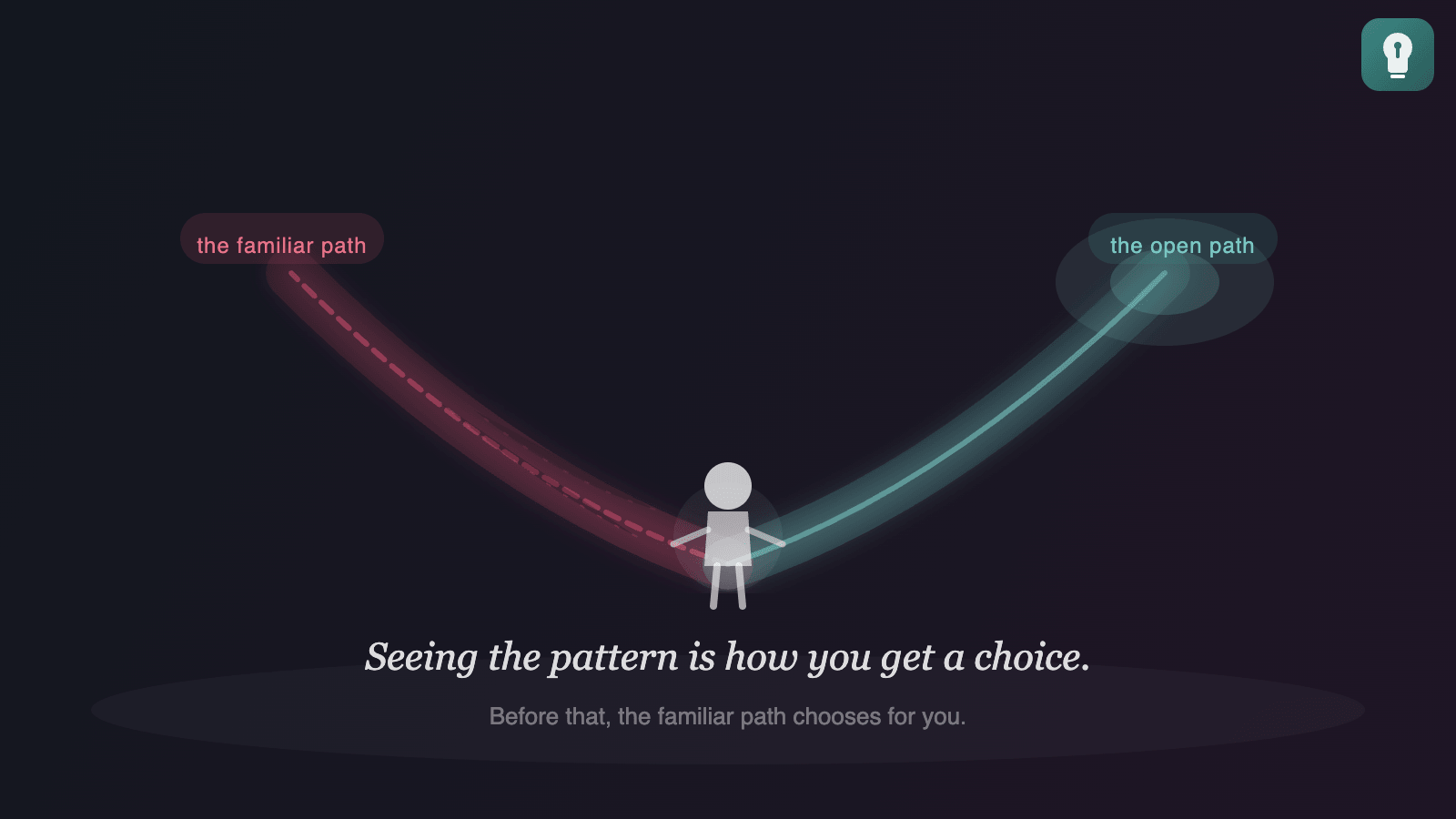
Understanding that your choices reflect something internal isn't an invitation to blame yourself for relationships that didn't work. The people who hurt you were responsible for their own behavior. What you're examining isn't fault — it's agency. Because as long as the pattern is unconscious, it runs you. Once you can see it, you have something you didn't have before: choice.
That choice might start small. Noticing the pull before acting on it. Sitting with the discomfort of someone available instead of immediately labeling it as a lack of chemistry. Asking what you're actually looking for in a relationship versus what you've been trained to seek. These aren't dramatic changes. They're quiet recalibrations — and over time, they reshape everything.
As long as the pattern is unconscious, it runs you. Once you can see it, you have something you didn't have before: choice.


Comments
How did you like this article?
No comments yet. Be the first to share your thoughts!