Rest Is Not the Absence of Productivity
You've been taught that rest is what happens when you stop working. But rest is work — the kind your nervous system can't skip.

Somewhere along the way, you learned that rest is what happens in the gaps—the leftover time after everything important is done. It's the reward you earn, the indulgence you allow, the thing you'll get to eventually.
This framing has cost you. Rest positioned as optional means rest gets skipped. Rest seen as unproductive means rest carries guilt. And a body that doesn't rest doesn't recover—it just accumulates debt until the interest comes due.
Here's the reframe: rest is not the absence of productivity. Rest is a different kind of productivity—the kind that makes all other productivity possible.
What Rest Actually Does
Rest isn't passive. While you're resting, your body is actively working—consolidating memories, repairing tissue, clearing metabolic waste, rebalancing hormones, restoring depleted neurotransmitters. This isn't downtime. It's maintenance.
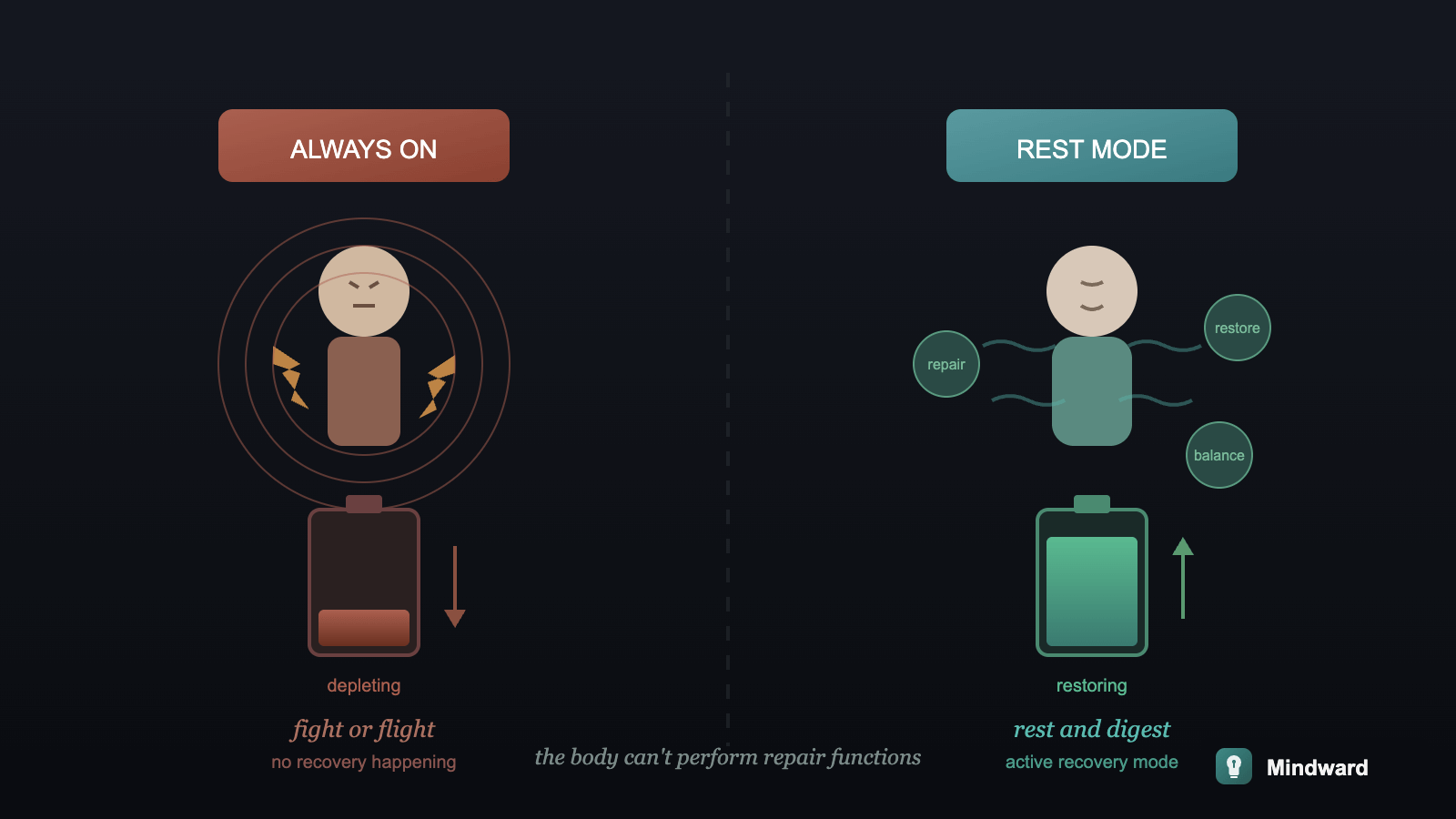
Your nervous system operates in two modes: sympathetic (fight or flight) and parasympathetic (rest and digest). Modern life keeps most people locked in sympathetic activation—always alert, always ready, always slightly stressed. Rest is what switches the mode.
Without adequate time in parasympathetic mode, the body can't perform the repair functions it needs. You're running the engine without ever changing the oil. It works, until it doesn't.
The Guilt Problem
If you feel guilty when you rest, you're not alone. The culture has trained this into you—the equation of worth with output, the celebration of busy, the subtle shame around doing nothing.
But guilt during rest isn't just uncomfortable—it's counterproductive. Stress hormones don't care why you're stressed. If you're anxious about resting, you're not actually resting. You're just sitting still while your nervous system stays activated.
Real rest requires permission. Not just physical stillness, but mental release. The belief that this is allowed, that this is necessary, that this is not stolen time.
Rest you feel guilty about isn't rest. It's stress in a different position.
Active Rest vs. Passive Collapse
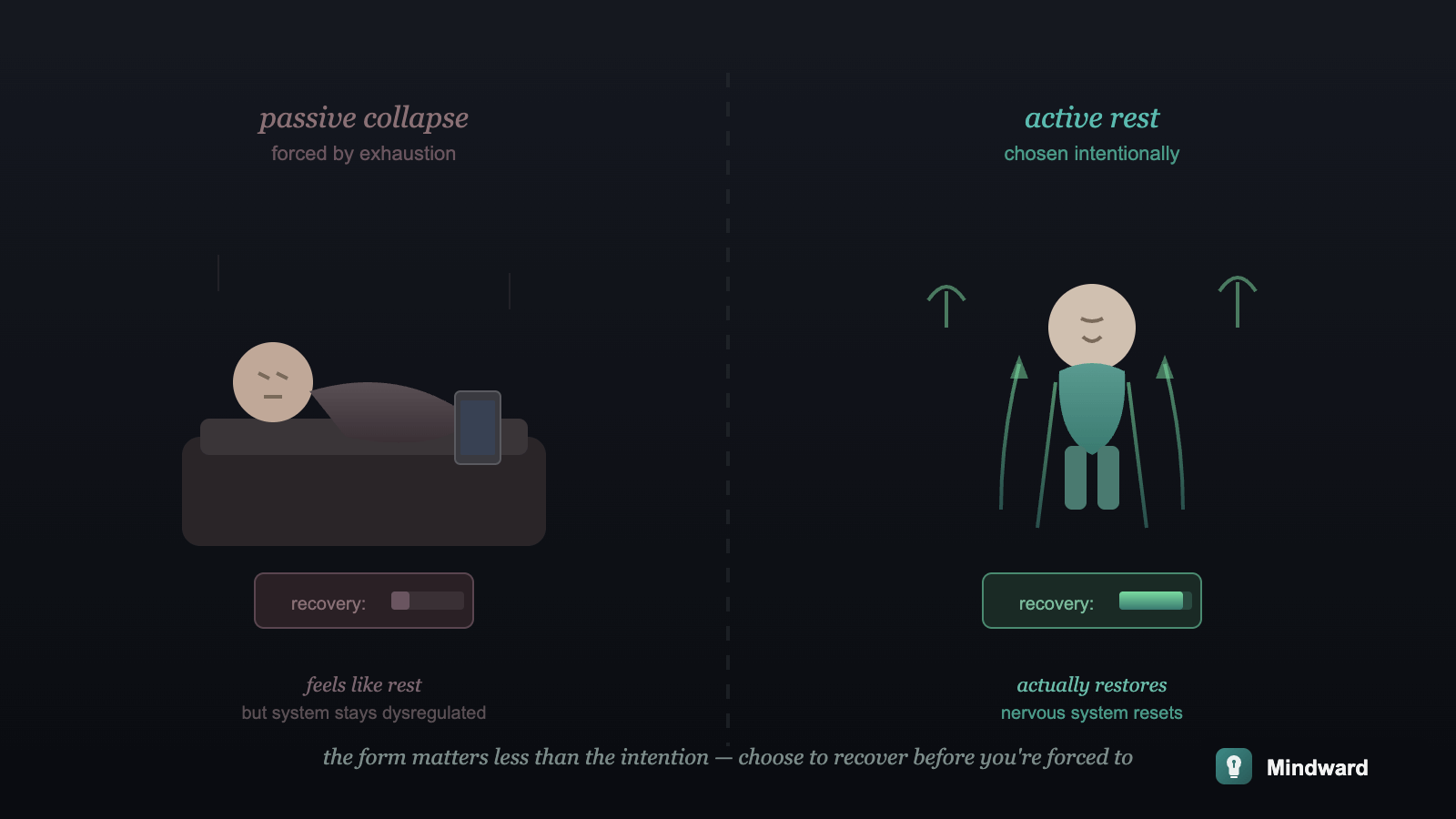
There's a difference between intentional rest and collapsing from exhaustion. One is chosen; the other is forced. One restores; the other barely maintains.
Passive collapse is what happens when you've pushed past your limits and your body takes over. You crash on the couch, scroll mindlessly, zone out in front of a screen. It feels like rest but often doesn't restore—because your nervous system is still dysregulated.
Active rest is deliberate. It might mean a walk, a nap, time in nature, a conversation that energizes you, or genuine stillness without distraction. The form matters less than the intention: you're choosing to let your system recover before it forces you to.
Rest as Investment
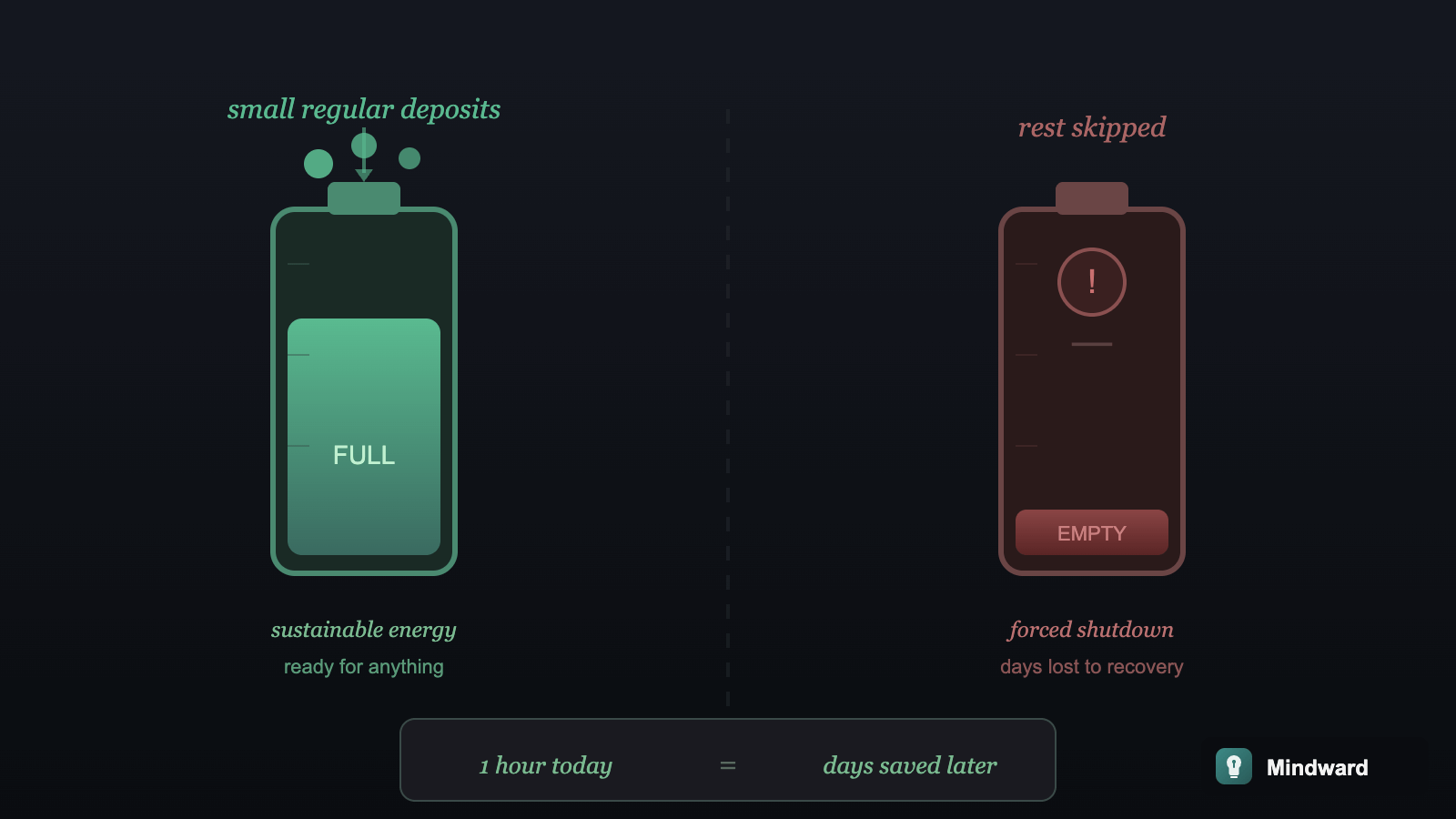
Think of rest as compound interest working in your favor. Small regular deposits of recovery prevent the massive withdrawals of burnout. An hour of rest today saves days of forced recovery later.
The math isn't intuitive. Working through exhaustion feels productive in the moment, but the quality drops, the errors increase, and the debt accumulates. Resting when you're not yet depleted feels indulgent, but it's actually efficient.
High performers in every field know this. The best athletes prioritize recovery as seriously as training. The most creative minds protect their downtime fiercely. They've learned that output depends on input—including the input of rest.
What Adequate Rest Looks Like
Rest needs vary, but most people need more than they're getting. Sleep is the foundation—seven to nine hours for most adults, non-negotiable. But rest extends beyond sleep.
Daily rest might be twenty minutes of genuine stillness, a walk without purpose, a meal eaten slowly. Weekly rest might be a day without obligations, time that belongs entirely to you. Seasonal rest might be actual vacation—not working remotely from a different location.
The test is simple: do you feel restored? If you're always tired despite technically resting, the rest isn't working. Something about the quality, the duration, or the guilt is undermining the recovery.
Permission Granted
You don't need to earn rest. You don't need to justify it. The body requires it regardless of how productive you've been or how much remains on your list.
Rest is not a reward for finishing. It's a requirement for continuing. The work will still be there after you've recovered—but you'll be better equipped to do it.
Rest is not the opposite of productivity. It's the foundation of it.
Let yourself rest. Not because you've earned it, but because you need it. That's reason enough.


Comments
How did you like this article?
No comments yet. Be the first to share your thoughts!