Nobody Taught You This. Everyone Assumed Someone Else Would.
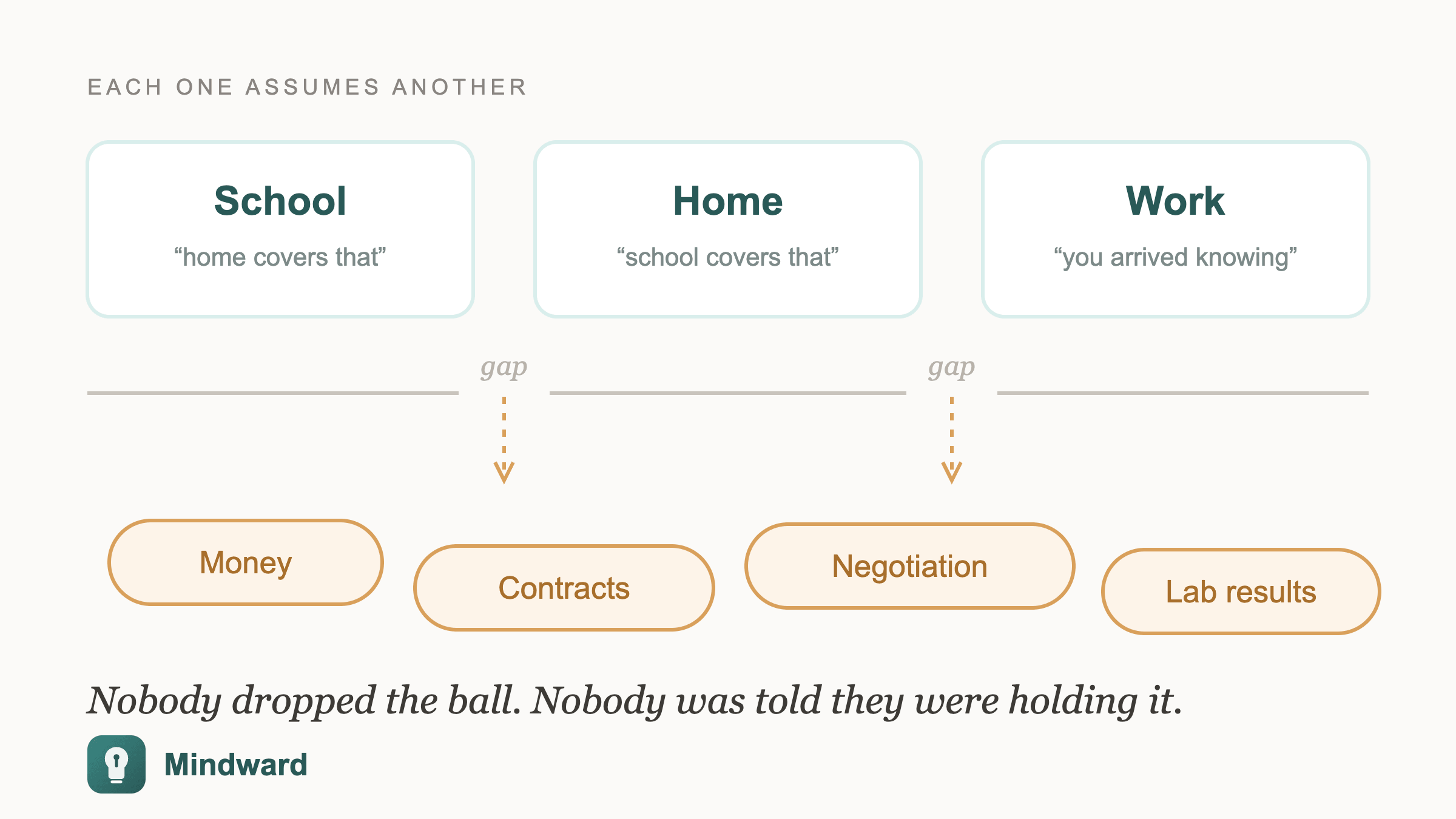
The things you feel embarrassed for not knowing — money, contracts, negotiation, your own lab results — were never actually taught to anyone. That's a curriculum problem, not a character one.
There's a specific feeling that shows up somewhere in your twenties and never entirely leaves. You're holding a document — a lease, an insurance policy, a job offer, a page of blood test results — and you realize you can't actually read it. Not the words. The meaning. What's standard, what's negotiable, what's a warning sign, what you're supposed to say next. And underneath that, a quieter thought: everyone else probably learned this somewhere.
They didn't. That's the part worth sitting with. You can analyze a poem, balance a chemical equation, and name the causes of a war you'll never visit. But nobody walked you through what an indemnity clause does to your risk, why the first number said out loud in a salary conversation shapes every number after it, or what it means when one marker on your panel sits slightly outside its reference range. The gap you're embarrassed about is nearly universal, and it isn't a gap in you.
The Handoff Nobody Was Told They Were Making
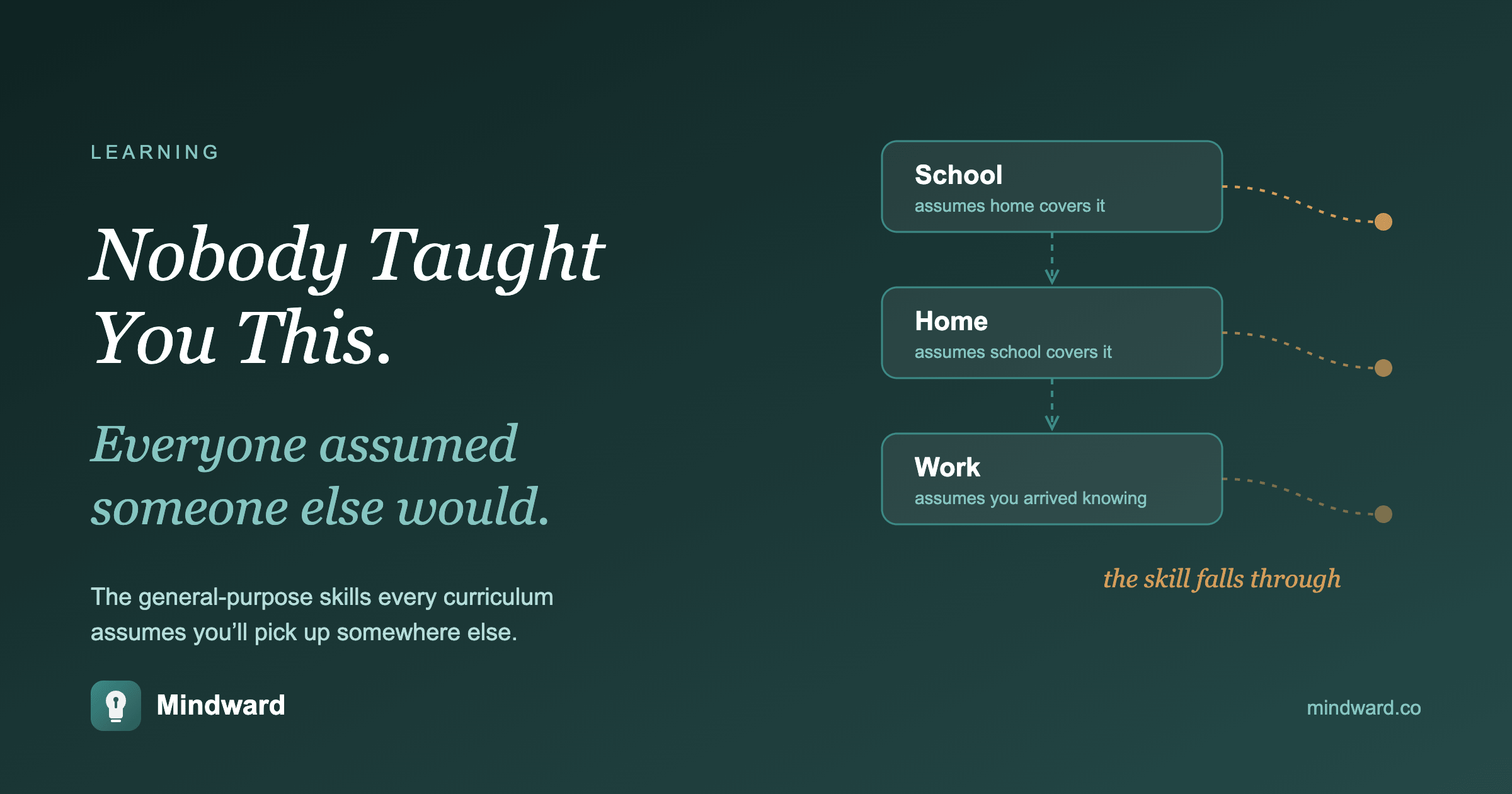
Every curriculum runs on a quiet division of labor. School teaches the transferable and the testable, assuming the practical material gets absorbed at home. Home assumes school covers the formal things, or that work eventually will. Work assumes you arrived already knowing how to read a contract, ask for money, and manage your own attention. Each one is doing its job honestly. The skill still falls straight through the middle.
That's what a lacuna is — not a hole someone dug, but a space where two things were supposed to meet and didn't. Which means the skills that fall through aren't random. They're the general-purpose ones: money, contracts, negotiation, habits, health information, your own attention. The things that belong to no single subject, and therefore to no single teacher.
The gap isn't in your intelligence or your effort. It's in the handoff. Nobody dropped the ball, because nobody was told they were holding it.
Why It Feels Like a Character Flaw
These skills get described with words that make not having them sound shameful. Basic. Common sense. Adulting. Every one of those words smuggles in an implication — that acquisition should have been automatic, that a functioning adult absorbs this through ambient exposure. So when you don't have it, the missing knowledge doesn't feel like missing knowledge. It feels like evidence about you.
That's the expensive part. Not the not-knowing — the hiding. You sign without asking what clause fourteen means. You accept the first offer because asking for the range would reveal you don't know the range. You nod through the appointment and look up the terms in the parking lot. The gap stays exactly the same size, and now it has a lock on it.
These Skills Are Smaller Than the Shame Around Them
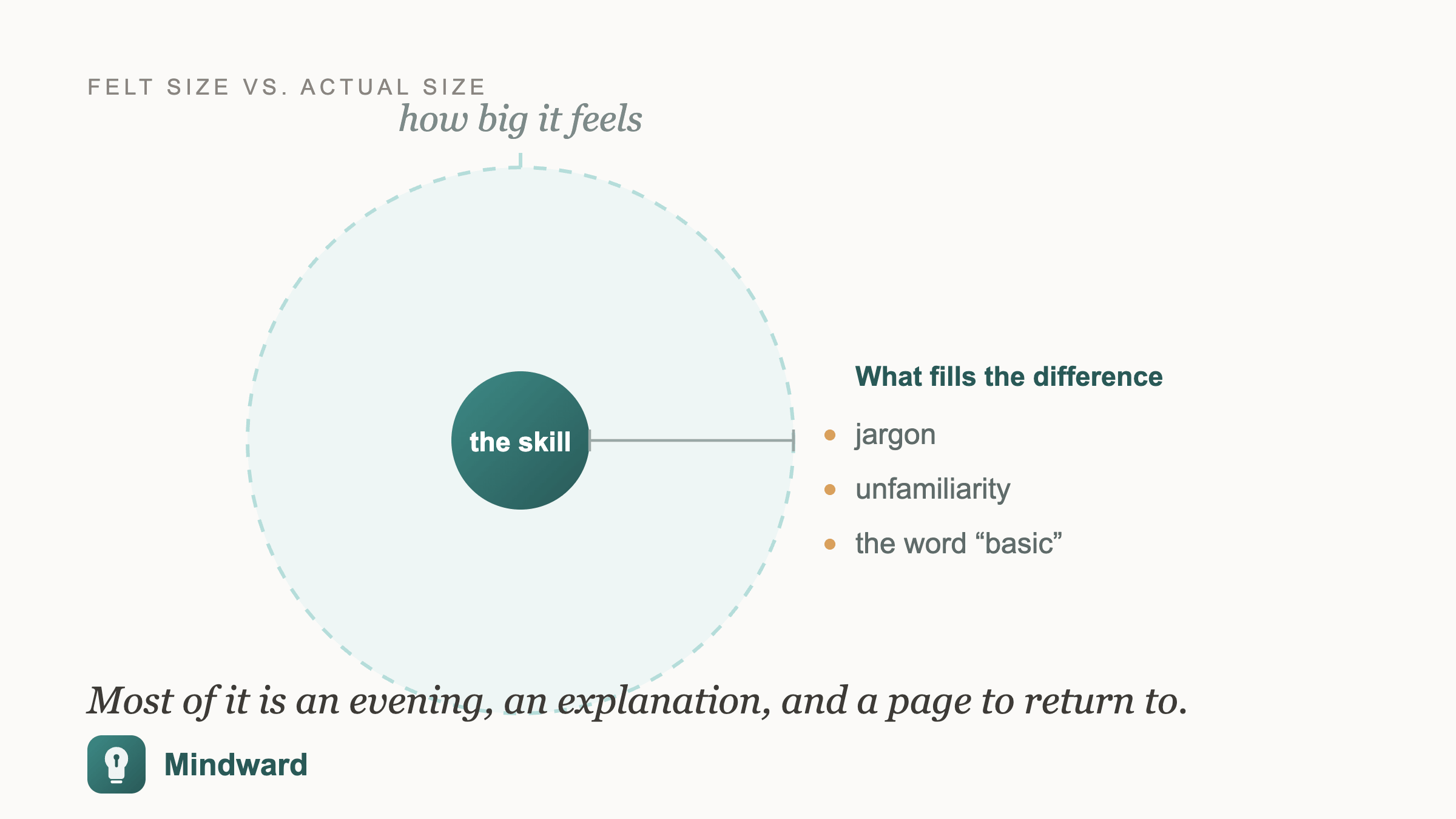
Here's the reframe that does the real work: the actual surface area of these subjects is tiny. They feel vast because they're unfamiliar, and because the people who know them speak in jargon that sounds like depth. But each one is bounded and finite, and functional competence sits far lower than expertise.
- Contracts: knowing which clauses quietly shift risk onto you, and that nearly everything is a draft until you sign it.
- Negotiation: understanding anchoring, knowing your walk-away option, and being able to sit through a silence.
- Money: one mechanic — compounding — and one habit — knowing what leaves your account before it leaves.
- Health data: reading a reference range, and trusting trends over single readings.
- Your own habits: recognizing that behavior follows cues and friction far more reliably than it follows intention.
None of that is a degree. Most of it is an evening, a decent explanation, and a page you can look at again in six months.
How to Close One Properly
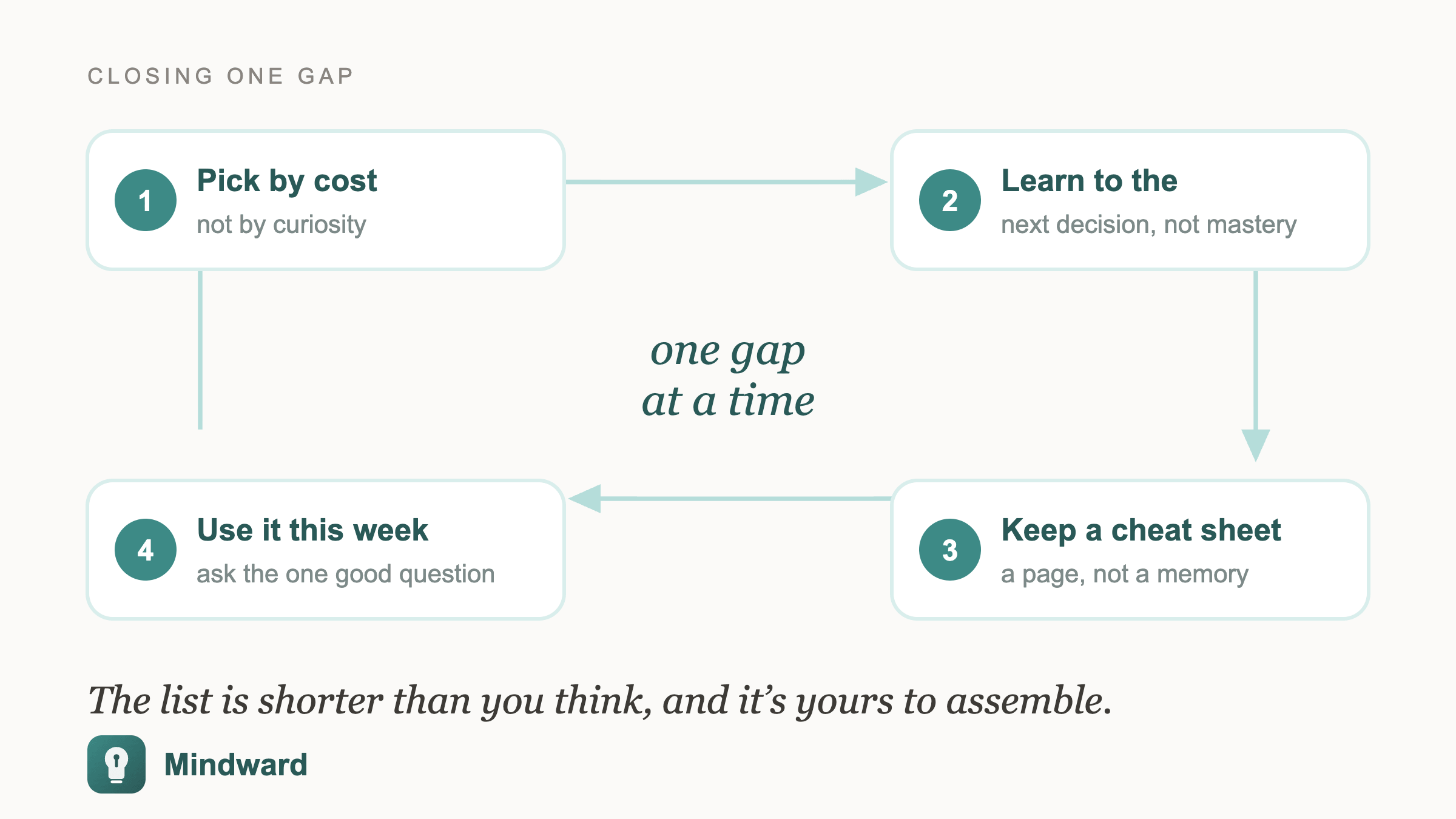
Pick by cost, not by curiosity. The gap worth closing first isn't the most interesting one — it's the one currently attached to a decision. A lease you're about to sign. A raise you haven't asked for. A number your doctor mentioned that you didn't question.
Then learn to the point of the next decision, not to the point of mastery. Practical understanding builds fastest when it has something to attach to. Read enough to ask one good question, then go ask it. The answer will teach you more than another hour of reading would have.
And keep an artifact. This knowledge evaporates because you use it so rarely — once a year, once a decade. Nobody retains something they touch that seldom, and expecting yourself to is a design error, not a memory failure. What you need isn't recall. It's a page you can return to. A cheat sheet isn't a beginner's crutch; it's how competent people in every technical field actually operate.
That's the entire premise behind https://lacuna.academy — short, practical primers on precisely the skills every curriculum assumes you'll pick up somewhere else. Money, contracts, negotiation, your own habits, reading your own lab results. Each topic is broken into parts you can finish in a few minutes, written to be genuinely enjoyable rather than dutiful, and ends with a cheat sheet you'll actually reuse. It exists because the gap is structural, and structural gaps need something built specifically to fill them.
Start With What's Already Costing You
Take a quick inventory. Which document did you sign without fully understanding? Which conversation did you avoid because you didn't have the vocabulary for it? Which recurring decision do you make on instinct because you were never handed a method? That list is your syllabus. It's shorter than you think it is, and it was always going to be assembled by you — because it was never assigned to anyone else.
You weren't failing a curriculum. You were handed an incomplete one and asked to navigate as though it were finished. The moment you stop reading the gap as a verdict, it turns into something far more useful: a list of things you haven't gotten to yet.


Comments
How did you like this article?
No comments yet. Be the first to share your thoughts!