You're Not Lazy, You're Running on Empty
That thing you're calling laziness might actually be depletion wearing a disguise. The difference matters more than you think.

You're staring at the thing you need to do. You know it needs doing. And yet you cannot make yourself start. So you add another label to the pile of ways you've failed yourself: lazy.
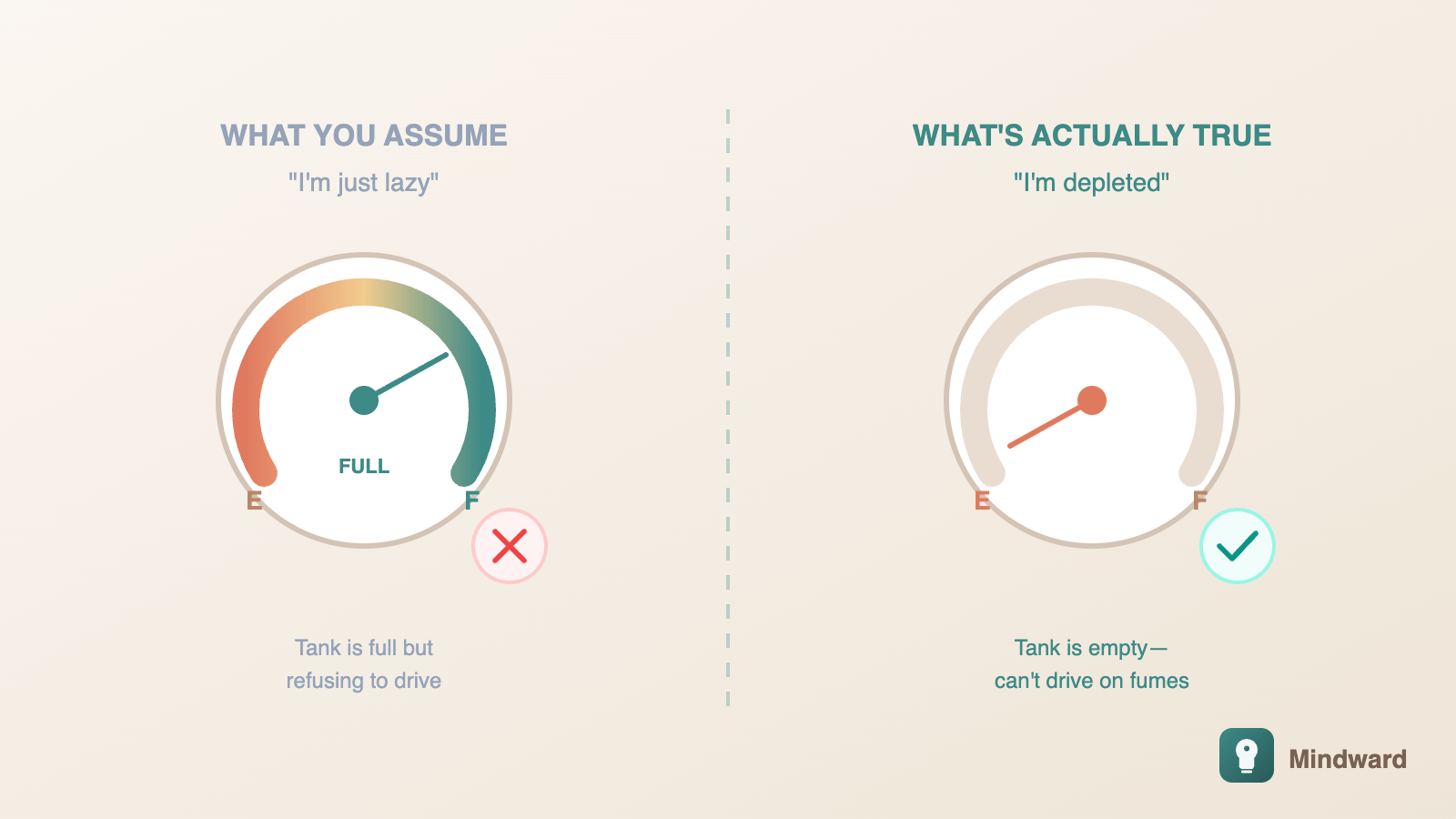
But here's what that label misses. Laziness implies you have the resources and simply refuse to use them. It assumes the tank is full and you're choosing not to drive.
What if the tank is empty? What if the engine has been running for so long on fumes that it's not a matter of willingness anymore—it's a matter of capacity?
The Myth of Endless Capacity
Somewhere you absorbed the idea that your capacity should be constant. That a well-functioning person wakes up each day with the same energy reserves, same decision-making power, same ability to push through.
This isn't how humans work. Your capacity fluctuates—daily, hourly, seasonally. It's affected by sleep, stress, grief, hormones, seasons, relationships, nutrition, and a hundred invisible factors you're not even tracking.
Research on decision fatigue shows that willpower operates like a muscle that tires with use. Studies on ego depletion demonstrate that resisting impulses, making choices, and regulating emotions all draw from the same limited pool. When that pool empties, what looks like laziness is actually a system running on overdraft.
You can't willpower your way out of depletion. Trying to is like revving an engine with no fuel—you just burn out the starter.
What Depletion Actually Looks Like
Depletion doesn't always announce itself as exhaustion. Sometimes it wears subtler disguises that you're more likely to judge than address.
- Procrastination that isn't about the task itself—you delay everything, not just hard things
- Decision paralysis over small choices that shouldn't require much thought
- Irritability that seems disproportionate to its triggers
- Brain fog or difficulty concentrating even when you're trying
- Loss of interest in things that usually engage you
- Physical tiredness that sleep doesn't fully resolve
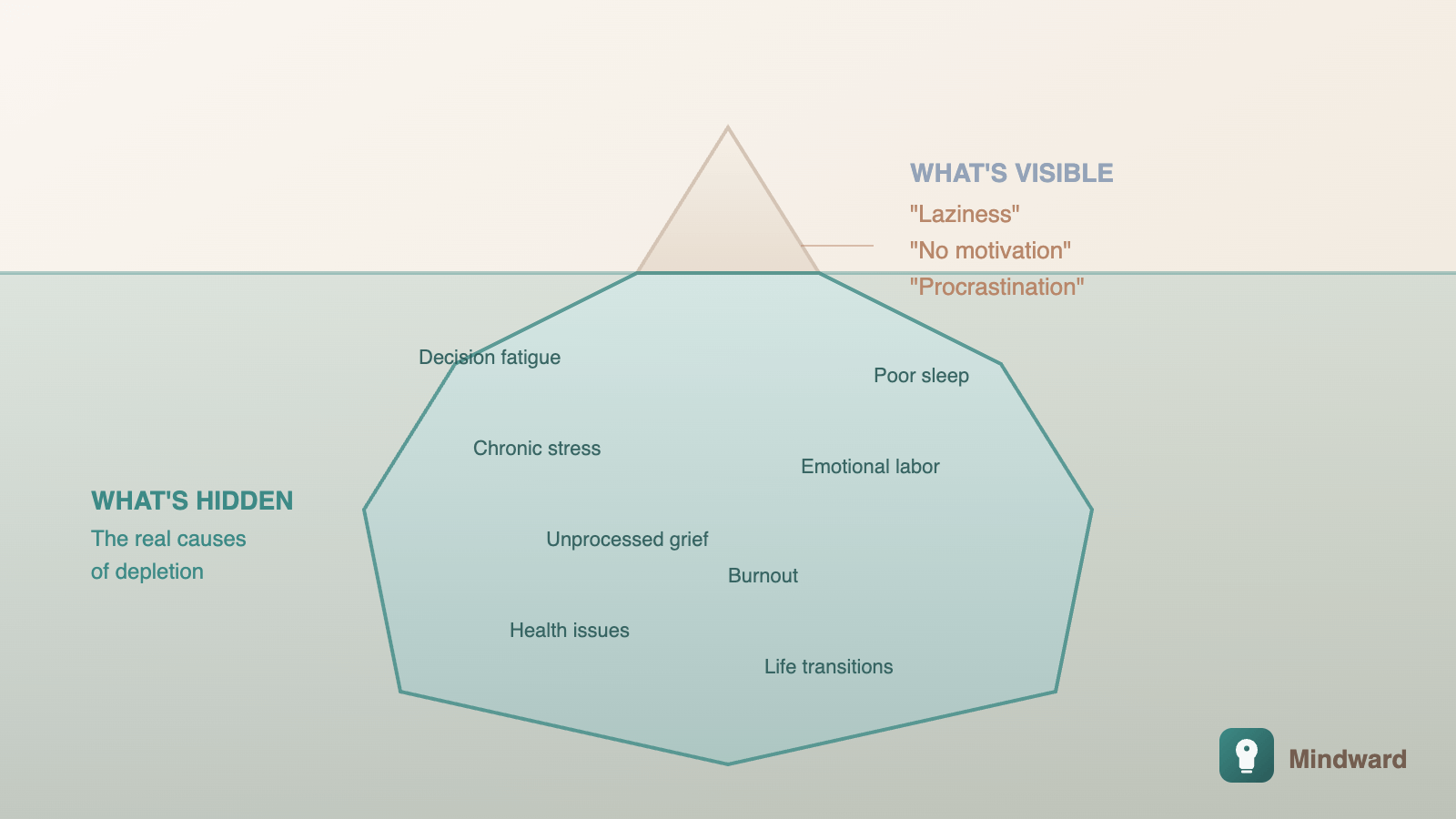
When you're depleted, your brain starts rationing resources. It conserves energy by making everything feel harder than it needs to be. That resistance you feel isn't a character flaw—it's a protective mechanism telling you the system is overtaxed.
Why Willpower Makes It Worse
The instinct when you feel unproductive is to try harder. Push through. Discipline yourself into action. And sometimes this works—for a while.
But willpower drawn from an empty account isn't free. You're borrowing against tomorrow's energy. You're training your nervous system that your signals don't matter, that the only acceptable response to depletion is more effort.
This is how burnout builds. Not from one dramatic collapse, but from the accumulated debt of consistently overriding your own capacity limits.
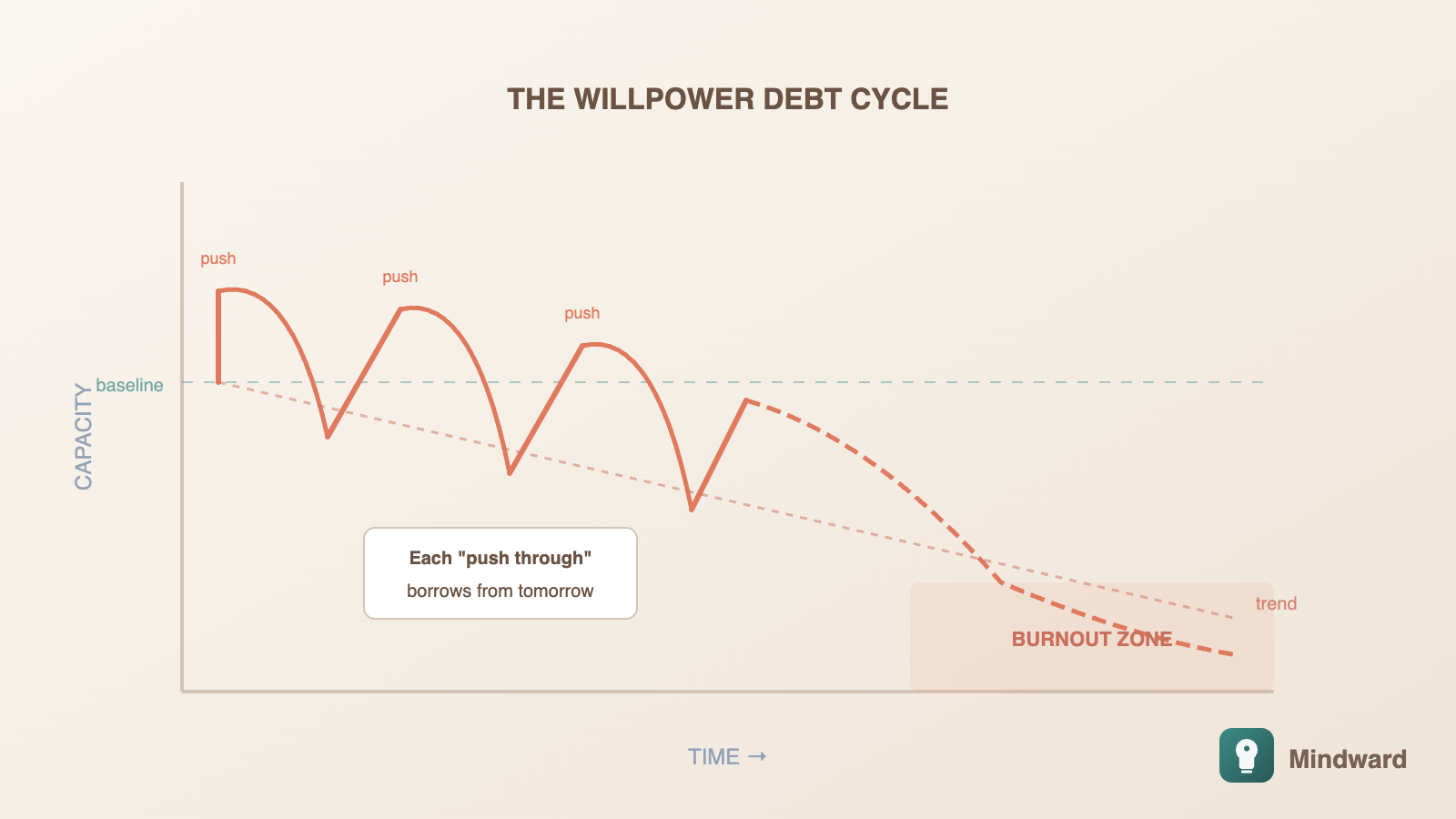
Pushing through depletion doesn't build character. It borrows from your future self at a high interest rate.
The Difference Between Rest and Restoration
Here's where it gets tricky. You might be resting—technically not working, technically taking breaks—and still not restoring.
Scrolling your phone isn't restoration. Collapsing in front of the TV while mentally rehearsing tomorrow's problems isn't restoration. Being physically still while remaining emotionally activated keeps you in depletion even when you're "relaxing."
True restoration requires your nervous system to actually shift states. It means activities that don't just pause the drain but actively refill the tank: genuine sleep, movement your body enjoys, connection that doesn't require performance, time in nature, creative play without stakes.
- Notice what actually restores you versus what just passes time. They're often different.
- Restoration usually involves some form of presence—being in the moment rather than escaping it.
- The best restoration often feels slightly effortful to start but easeful once you're in it.
Rewriting the Story
The next time you catch yourself reaching for the word "lazy," pause. Ask instead: when did I last feel genuinely restored? What has my system been carrying that I haven't fully accounted for? What would I say to a friend running this depleted?
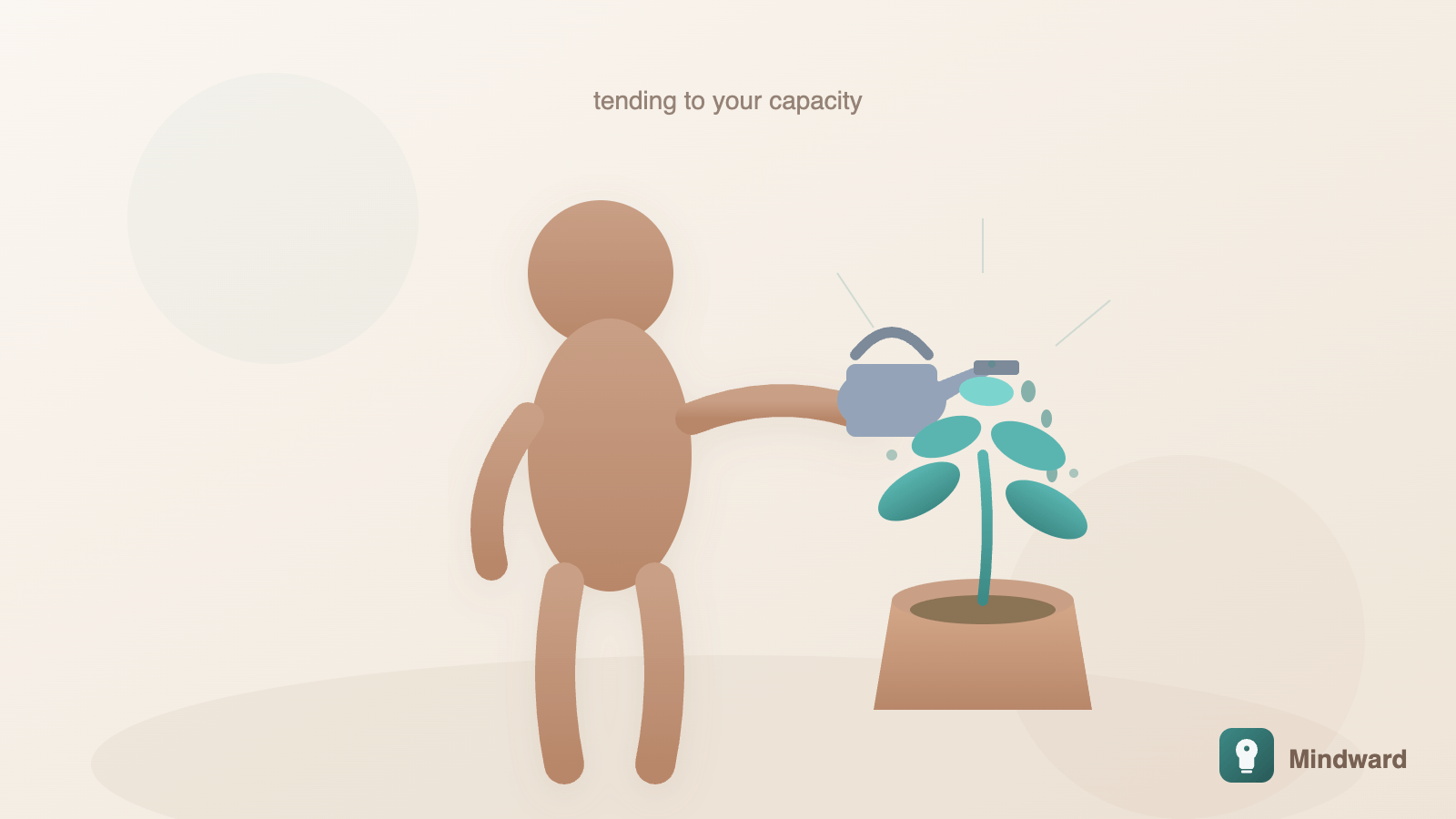
You're not lazy for struggling when you're depleted. You're human. And the solution isn't more discipline—it's more honesty about what you actually need to function.
The most productive thing you might do today is stop trying to be productive. Not because you're giving up, but because you're finally giving yourself what you need to show up tomorrow.
You can't outwork depletion. But you can stop mistaking it for a moral failing and start treating it like the signal it is.


Comments
How did you like this article?
No comments yet. Be the first to share your thoughts!