The Weight of Always Being the Strong One
Everyone leans on you. You hold it together when others fall apart. But no one asks who holds you—and you've stopped expecting them to.
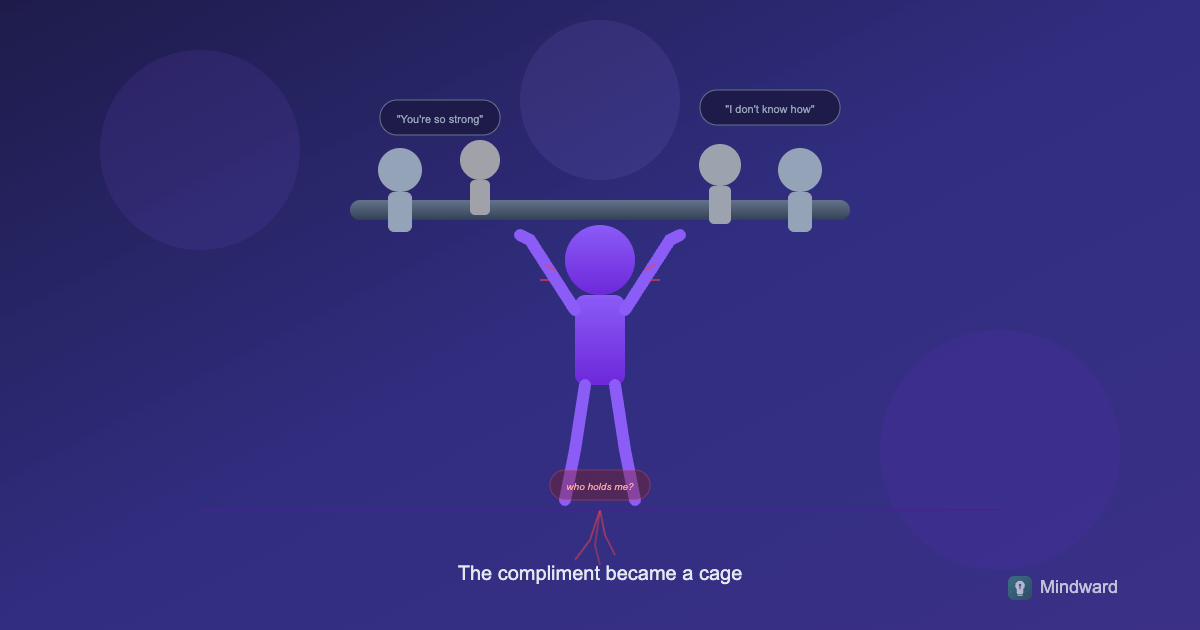
You're the one people call when things fall apart. The calm presence in a crisis. The friend who always knows what to say, the family member who keeps everyone together, the colleague who absorbs the chaos so others don't have to.
It started as a compliment. "You're so strong." "I don't know how you handle everything." "You always have it together." Somewhere along the way, the compliment became a cage. Now strength isn't something you have—it's something you owe.
The Role You Didn't Choose
For many people, being the strong one started early. Maybe you had a parent who couldn't cope, so you learned to manage your own emotions and theirs too. Maybe you were the oldest sibling expected to set the example. Maybe showing weakness wasn't safe, so you built walls and called them strength.
The role fit, so you kept playing it. And people let you—because your strength was convenient for them. No one questioned whether you needed support because you never looked like you did.
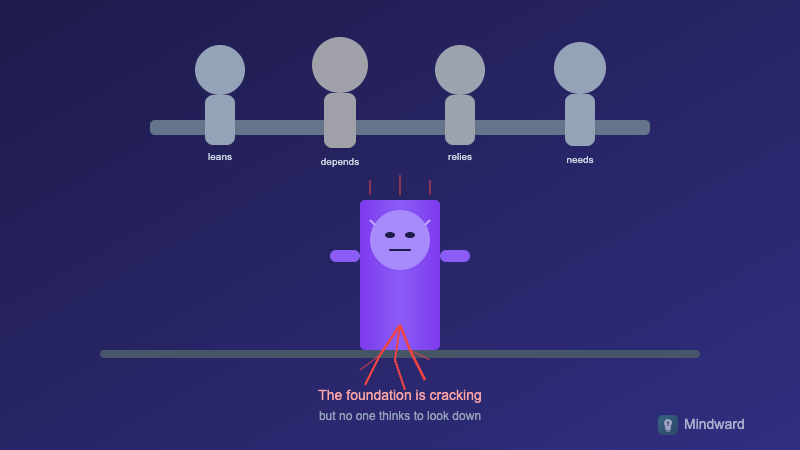
What It Actually Costs
Constant strength isn't sustainable—it's expensive. Every time you absorb someone else's crisis, regulate your own emotions to make room for theirs, or perform okayness you don't feel, you spend resources that don't automatically replenish.
The exhaustion is invisible because you've gotten so good at hiding it. You don't cry in front of people. You don't burden others with your problems. You handle your own messes quietly and then show up fresh-faced for everyone else's. But the fatigue accumulates.
Being strong for everyone means being seen by no one. The real you—the one who struggles, doubts, and needs—stays hidden.
Why Asking for Help Feels Impossible
You've thought about reaching out. But something stops you. Maybe it's the fear that you'll be too much—that your needs will overwhelm the people used to you being the steady one. Maybe it's pride, or the belief that needing help means you've failed at the one thing you're good at.
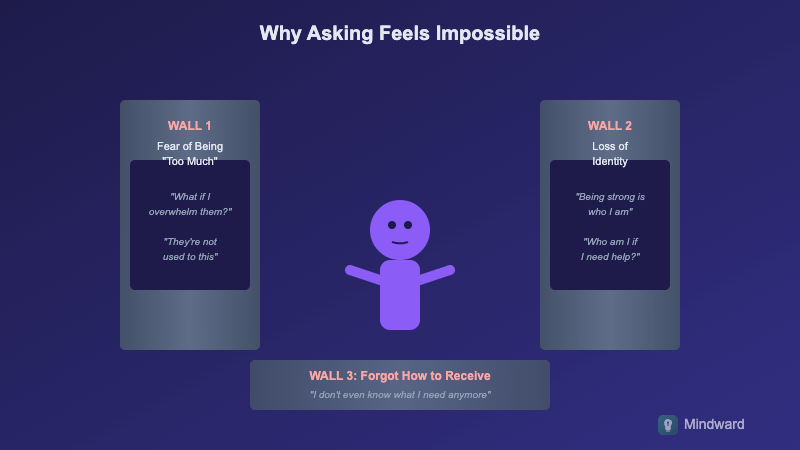
There's also a practical problem: you've trained people not to check on you. They assume you're fine because you've always been fine. The dynamic you built works exactly as designed—which is exactly the problem.
And honestly, you might not even know how to receive care anymore. When someone offers help, you deflect. When someone asks how you're really doing, you give the short answer. Vulnerability has become a foreign language.
Strength Isn't the Absence of Need
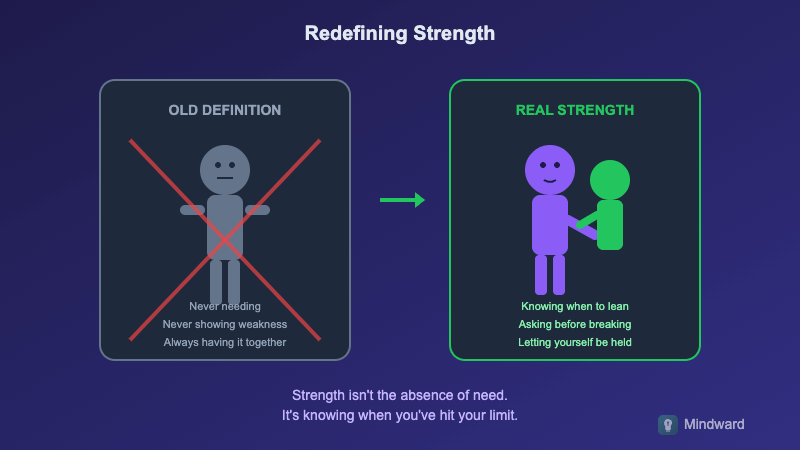
Somewhere you learned that strength means not needing. That capable people don't struggle, or at least don't show it. But that's not strength—it's isolation wearing a mask.
Real strength includes knowing when you've hit your limit. It includes letting people see you before you've cleaned yourself up. It includes asking for help while you still have the resources to receive it, not waiting until you collapse.
You are allowed to be held. You are allowed to not have it together. You are allowed to take up space with your own needs.
Letting the Mask Slip
You don't have to dismantle everything at once. Start small. Let one person see one crack. Answer "how are you" honestly once. Don't volunteer to fix the next crisis that isn't yours to fix.
- Identify one person who might be able to hold space for you
- Practice saying "I'm not okay" out loud, even alone
- Notice when you're performing strength instead of feeling it
- Let someone help with something small before you're desperate
- Stop apologizing for having needs—they're not inconveniences
Some people won't know what to do when you show up differently. They've built their relationship with you around your reliability. That discomfort is information about the relationship, not proof that you should keep hiding.
You've spent so long being strong for everyone else. The work now is learning that your own tenderness isn't weakness—it's the part of you that's been waiting to finally be seen.
You don't have to carry everything. You never did.


Comments
How did you like this article?
No comments yet. Be the first to share your thoughts!