Your Need for Approval Is Exhausting You
You've become so good at reading rooms and adjusting yourself that you've forgotten what you actually want. That adaptation has a cost.
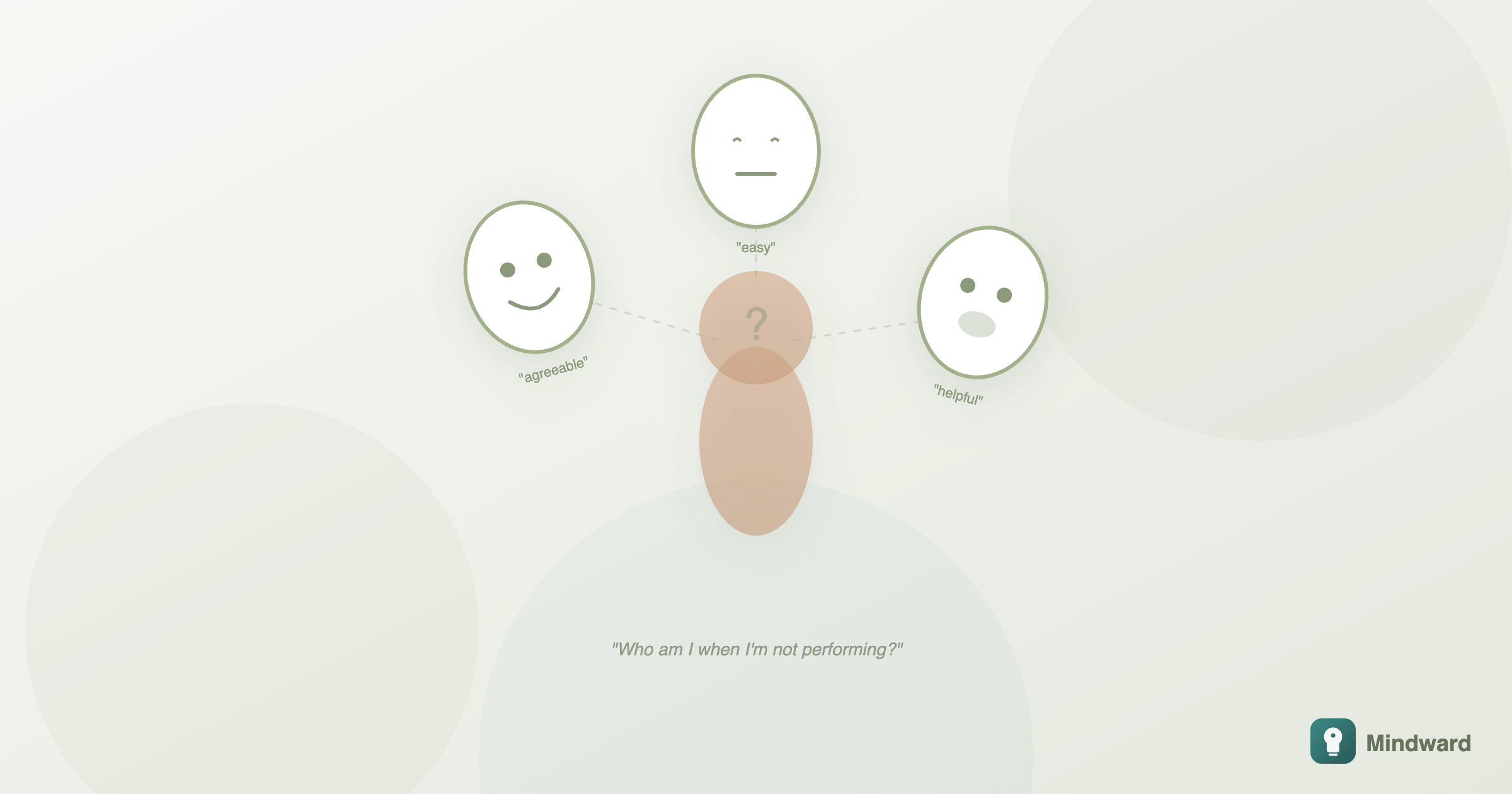
You walk into a room and immediately start scanning. What do they need? What do they expect? How should you adjust to make this interaction smooth, to leave them with a good impression, to avoid friction?
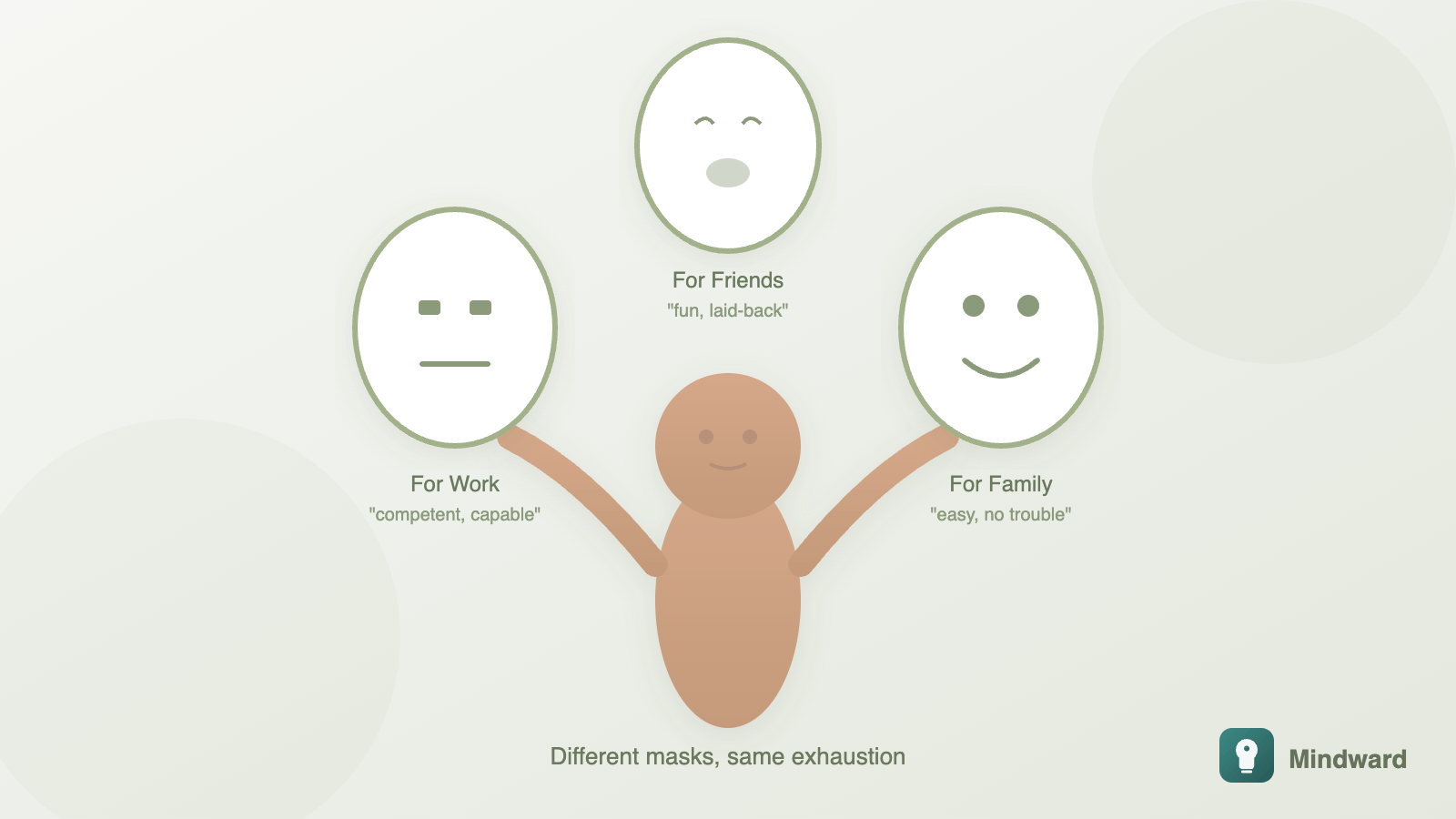
You've gotten so good at this that it feels automatic. Reading people, anticipating needs, shapeshifting to fit. It looks like social intelligence. It feels like survival.
But underneath the competence is a quiet exhaustion. And if you're honest, you're not sure who you are when you're not performing for someone else's approval.
Where This Pattern Comes From
Approval-seeking isn't a character flaw. It's usually an intelligent adaptation to an environment where love or safety felt conditional.
Maybe acceptance required being easy, helpful, agreeable. Maybe conflict meant withdrawal of affection. Maybe your needs were treated as burdens, so you learned to make yourself small and useful instead.
These early experiences teach a powerful lesson: your worth depends on others' responses to you. To be valued, you must be valuable to them—which means constantly monitoring, adjusting, earning.
People-pleasing isn't generosity. It's often a survival strategy that outlived its usefulness.
The Cost of Constant Adaptation
Shapeshifting for approval isn't free. Every adjustment away from what you actually feel, want, or believe costs something—even when it's subtle, even when it's automatic.
- Decision fatigue from constantly calculating what others want before knowing what you want
- Resentment that builds when your needs go unmet because you never voiced them
- Identity confusion—losing track of your actual preferences, opinions, and desires
- Relationship fragility—connections built on a performed version of you can't truly hold you
- Exhaustion from the vigilance required to maintain the performance
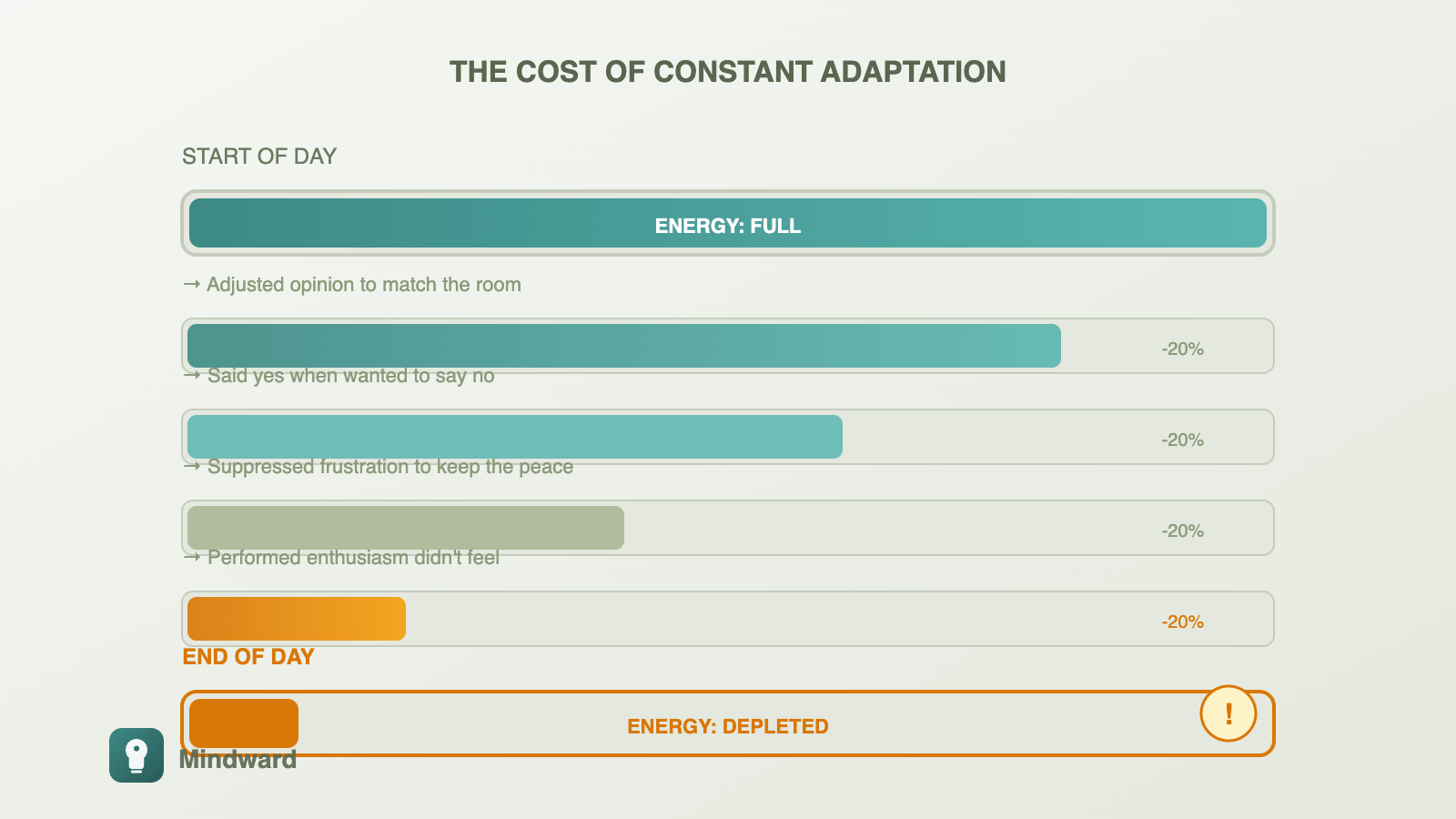
The cruelest part is that the approval you earn never quite lands. When someone likes the adjusted version of you, it doesn't fully register—because you know they're not seeing the real you. So you need more approval, more reassurance, in an endless cycle that never satisfies.
The Myth of Universal Likability
Behind chronic people-pleasing is often an unexamined belief: if I'm good enough, everyone will like me. If I avoid conflict and meet needs, I'll be safe from rejection.
But universal likability isn't possible—and pursuing it means abandoning yourself. Every time you contort to please someone, you're implicitly agreeing that their comfort matters more than your authenticity.
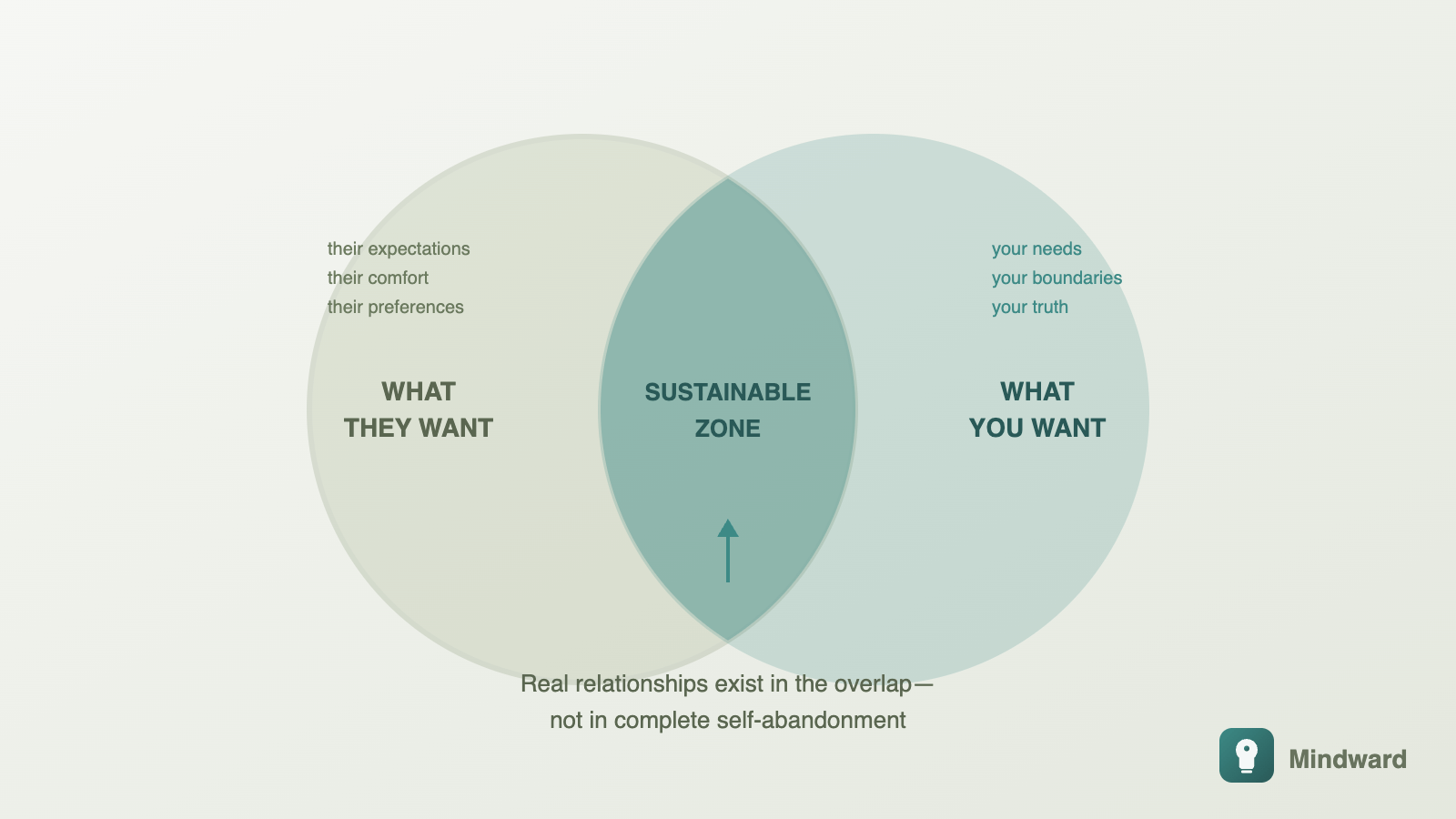
The people worth keeping in your life aren't the ones who need you to perform. They're the ones who can handle your real preferences, your actual boundaries, your honest no. Filtering for those people requires showing them who you actually are.
You can't be rejected for who you are if you never show anyone who you are. But you can't be truly accepted either.
Finding Your Own Signals
When you've spent years tuned to others' frequencies, your own signals can feel faint or confusing. What do I actually want? becomes a surprisingly hard question.
Reconnecting with yourself isn't dramatic. It's small, repeated moments of checking in instead of checking out.
- Pause before saying yes. Notice if you're agreeing because you want to or because declining feels dangerous.
- Practice low-stakes preferences. Pick the restaurant. Choose the movie. State an opinion without hedging.
- Notice your body. Tension, contraction, and fatigue are often signals that you're overriding yourself.
- Allow disappointment. Other people can be disappointed in your choices without that meaning you've done something wrong.
The Discomfort of Being Seen
Dropping the performance feels risky because it is. When you stop shapeshifting, some people won't like what they see. Some relationships will strain or end.
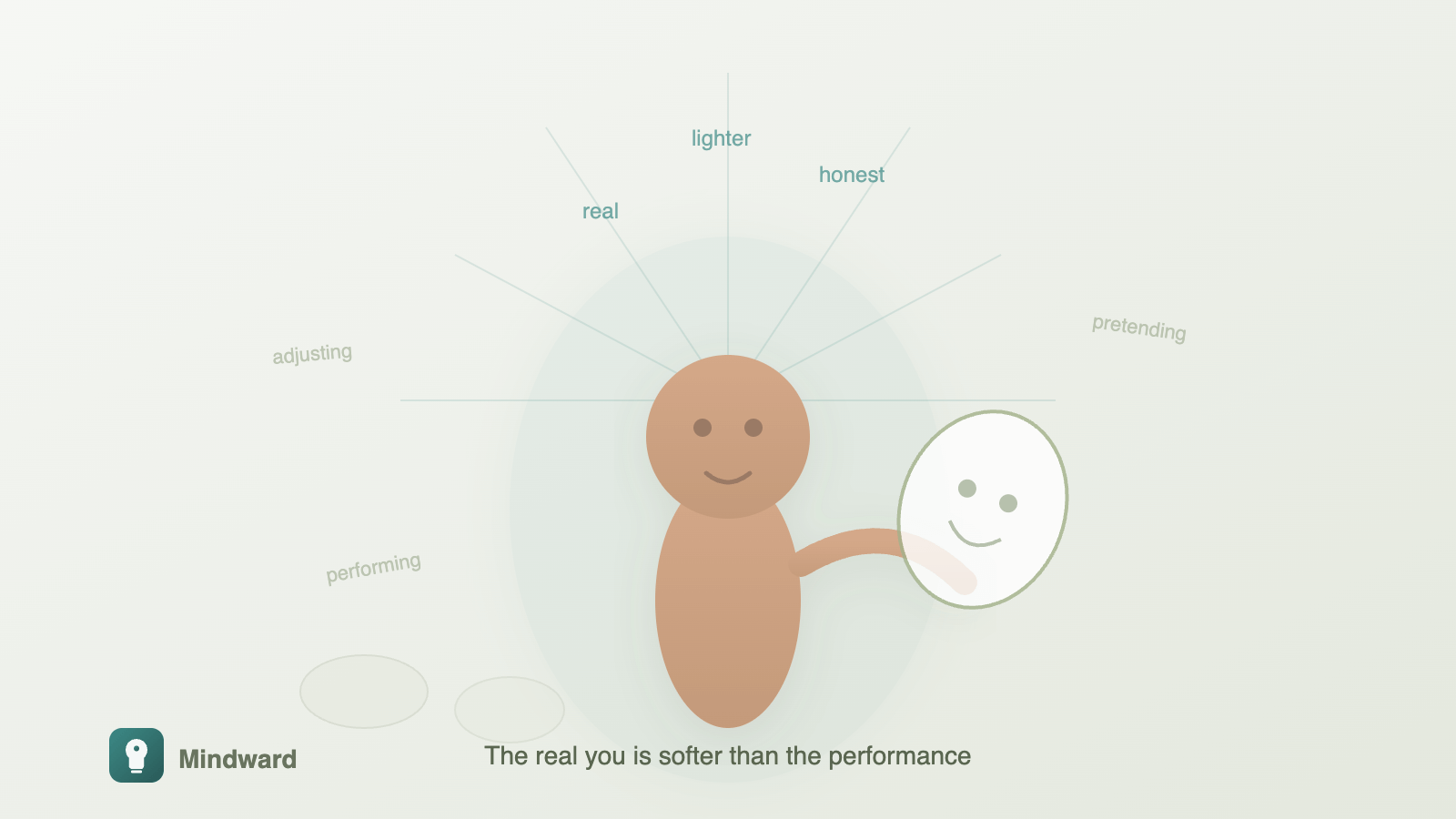
But here's what you gain: the relationships that remain can actually hold you. The approval you receive lands, because it's based on something real. And the exhaustion of constant performance begins to lift.
You were never meant to be universally palatable. You were meant to be specifically, imperfectly yourself—and to find the people who want exactly that.
The goal isn't to stop caring what anyone thinks. It's to stop abandoning yourself to manage what they think.


Comments
How did you like this article?
No comments yet. Be the first to share your thoughts!