You Don't Have to Earn Your Rest
Somewhere along the way, rest became something you had to deserve. That belief is costing you more than you realize.
You know the feeling. You're exhausted, but you haven't "done enough" to justify stopping. So you push through another hour, another task, another day—waiting for permission that never quite arrives.
Somewhere along the way, rest became conditional. It turned into a reward you earn through sufficient productivity, something you take only after you've proven you deserve it.
This isn't just a personal quirk. It's a cultural inheritance—and it's making us sicker, more anxious, and paradoxically less productive.
How Rest Became a Reward
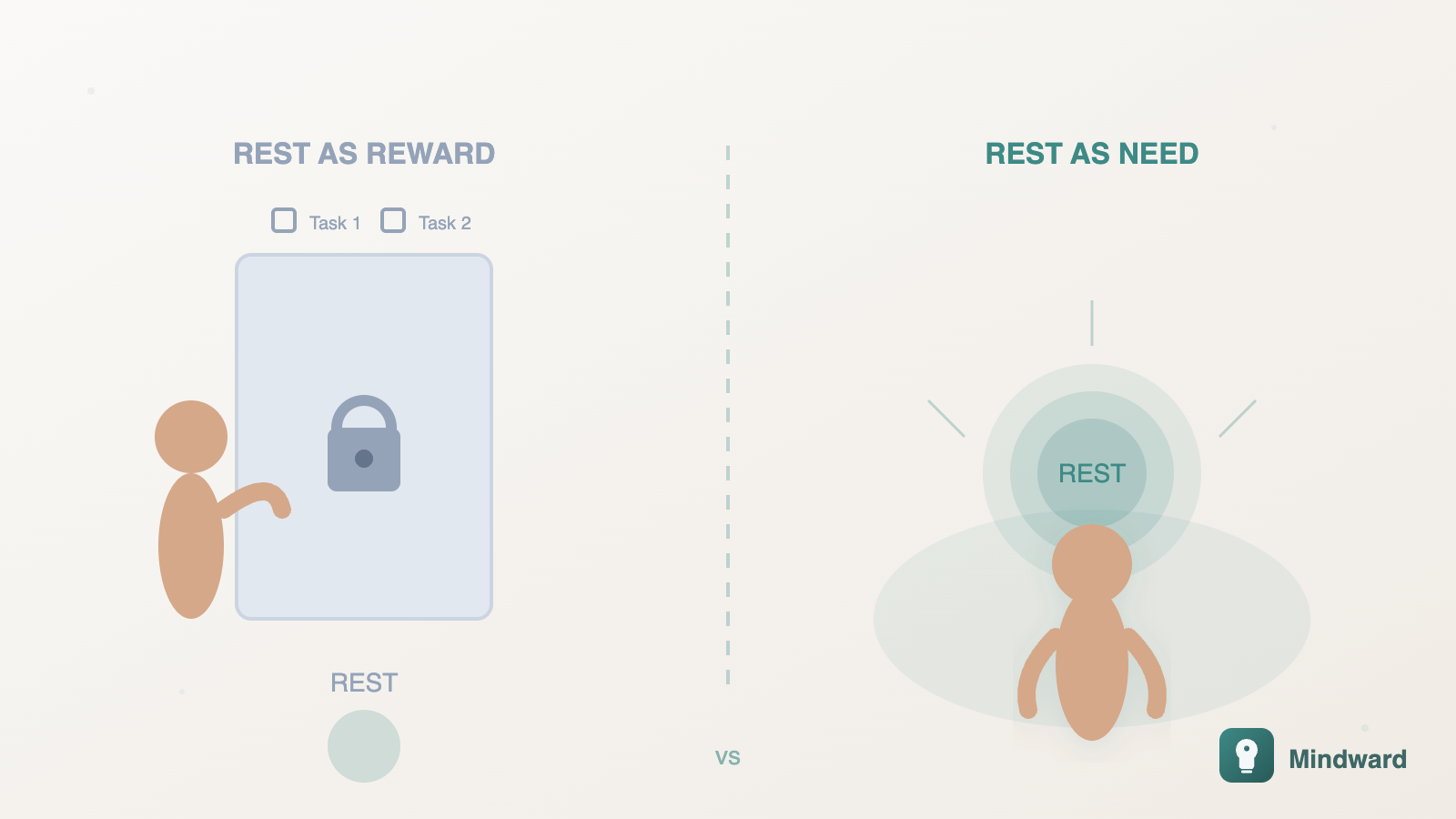
The logic seems reasonable on the surface: work hard, then rest. Finish your tasks, then relax. Earn the break before you take it.
But this framing has a hidden premise—that your natural state should be output. That rest is an interruption to productivity rather than a foundation for it. That your value is tied to what you produce, and anything else requires justification.
When rest becomes a reward, it also becomes precarious. There's always more to do. The bar for "enough" keeps moving. And the exhaustion you feel starts to seem like a personal failure rather than a signal worth heeding.
You don't wait until you're "hungry enough" to eat. Rest works the same way—it's a need, not a prize.
The Biology You're Fighting
Your body doesn't operate on a merit system. It has requirements—sleep, recovery, downtime—that exist independent of your to-do list.
When you chronically defer rest, your nervous system doesn't simply wait patiently. It adapts. Stress hormones stay elevated. Your baseline shifts toward hypervigilance. The ability to relax atrophies because you so rarely practice it.
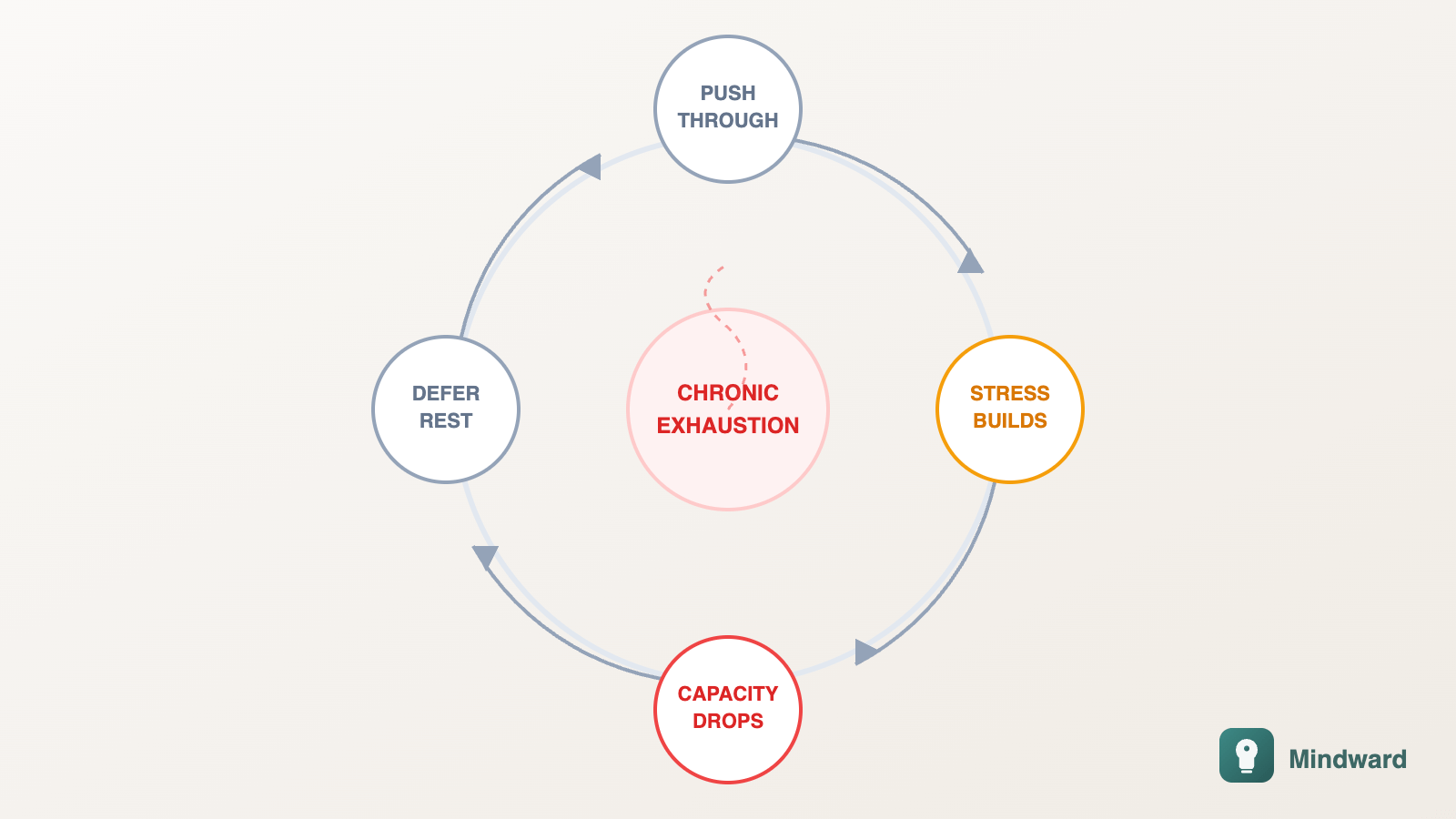
Research on burnout shows this clearly. It's not just about working too much—it's about insufficient recovery. People burn out not only from high demands but from the inability to detach and replenish. The "earn your rest" mentality directly undermines this recovery process.
The Productivity Paradox
Here's the part that might shift your thinking: rest isn't the opposite of productivity. It's a prerequisite for it.
Studies on performance consistently show that strategic rest improves focus, creativity, and output quality. The brain consolidates learning during downtime. Problem-solving improves after breaks. Decision-making degrades predictably with fatigue.
When you push through exhaustion to "earn" rest later, you're often producing lower-quality work that takes longer—then resting less because you're behind. The math doesn't work.
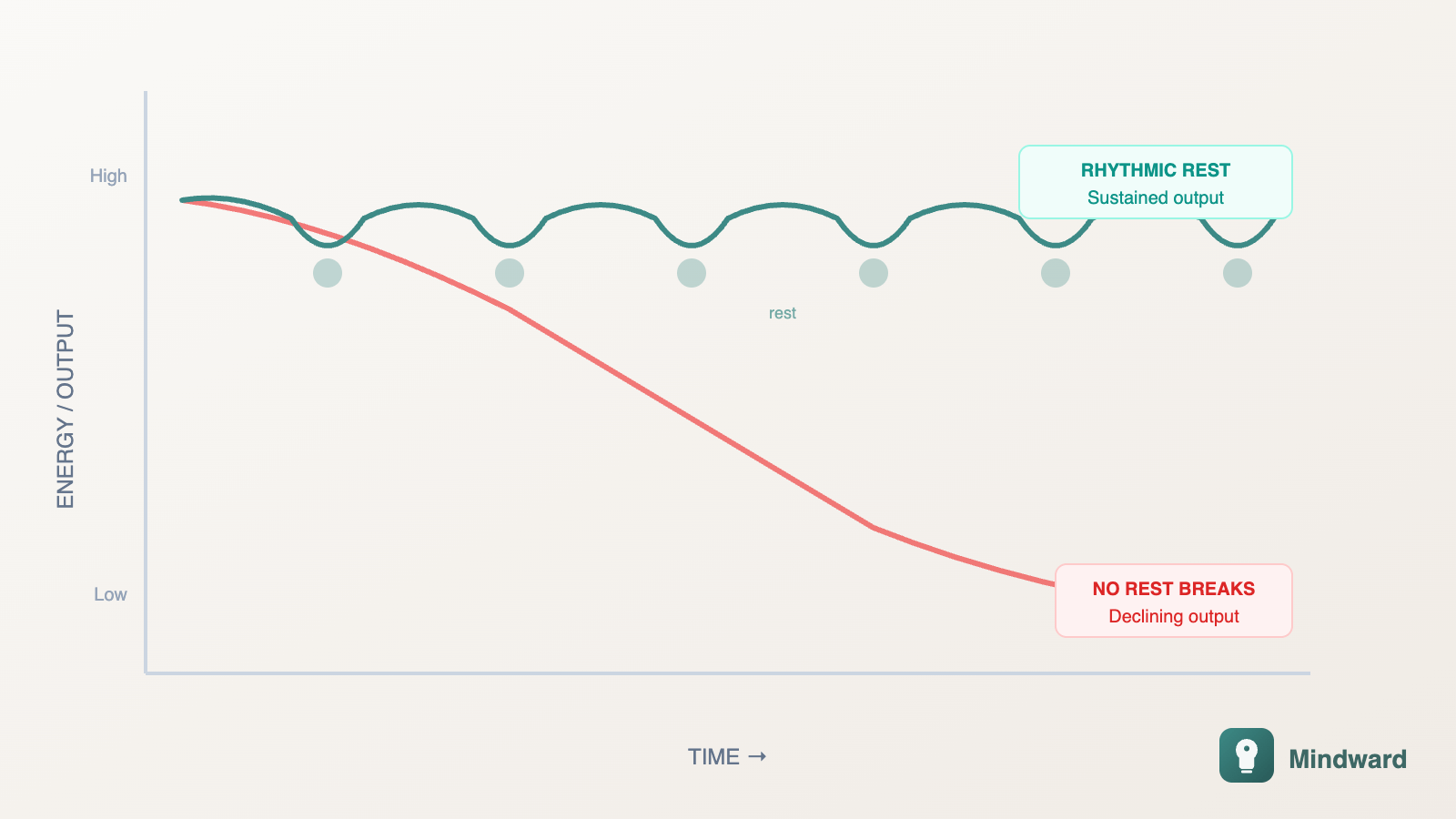
Rest isn't what you do when you've finished being productive. It's what makes sustained productivity possible.
What Unconditional Rest Looks Like
Unconditional rest doesn't mean abandoning responsibility. It means changing the logic—from "I'll rest when I deserve it" to "I'll rest because I need it, and that need is legitimate."
This is harder than it sounds. The discomfort of resting "early" or "unearned" is real. You might feel guilt, anxiety, the pull to check just one more thing. These feelings are the residue of the old conditioning, not evidence that you're doing something wrong.
- Notice when you're bargaining with yourself about rest. "After this task" or "once I finish this week" are signs you're treating rest as conditional.
- Practice resting before you're depleted. Waiting until exhaustion forces you to stop means you're always recovering from a deficit.
- Separate rest from laziness in your mind. Laziness is avoidance of necessary action. Rest is necessary action.
- Start small if the guilt is intense. Even brief, intentional pauses begin rewiring the pattern.
The Permission You're Waiting For
If you've been waiting for permission to rest without earning it first, here it is: you're allowed. Not because you've done enough today. Not because you'll be more productive tomorrow. But because rest is part of being human, and you don't need to justify being human.
The exhaustion you feel isn't a sign that you need to try harder. It's information. It's your body telling you something you've been trained to ignore.
You can keep pushing, waiting for a finish line that keeps moving. Or you can question the premise—that rest must be earned—and find that the permission you've been seeking was never anyone else's to give.
Rest is not a reward for finishing. It's how you sustain the capacity to continue.


Comments
How did you like this article?
No comments yet. Be the first to share your thoughts!