You Can't Think Your Way Out of Anxiety
Your mind promises that if you just think harder, you'll find the solution. But anxiety doesn't work that way—and the attempt is making it worse.

You know this loop. A worry surfaces, so you analyze it. You examine it from every angle, searching for the insight that will finally dissolve the fear. If you just think it through completely, you'll reach certainty. Then you can relax.
But the certainty never comes. Each answered question spawns three more. Each reassurance holds for an hour before doubt creeps back. And somehow, after all that thinking, you feel worse than when you started.
This isn't a failure of effort. It's a fundamental misunderstanding of what anxiety is and how it operates.
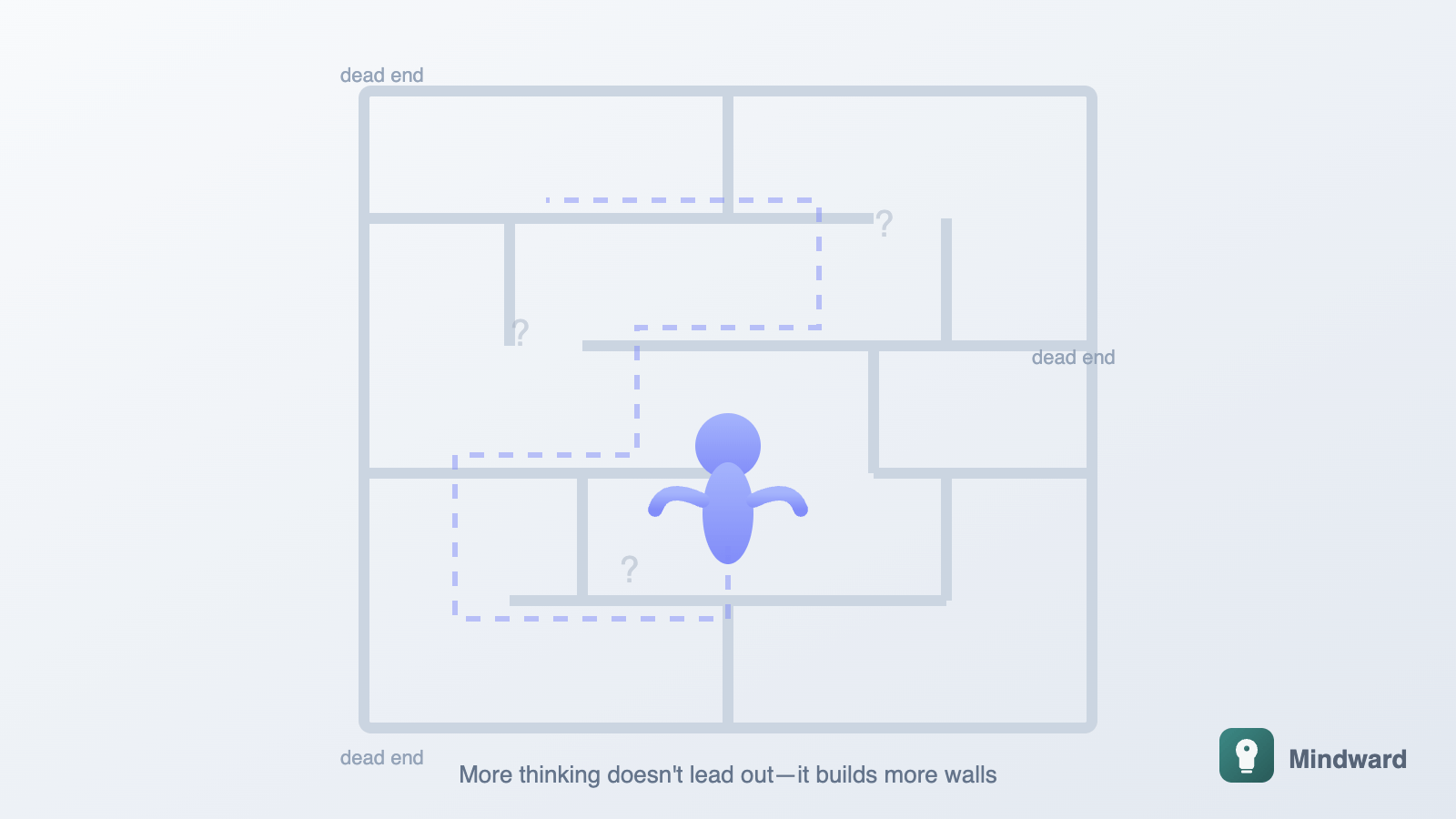
The Trap of Solving Feelings With Logic
Anxiety feels like a problem to be solved. And your mind is a problem-solving machine—it's what kept your ancestors alive. So when anxiety shows up, the mind does what it knows: analyze, predict, prepare.
But anxiety isn't a math problem. It's an emotional state arising from your threat-detection system. Logic doesn't turn off the alarm—it often amplifies it by treating the threat as real enough to require analysis.
When you engage with anxious thoughts, you're essentially telling your nervous system: "Yes, this is worth worrying about." The more mental energy you spend, the more important the threat seems. Your attempt to escape the maze just builds more walls.
Engaging with anxious thoughts doesn't resolve them. It validates them as worthy of your attention.
Why Reassurance Never Lasts
If you struggle with anxiety, you've probably sought reassurance—from yourself, from others, from Google at 2 AM. And it works, briefly. The relief is real. But then the worry adapts, finds a new angle, and you need reassurance again.
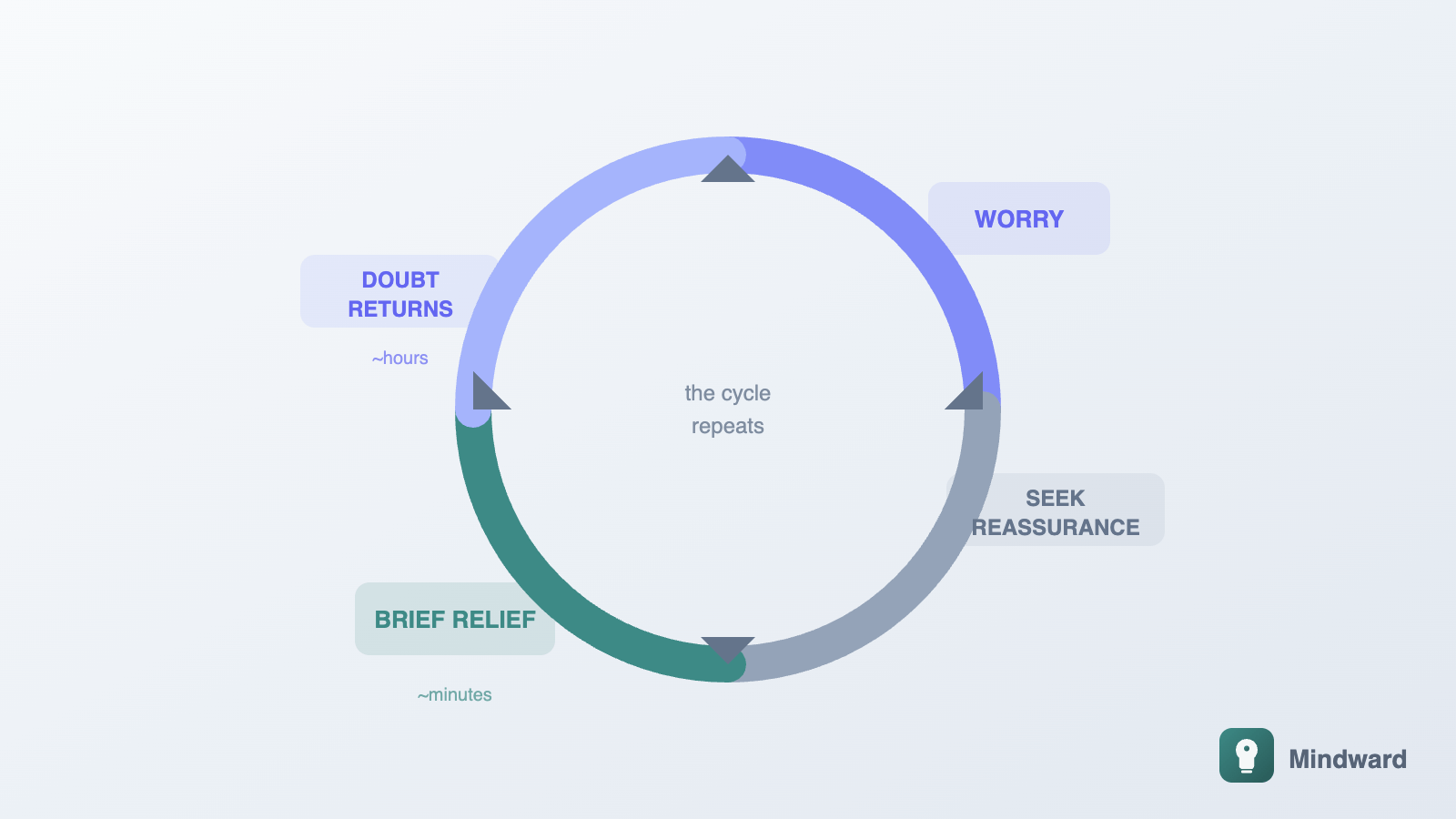
This is because reassurance treats the symptom while reinforcing the cause. Every time you seek certainty, you're confirming that uncertainty is intolerable. You're training your brain that this worry deserves an answer—and since life offers few guarantees, the worry always returns with a new question.
Research on anxiety disorders confirms this pattern. Reassurance-seeking provides short-term relief but increases long-term anxiety. The more you feed the need for certainty, the hungrier it grows.
The Paradox of Control
Here's where it gets counterintuitive. Trying to control your thoughts gives them more power, not less.
There's a classic psychology experiment: try not to think of a white bear for the next thirty seconds. What happens? The white bear shows up more than it would have otherwise. This is called ironic process theory—monitoring your mind for something ensures you'll find it.
Anxious thoughts work the same way. The more you try to push them away, argue with them, or solve them, the more present they become. Your resistance keeps them alive.
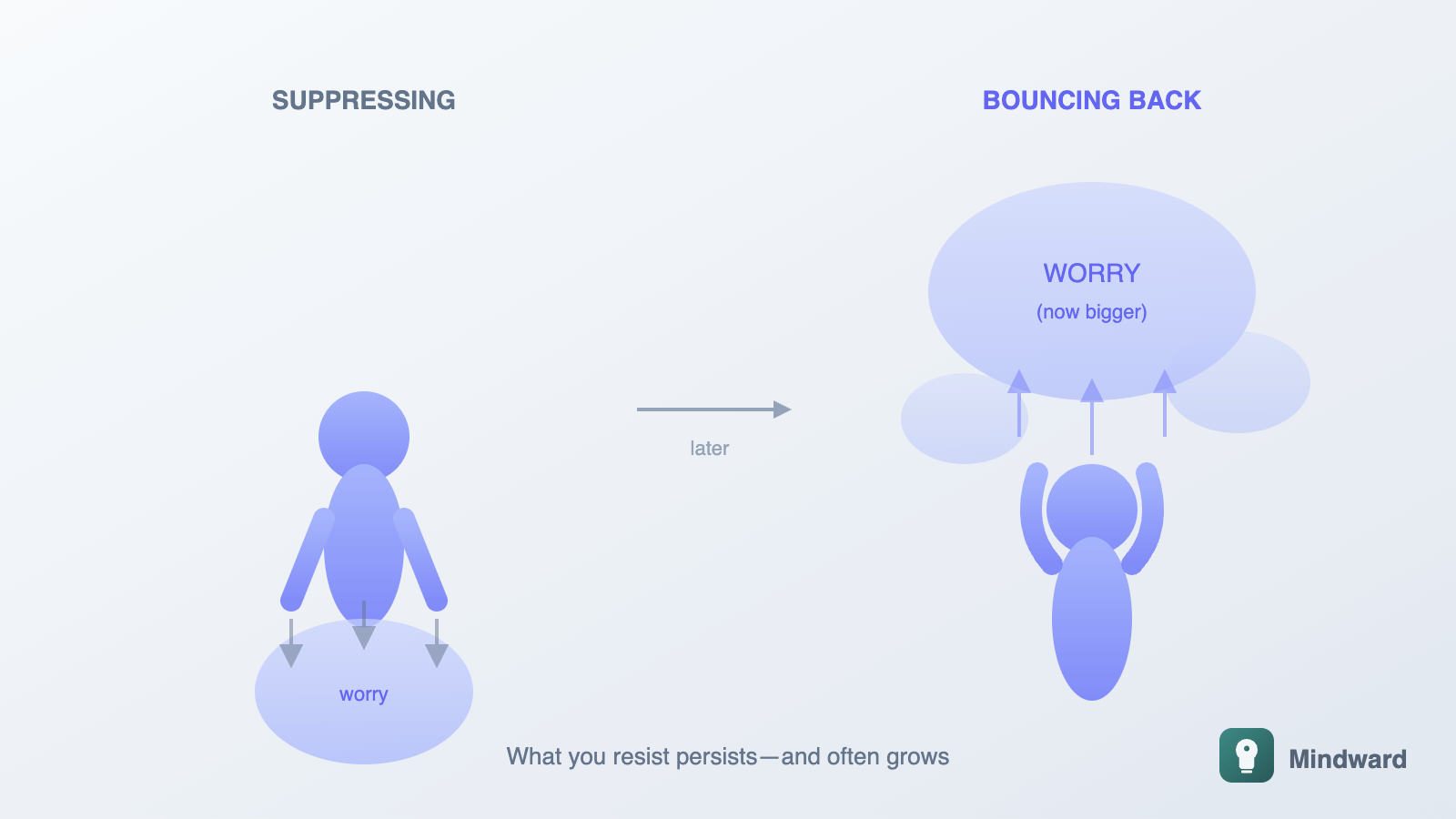
You can't delete anxious thoughts. But you can change your relationship to them.
What Works Instead
If thinking harder makes anxiety worse, what actually helps? The research points toward a different approach entirely—one that feels wrong at first because it goes against every instinct.
- Notice without engaging. When an anxious thought appears, acknowledge it without arguing: "There's that worry again." You're observing, not solving.
- Allow discomfort. Instead of rushing to fix the feeling, let it be present. Anxiety is uncomfortable but not dangerous. It peaks and passes faster when you're not fighting it.
- Redirect attention, don't suppress. You can't force a thought away, but you can gently shift focus to something present—your breath, your surroundings, a task requiring attention.
- Act despite uncertainty. Waiting for the worry to resolve before you act keeps you stuck. Taking action while uncertain teaches your brain the threat isn't as real as it felt.
This isn't about ignoring real problems. If something needs action, act. But most anxious thoughts aren't calls to action—they're false alarms asking for engagement you shouldn't give.
Letting Thoughts Pass
Picture your thoughts as cars on a road. You're sitting on a bench beside it. Anxious thinking is like jumping in front of every car, trying to stop it, inspect it, argue with it. No wonder you're exhausted.
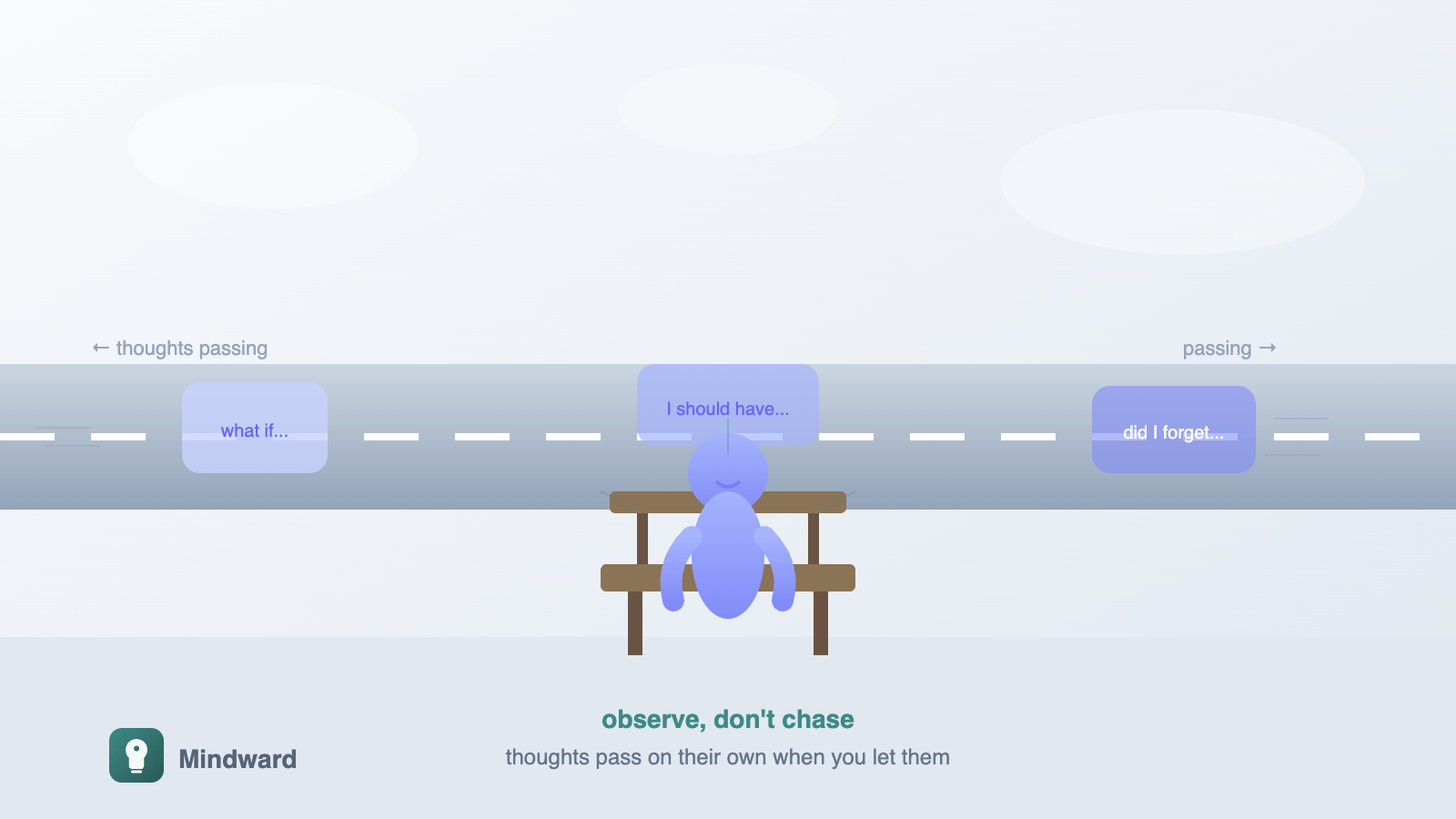
The alternative is watching them pass. The thought arrives, exists briefly, and moves on—if you let it. You don't have to believe every thought. You don't have to solve it. You can simply notice and return to whatever you were doing.
This takes practice. After years of engaging with every worry, sitting still feels dangerous. But each time you let a thought pass without chasing it, you're rewiring the pattern. You're teaching your brain that not everything requires a response.
Thoughts are events in your mind, not truths about reality. You can let them pass without acting on them.


Comments
How did you like this article?
No comments yet. Be the first to share your thoughts!