The Exhausting Work of Avoiding How You Feel
Suppressing emotions feels like strength. But the energy it takes to keep feelings at bay is quietly draining your capacity for everything else.

You've gotten good at this. The redirect when a feeling surfaces. The busy-ness that keeps you one step ahead of what you'd rather not examine. The slight tension you've learned to live with because addressing it feels like too much.
This isn't weakness. It's a strategy—one you developed because at some point, it worked. Avoiding difficult emotions kept you functional when you needed to be. It got you through situations where falling apart wasn't an option.
But strategies that protect us in crisis often cost us in ordinary life. And the cost of emotional avoidance is higher than most people realize.
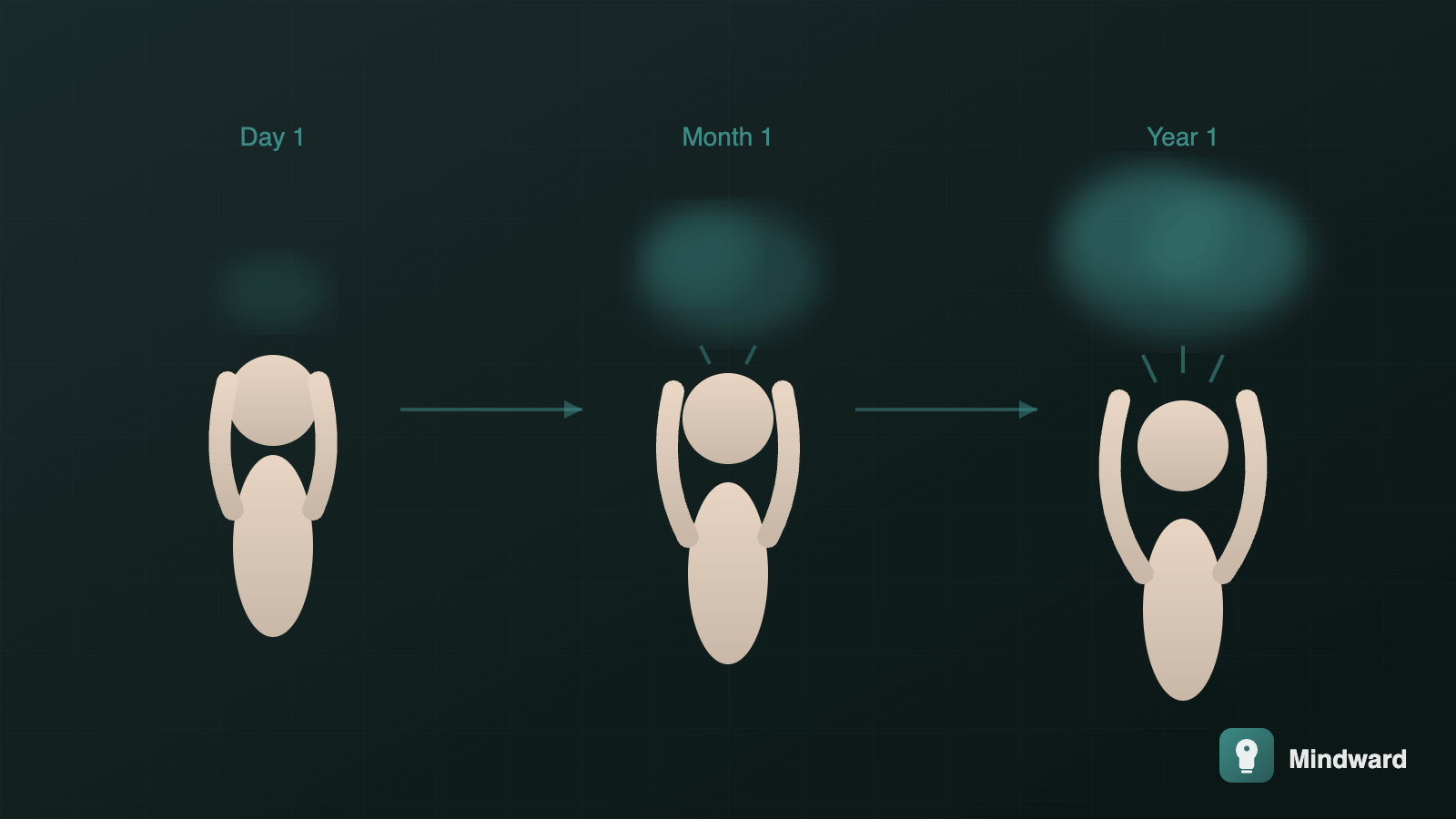
The Hidden Tax on Your Energy
Suppressing emotions isn't passive. It's active, ongoing work. Research in psychology calls this "expressive suppression," and studies consistently show it requires significant cognitive resources to maintain.
Think of it like holding a beach ball underwater. You can do it. But it takes constant pressure, and the moment your attention slips, it surfaces anyway—often with more force than if you'd just let it float.
This is why you can feel exhausted without having "done anything." A significant portion of your mental bandwidth is allocated to a background process you're barely aware of: keeping certain feelings from reaching the surface.
Emotional avoidance doesn't eliminate feelings. It just adds the work of suppression to whatever you were already carrying.
Why It Feels Like the Safer Option
Avoidance persists because it works in the short term. The moment you distract yourself from anxiety, you feel relief. The moment you push down sadness, you can function. The immediate feedback is positive.
But emotions don't dissolve when ignored. They compound. The anxiety you avoided today doesn't disappear—it waits, often growing more diffuse and harder to name. The grief you postponed doesn't expire—it embeds itself in your body, showing up as tension, fatigue, or an irritability you can't quite explain.
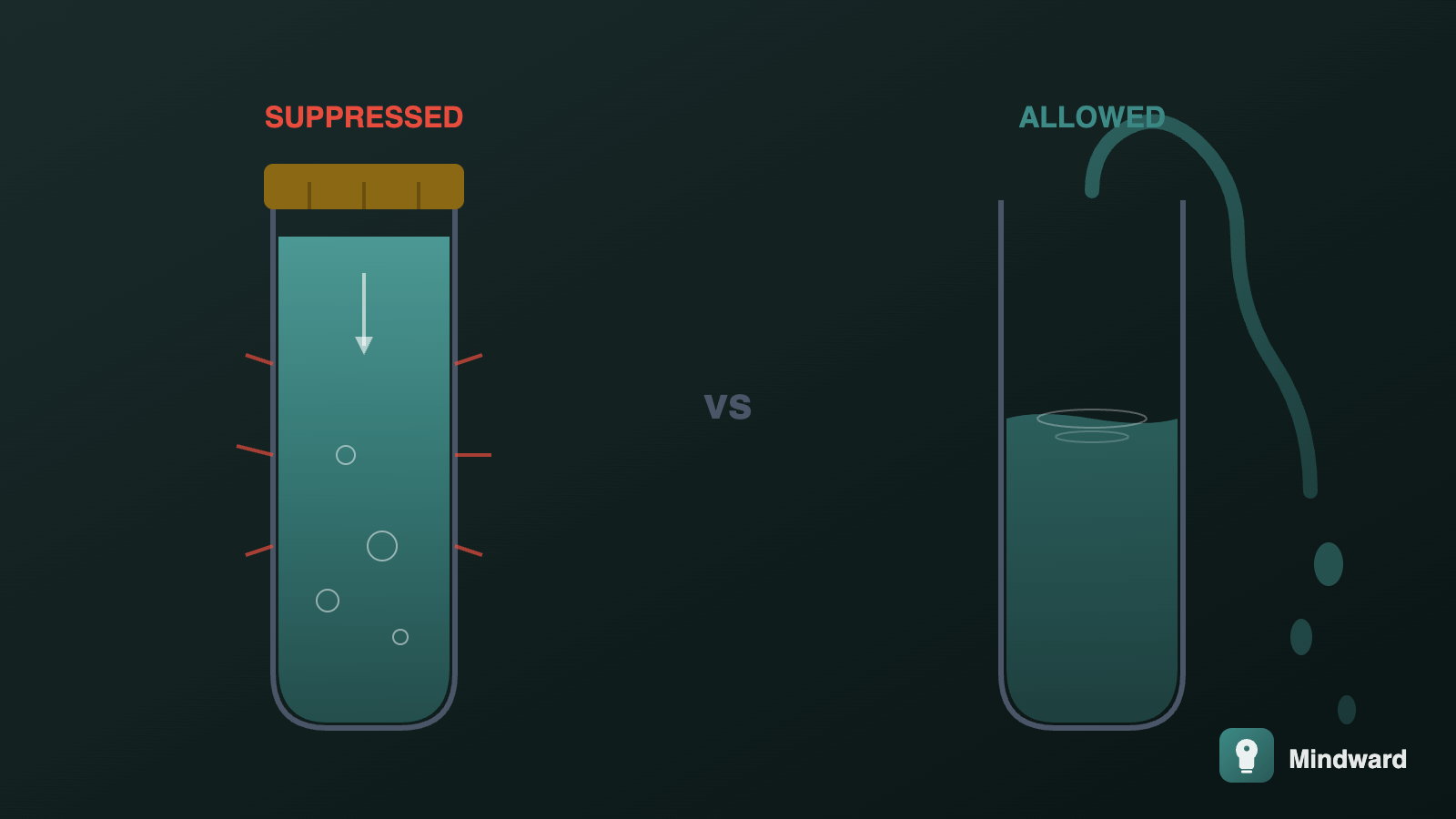
The research on this is clear. A landmark study by James Gross at Stanford found that people who habitually suppress emotions experience more negative feelings over time, not fewer. They also report lower life satisfaction and weaker social connections. The strategy designed to protect them was quietly eroding their wellbeing.
The Difference Between Feeling and Drowning
Here's where it gets nuanced. Feeling your emotions doesn't mean being overwhelmed by them. It doesn't mean crying at work, venting without filter, or letting every feeling dictate your behavior.
There's a space between suppression and flooding—and that's where emotional health lives.
This space is about acknowledgment. It's the internal shift from "I'm not going to think about that" to "I notice I'm feeling something about this." You don't have to act on it. You don't have to solve it. You just have to stop pretending it isn't there.
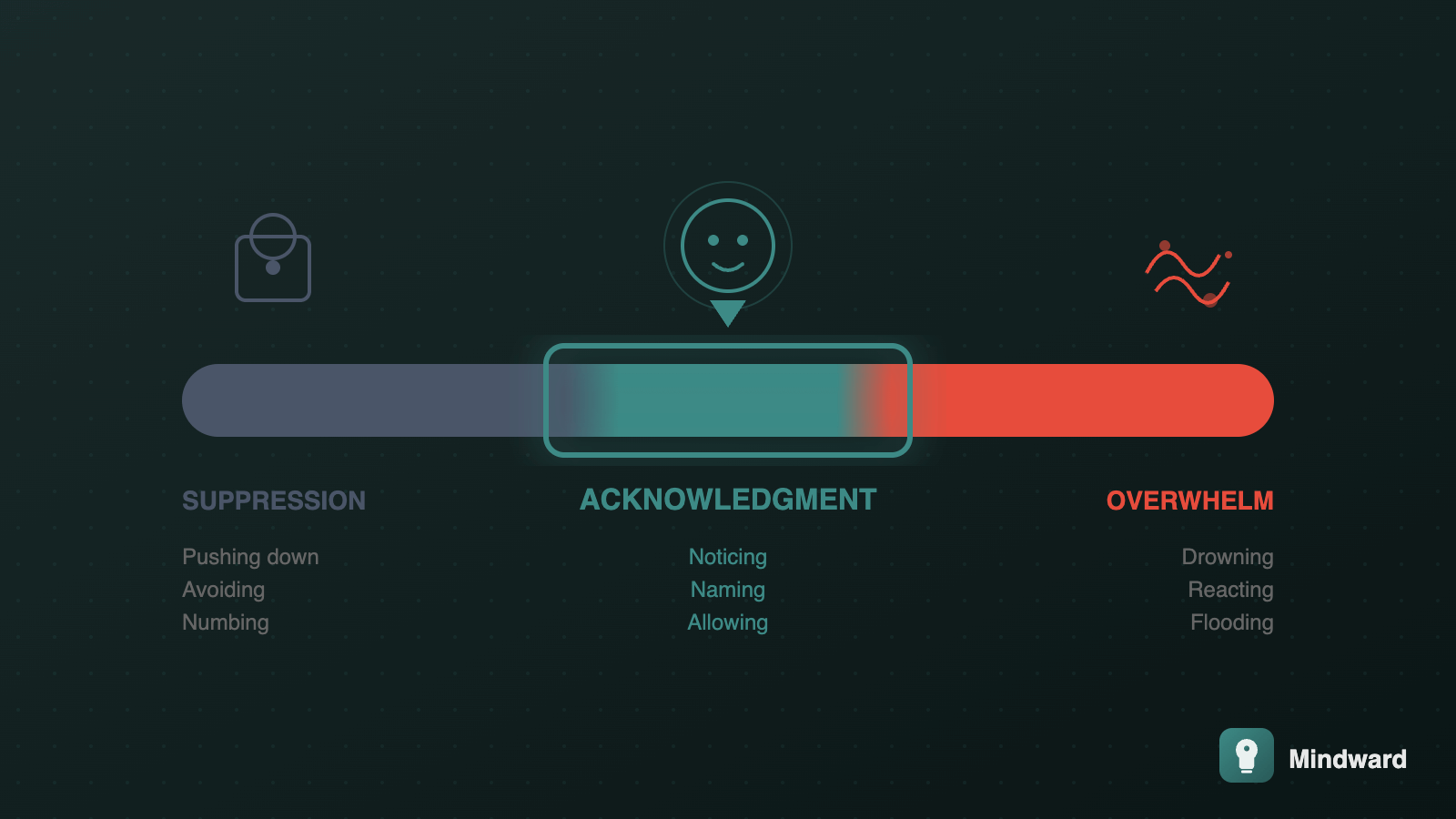
Acknowledging an emotion takes seconds. Suppressing it can take hours of background processing you don't even realize you're doing.
What Allowing Actually Looks Like
Allowing emotions isn't dramatic. It's quiet, brief, and surprisingly simple once you've practiced it a few times.
- Notice the physical sensation. Where do you feel it? Chest, throat, stomach? Just locate it without trying to change it.
- Name it without judgment. "There's anxiety" or "I'm noticing sadness." The naming creates distance—you're observing the emotion rather than being consumed by it.
- Let it be there. This is the counterintuitive part. You don't need to fix it, release it, or transform it. Emotions that are allowed to exist tend to move through faster than emotions that are fought.
- Return to what you were doing. Allowing doesn't mean wallowing. You acknowledged the feeling. Now you continue with your day, but without the extra weight of pretending.
This might take thirty seconds. And those thirty seconds can save you hours of the low-grade drain that comes from suppression.
The Unexpected Freedom
People who learn to allow their emotions often report something surprising: they feel less controlled by their feelings, not more. This seems paradoxical. How does letting yourself feel lead to less emotional reactivity?
Because suppression keeps you in a constant relationship with what you're avoiding. You're always monitoring, always vigilant, always one trigger away from the feeling you've been outrunning. That's not freedom—it's exhausting maintenance.
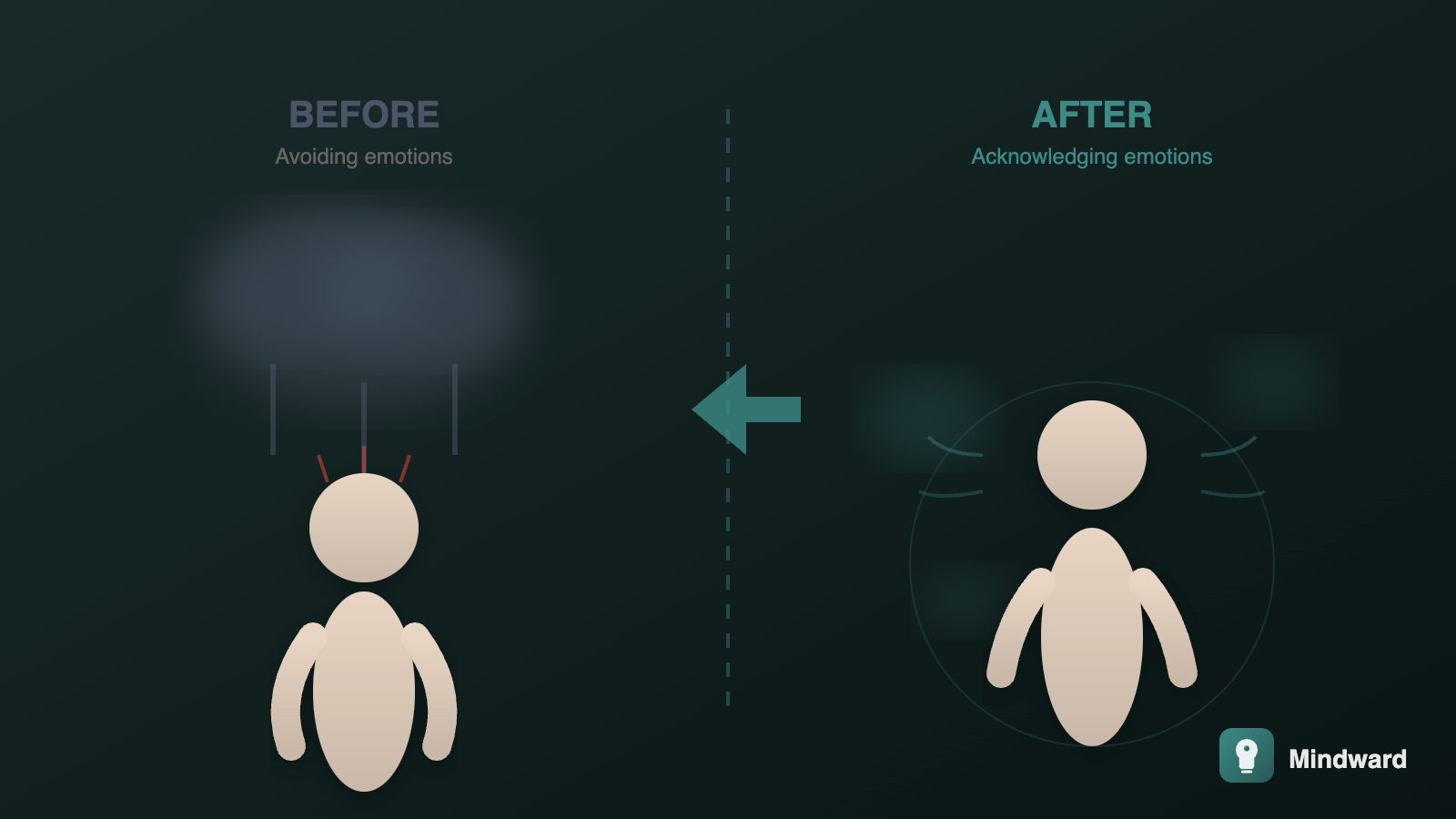
When you allow emotions to exist without resistance, they lose their charge. They become information rather than threats. You can feel anxious and still make a decision. You can feel sad and still show up for your life. The feeling is there, but it's not running the show.
Starting Where You Are
If you've spent years avoiding certain feelings, you won't undo that pattern overnight. And that's fine. This isn't about perfection—it's about reducing the hidden tax on your energy.
Start small. The next time you notice yourself reaching for distraction when a feeling surfaces, pause. Just for a moment. See if you can let the feeling be there for ten seconds before you do anything else.
That's it. Ten seconds of allowing instead of avoiding. It won't feel like much, but it's training a different response—one that costs you less over time.
You've been strong enough to carry the weight of avoidance for years. You're strong enough to set some of it down.


Comments
How did you like this article?
No comments yet. Be the first to share your thoughts!