Why People Stop Telling You Things
When people go quiet, it's rarely random. Usually, they learned that telling you things comes with a cost. Your reactions are training the people around you what's safe to share.
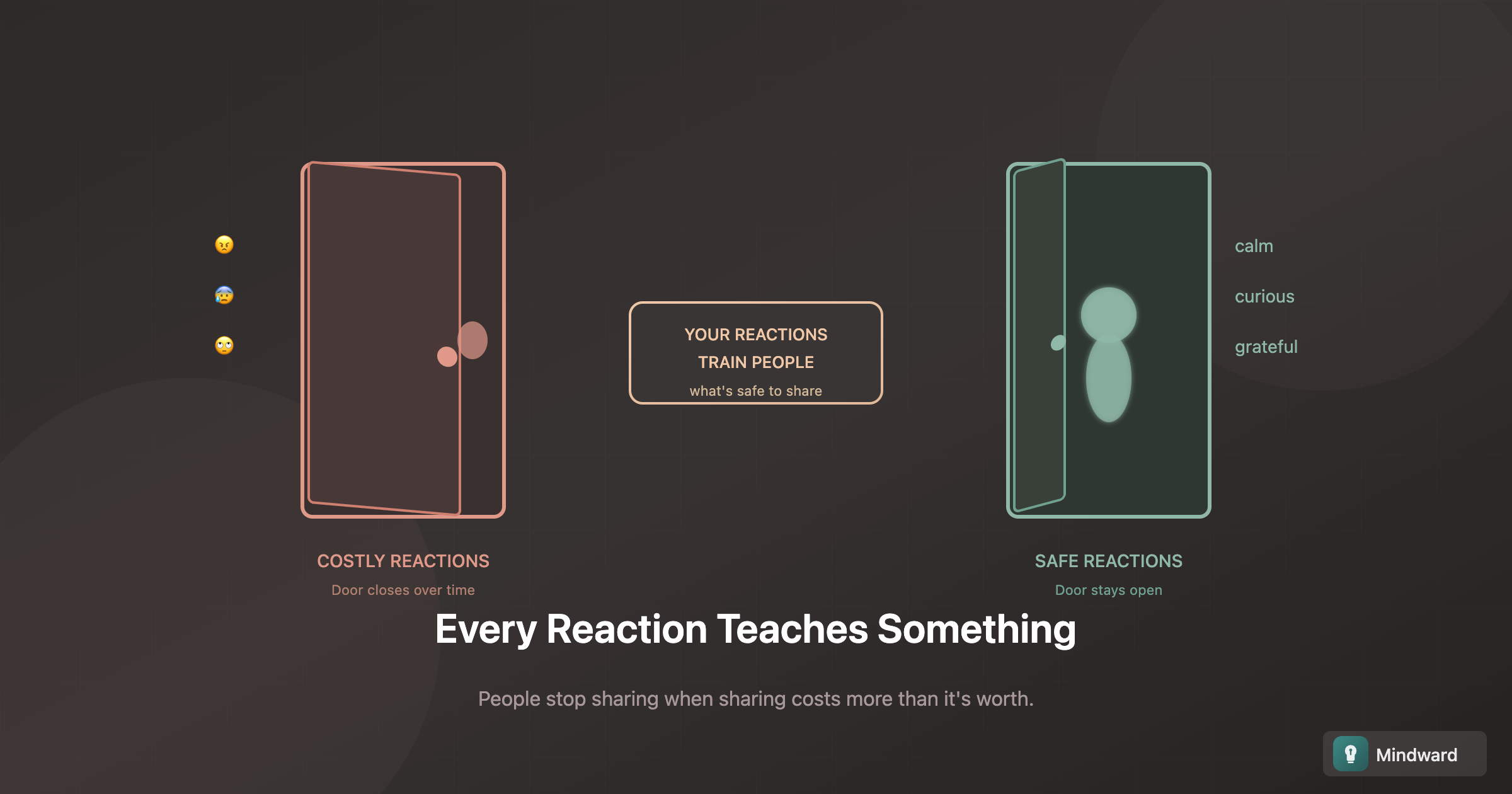
Someone used to tell you things. Now they don't. They share less, mention things later, or you find out from someone else. It feels like they've pulled away—but the distance didn't come from nowhere.
People stop telling you things when telling you things costs more than it's worth. When sharing leads to reactions they don't want to manage. When being honest creates more problems than staying quiet. They learn this from experience—specifically, from how you've responded before.
Your Reactions Are Training
Every time someone tells you something, your reaction teaches them what happens when they share. Get angry at bad news, and they learn bad news isn't safe. Get anxious about their problems, and they learn their problems will become yours to manage. Get defensive about feedback, and they learn feedback isn't welcome.
This training happens whether you intend it or not. You might think you want honesty, but if honesty consistently triggers difficult reactions, people learn to avoid the trigger. They're not being deceptive—they're being rational.
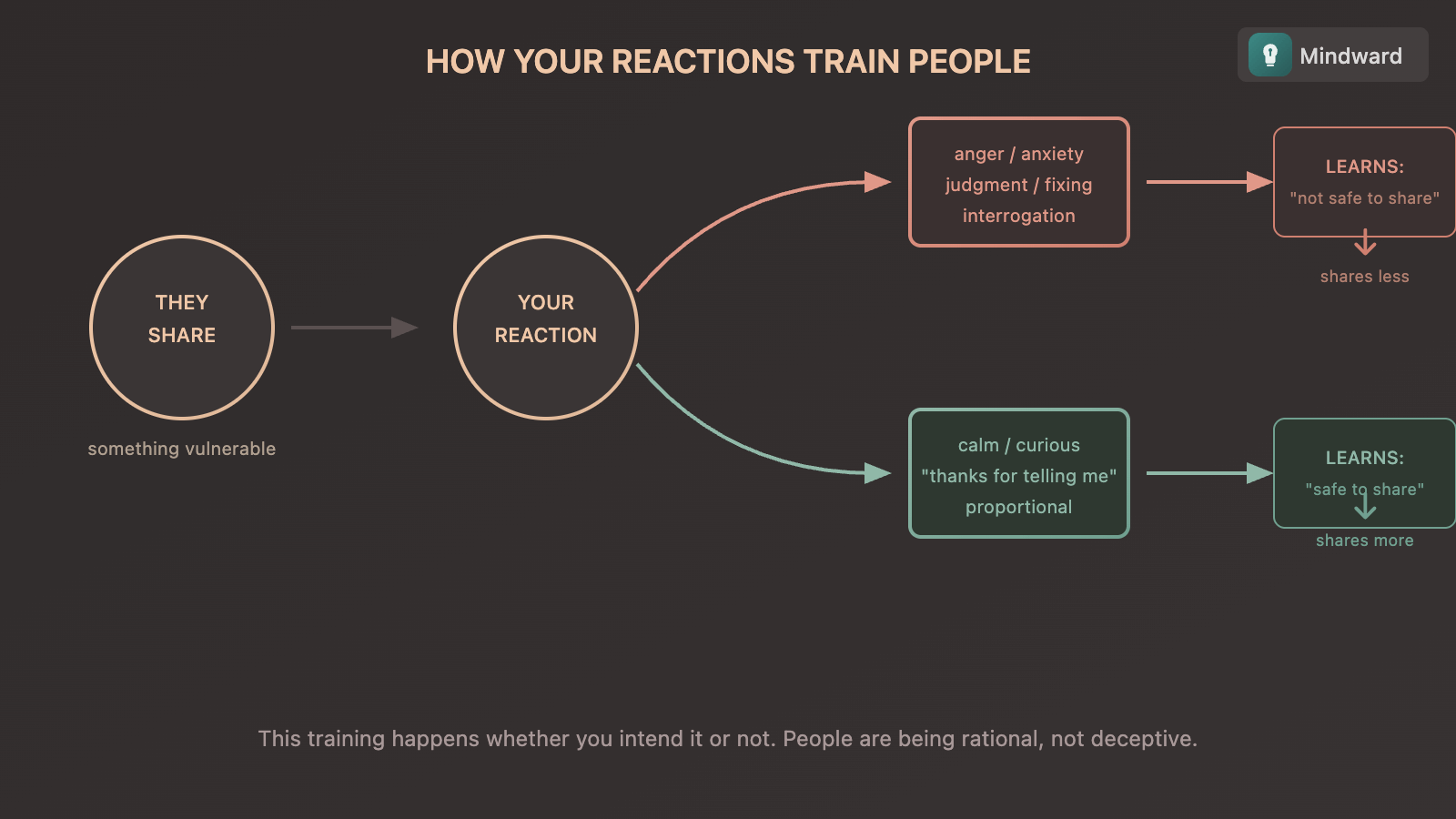
People don't stop sharing because they don't trust you. They stop because experience taught them that sharing has costs.
The Reactions That Close Doors
Some reactions reliably train people to share less. These aren't necessarily wrong—they're often natural responses to difficult information. But natural doesn't mean consequence-free.
- Shooting the messenger: Responding to bad news with anger or blame, even when they're not at fault
- Making it about you: Turning their problem into your anxiety, your feelings, your needs
- Immediate fixing: Jumping to solutions before they've finished talking, signaling their feelings aren't the point
- Interrogation: Responding to vulnerability with questions that feel like cross-examination
- Disproportionate reactions: Small admissions triggering big emotional responses
None of these responses means you're a bad person. Most come from caring—you're worried, you want to help, you're invested in the outcome. But caring that manifests as difficult-to-manage reactions still trains people that sharing is costly.
What Safe Feels Like
Being someone people tell things to isn't about never having reactions. It's about making your reactions something they can handle—predictable enough to trust, regulated enough to not become their problem.
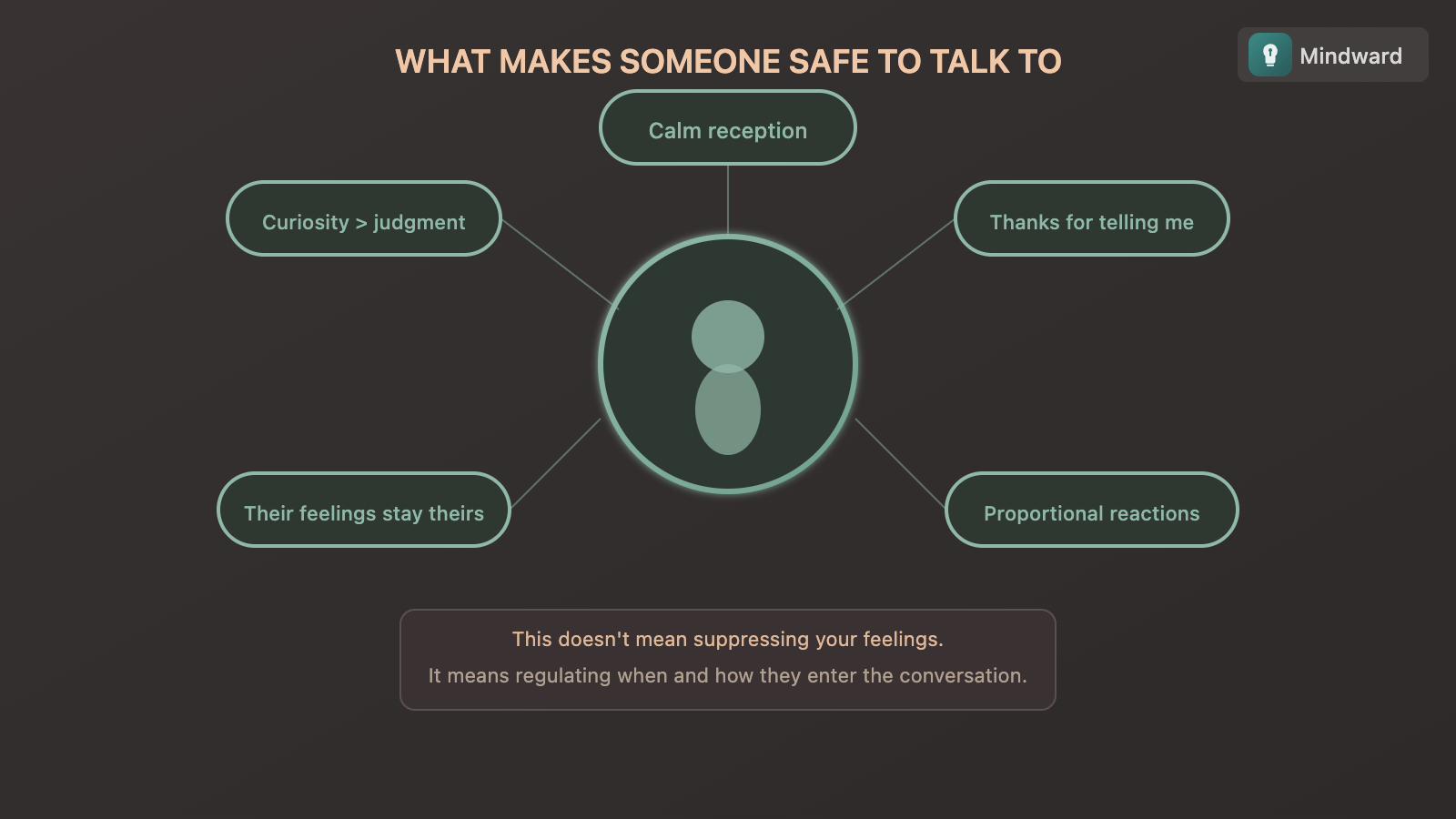
- Calm reception: Taking information in without immediate emotional escalation
- Curiosity over judgment: 'Tell me more' instead of 'Why would you do that?'
- Their feelings stay theirs: You can care without making your feelings the new problem to manage
- Gratitude for honesty: 'Thanks for telling me' as a genuine first response
- Proportional reactions: Small things get small responses; big things get measured ones
This doesn't mean suppressing your feelings. It means regulating when and how they enter the conversation. You can have a big reaction later—after they've felt heard, after the moment of sharing has been safe.
Repairing the Pattern
If someone has already learned that telling you things is costly, that pattern won't reverse automatically. Trust that's been trained away has to be trained back—through consistent evidence that sharing is safe now.
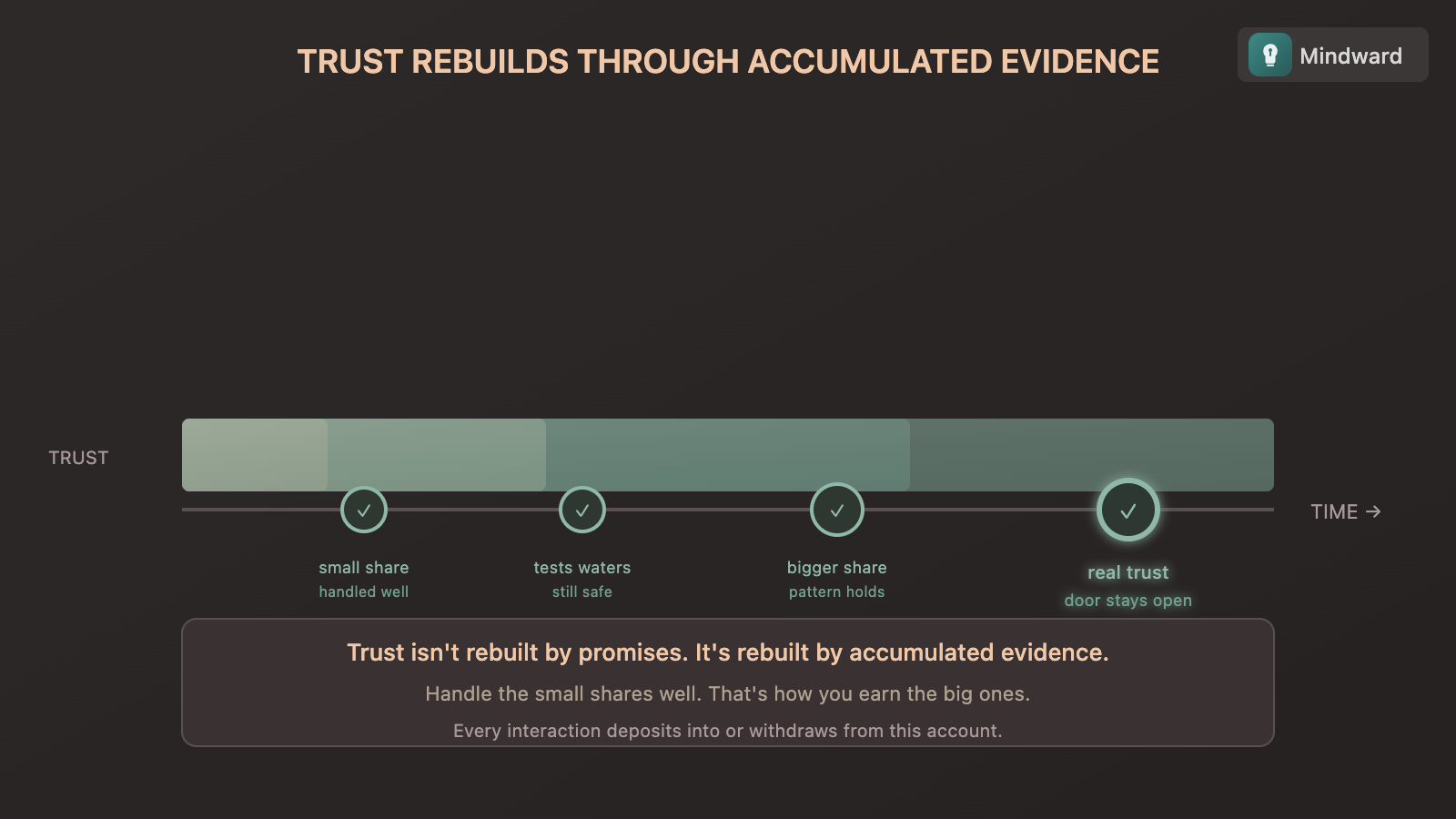
This means noticing opportunities to respond differently. The small things they do share—handle those well. When they test the waters with minor admissions, make those interactions easy. You're building a track record that counters the old one.
You can also name the pattern directly: 'I realize I haven't always made it easy to tell me things. I'm working on that.' This isn't about grand apologies—it's about signaling that you're aware and trying.
Trust isn't rebuilt by promises. It's rebuilt by accumulated evidence that this time is different.
The Long Game
Being someone people tell things to is a long-term investment. Every interaction either deposits into or withdraws from that account. The goal isn't to never have reactions—it's to make honesty consistently less costly than silence.
When people tell you hard things, that's a form of trust. They're betting that sharing is worth the risk. How you respond determines whether that bet pays off—and whether they'll make it again.
The information you most need to hear is often the information that's hardest to share. If you want access to it, you have to make sharing it safe. Your reactions are the key that either opens or closes that door.


Comments
How did you like this article?
No comments yet. Be the first to share your thoughts!