Saying Less Often Lands More
More words don't mean more clarity. Sometimes the most powerful thing you can say is less.
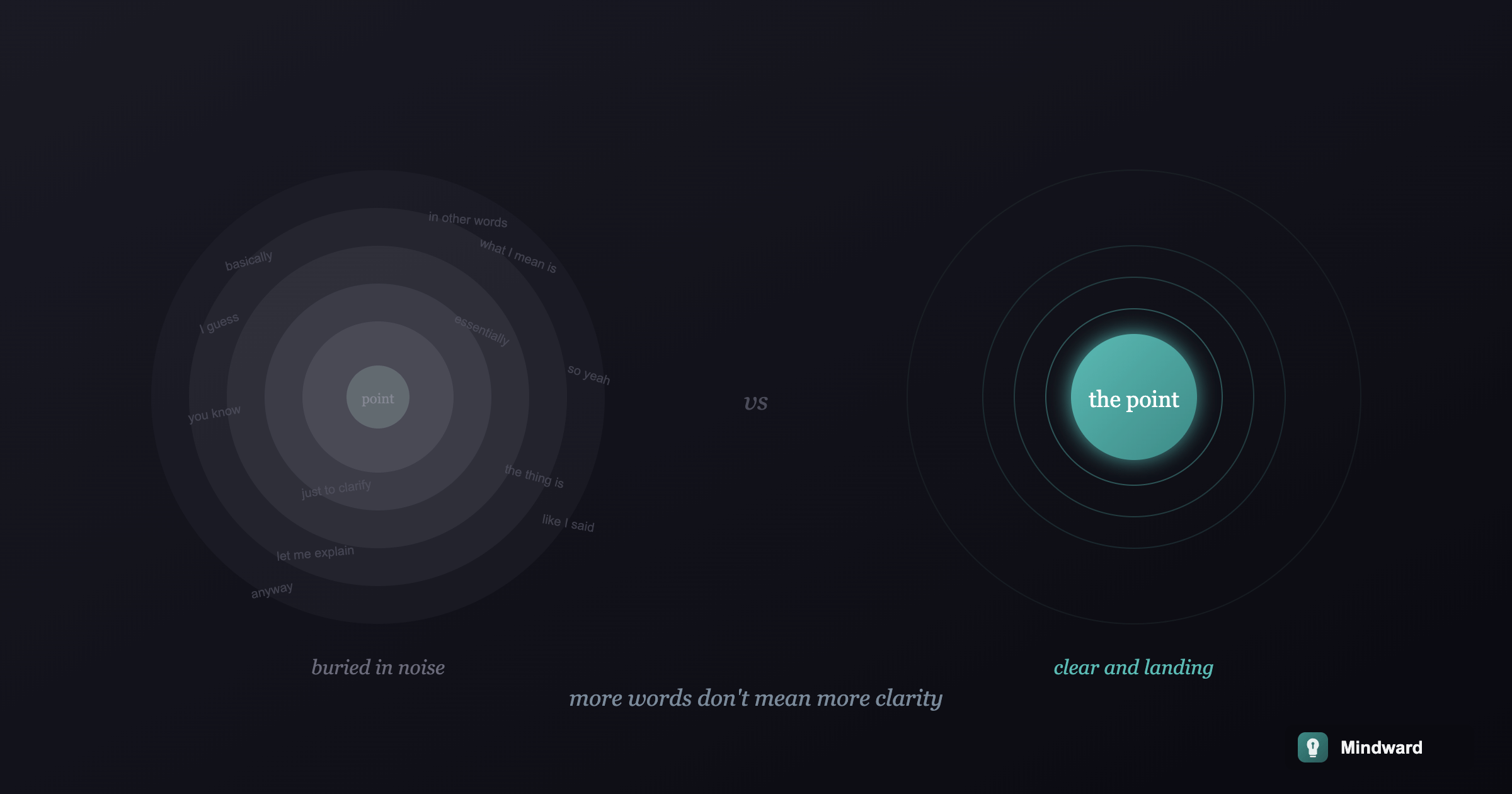
You had something important to say. So you said it. And then you kept going—adding context, clarifying, reinforcing, explaining why you said what you said. By the time you finished, the thing you wanted them to hear was buried under everything else.
This is one of the most common ways communication fails. Not because the message was wrong, but because it was drowned by the messenger.
More words feel like more clarity. They're usually the opposite.
Why We Over-Explain
The instinct to keep talking comes from a reasonable place. You want to be understood. You're afraid your point won't land, so you prop it up with more words, more angles, more justification.
There's also anxiety underneath. Silence after you speak can feel like rejection. If you keep talking, you delay the moment of judgment. You fill the space before they can disagree.
But here's what happens: every word after your point dilutes it. You're not adding—you're subtracting. The more you explain, the less they remember. The core message gets lost in the noise you built around it.

The Weight of Brevity
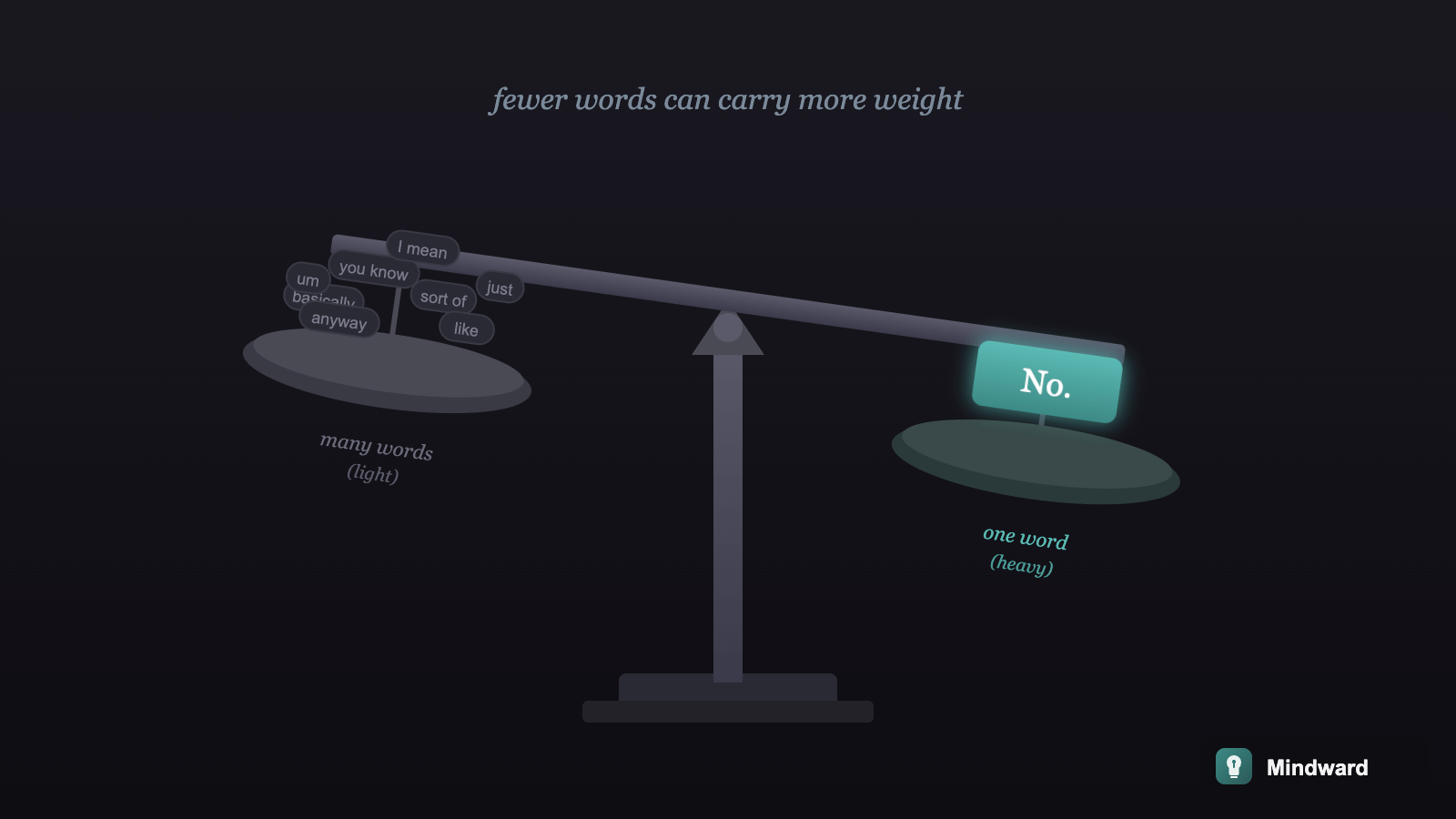
Short statements carry weight precisely because they're short. They signal confidence. They suggest that you trust the listener to understand without hand-holding. They leave room for the message to breathe.
Think about the phrases that have stayed with you—the feedback that changed how you saw yourself, the advice that actually landed. Chances are, they weren't paragraphs. They were sentences. Sometimes fragments.
Brevity earns attention. When someone consistently speaks with economy, people lean in. They know the words are chosen, not automatic. Every sentence matters because not every thought becomes one.
Brevity isn't about withholding. It's about trusting your point to stand without scaffolding.
What You Leave Out Creates Space
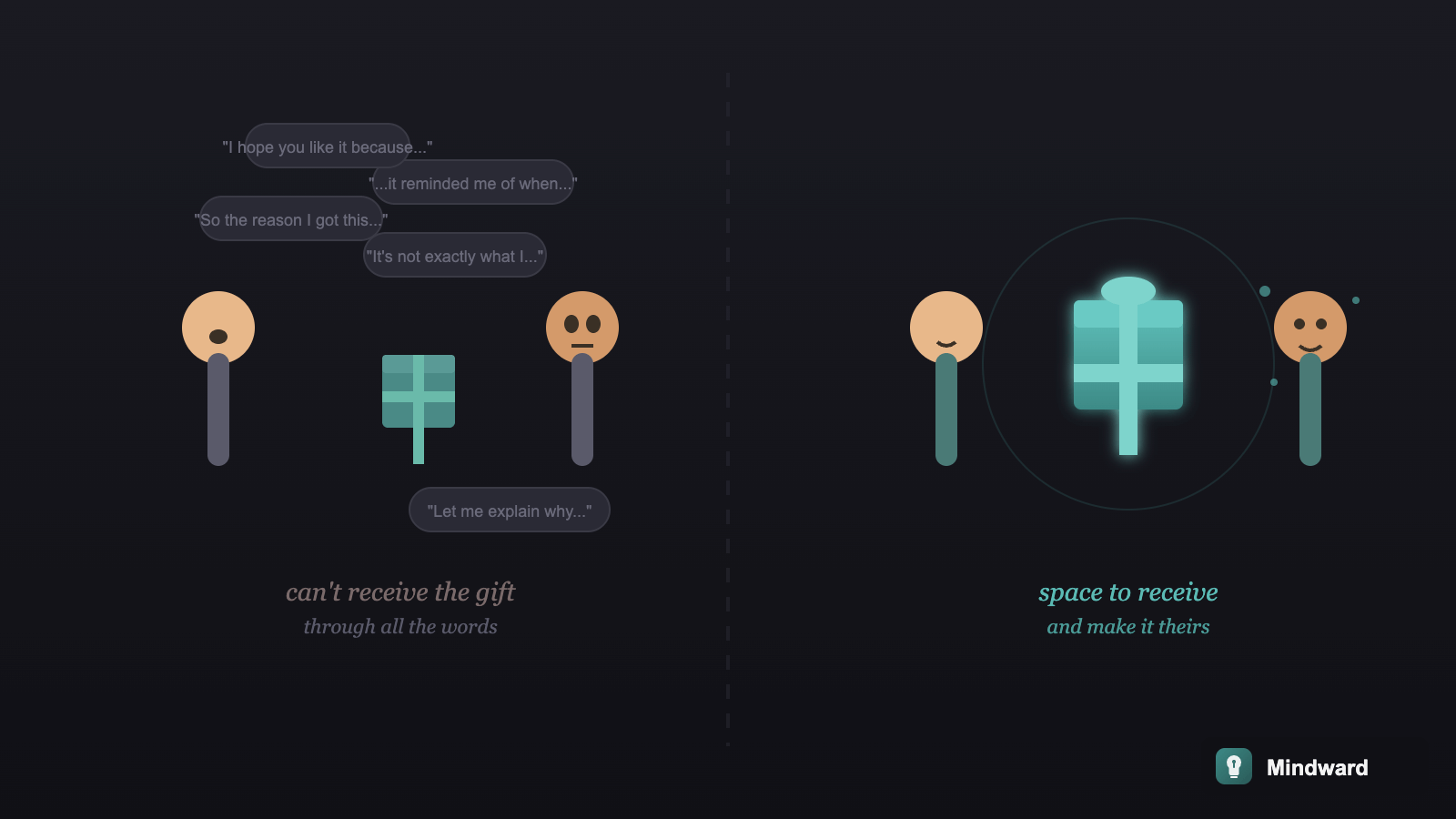
When you stop talking, something important happens: the other person gets to think. They process. They connect your words to their own experience. They make it theirs.
Over-explaining robs them of that space. It tells them exactly what to think, which often triggers resistance. People don't like being led by the hand—they like arriving somewhere themselves.
The gap you leave isn't empty. It's an invitation. It says: I've given you something—now it's yours to hold.
The Discipline of Fewer Words
Speaking less isn't natural for most people. It requires restraint—catching yourself mid-justification and stopping. Tolerating the discomfort of silence. Trusting that you've said enough.
One practical approach: say what you need to say, then pause. Don't fill the pause. Let it sit. If clarification is actually needed, the other person will ask. Often, they won't—because you were already clear.
Another: before you speak, ask yourself what you actually want to communicate. Not everything you're thinking—just the one thing that matters. Lead with that. See if you even need the rest.
Editing isn't just for writing. Your speech benefits from the same discipline—cutting what's unnecessary so what's essential can land.
When Less Changes the Dynamic
In difficult conversations, brevity becomes even more powerful. When emotions are high, walls go up. Long explanations feel like attacks. Defenses activate.
But a short, clear statement can slip past the defenses. It doesn't overwhelm. It gives the other person room to respond rather than react. It de-escalates by refusing to escalate.
This doesn't mean being cold or withholding. It means respecting the weight of the moment by not overloading it. The fewer words you use, the more each one can carry.
Earning the Right to Be Heard
People who speak less are heard more. Not because they're withholding, but because when they do speak, it matters. They've built a reputation for signal over noise.
You don't earn this overnight. It's a practice—a gradual shift from filling space to choosing what fills it. Over time, people start to listen differently. They know your words are considered.
The goal isn't to say little. It's to say only what needs to be said—and trust that it's enough.
You don't need more words to be understood. You need the right ones. And often, there are fewer of those than you think.
Say less. Mean more. Let it land.


Comments
How did you like this article?
No comments yet. Be the first to share your thoughts!