Why Explaining Yourself More Doesn't Help
They're not getting it. So you explain again—more detail, different angle, clearer words. Still nothing. The problem isn't your explanation. It's that explanation isn't what's needed.
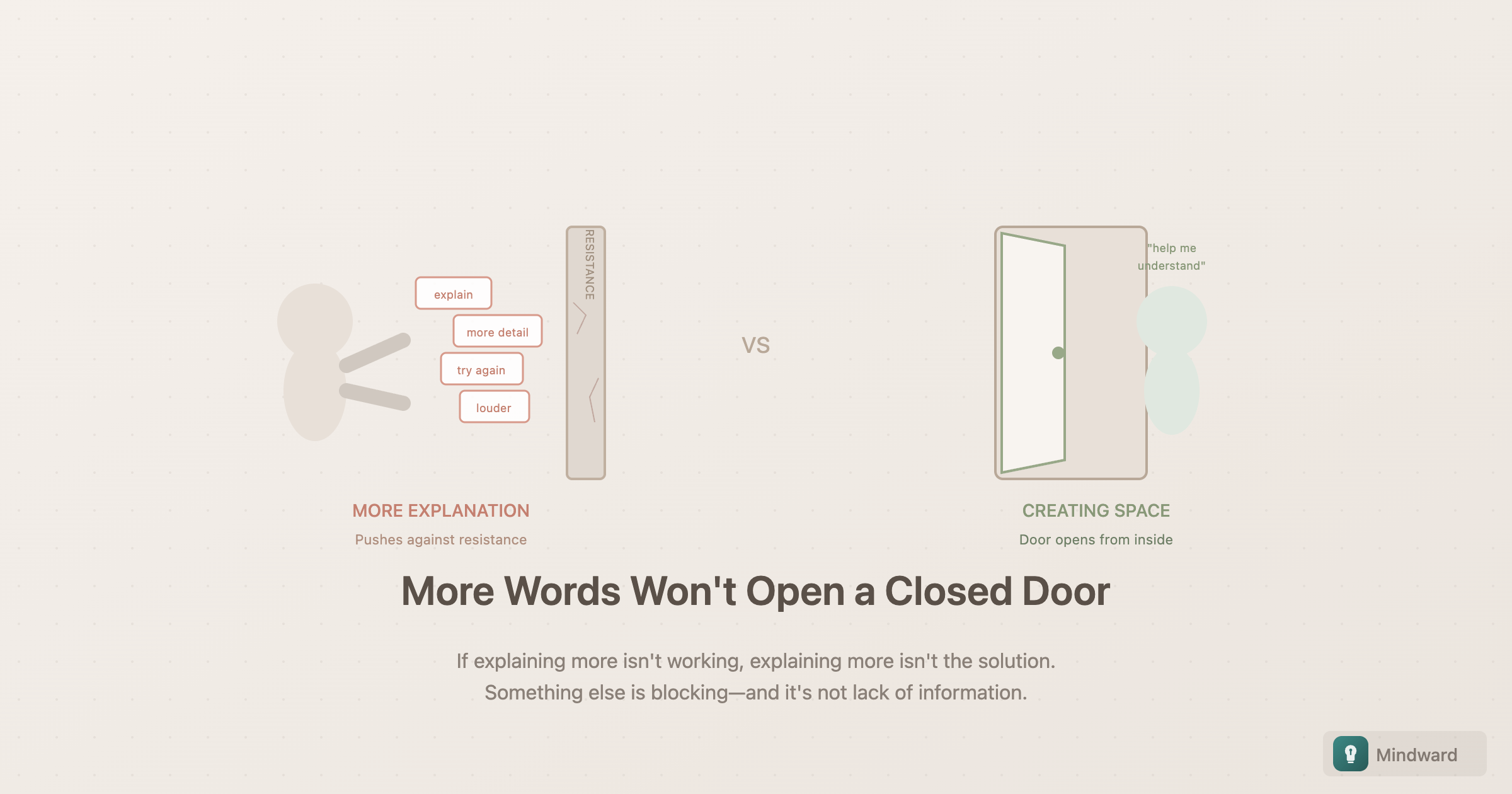
You said something. They didn't get it. So you said it again, differently. Still confused—or worse, they pushed back. So you tried once more, with more detail, more context, more precision. Now they're frustrated, you're frustrated, and somehow understanding is further away than when you started.
This pattern is so common it feels inevitable. But it's not a communication problem in the way you think. The issue isn't that you haven't found the right words yet. It's that words aren't what's blocking understanding.
The Explanation Instinct
When someone doesn't understand us, our instinct is to explain harder. More information, better analogies, clearer logic. We assume the problem is informational—they're missing data, and if we supply it, comprehension will follow.
Sometimes that's true. Sometimes people genuinely lack context and a good explanation solves everything. But often—especially in charged conversations—the block isn't informational at all. It's emotional, relational, or positional. And no amount of explaining fixes those.
If explaining more isn't working, explaining more probably isn't the solution.
What's Actually Blocking
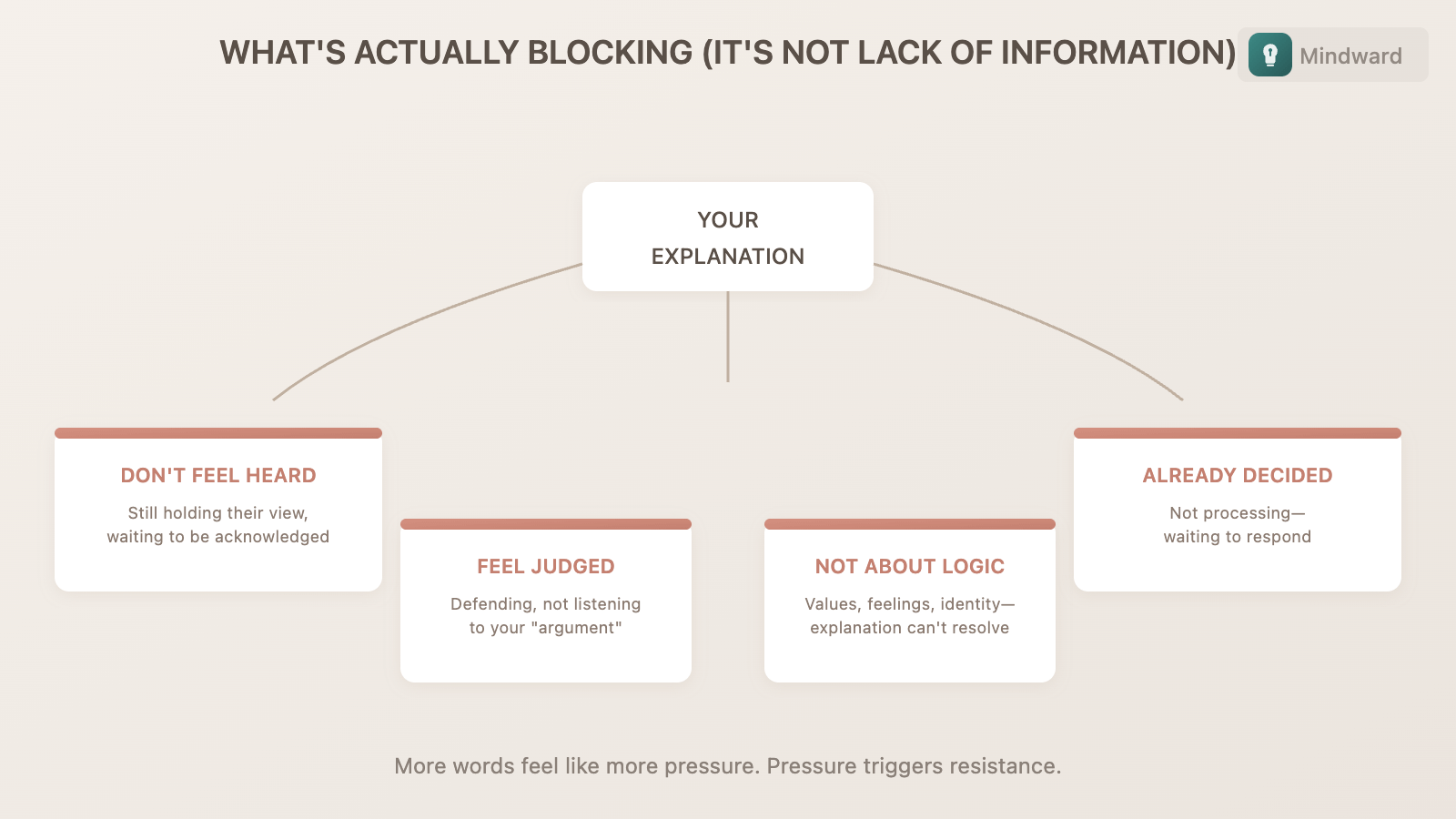
When someone can't hear your explanation, something else is usually in the way. Recognizing what's blocking is the first step to actually getting through.
- They don't feel heard yet: They're still holding their own perspective, waiting for acknowledgment before they can take in yours
- They feel judged: Your explanation feels like an argument for why they're wrong, so they're defending rather than listening
- It's not about logic: The disagreement is about values, feelings, or identity—things explanation can't resolve
- They've already decided: They're not processing your words; they're waiting to respond
- The relationship is strained: Trust is low enough that your words are filtered through suspicion
In each case, more explanation doesn't address the actual obstacle. It often makes it worse—more words feel like more pressure, more insistence that they should see it your way.
The Loudness Trap
There's a version of this that's almost physical. When people don't understand, we instinctively get louder. Not necessarily in volume—though sometimes that too—but in intensity. We emphasize more, repeat more, insist more.
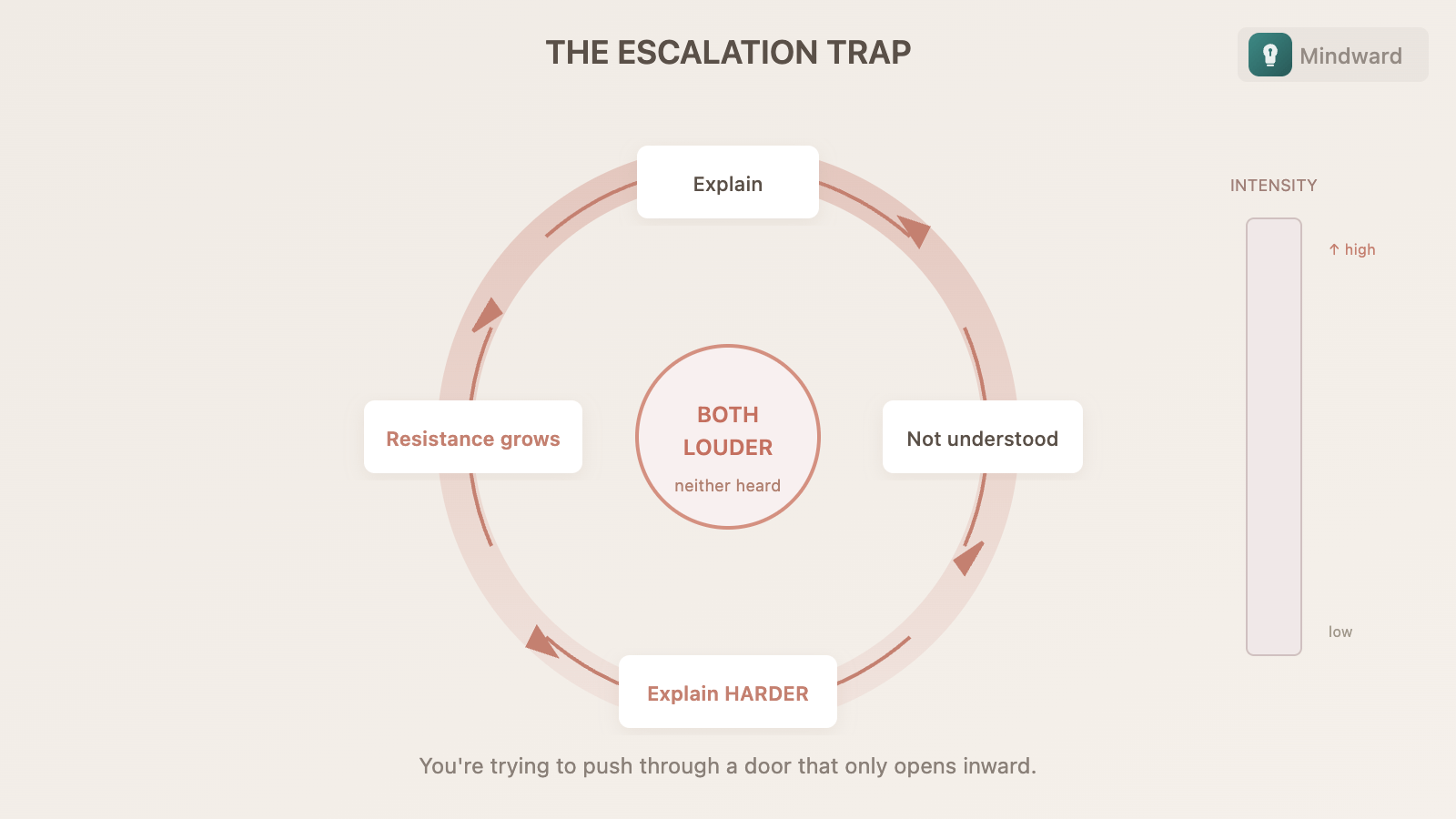
But intensity registers as pressure. And pressure triggers resistance. The more forcefully you explain, the more they brace against it. You're trying to push through a door that only opens inward.
This is why arguments escalate. Both people are explaining harder, neither is being heard, and the increased effort on both sides just raises the stakes without moving anything forward.
What to Do Instead
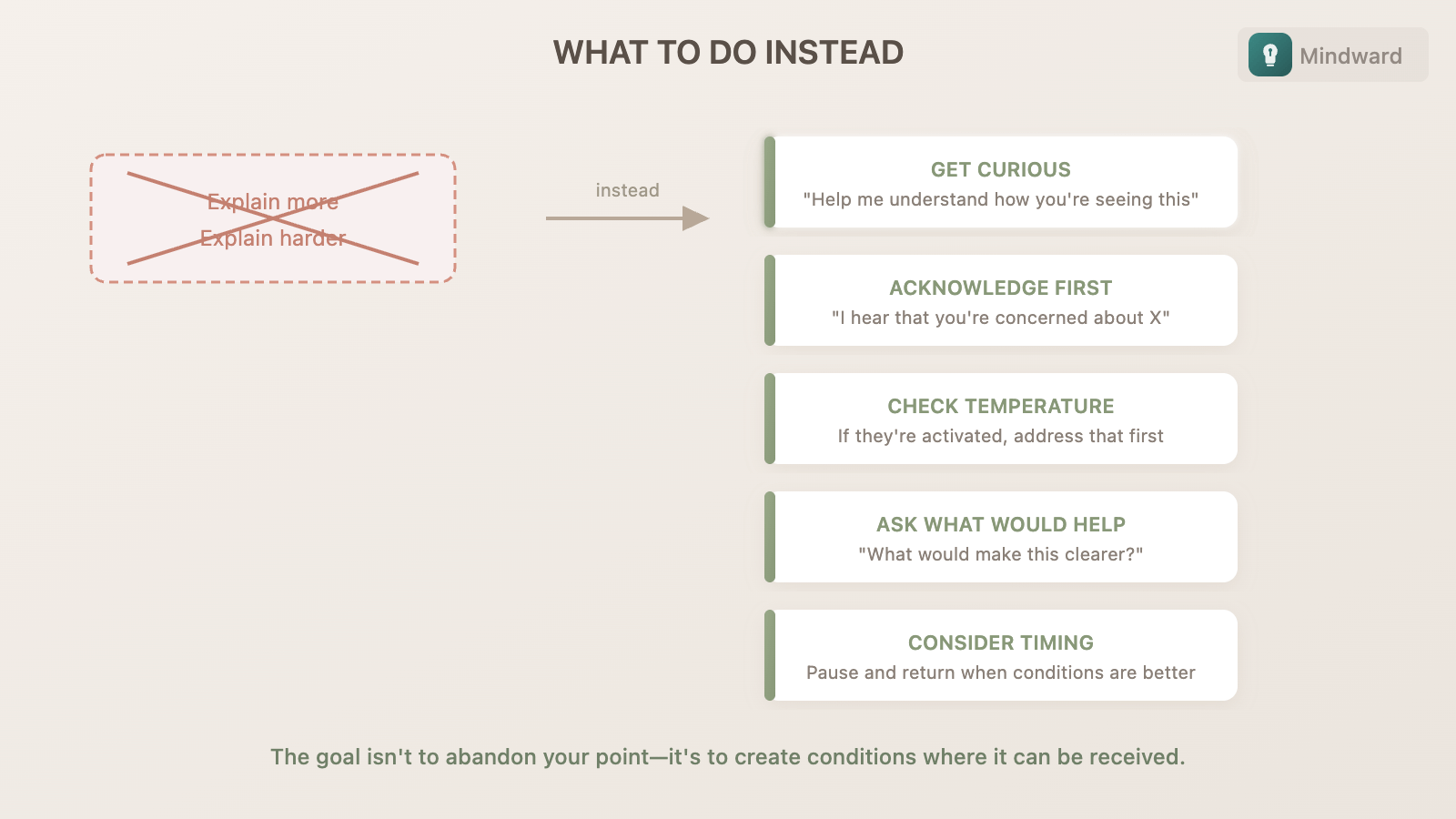
When explaining isn't working, stop explaining. Not permanently—but long enough to address whatever is actually in the way.
- Get curious about their view: 'Help me understand how you're seeing this' does more than another round of your perspective
- Acknowledge before advancing: 'I hear that you're concerned about X' creates space that explanation never can
- Check the emotional temperature: If they're activated, no explanation lands. Address the activation first
- Ask what would help: 'What would make this clearer?' puts them in problem-solving mode instead of defense mode
- Consider timing: Sometimes the best move is to pause and return when conditions are better
The goal isn't to abandon your point. It's to create conditions where your point can actually be received. That usually requires doing something other than explaining.
When You're the One Not Getting It
This works in reverse too. When someone keeps explaining to you and it's not landing, consider what might be blocking on your end. Are you actually listening, or waiting to respond? Do you feel judged? Is there something you need acknowledged before you can hear them?
Sometimes saying 'I want to understand, but I'm having trouble taking it in right now' is more honest and more productive than pretending to listen while your defenses are up.
Understanding requires reception, not just transmission. Both people have to create the conditions for it.
The Patience of Being Understood
Being understood often takes longer than we want. It requires waiting for the right moment, reading what's actually blocking, and being willing to do the relational work that pure explanation skips.
But the alternative—explaining harder until everyone is exhausted—doesn't actually get you understood. It just gets you louder. And loud isn't the same as heard.
Next time your explanation isn't landing, resist the urge to explain more. Get curious about what's actually in the way. You might find that the path to being understood runs through listening first.


Comments
How did you like this article?
No comments yet. Be the first to share your thoughts!