Why People Don't Take Your Advice (Even When You're Right)
You gave good advice. They ignored it. The problem isn't your advice—it's the order of operations. Understanding before solutions isn't just kind; it's the only thing that works.
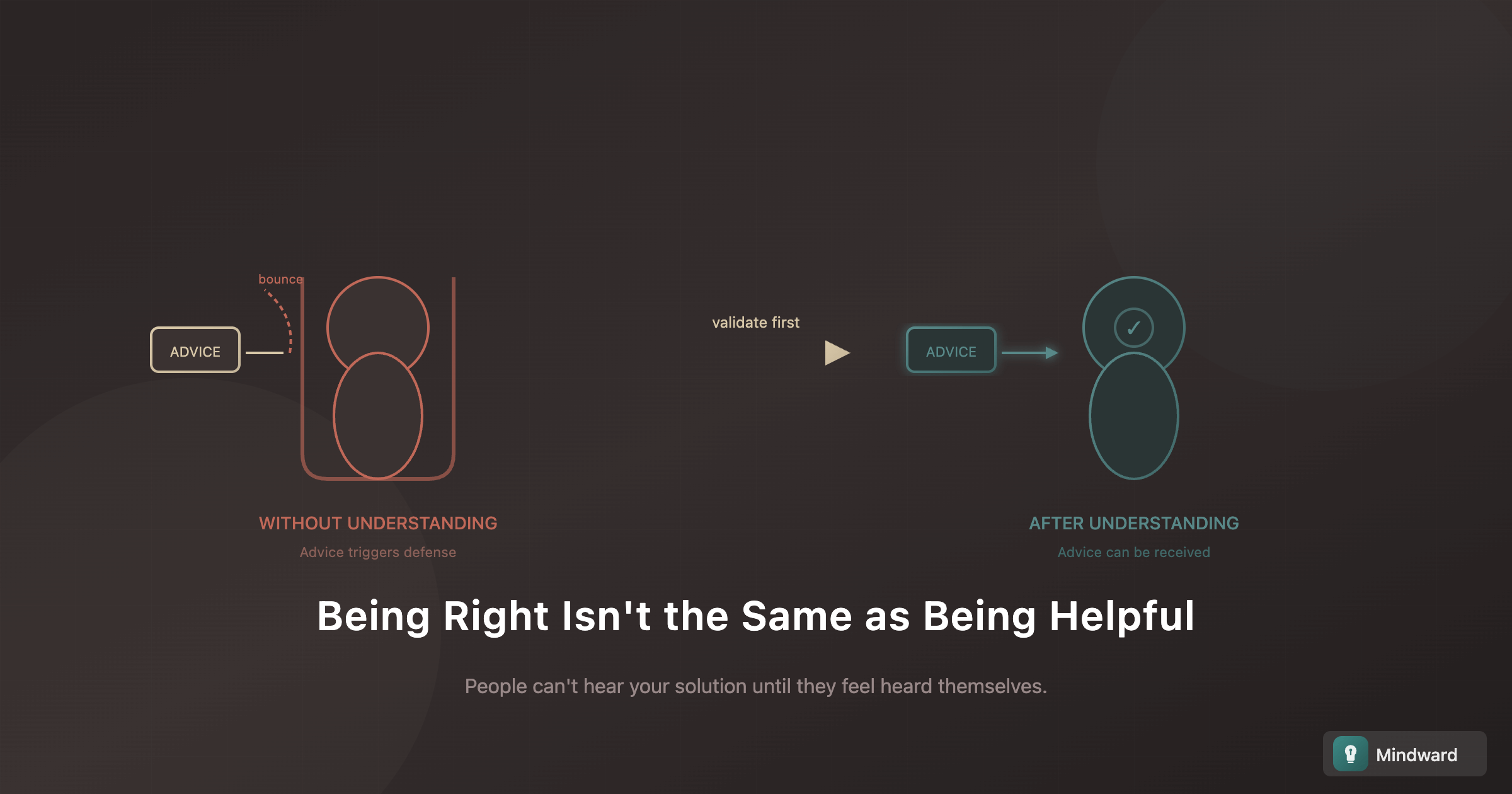
They came to you with a problem. You saw the solution clearly—maybe instantly. You told them what to do. And they did something else entirely. Or nothing at all. Or they got defensive and stopped talking.
It's maddening. You were right. The advice was good. Why didn't they take it? The answer isn't that they're stubborn or irrational. It's that you skipped a step—the step that makes advice possible to receive.
The Problem With Jumping to Solutions
When someone shares a problem, they're usually not ready to hear solutions. They're still in the problem—feeling it, processing it, needing it witnessed. Advice at this stage doesn't land as helpful. It lands as dismissive.
Even when you're right—especially when you're right—premature advice communicates something unintended: I don't need to understand your situation. The answer is obvious. Why haven't you figured this out already?
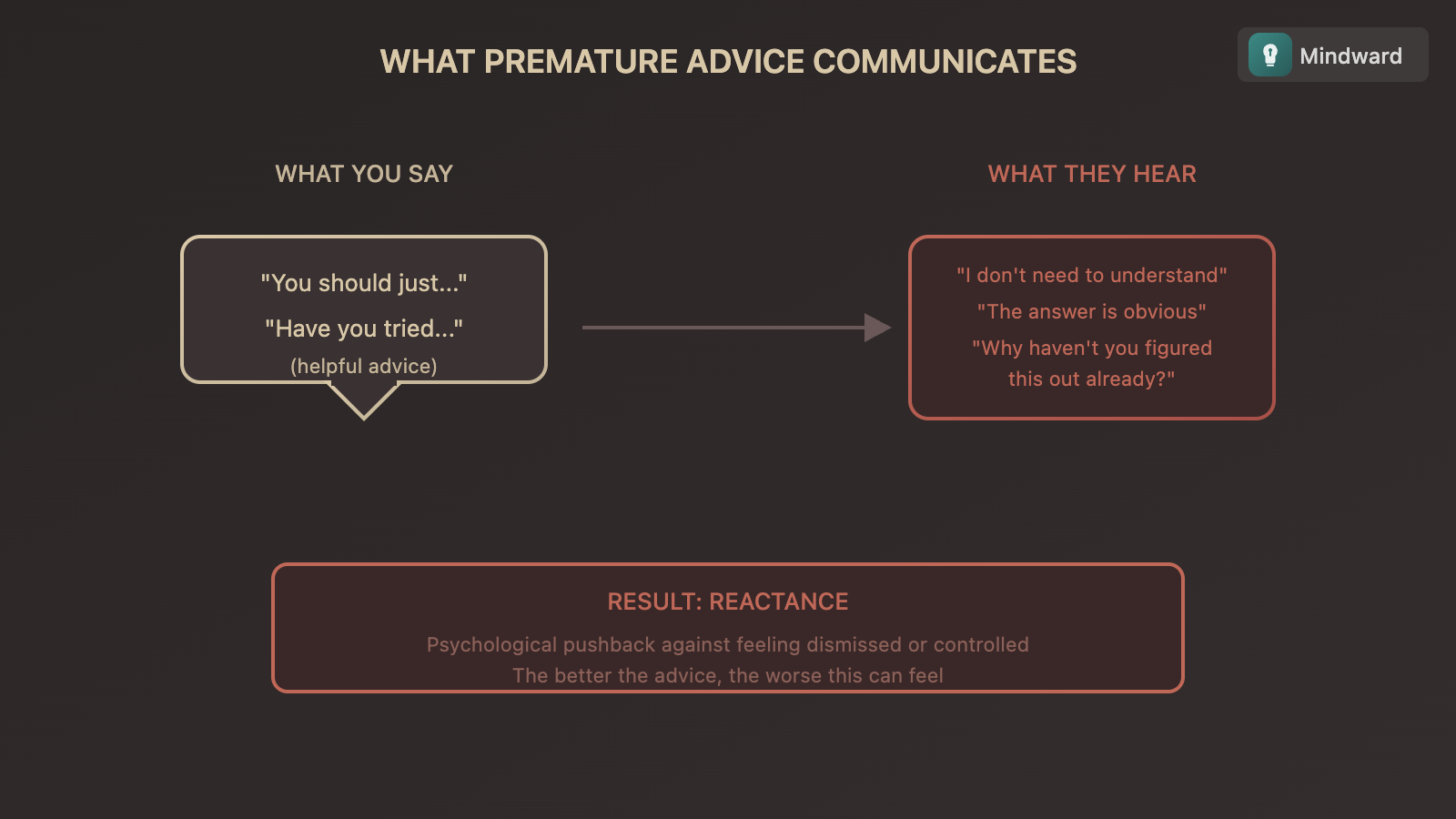
People can't hear your solution until they feel heard themselves. Understanding isn't a detour to helping—it's the prerequisite.
Why Validation Comes First
Validation means acknowledging someone's experience as real and understandable—not agreeing with everything they think or do, but recognizing that their feelings make sense given their situation.
When people feel validated, their defenses drop. They're no longer spending mental energy wondering if you get it, if you're judging them, if you think they're overreacting. That energy becomes available for actually considering what you have to say.
Without validation, advice triggers reactance—the psychological pushback against feeling controlled or dismissed. The better your advice, the more it can feel like an attack: You're telling me the answer is simple, which means you think I'm stupid for not seeing it.
What Validation Actually Sounds Like
Validation isn't agreeing. It isn't even sympathy. It's demonstrating that you understand what they're experiencing and why it makes sense that they're experiencing it.
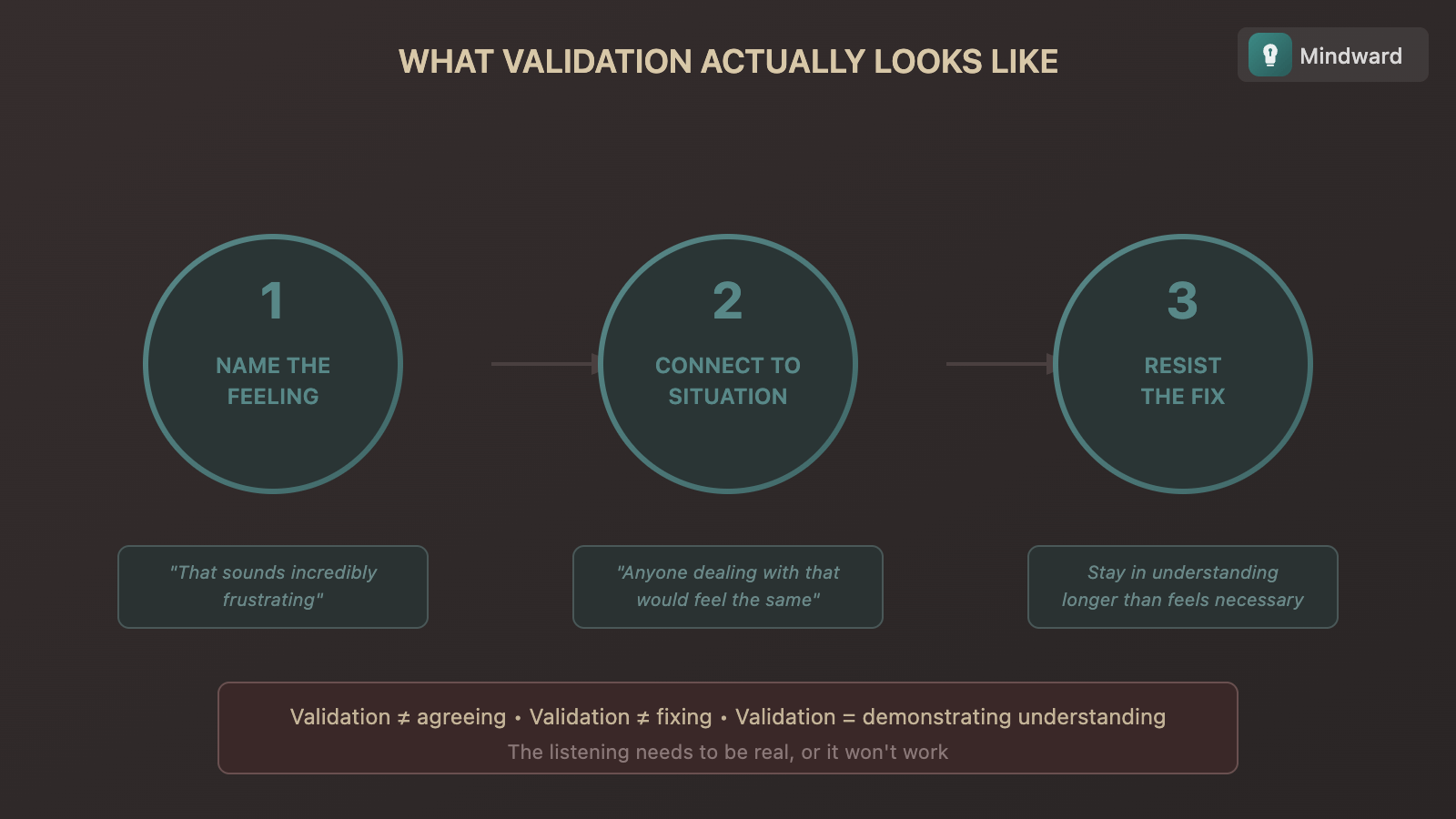
- Name what they're feeling: 'That sounds incredibly frustrating' or 'No wonder you're exhausted'
- Connect it to their situation: 'Anyone dealing with that would feel the same way'
- Resist the fix: Stay in understanding mode longer than feels necessary—it's probably the right amount of time
The goal isn't to perform validation as a technique to get them to listen to you. It's to actually understand their experience. The listening needs to be real, or it won't work.
The Order of Operations
There's a sequence that makes advice work: First understand, then validate, then (maybe) advise. Most people reverse this—they lead with solutions because they want to help and they can see the answer. But leading with solutions skips the steps that make receiving help possible.
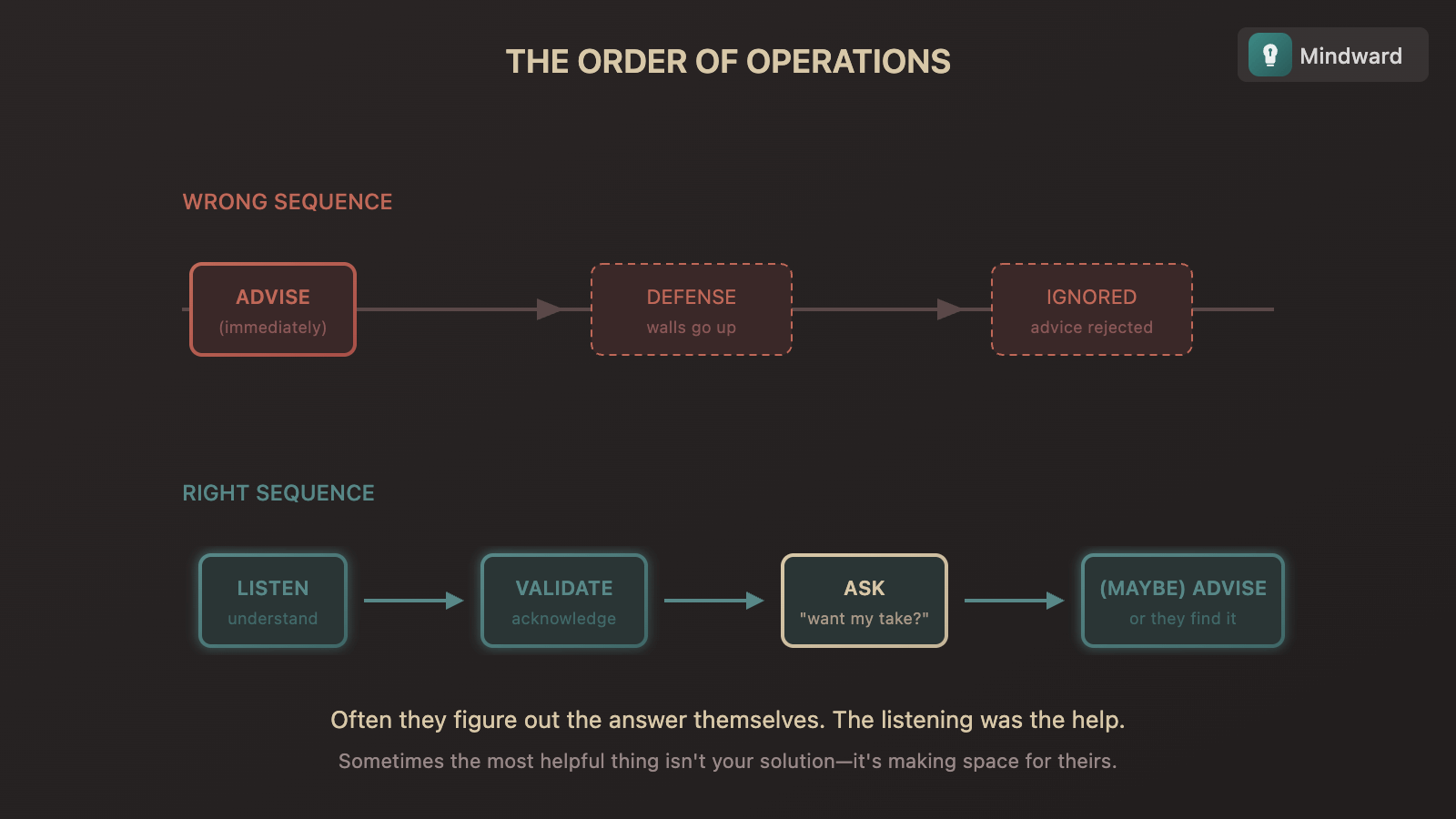
After you've understood and validated, something important happens: often they figure out the answer themselves. The act of being heard creates space for their own thinking. You didn't need to give advice at all—you needed to create conditions where they could find their own way.
And when they do want advice, they're now able to hear it. They're not defending against you. They're not feeling dismissed. They're genuinely curious what you think because they trust you understand the situation.
Sometimes the most helpful thing isn't your solution. It's making space for them to find theirs.
Ask Before You Advise
Here's a practical tool: after you've listened and validated, ask if they want your input. 'Do you want my take on this, or do you mostly need to vent?' 'I have some thoughts if you want them—no pressure if you just needed to talk.'
This does two things. It gives them agency over the conversation—they're not a passive recipient of your wisdom. And it makes them more receptive if they do want advice, because they've actively invited it rather than having it imposed.
Sometimes they'll say no—they just needed to be heard. That's not a failure on your part. That's you actually helping with what they actually needed.
Being Right Isn't the Point
You probably are right. Your advice probably is good. That's not the obstacle. The obstacle is that being right doesn't automatically translate into being helpful. Helpful requires your rightness to be receivable, and receivable requires emotional groundwork.
The people who are best at helping others aren't the ones with the best answers. They're the ones who understand that answers come after understanding—and who have the patience to let that sequence unfold.
Next time someone brings you a problem, try sitting in understanding a little longer than feels comfortable. Resist the pull to fix. Let them feel genuinely heard. You might find they don't need your advice at all. And if they do, they'll finally be able to hear it.


Comments
How did you like this article?
No comments yet. Be the first to share your thoughts!