What People Actually Mean When They Say 'You Don't Understand'
You understood the words perfectly. You grasped the situation. You might even have good advice. But they're still saying you don't understand—because understanding isn't what you think it is.
You're listening carefully. You follow the story. You understand the problem—maybe you even see the solution clearly. Then they say it: 'You don't understand.'
It's frustrating. You do understand. You could repeat back exactly what they said. You grasp the facts, the context, the stakes. How can they say you don't understand when you clearly do?
Because they're not talking about comprehension. They're talking about something else entirely.
Two Kinds of Understanding
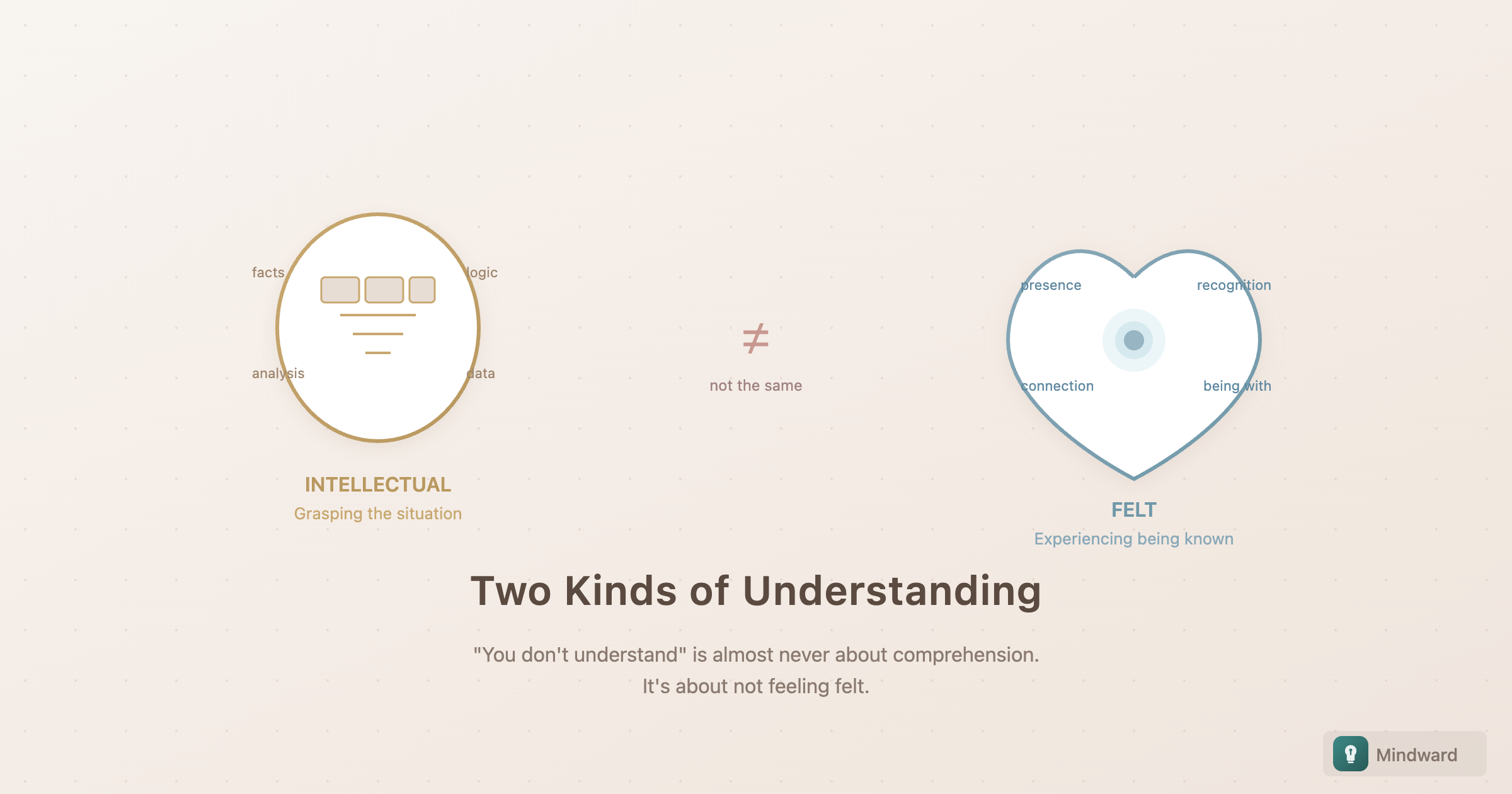
There's intellectual understanding—grasping the facts, following the logic, seeing the situation accurately. And there's felt understanding—the experience of being known, of having your inner reality recognized and acknowledged.
When someone says 'you don't understand,' they almost never mean you've failed at the first kind. They mean they're not experiencing the second. They don't feel felt.
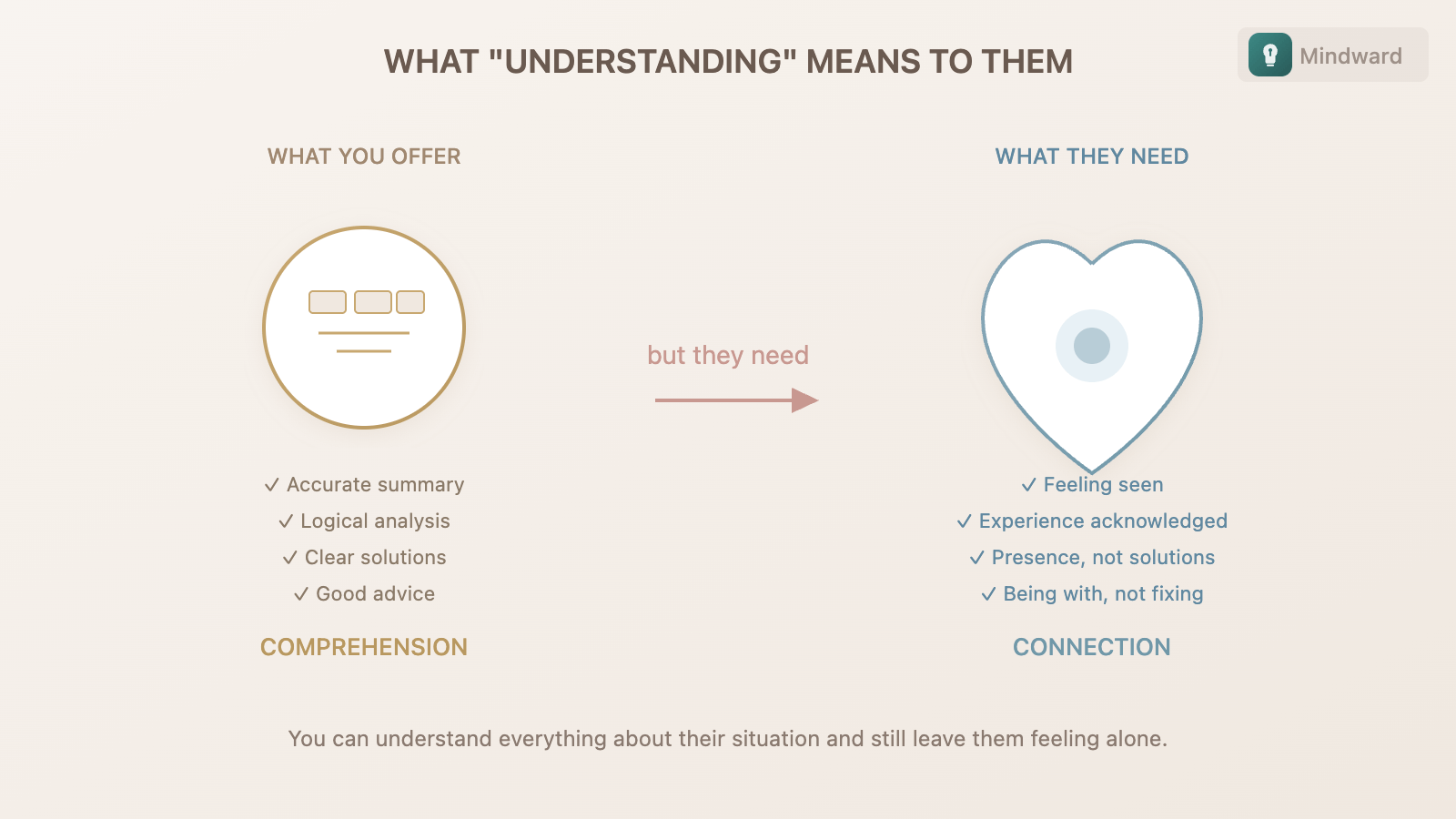
Understanding the situation is not the same as understanding the person in it. One is comprehension. The other is connection.
What They're Actually Asking For
When someone says you don't understand, they're usually expressing one of a few things: I don't feel like you get how hard this is. I don't feel like you see what this means to me. I feel like you're focused on the problem, not on me experiencing the problem.
They're not asking you to be smarter about their situation. They're asking you to be present to their experience of it. These are entirely different requests, and they require entirely different responses.
Intellectual understanding responds with analysis, solutions, perspective. Felt understanding responds with acknowledgment, reflection, presence. The first is about the problem. The second is about the person.
The Instinct That Backfires
When someone says we don't understand, most of us instinctively try to prove that we do. We summarize their situation. We demonstrate comprehension. We might even get slightly defensive—of course I understand, I've been listening this whole time.
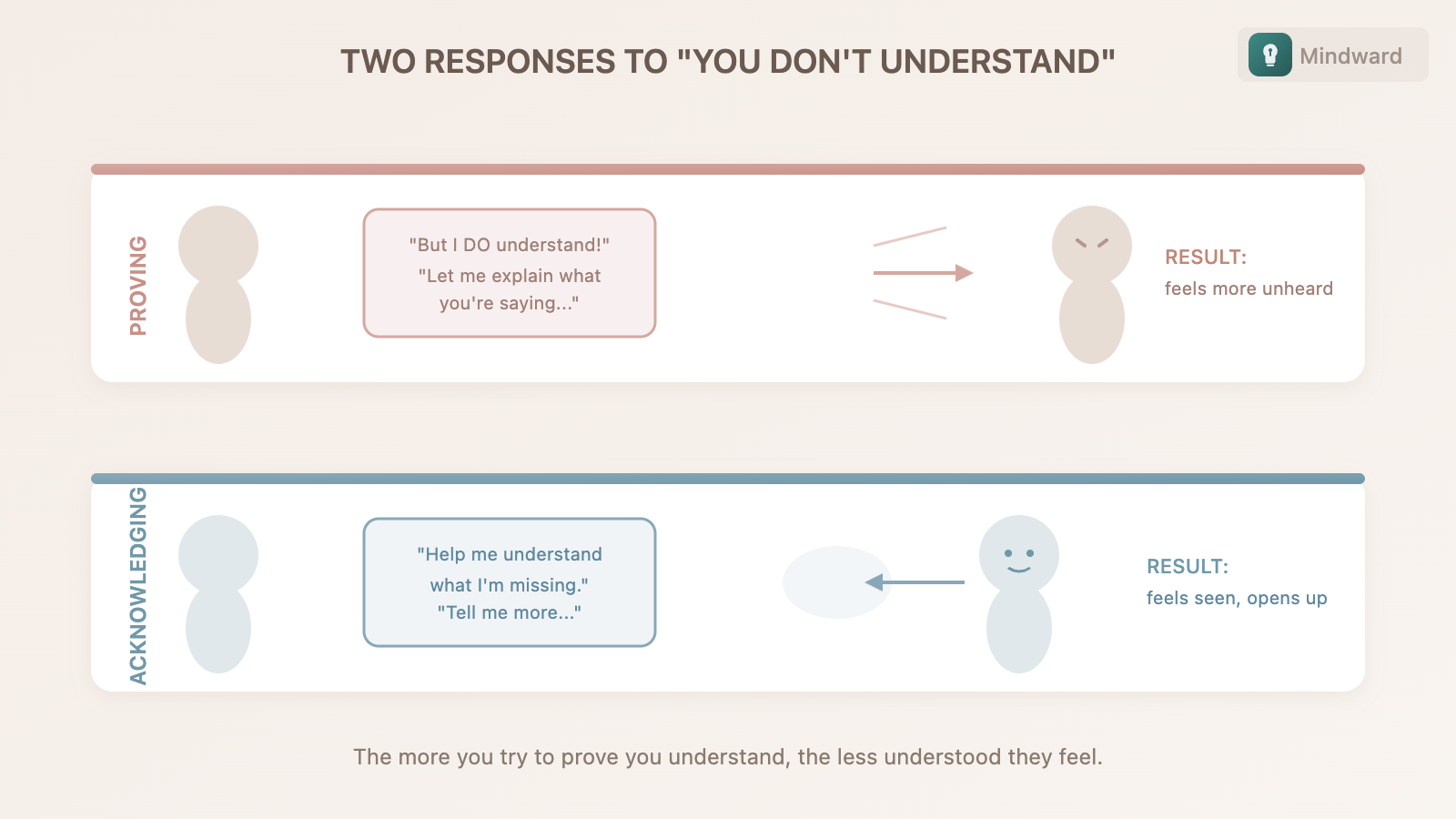
But proving intellectual understanding doesn't address the actual gap. It often widens it. Now they feel unheard and like they have to justify why they feel unheard. The conversation becomes about whether you understand instead of about what they're going through.
The more you try to prove you understand, the less understood they feel. It's counterintuitive, but it's consistent.
What to Do Instead
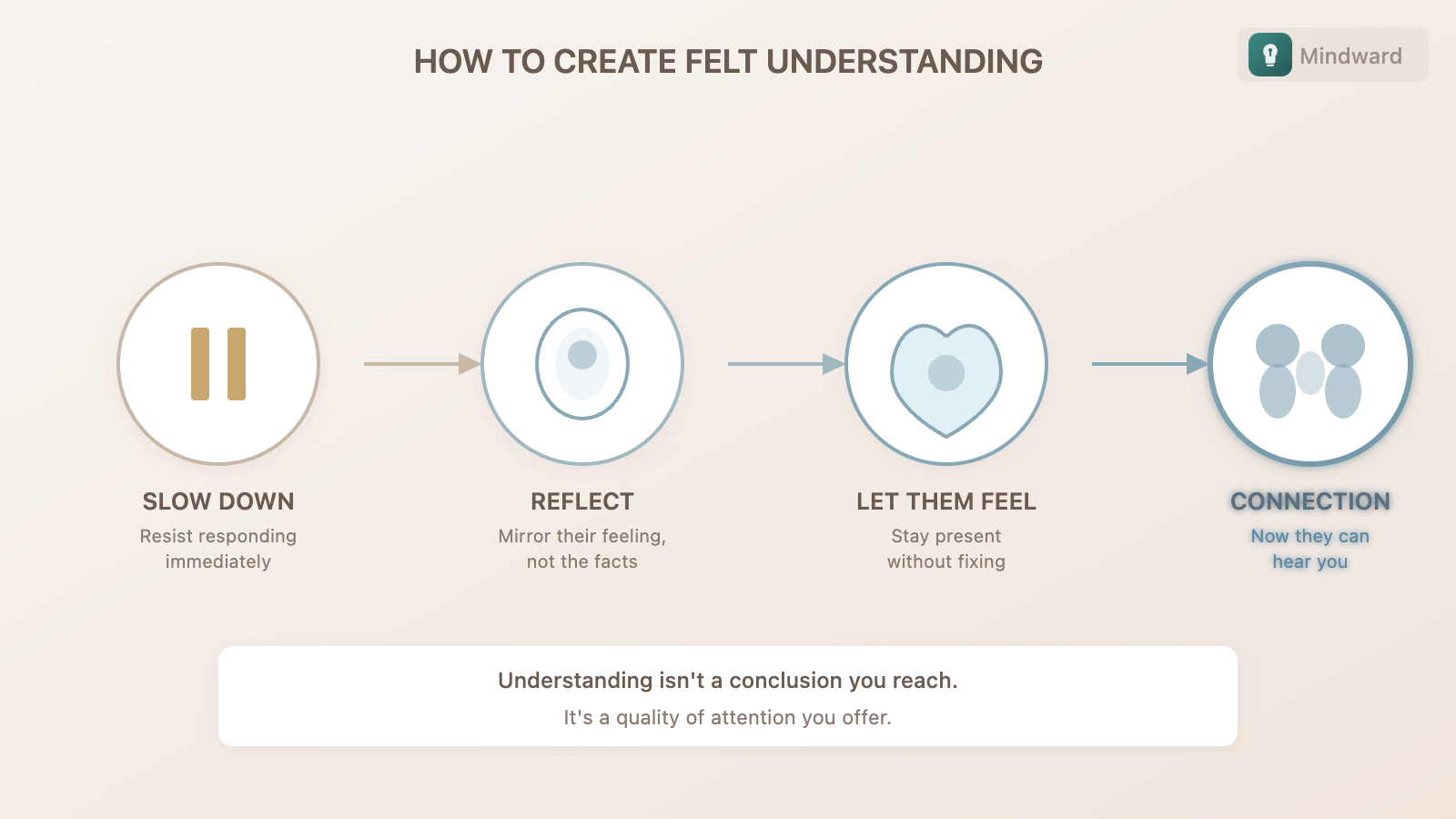
When someone says you don't understand, resist the urge to demonstrate that you do. Instead, get curious about what they're experiencing that isn't landing.
- Ask, don't prove: 'Help me understand what I'm missing' instead of 'But I do understand'
- Reflect the feeling, not the facts: 'It sounds like this is really weighing on you' rather than restating the situation
- Acknowledge the gap: 'I might not fully get it—tell me more about what this is like for you'
- Stay with them longer: Often the issue is moving too quickly to response mode
The goal isn't to prove comprehension. It's to create the experience of being understood. Sometimes that means saying less, not more. Sometimes it means sitting in their reality instead of translating it into yours.
Understanding as Presence
Real understanding isn't a conclusion you reach. It's a quality of attention you offer. It's the difference between analyzing someone's situation and being with them in it.
You can understand everything about what someone is going through and still leave them feeling utterly alone. Or you can understand very little of the details and still make them feel completely held. The information matters less than the presence.
Being understood isn't about someone grasping your situation. It's about feeling like you exist to them—like your experience is real and it registers.
Next time someone says you don't understand, don't defend your comprehension. Get curious about their experience. Stay a little longer before you respond. Let them feel felt before you try to help them feel better.
That's what they were asking for all along.


Comments
How did you like this article?
No comments yet. Be the first to share your thoughts!