The 'Future You' Problem: Why Saving Feels Impossible
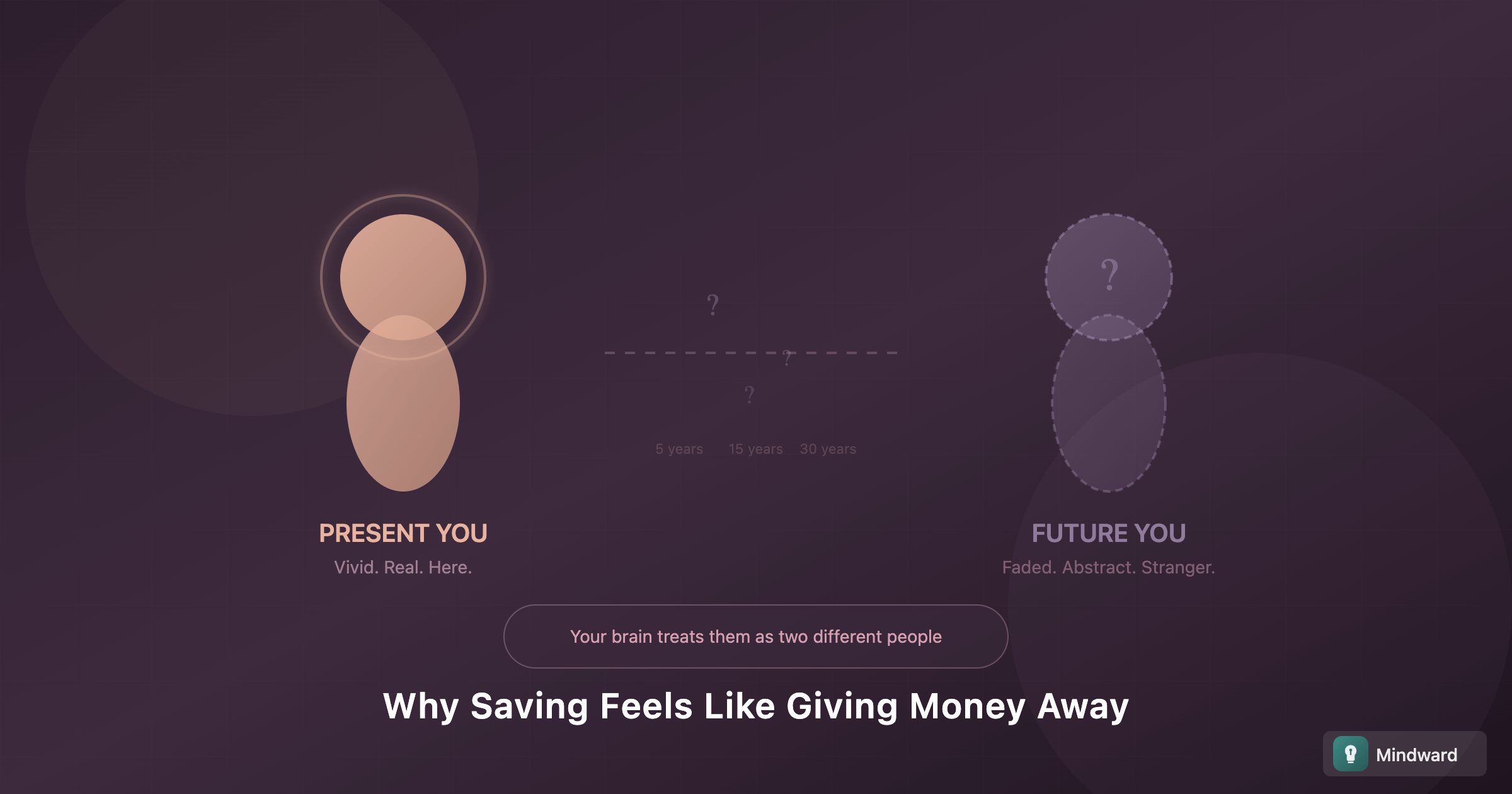
Your brain treats your future self like a stranger. That's why saving feels like giving money away. Here's the psychology behind it—and how to bridge the gap.
You know you should save. You understand compound interest. You've seen the charts showing what consistent investing does over decades. And yet, when the money hits your account, saving still feels like sacrifice—like handing cash to someone who isn't you.
That feeling isn't weakness. It's biology. Your brain genuinely struggles to treat your future self as the same person sitting here now. And until you understand that, every savings plan will feel like fighting yourself.
The Stranger in Your Future
Neuroscience research reveals something unsettling: when people think about their future selves, brain imaging shows activation patterns similar to when they think about strangers. Your brain literally processes 'you in 20 years' more like 'some random person' than like 'you right now.'
This is called temporal discounting—the tendency to value immediate rewards far more than future ones. A dollar today feels worth more than a dollar next year. Not because of inflation or investment returns. Because the person receiving that future dollar doesn't feel like you.
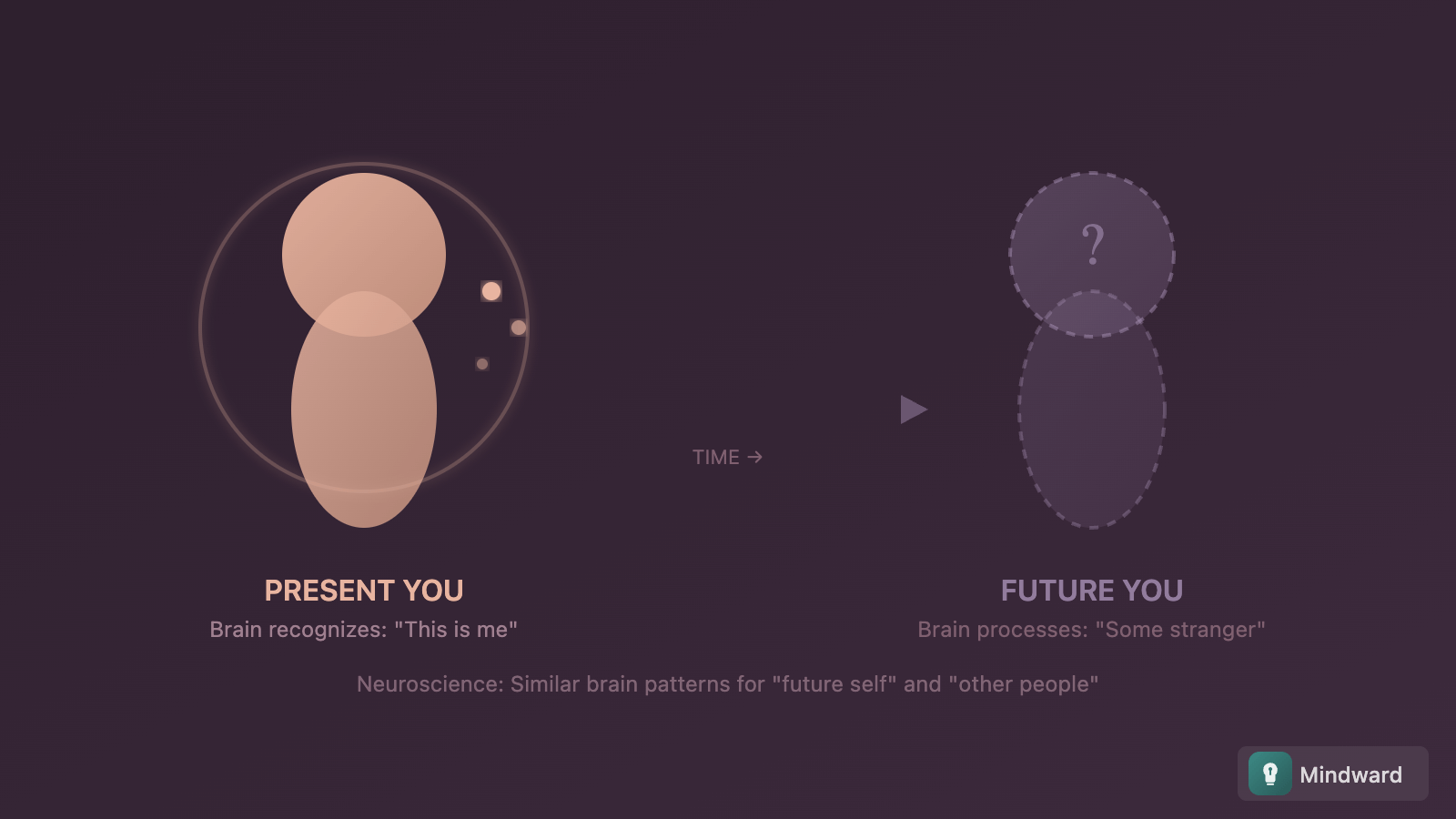
So when you choose spending now over saving for later, you're not being irresponsible. You're being human. Your brain is wired to prioritize the person it recognizes—present you—over the stranger it doesn't.
Why Logic Doesn't Fix It
Understanding compound interest doesn't solve this problem. You can know intellectually that saving $500 a month for 30 years creates significant wealth. But that knowledge lives in your prefrontal cortex. The part of your brain making spending decisions operates on emotion, immediacy, and identity.
Telling yourself to save for retirement is like telling yourself to save for a stranger's retirement. The math makes sense. The motivation doesn't follow.
You can't logic your way into caring about someone your brain doesn't recognize as you.
Bridging the Gap
The solution isn't more discipline. It's making your future self feel real. Research shows that people who feel more connected to their future selves save significantly more—not because they're more responsible, but because saving stops feeling like loss.
This connection can be built deliberately. The goal is to collapse the psychological distance between who you are now and who you'll become.
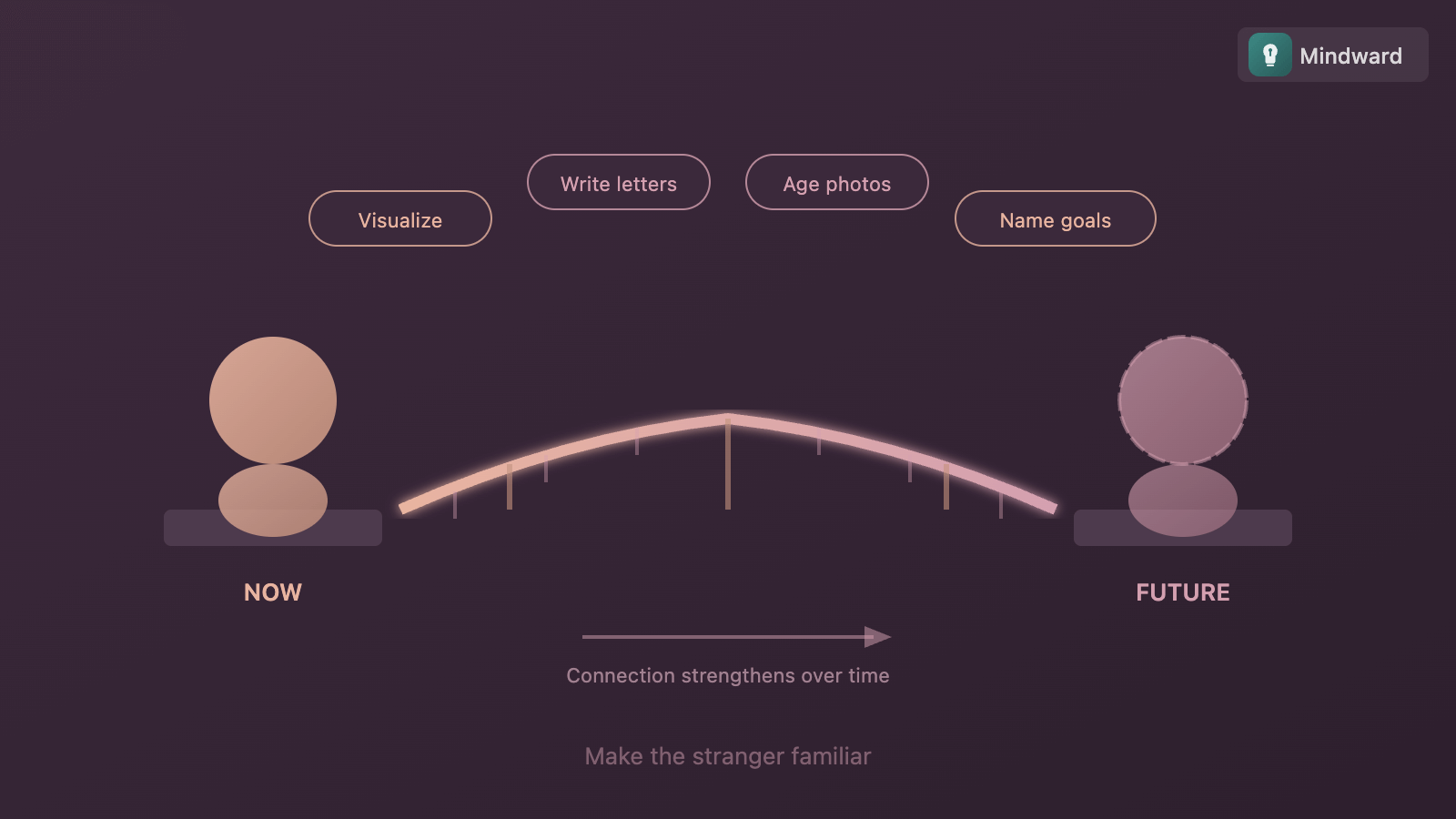
- Visualize with specificity: Don't think about 'retirement.' Picture a specific Tuesday—where you are, what you're doing, what you need money for that day. Concrete details create connection.
- Write letters to your future self: The act of addressing future you as 'you' rather than thinking about them in third person shifts how your brain categorizes that person.
- Use aging apps or photos: Studies show that viewing aged images of yourself increases saving behavior. Seeing the face makes the person real.
- Name your goals in terms of that person's life: Not 'retirement fund' but 'the account that lets 65-year-old me choose whether to work.' Identity-based framing matters.
Make It Automatic Anyway
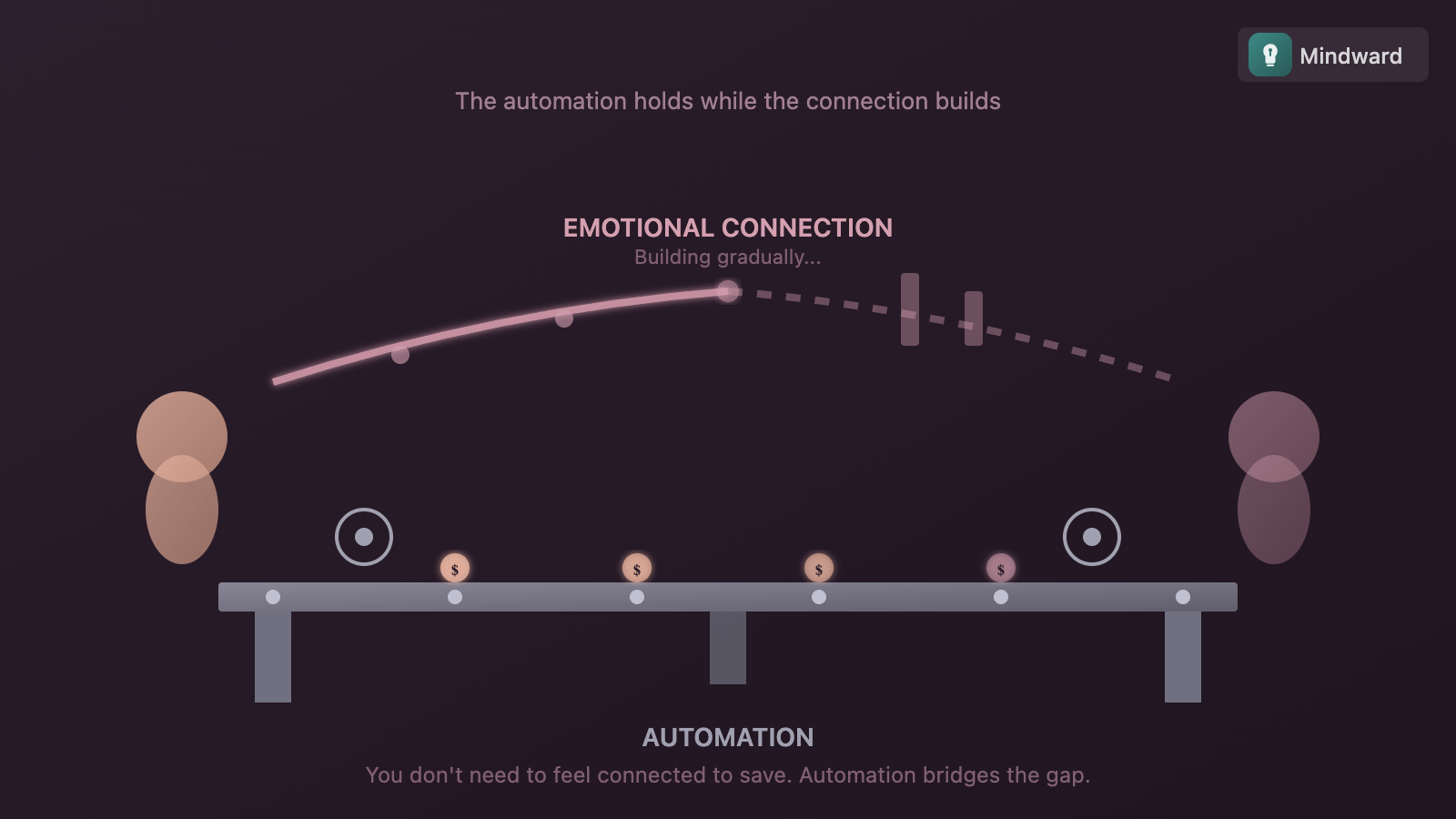
While you're building that connection, don't rely on it. Automate your savings so the decision doesn't require feeling connected to your future self in the moment. Move the money before you see it. Make saving the default, not the choice.
Automation is the bridge that holds while you're building the real one. It doesn't require you to feel motivated. It just requires one decision, made once, that runs in the background.
The Identity Shift
Over time, something changes. As your savings grow, as you write to your future self, as you picture specific moments in that life—the stranger starts to feel familiar. The gap closes. Saving shifts from sacrifice to continuity.
You stop giving money away and start setting it aside for yourself. The same action, completely different experience.
Saving isn't about denying present you. It's about recognizing future you as equally real, equally deserving, equally you.
Your brain didn't evolve to plan for decades. It evolved to survive today. But you can work with that wiring instead of against it—by making tomorrow feel like today, and making the stranger in your future feel like someone worth taking care of. Because they are. They're you.


Comments
How did you like this article?
No comments yet. Be the first to share your thoughts!