One Number: A Simpler Way to Know If You're Okay
You don't need twelve budget categories and a color-coded spreadsheet. You need one number that tells you whether you're moving forward or falling behind.

You've tried the apps. The spreadsheets with seventeen tabs. The zero-based budget where every dollar has a job. And somewhere around week three, you stopped opening any of it.
The problem isn't your commitment. It's the complexity. Most budgeting systems ask for a level of ongoing attention that doesn't match how people actually live. They work beautifully in theory and collapse under the weight of real life.
But you still need to know if you're okay. You need something that tells you, without a finance degree or three hours of data entry, whether you're moving forward or slowly sinking. That something is one number.
The Number That Matters
Your net worth. That's it. What you own minus what you owe. Assets minus liabilities. One number that captures the entire financial picture without requiring you to categorize last Tuesday's coffee.
This isn't about being wealthy. It's about trajectory. Is the number going up over time, or down? That single trend tells you more than any budget category ever could.
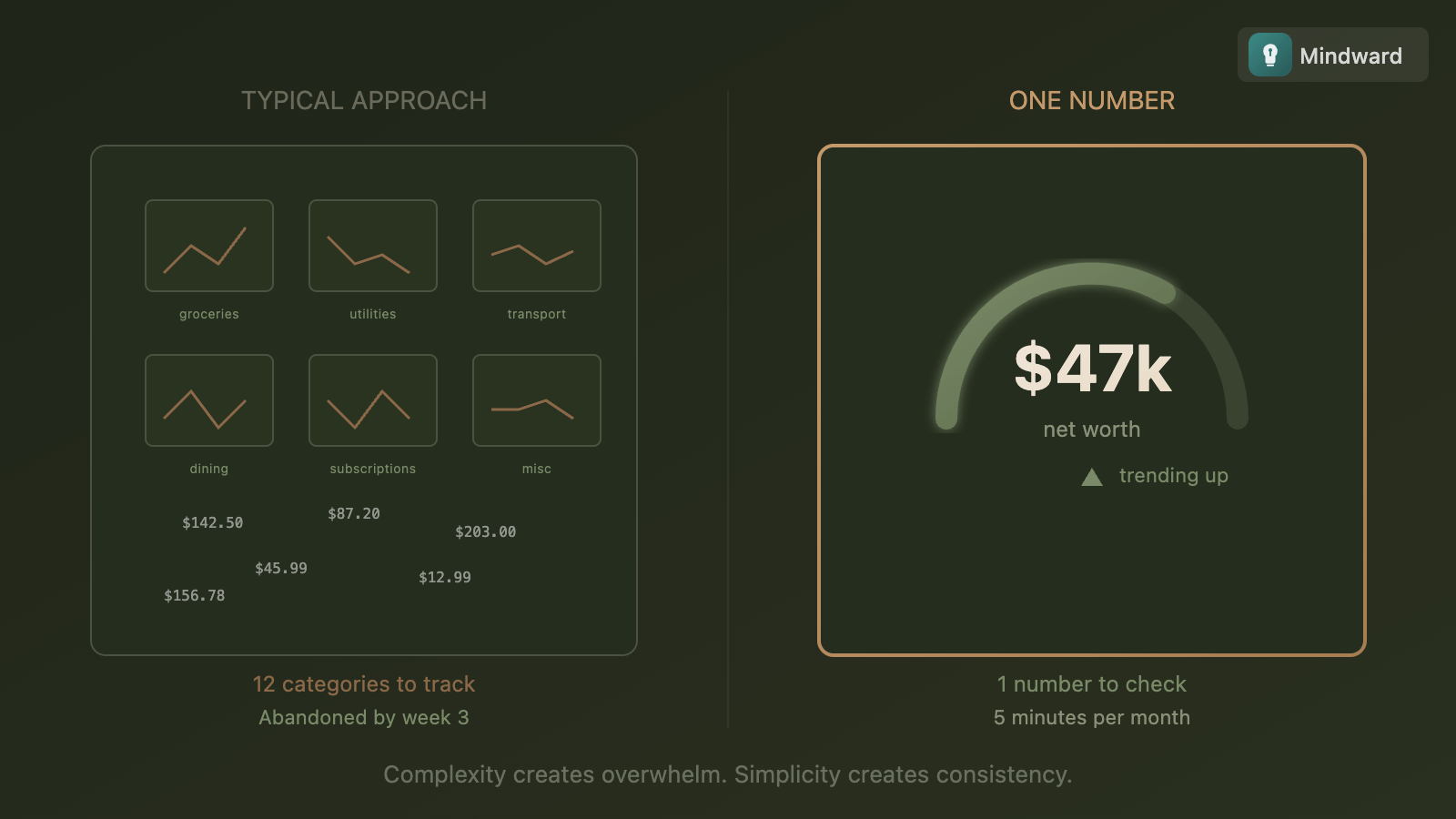
You don't need to track everything. You need to track the thing that shows whether everything else is working.
Why One Number Works
A detailed budget tells you where your money went. Net worth tells you what that spending produced. You can have a perfect budget and still make no progress. You can have no budget at all and watch your net worth climb. The outcome is what matters.
Tracking one number is sustainable. You can do it in five minutes once a month. You don't need to maintain categories, reconcile transactions, or feel guilty about the gym membership you forgot to cancel. You just need to answer one question: is this number higher than last month?
- Bank accounts: checking, savings, anything with your money in it
- Investment accounts: retirement, brokerage, whatever you have
- Debts: credit cards, loans, mortgage balance
- Subtract the debts from everything else
- That's your number
What the Trend Reveals
Check it monthly. Don't panic about any single month—life happens. Look at the trend over three months, six months, a year. That's where the truth lives.
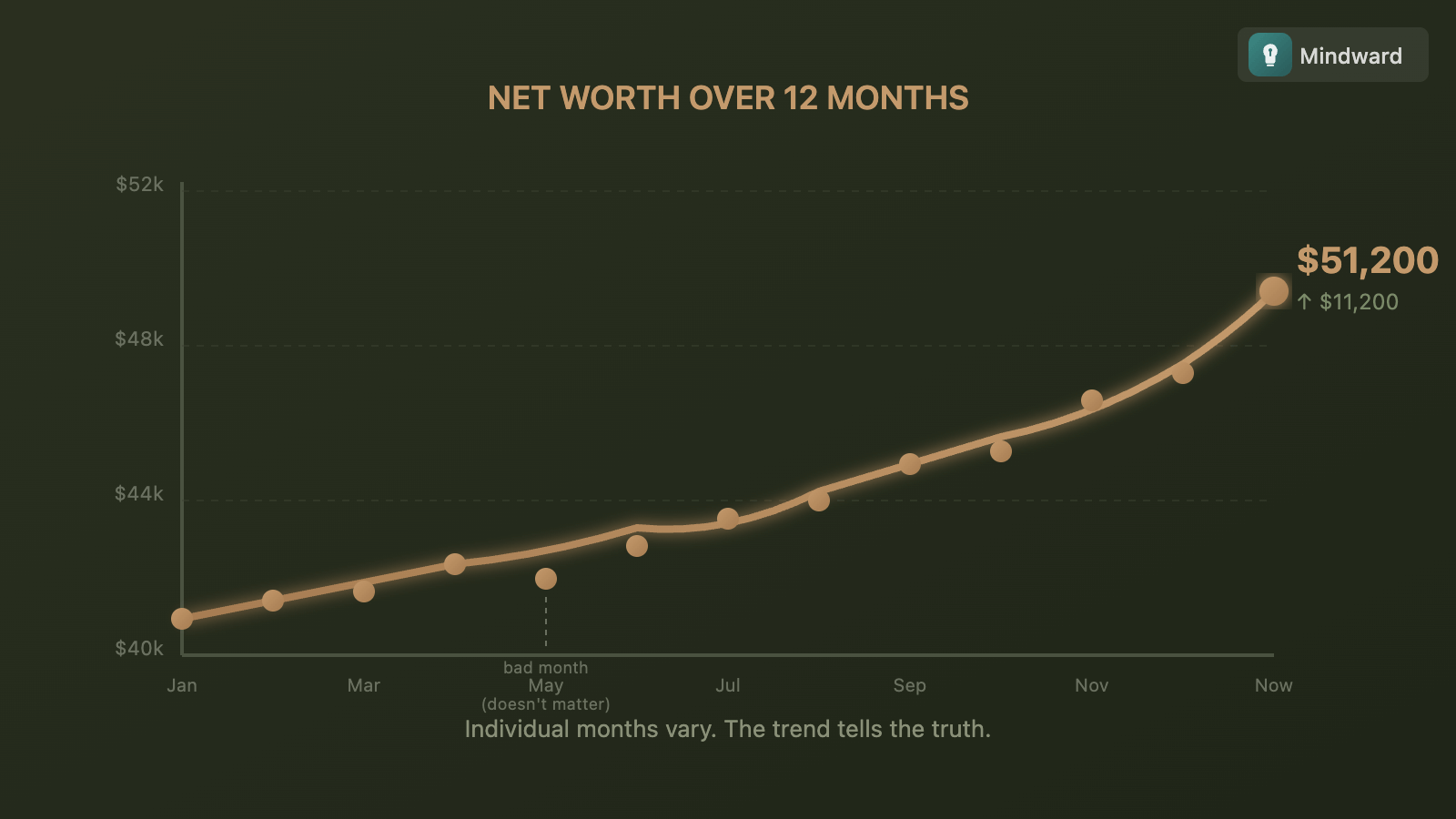
If the number is consistently rising, something is working. Your income exceeds your spending by enough to make progress. You don't need to know exactly why. The result speaks for itself.
If the number is flat, you're treading water. Not drowning, but not swimming either. Everything coming in is going back out. That's useful information—it means any improvement in income or spending will show up immediately.
If the number is dropping, you're spending more than you make. That's a problem that needs attention, and now you know it without tracking 47 expense categories to find out.
The Permission to Stop
Here's what this approach gives you: permission to stop doing the things that weren't working anyway. The detailed tracking you abandoned. The budget reviews you skipped. The financial guilt you carried for not being 'on top of things.'
You don't need to be on top of things. You need to know if things are working. Those aren't the same.
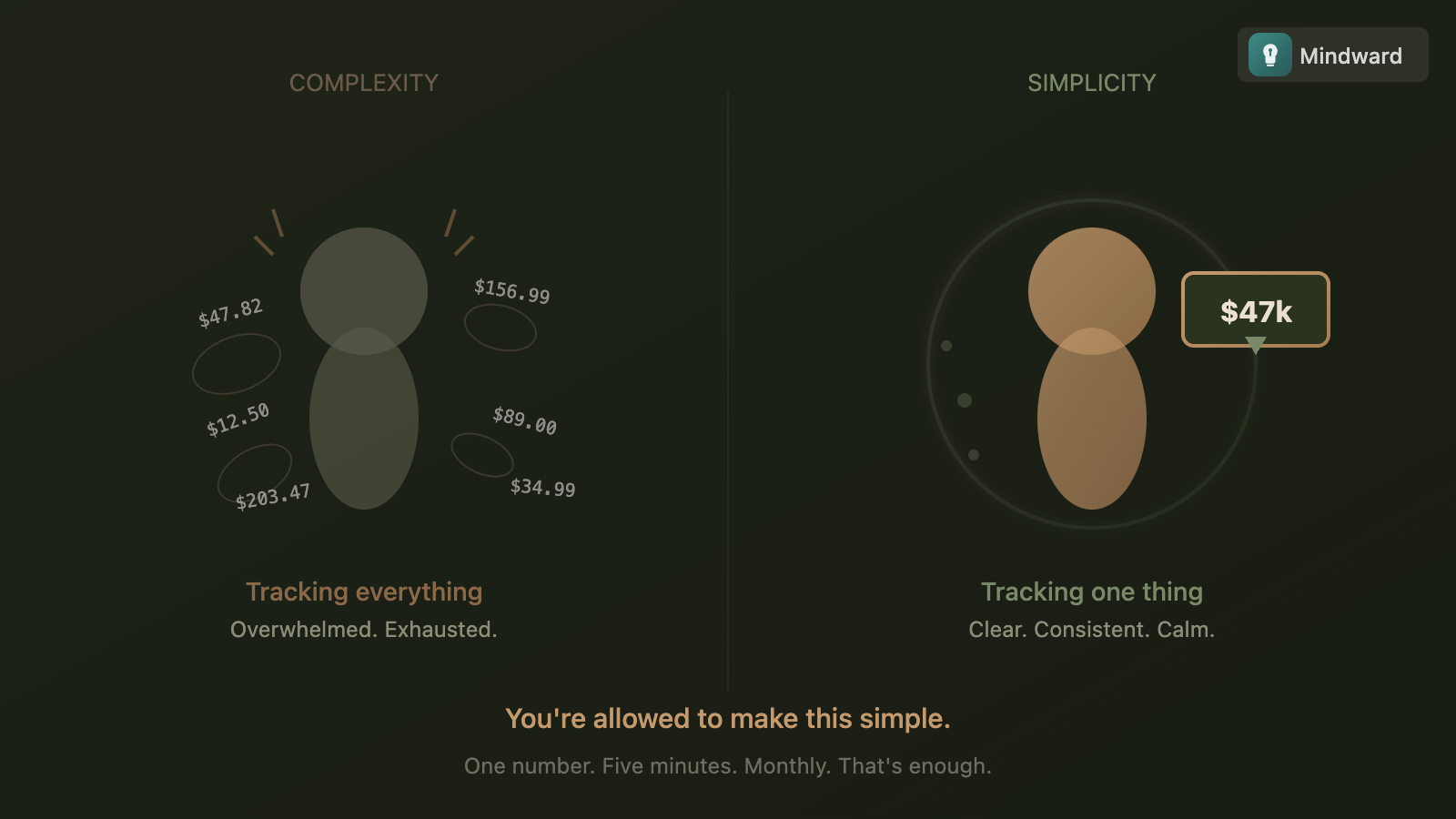
Simplicity isn't laziness. It's choosing the metric that actually matters and ignoring the noise.
When to Add Complexity
If your number is dropping, then you need more detail. Not permanent complexity—targeted investigation. Where is the leak? Once you find it and fix it, you can go back to watching the one number.
If your number is rising but you want to accelerate, same approach. Temporary deep dive. Find the opportunities. Implement changes. Return to simplicity.
Complexity is a tool you reach for when needed, not a lifestyle you maintain indefinitely. The one-number approach isn't about ignorance. It's about appropriate attention—enough to stay informed, not so much that you burn out and stop entirely.
Start This Month
Open a note on your phone. Write down today's date and your net worth. Don't optimize anything yet. Don't set goals. Just capture the number.
Next month, do it again. Compare. That's it. That's the entire system.
You now have something most people don't: a clear, simple way to know if you're okay. Not a perfect picture. Not a complete financial plan. Just the one thing that tells you whether all your other choices are adding up to progress.
Financial clarity doesn't require complexity. It requires knowing which number to watch.
You're allowed to make this simple. You're allowed to track one thing. And if that one thing keeps moving in the right direction, you're allowed to stop worrying about all the rest.


Comments
How did you like this article?
No comments yet. Be the first to share your thoughts!