Lifestyle Creep: The Invisible Drain You Don't Notice Until It's Done
Your income went up. So did your spending. Somehow, you're no happier and no further ahead. That's lifestyle creep—and it happens so gradually you don't see it coming.
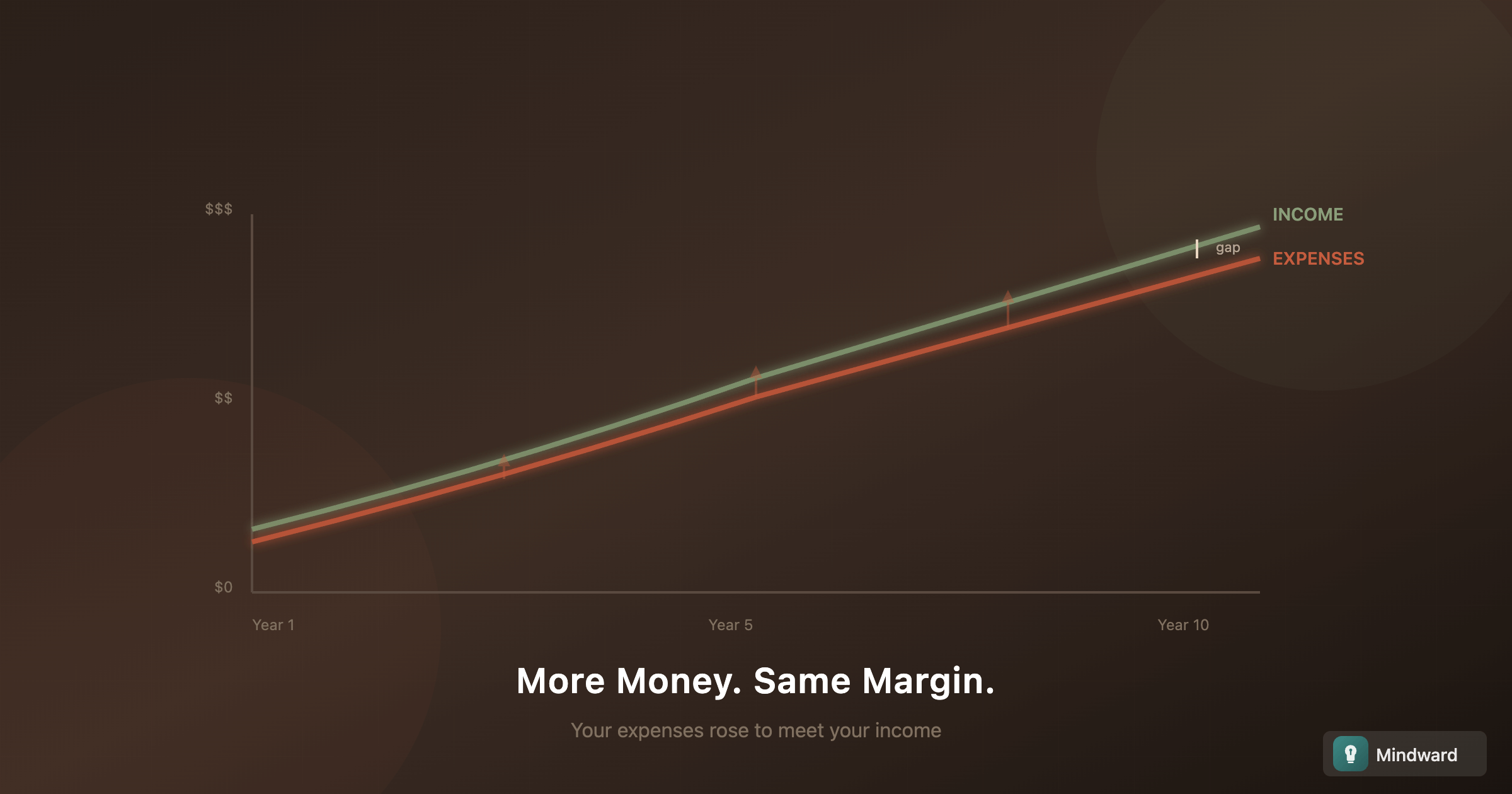
Five years ago, you made less money and somehow made it work. Now you earn significantly more, and yet—there's still nothing left at the end of the month. The math doesn't add up. Except it does, just not the way you'd expect.
This is lifestyle creep. The gradual, almost imperceptible expansion of your spending to match your income. It doesn't feel like a choice. It feels like life just costs more now. But that's the trap—it always feels that way.
How It Happens
Lifestyle creep doesn't announce itself. It arrives as a series of reasonable upgrades. A slightly nicer apartment when the old one felt cramped. A better car when the old one needed repairs. Subscriptions you forgot to cancel. Restaurants instead of cooking because you're busy and you've earned it.
Each decision makes sense in isolation. None of them feel extravagant. But they accumulate into a new baseline—a floor of spending that feels non-negotiable, even though none of it existed three years ago.
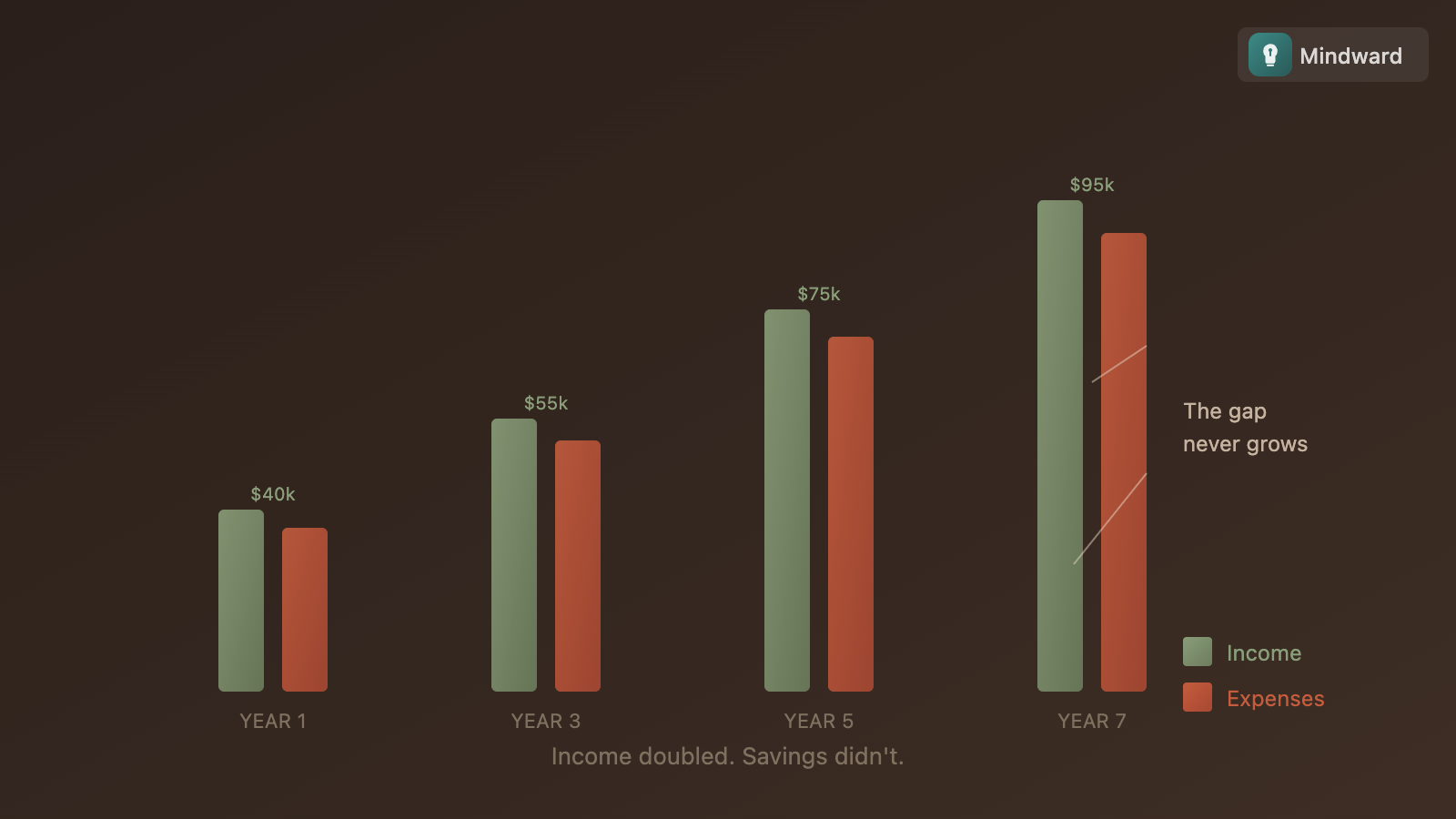
The danger isn't any single expense. It's that your floor keeps rising while your ceiling stays the same.
The Hedonic Treadmill
Here's what makes lifestyle creep so insidious: the upgrades stop feeling like upgrades. The nicer apartment becomes just your apartment. The better car is just your car. The lifestyle that once felt like a reward becomes the new normal—and now you need the next upgrade to feel the same lift.
Psychologists call this hedonic adaptation. Whatever level you reach, your brain recalibrates to treat it as baseline. The satisfaction fades, but the cost remains. You're paying more for the same emotional return.
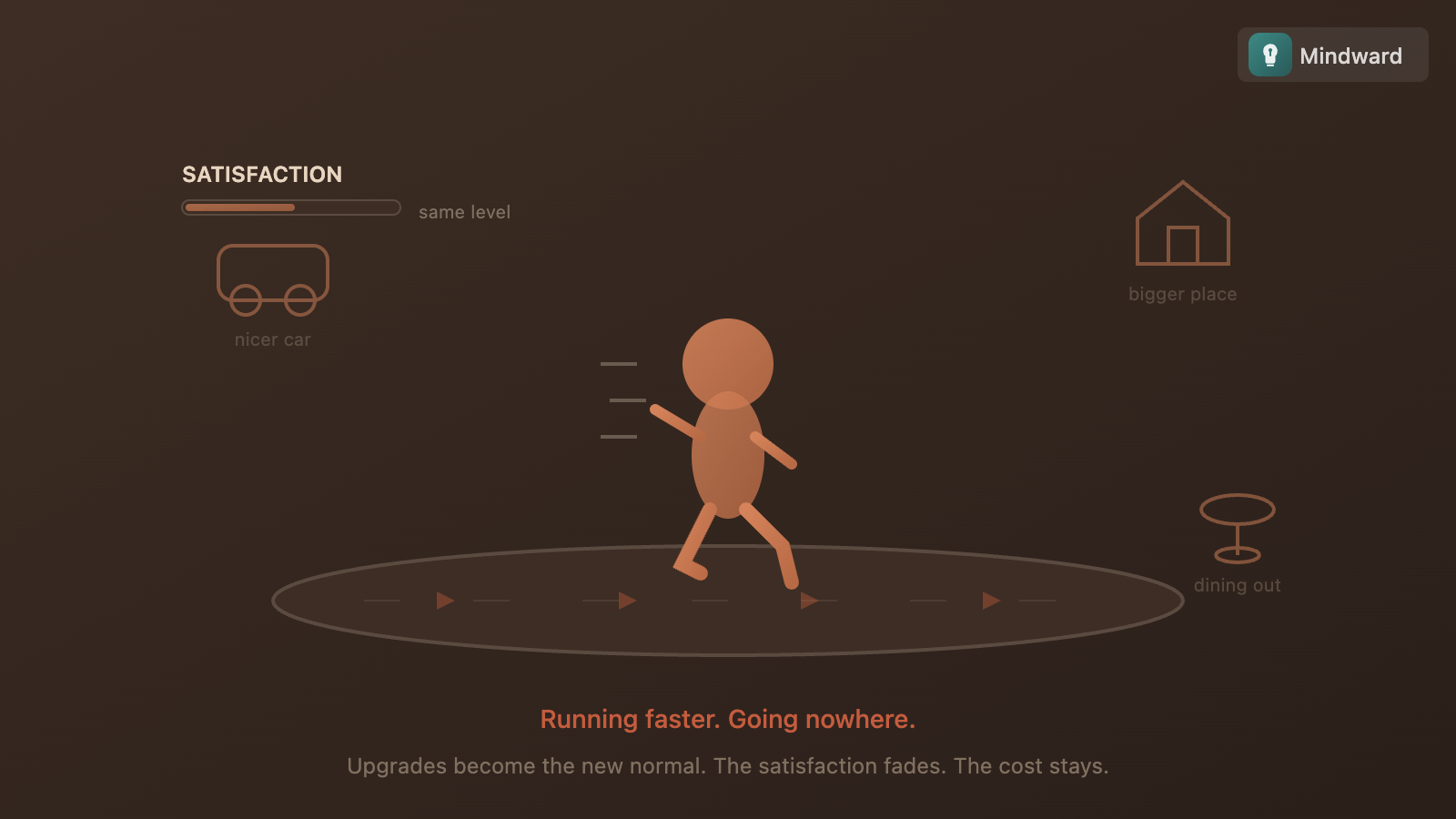
This is why people earning four times what they made a decade ago often feel no more financially secure. The number changed. The margin didn't.
The Invisible Tax on Every Raise
When you get a raise, lifestyle creep acts as an invisible tax. The extra $500 a month doesn't go to savings or investments. It gets absorbed—by slightly more expensive groceries, a few new subscriptions, dining out one more time per week. Not decisions you made. Just drift.
And because each increase happens gradually, you never have the experience of choosing comfort over security. You just wake up one day unable to explain where the money went.
- Your rent increased because you 'needed more space'
- Your car payment increased because you 'deserved reliability'
- Your food spending increased because you 'don't have time to cook'
- Your subscriptions multiplied because each one was 'only $15/month'
Individually, all defensible. Collectively, the reason your raise disappeared.
Catching It Early
The only defense against lifestyle creep is making it visible. What you don't track, you can't manage. And lifestyle creep survives specifically because it stays beneath your attention.
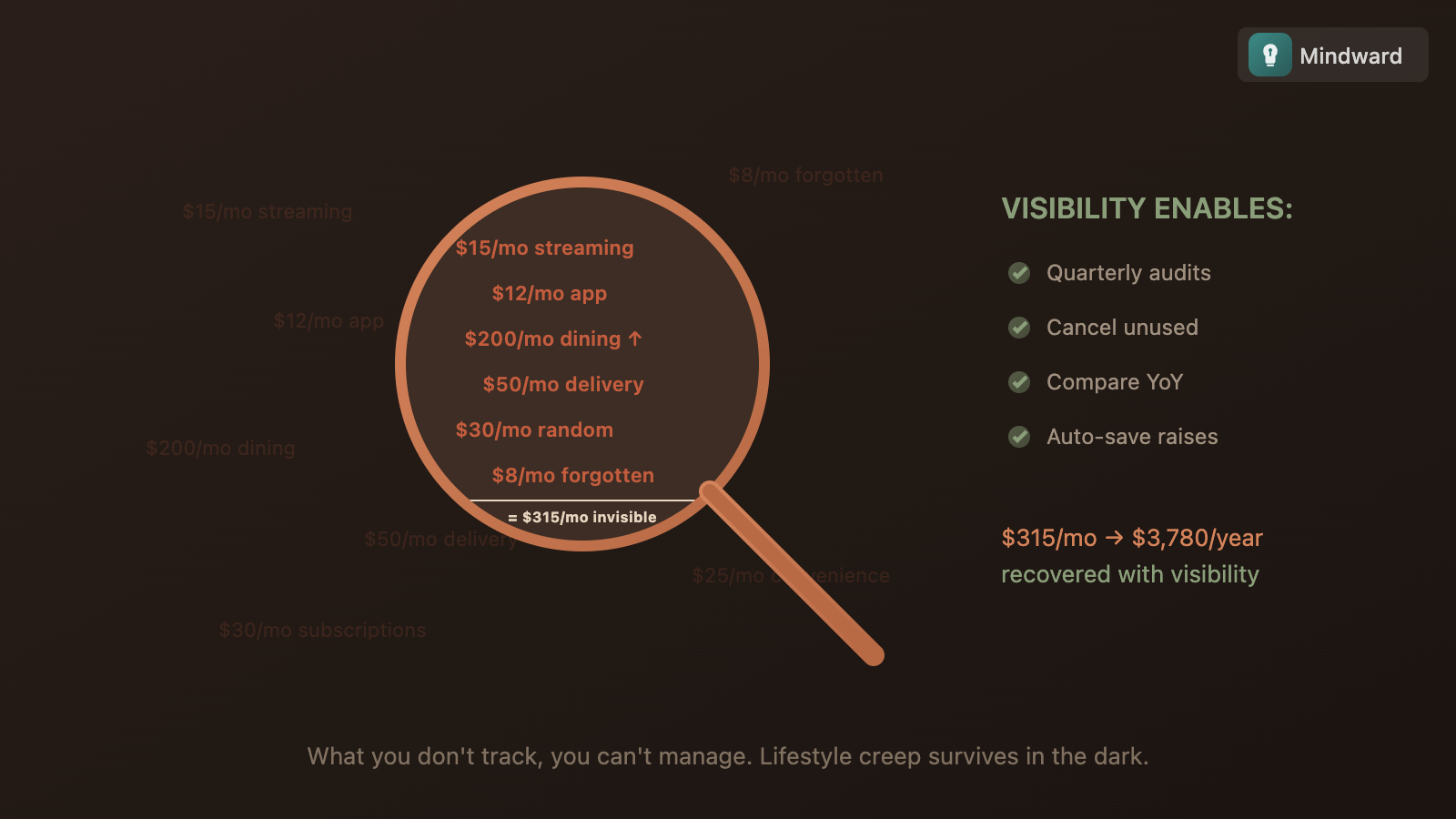
This doesn't require obsessive budgeting. It requires periodic audits—moments where you compare what you spend now to what you spent before, adjusted for actual changes in your life. Not what feels necessary. What's actually different.
- Review subscriptions quarterly: Cancel anything you haven't actively used in 30 days
- Compare annual spending year-over-year: Where did categories inflate without a clear reason?
- Apply the 'past self' test: Would the version of you from five years ago consider this essential?
- Automate savings on every raise: Move 50% of any increase to savings before you see it
The Goal Isn't Deprivation
This isn't about living like you're still broke. Spending more as you earn more isn't inherently wrong. The problem is spending more unconsciously—letting your lifestyle inflate by default rather than by decision.
Intentional upgrades are fine. The apartment that genuinely improves your life, chosen deliberately, is not the same as the apartment you drifted into because it was available. The difference is awareness.
Lifestyle creep isn't defeated by discipline. It's defeated by visibility. You can't fight what you don't see.
Your income is a tool. Lifestyle creep turns it into a treadmill—more effort for the same place. But it only works in the dark. Shine a light on it, and you get to decide what your money actually buys: a slightly nicer version of the same life, or genuine progress toward something that matters.


Comments
How did you like this article?
No comments yet. Be the first to share your thoughts!