Your Work Will Not Speak for Itself. You Have to Speak for It.
Doing great work is not enough. The people who advance are not just competent - they make sure the right people know they are competent. This is not bragging. It is professional survival.
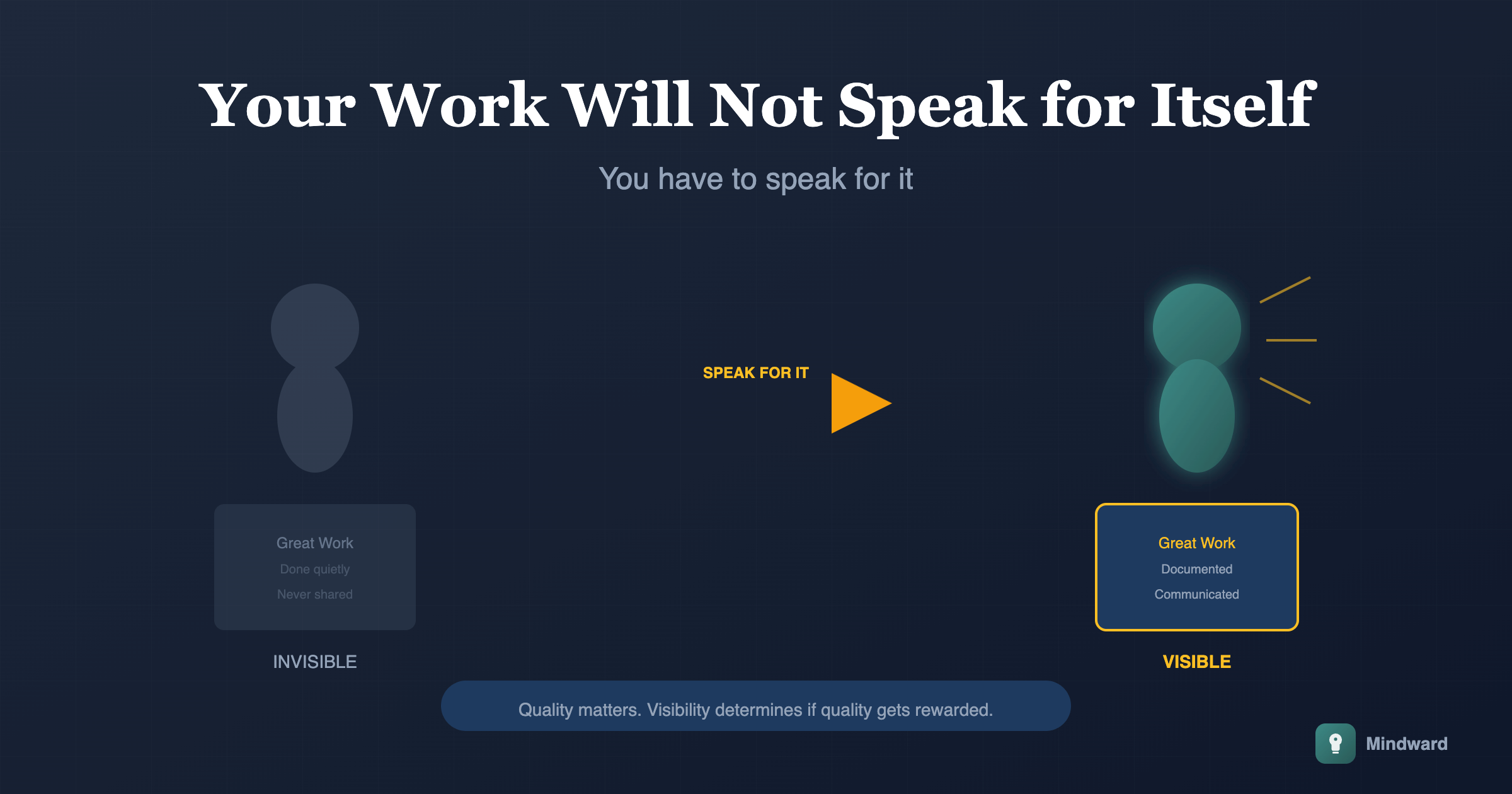
You have probably worked with someone like this: competent but invisible. They do excellent work, hit every deadline, solve problems quietly. They assume their output will be noticed, that quality speaks for itself, that the right people are paying attention.
Years pass. They watch less talented colleagues get promoted. They are confused, then bitter. I do better work than them. Why do I not get recognized?
The answer is uncomfortable: because no one knows. Their manager is juggling dozens of priorities. Leadership is three levels removed. The work that felt so visible from the inside was invisible from the outside.
Quality matters. But visibility determines whether quality gets rewarded.
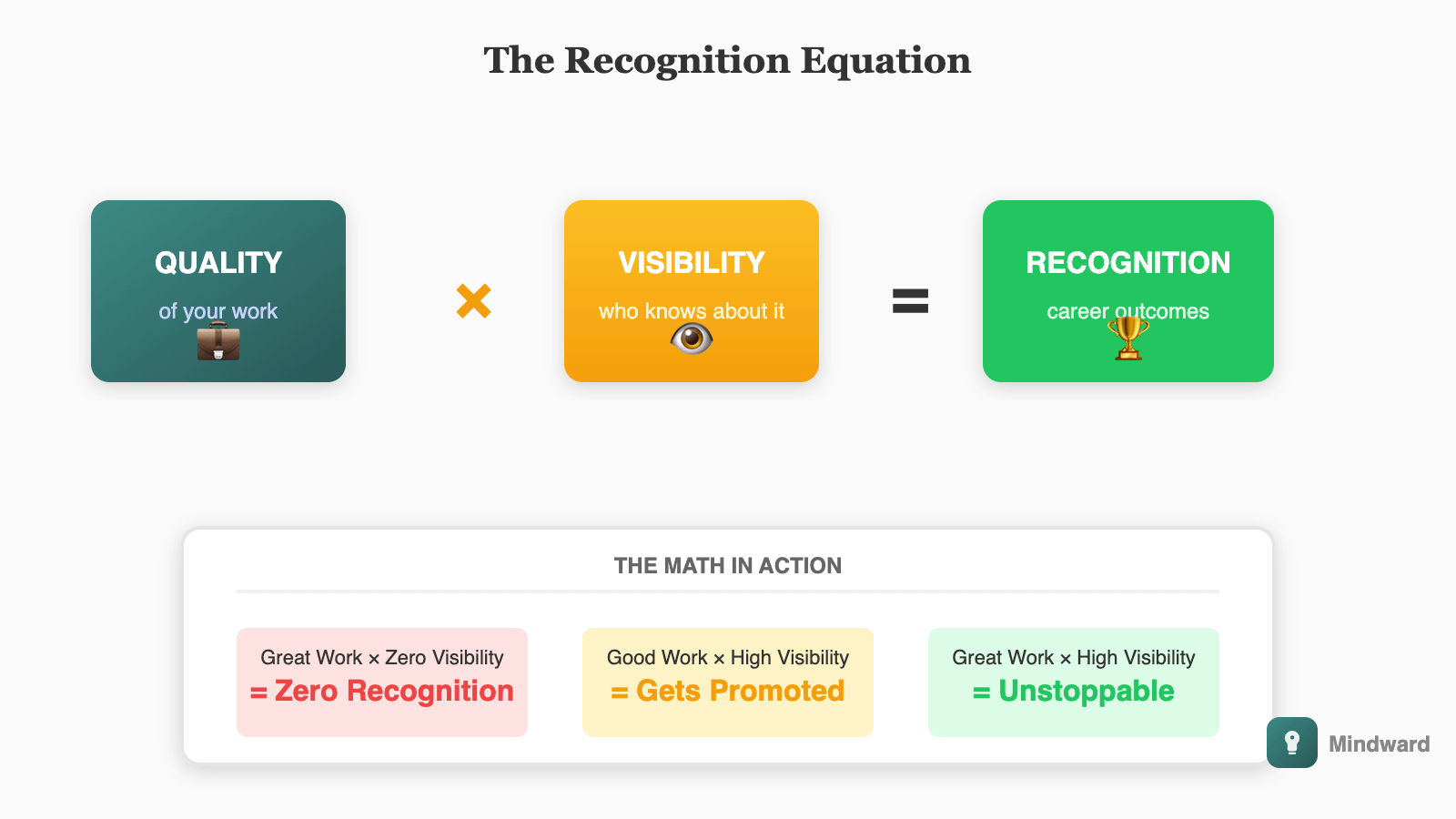
Why This Feels Wrong
If you recoil at the idea of self-promotion, you are not alone. Many high-performers share a belief that feels virtuous: good work should be its own reward. Talking about your accomplishments is bragging. Humble people let results speak.
This belief is noble but naive. It assumes a world where bosses have perfect information, where merit is automatically recognized, where everyone's contributions are equally visible. That world does not exist.
The reality is that decision-makers are overwhelmed. They are not tracking your daily wins. When it is time for promotions, raises, or interesting projects, they work from mental models - impressions built over time. If you are not in those mental models, you are not in the conversation.
You are not choosing between doing good work and being visible. You are choosing between being visible and being invisible. The work happens either way.
Visibility Is Information, Not Ego
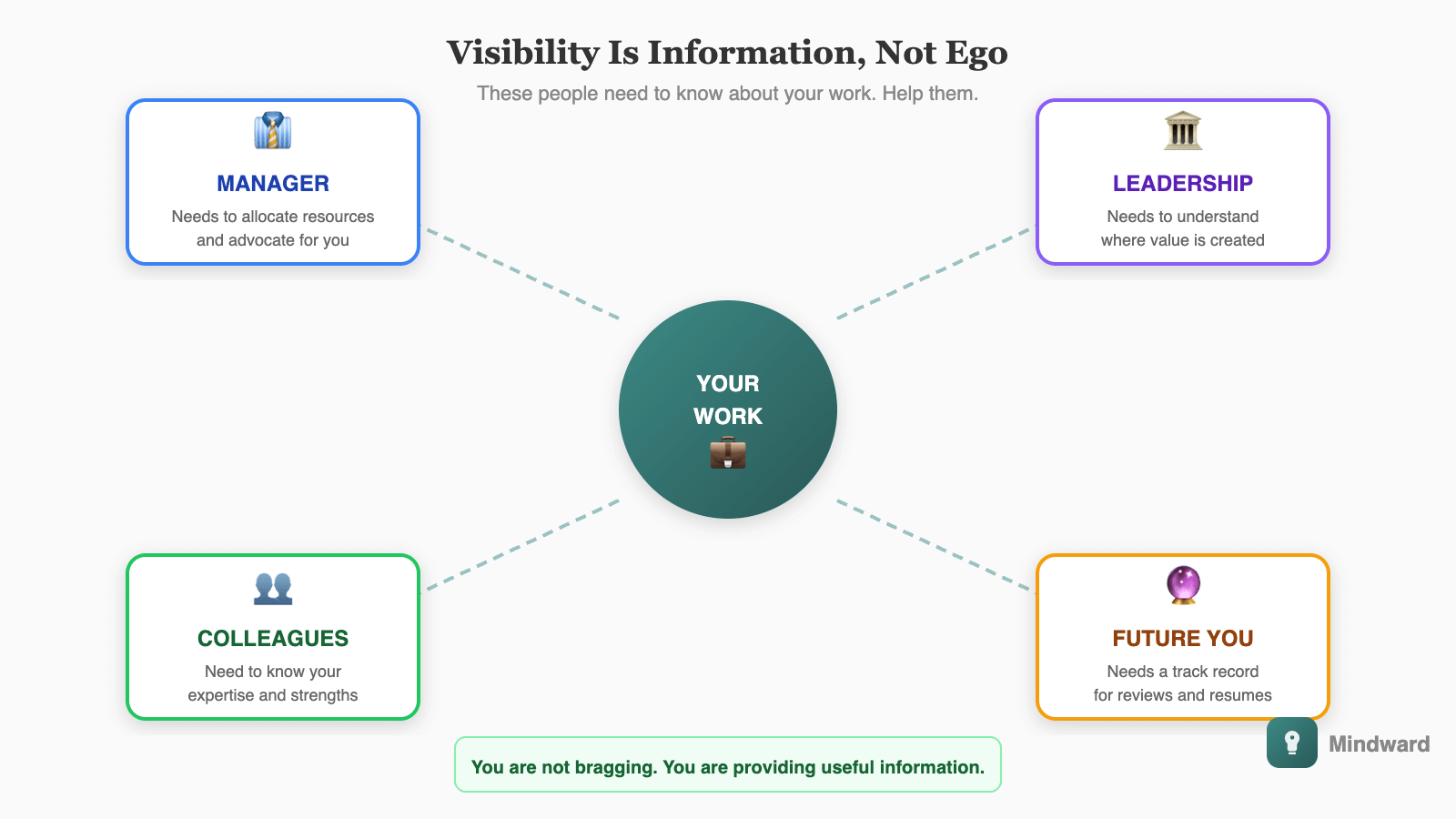
Reframe what visibility means. It is not about ego or credit. It is about information flow.
Your manager needs to know what is working and what is not. Leadership needs to know where value is being created. Colleagues need to know who to go to for what. When you make your work visible, you are providing useful information to people who need it.
Think of it as documentation that happens to have career benefits. You are not saying look how great I am. You are saying here is what happened, here is the impact, here is what we learned. The facts do the work.
The Tactics That Do Not Feel Slimy
Self-promotion done poorly is obvious and off-putting. But there are ways to increase visibility that feel natural and actually help people.
The weekly update. Send your manager a brief end-of-week summary. Three to five bullets: what you accomplished, what you are working on next, any blockers. This takes five minutes and ensures your work is registered. It also makes your manager's job easier - they have ammunition when advocating for your team.
The meeting contribution. In team meetings, speak up at least once. Share what you are working on, offer input on others' challenges, ask good questions. Visibility is not just about output - it is about presence. People remember voices, not silence.
- Weekly update email to your manager (5 min, Friday afternoon)
- One substantive contribution per team meeting
- Share learnings and resources that help others
- Document wins when they happen (not months later)
- Volunteer for visible projects, not just necessary ones
- Say yes to presenting, even when it is uncomfortable
The casual share. When you finish something significant, mention it naturally. Hey, just wrapped up the client migration - ended up saving us about 40 hours of manual work. This is not bragging. It is information. People cannot celebrate or leverage wins they do not know about.
Document as You Go
Performance review time arrives. You are asked to list your accomplishments from the past six months. Your mind goes blank. The wins that felt so vivid in the moment have faded. You reconstruct a fraction of what you actually did.
This is a universal experience, and it is entirely preventable. Keep a running document - a brag doc or work log - where you note accomplishments as they happen. Date, what you did, what the impact was. Takes thirty seconds per entry.
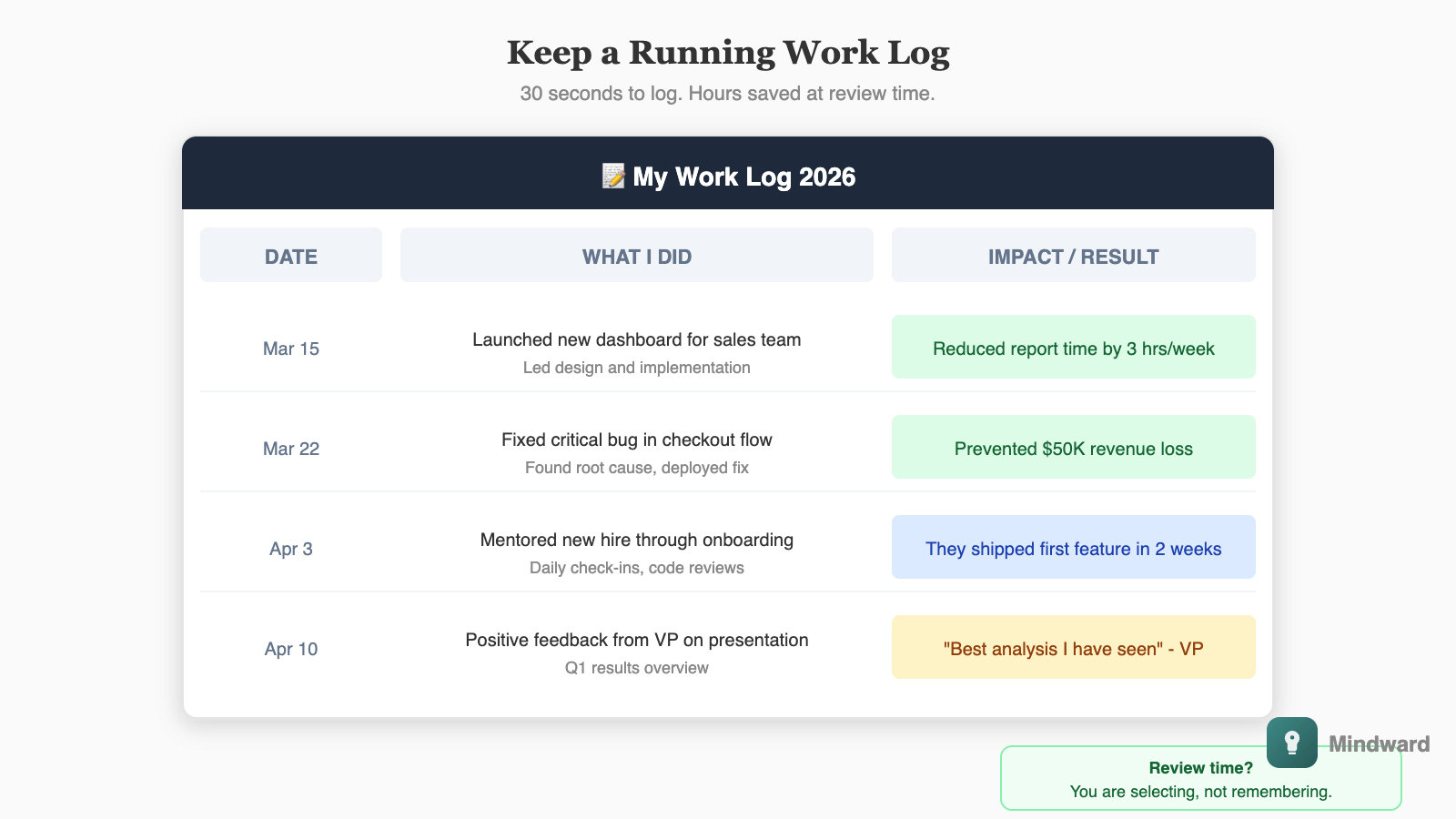
When review time comes, you are not reconstructing - you are selecting. When someone asks what you have been up to, you have specifics instead of vague generalities. When you need to update your resume, the material is already there.
This document is not for show. It is a tool that gives you clarity about your own contributions and evidence when you need it.
Choose Visible Projects
Not all work is equally visible. Some tasks matter enormously but happen in the background. Others have outsized visibility relative to their difficulty.
This does not mean avoiding important-but-invisible work. It means being strategic about balance. If you spend all your time on necessary background tasks, you will be necessary but replaceable. Occasionally volunteer for the presentation, the client-facing project, the cross-functional initiative. These put you in front of people who do not normally see your work.
The work that gets you hired is often different from the work that gets you promoted. Adjust accordingly.
Look for opportunities where your contribution is clearly attributable. Committee work often is not - ten people contribute, no one's effort stands out. Leading a specific initiative is different - there is a clear owner and a clear outcome.
Build Relationships Upward
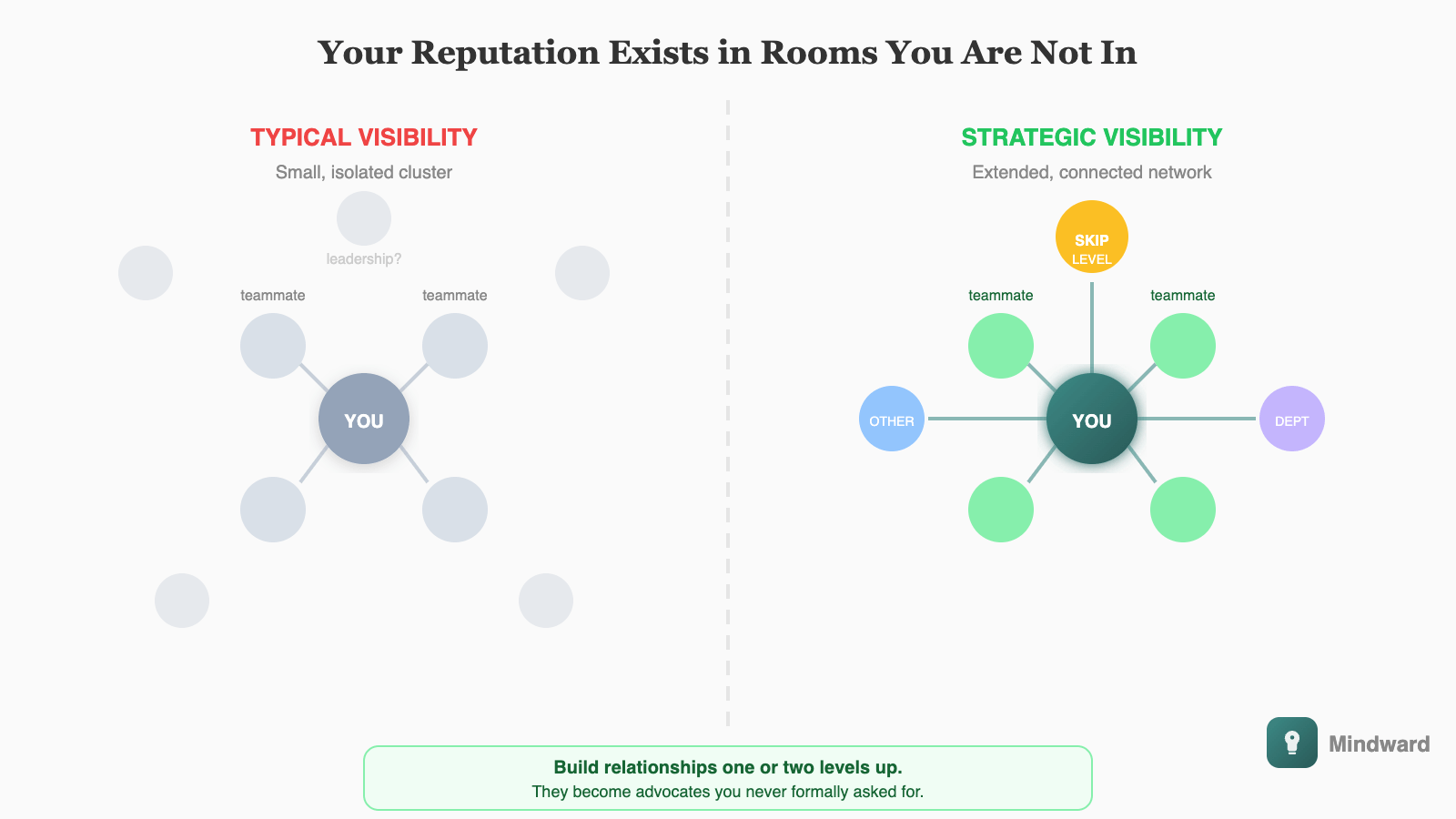
Visibility is not just about broadcasting - it is about who receives the signal. Building relationships with people one or two levels above you dramatically increases your visibility where it matters.
This does not require being political or manipulative. It means taking opportunities to interact with senior people. Ask good questions in all-hands meetings. Request fifteen minutes of their time to understand their priorities. Offer help on something in their domain. Send a note when you appreciated something they said or did.
Most people only interact with those directly around them. The ones who build broader relationships have advocates they have never formally asked for.
The Long Game
None of this is about gaming the system or being fake. It is about recognizing that career success requires two things: doing good work and making sure that work is known.
The people who advance are not necessarily the best performers. They are the best performers who also understood that visibility is part of the job. They documented their wins. They spoke up in meetings. They built relationships beyond their immediate circle. They made their manager's job easier by keeping them informed.
This feels uncomfortable at first. It might always feel a little uncomfortable. But the alternative - doing great work in obscurity and hoping someone notices - is not humility. It is a strategy that does not work.
Your work will not speak for itself. It never has. Speak for it, and give it the chance to be seen.


Comments
How did you like this article?
No comments yet. Be the first to share your thoughts!